One of the silver linings of the current “social distancing” is that I’m able to get work on some of my back burner projects, things that I aren’t a priority, but would like to get done. In the past, I have made a couple of giant shells for the three shell game out of a resin, but used a casting method to where the shells weren’t uniform. I’ve wanted to make a set where the shells inside and out were more uniform.
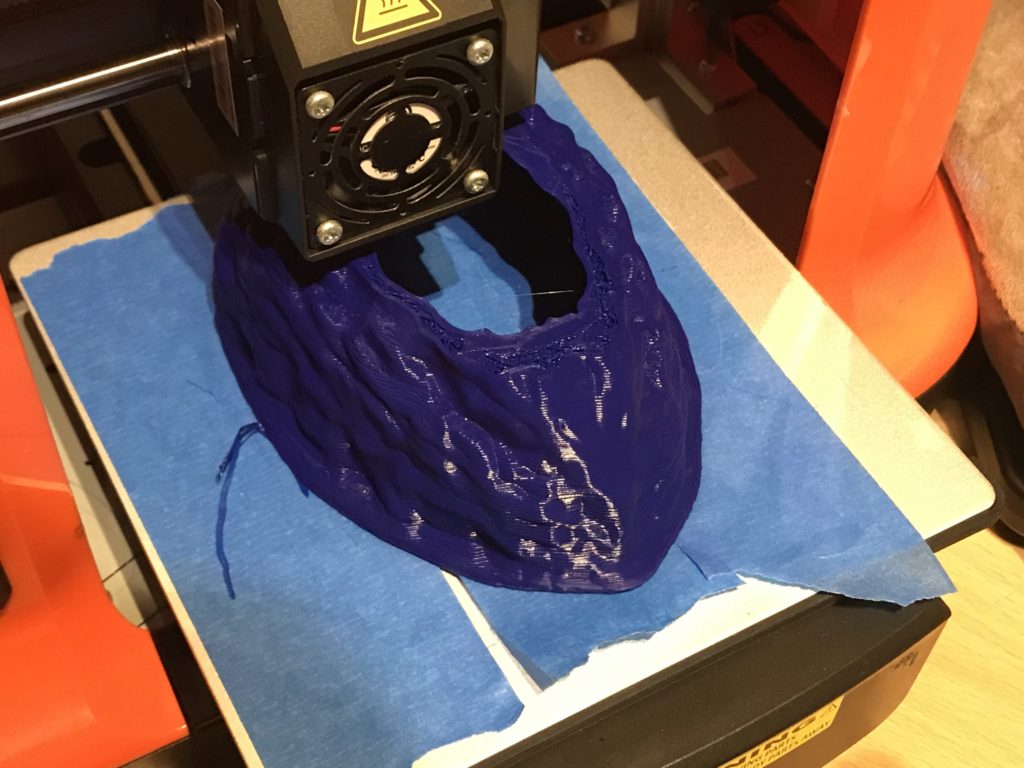
Yesterday I 3D printed a giant shell which will be the original that the other shells will be made from.
The next step is to make a silicone mold and cast them in resin. I’ll probably put a magnet in them so that they handle more like a chop cup than a shell game set.
When someone puts out a magic trick, there are two ways the creator does it. One is how they do it and the other is a dumbed down version for people who don’t want to practice. Personally when I put out a product, I put out what I actually do and use (at the time of putting it out). That way it’s a release that I know inside and out.
A great trick that came out a few years ago, but has mixed reviews is called Split.
The effect is you have a twenty dollar bill and it visually rips into two ten dollar bills. This is a great trick, but the main complaint I saw was the gimmick was obvious. The problem that people weren’t able to see past was that it was designed to be done with non-US currency. The money in other countries is more colorful and the designs hide the gimmick better.
For me it took about a minute of looking at the gimmick to solve the problem. Here’s my gimmick:
Basically I moved the gimmick from the middle of the bill to the edges. There’s a lot more printing to hide it on a US bill.
Then there was a corner of the old bill that was slightly visible when I was doing mirror practice. I covered it with the corner of a bill that matched what it should be. This was a small thing that really wasn’t an issue, it just sorta bugged me.
When you get a trick and you think it doesn’t work, before you write a bad review, take a step back and look at the bigger picture. Was the trick designed with European money, or created by someone that’s left handed, or whatever. You many not work exactly as the creator, and you need to be able to adjust.
Apparently I’m pretty guilty of having some disgusting props. I was looking over what I use and my personal set of dice for my Cee Lo (cup and dice) routine are gross. I think how they got this bad is that I’m the only person that handles the dice, so I haven’t gotten anyone to … Continue reading “Clean Up Your Act!”
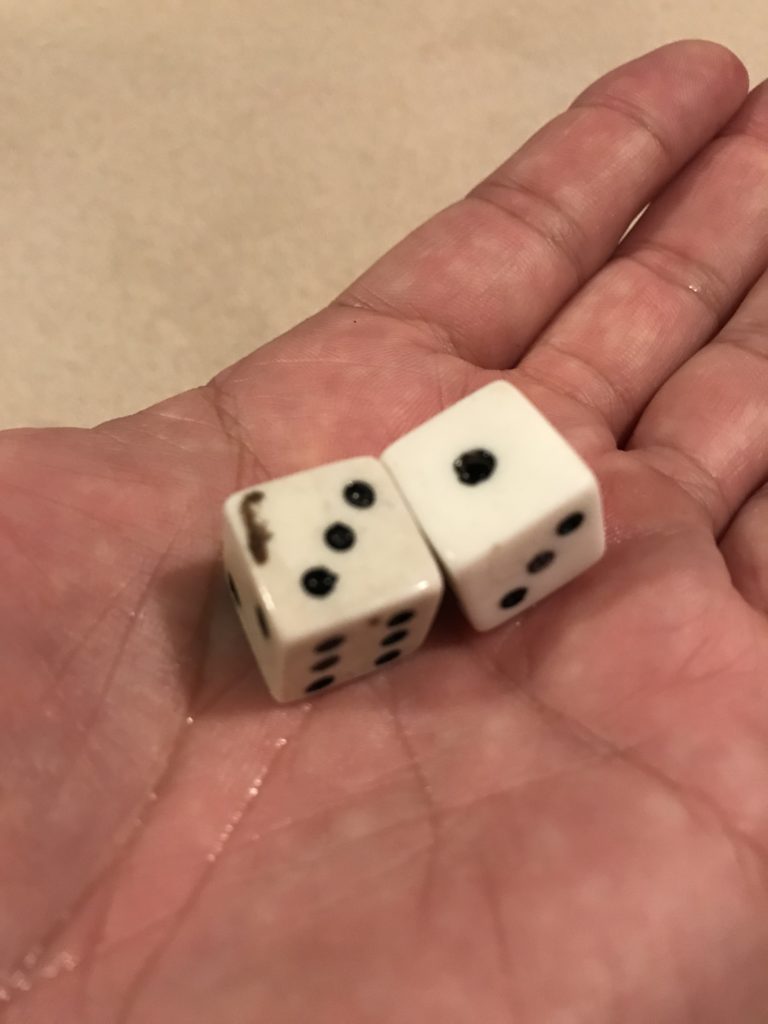
Apparently I’m pretty guilty of having some disgusting props. I was looking over what I use and my personal set of dice for my Cee Lo (cup and dice) routine are gross. I think how they got this bad is that I’m the only person that handles the dice, so I haven’t gotten anyone to react to their grossness.
The die with the number 1 up is the clean one and when compared to the other die, you can see how gross they were!
Right now is a good time to take a look your props and give them a good wipe down, even if they don’t need it!
One of the things that I try to do is use any “found time” that I have during my day. This is time when you’re just waiting. Here’s an example, over the weekended I did three shows at a church. There was about a 20 minute service, my show, then 40 minutes before the next … Continue reading “Found Time…”
One of the things that I try to do is use any “found time” that I have during my day. This is time when you’re just waiting. Here’s an example, over the weekended I did three shows at a church. There was about a 20 minute service, my show, then 40 minutes before the next service started. That gave me a lot of gaps in my day that’s bonus stuff to get done.
I packed my laptop and got some work done after my show and before the next service had started.
Essentially that gave me about half an hour between shows to get work done, which is great! That’s time I would have had to find elsewhere in my life. Then after the service started, while I was waiting for my show, I stood in the back of the room and worked on a card sleight. That’s also practice time that I’d have to find somewhere else in the day.
Being a good steward of your time is something that I think is important. Yes, it’s okay to waste time and just chill out, that’s important, however if I can use some time during gaps in my day to get things done, I’m happy to do it!
I love going to see a magic shows, and recently I drove almost four hours (due to traffic) to see Jason Andrews and Neils Dunker perform in Hoquiam, WA. I’m really surprised more magicians don’t go out and support live magic shows. For $20 the show was an amazing deal! One of the things that … Continue reading “See A Show!”
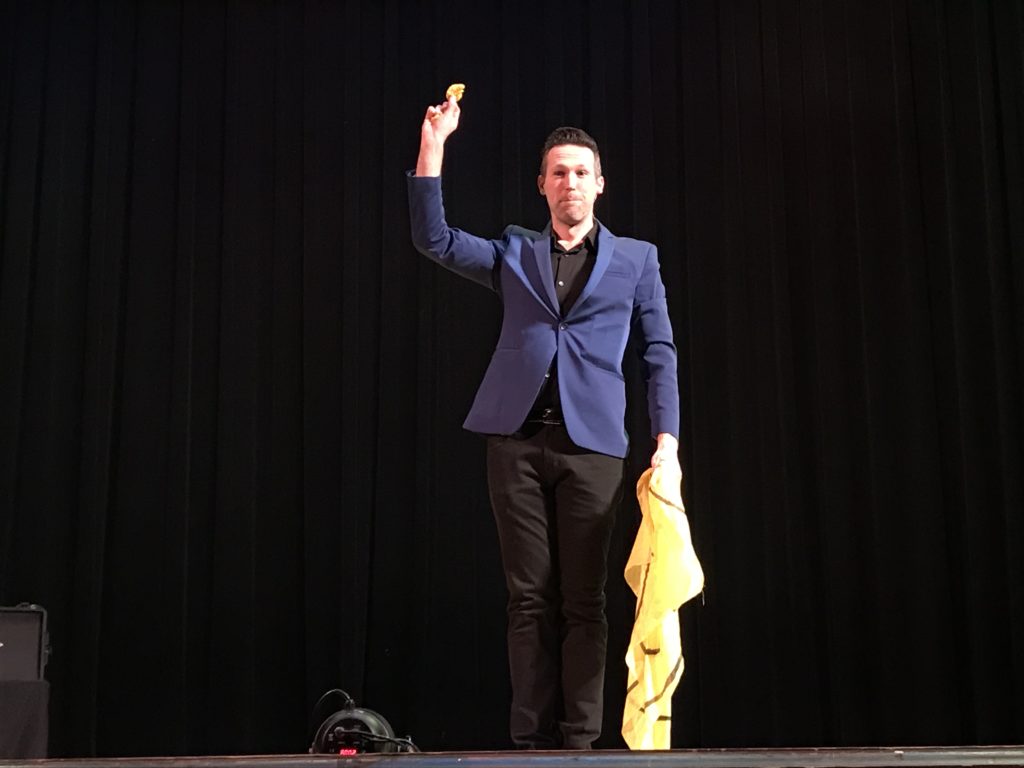
I love going to see a magic shows, and recently I drove almost four hours (due to traffic) to see Jason Andrews and Neils Dunker perform in Hoquiam, WA. I’m really surprised more magicians don’t go out and support live magic shows. For $20 the show was an amazing deal!
One of the things that I liked was that they show was two performers who basically did their own solo stuff, however they did interact onstage. That’s the hardest part of two people touring together. You can do it as a two act show with an opener and a closer, or you can intertwine them a little bit.
Jason and Niels did a couple of bits where they both were on stage and that really gives a feeling of a show, and not two people doing their separate acts. There’s not a right or wrong way to do it. Stand up comedy and bands use the two separate act formula and it works. However in this show in a theater it made it “gel” a bit better.
It was a fun show, you should check it out if it’s in your town.
One of the things that I try to do in my show is not to use props that other people use. It could be the same prop, but mine looks different. Usually the reason mine looks different is because I made it myself (or had it made for me). I read a long time ago … Continue reading “Make It Yourself…”
One of the things that I try to do in my show is not to use props that other people use. It could be the same prop, but mine looks different. Usually the reason mine looks different is because I made it myself (or had it made for me). I read a long time ago in an SH Sharpe book on magic theory that when you make the prop the pride your have from making it will show in your performance and that’s something that’s stuck in my head.
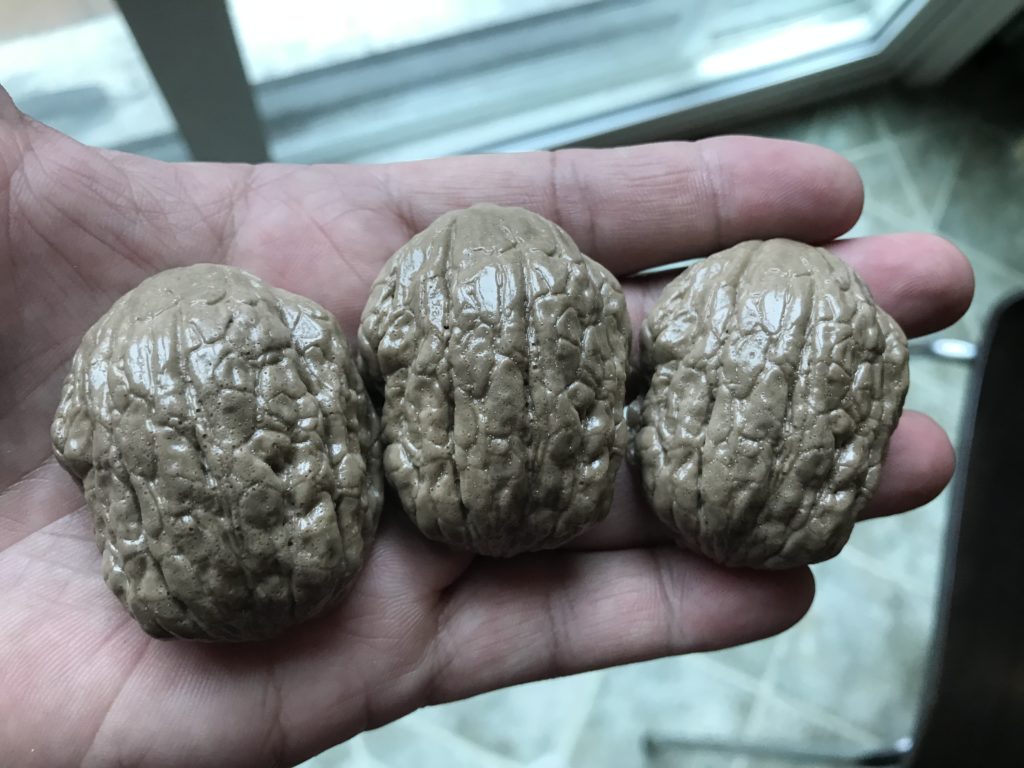
Recently I searched for a set of large walnuts to make my own set for the three shell game. I finally found some in the Ukraine had them shipped to me. I altered one of them a little bit and made a mold of it, and then cast my own set of shell game shells in resin.
These shells are larger than most shells, but not too large. I’ve used them in a couple of gigs and they’re working out great. The next step is to learn to reduce the tiny air bubbles in them.
One of the biggest challenges performing a magic show that’s not in a formal theater is being seen. These challenges range from pillars in the room, not being on a raised stage, or lighting. Sometimes you can fix these problems and sometimes you can’t and just have to deal with them. Last night my challenge … Continue reading “Staging Challenges”
One of the biggest challenges performing a magic show that’s not in a formal theater is being seen. These challenges range from pillars in the room, not being on a raised stage, or lighting. Sometimes you can fix these problems and sometimes you can’t and just have to deal with them.
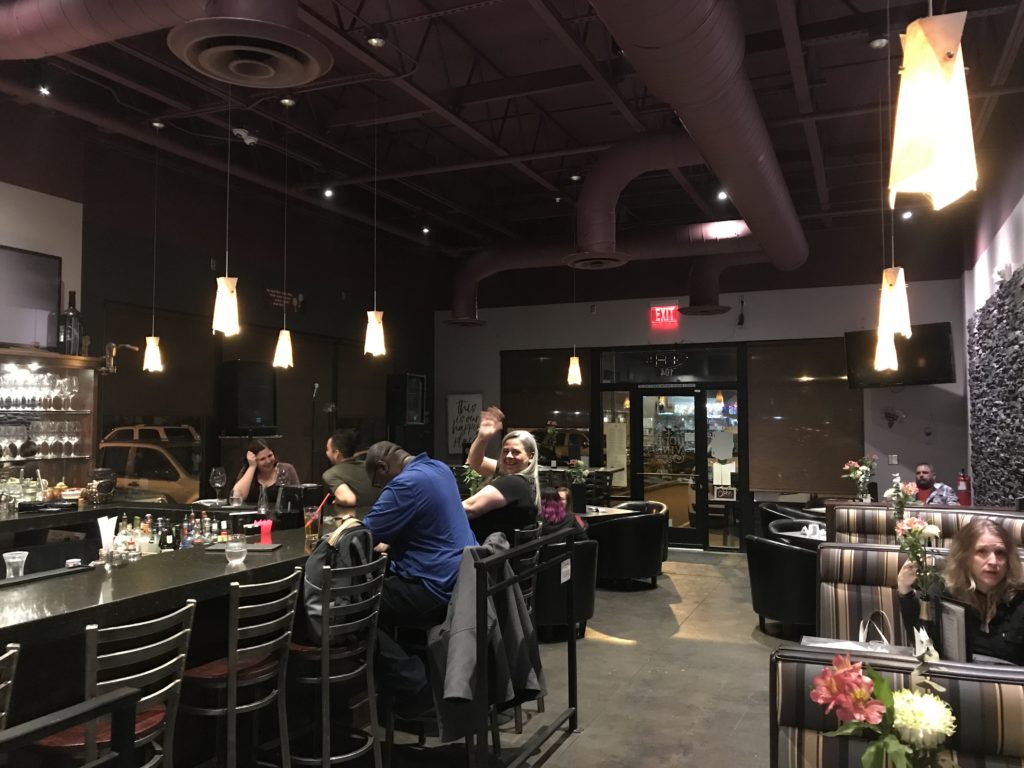
Last night my challenge was lighting. I was performing at a comedy night at a bar. Look a the pic below, the stage is on the left side and you can see the two speakers on each side of the stage.
The stage is in the darkest spot of the room. There’s no light there. Unfortunately there’s not much you can do about it because of how the room is. I can’t move the bar of the booths, the stage is pretty much in the only place it can be.
The next option is bringing in some light trees, sure, but then that brings up a new set of challenges, like blocking sight lines, taping down cords and where to put them. Also I refuse to travel with light trees. If I’m performing in the dark, that’s 100% the venue’s issue and one that’s not easily solved by me.
My solution was to do my show on the floor in front of the stage. There was a lot more light there. It’s not the ideal situation for my show, but the best for the circumstances I was given.
When I was a kid I remember Michael Close in his lecture talking about how to get good patter ideas for your tricks. His advice was to go out and do stuff that’s not magic related. Living a life aside from magic will add depth to you onstage. Personally for me, I love magic and … Continue reading “Live it!”
When I was a kid I remember Michael Close in his lecture talking about how to get good patter ideas for your tricks. His advice was to go out and do stuff that’s not magic related. Living a life aside from magic will add depth to you onstage.
Personally for me, I love magic and it’s a huge part of my life and something that I’m very passionate about. However I do have a lot of other interests. Things like travel, urban exploring and leather craft. Having those interests gives my show depth.
Earlier this week the podcast that I co host did an interview with Carisa Hendrix where she talks about her life.
Another thing that I learned while I was in Nashville was about the beginnings of Elvis’s performing career. I don’t remember who wrote it (it was a band member, or agent) said that, “Elvis got on stage, jumped around and carried on, then the bass player would start carrying on, then the next guy. ” … Continue reading “Keep Playing…”
Another thing that I learned while I was in Nashville was about the beginnings of Elvis’s performing career. I don’t remember who wrote it (it was a band member, or agent) said that, “Elvis got on stage, jumped around and carried on, then the bass player would start carrying on, then the next guy. ” What they were doing onstage was playing around and having fun.
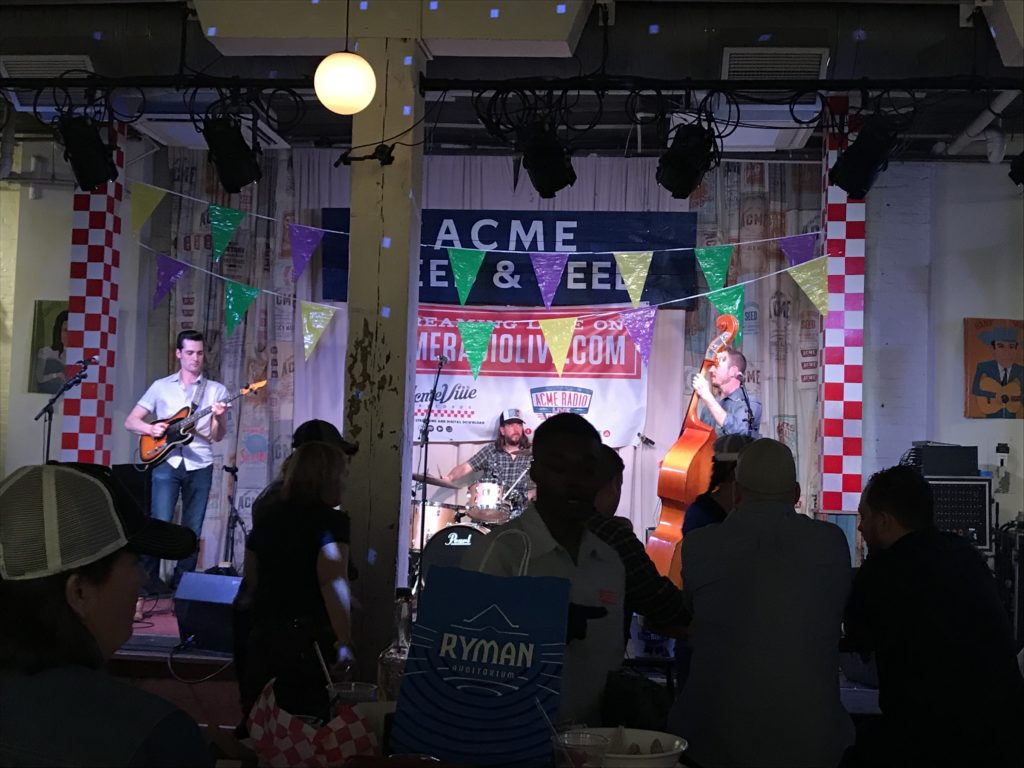
One of the bands I saw in Nashville was had four performers (only three are pictured) and only one of them was having fun onstage. In the band the bass player was having a blast, or at least he did a dang good job acting that he was having a ton of fun. His enthusiasm really carried across the audience.
When you are on stage, have fun and play around. Try something new, be whatever your version of silly is, and whatever your version of comedy is, don’t be so serious.
Today I was thinking of the Seven Keys To Baldplate routine. It’s the trick where you have seven keys, and only one opens a lock, and somehow that’s the key selected (or only one not selected). There are tons of methods to this trick, but I think Stewart Judah’s is the best. In that method … Continue reading “A Mentalism Idea…”
Today I was thinking of the Seven Keys To Baldplate routine. It’s the trick where you have seven keys, and only one opens a lock, and somehow that’s the key selected (or only one not selected). There are tons of methods to this trick, but I think Stewart Judah’s is the best. In that method any key will work or won’t work in the lock.
Typically people lock things like a finger ring or money to the lock. The idea I had for the trick was to lock someone’s belt loop to a chain. The other end of that chain could be attached to me, a chair, or whatever. You could even have multiple locks with multiple people that are locked together. Every finds the key that opens their lock.
The idea of chaining someone to something is an interesting visual and I think would lend itself to some interesting situational comedy. I think having people on the end of the lock instead of a ring will make it play bigger. The next challenge would be coming up with a routine.