Roving Magic Show Set List

Here’s what my props for a roving magic set look like:

The bottom row is my card routine, which is modular and can run anywhere from about 90 seconds to 7+ minutes. The top row are the other props that I use. Everything goes into my pockets except for the empty chop cup.

The top row is the fortune teller (it’s in my PCAM lecture notes), then my Out for Beers trick, three shell game and a chop cup. The nice thing about these props is that there’s a lot of texture I can have with my roving magic set. The opening is always the card routine, then the next trick depends on the group.

-Louie

Three Shell Game Ending

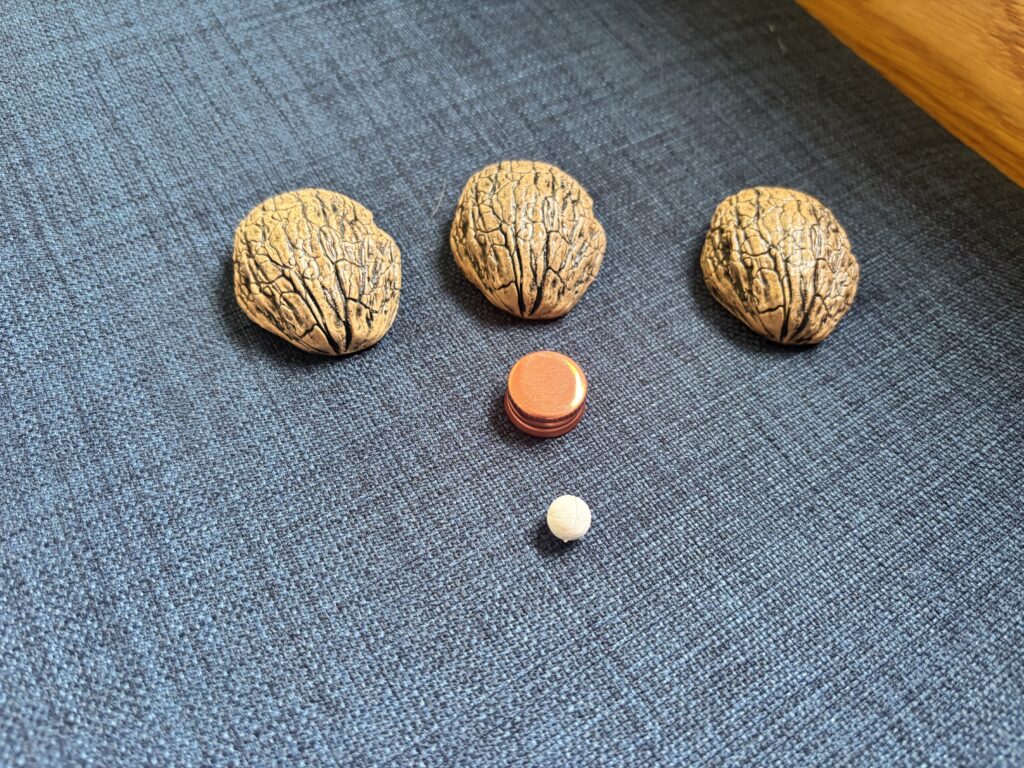
One of the endings that I’m doing with my three shell game routine is using a small cap that goes under the shell to replace the standard shot glass. I got the idea when I was on a flight and realized the tiny liquor bottle cap would fit under a shell. (you can read the post about it here)

Here’s a demo of what it looks like:

You could put a shot glass on top of the cap and shell for a triple cover! I really didn’t want to use the shot glass, as it’s bulky, heavy, and semi-fragile. This is a good solution for me!

-Louie

How to Make it Play Onstage

The last couple of days, I’ve written about my idea for a three shell game style routine to be done onstage. The basic premise is that the prize is put into a tennis ball that has a slit cut into it and it’s juggled with two other balls and the audience has to follow the one with the prize.

You can read about the idea here and how I solved one of the problems here.

A challenge that I didn’t think about with using a two dollar bill and a couple of one dollar bills is that they are visually similar when viewed from a distance. The different formatting of a five and higher value bill looks different, however a $1 and $2 have the same layout.

How Can They Look Different From a Distance?

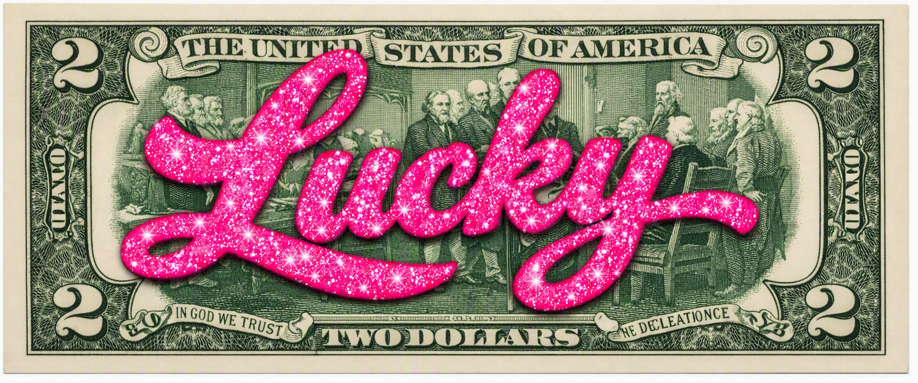
This is the challenge, making the trick play to the back row. Here’s an idea for the solution to that: What if on the back of the two dollar bill in bright, sparkly ink/paint I wrote “LUCKY”? I could introduce the two dollar bill and say it’s my lucky one, then turn it around to show the word on the back. That visual difference would make it play further back in an audience.

When I create routines, I always try to think about the back row!

-Louie

Remove the Loss In a Shell Game Routine

Yesterday I wrote a post about the idea of doing a three shell game type routine onstage using tennis balls, and you can read it here. The tennis balls have slits cut in them that I put money into, and the audience has to follow the one with the money.

One of the problems with this style of routine is that the spectator loses. I’m trying to take the sting out of that. My idea isn’t that they win; they still lose, but ultimately, as losers of the game, they still win.

How Do They Lose, But Still Win?

I’m not sure how this will play with an audience, but here’s the idea:

I show a two dollar bill and put it into one of the tennis balls. I tell the audience that it’s “My lucky two dollar bill” and you won’t win it. I’ve played this game hundreds of times; each time I lose two dollars, but I have never lost this two dollar bill!”

The bill is put into a tennis ball, and they’re juggled. Someone from the audience selects one of the balls, and it’s tossed to them. They open it, and it has one dollar in it. You give them a second chance, and they pick another one, and when they open it, that one has a one dollar bill in it as well. That leaves you with the two dollar bill!

Ok, so they lost in their objective; however, they still walked away with the same amount of money that they would have won if they found the two dollar bill.

I think this idea takes the sting out of the spectator losing at the end.

-Louie

The Shell Game Onstage

The idea of doing a three shell game style routine onstage has been in my head for a little while. Onstage, a shell game type routine typically manifests itself as a Bank Nite type routine, where money is mixed with worthless prizes. The spectator picks all but one envelope, leaving the magician with one, which has the money.

There are two challenges with a Bank Nite style of routine:
1: The spectator loses (usually)
2: The final reveal is anti-climatic, the audience knows what’s in the last envelope, so opening it isn’t really a moment.

A good example of ending the routine with a bit of a moment is telling the audience that money is in one of the envelopes, but not showing them. A good example of this is John Archer’s Blank Nite routine:

What’s the Solution to Doing The Shell Game Onstage?

This doesn’t really solve the problem, but here’s the idea I came up with: You have three tennis balls with slits cut in them. You put the $100 into one of them, and the audience has to follow that one while you juggle it.

This is nice and visual, and it has the mixing element of the three shell game. The audience is involved in trying to follow it.

This doesn’t solve the two main problems: the spectator loses, and the final reveal is anticlimactic.

I like the visual…but now to try to figure out how to solve the two issues.

-Louie

Is the Three Shell Game Relevant?

Not too long ago, a magician I was hanging out with said he didn’t think that younger people understood or knew what the shell game is. I disagree; I think young people know what the three shell game is, and my reasoning is that every ballpark in the USA plays a version of it on the jumbotron. Here’s the shell game at a Cincinnati Reds game:

It’s a simple concept of a game, and younger people definitely know what it is, or it wouldn’t be played in stadiums! This is one of the things that I like about it, it IS RELATABLE because people have played it before!

-Louie

How To Create New Ideas

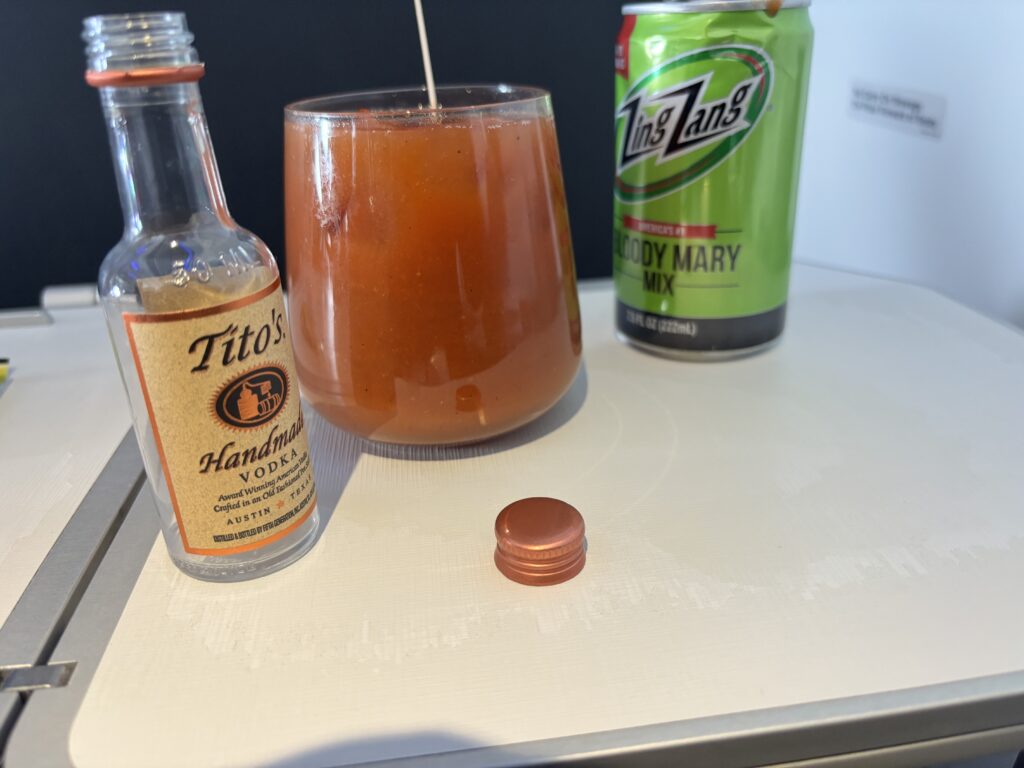
Sometimes an idea becomes a reality when you just notice something. Recently, I was on a flight having a Bloody Mary, and the cap was sitting on the tray table.

creativity for magicians on an airplane

The idea that popped into my head was to use it for the three shell game. In the shell game, there are a lot of phases where you put something on top of the shell to create the illusion that you can’t get at the pea. There’s very few where you put things under the shell to make it more difficult.

Here’s one with a finger ring that I came up with a long time ago:

The idea with the tiny bottle cap is to cover the pea with that, then put a shell on top of it.

The first thing I had to do to make it work was file off the little metal nubs at the bottom of the bottle cap. Once it was smooth, it worked perfectly!

This is an easy to carry thing, and could be used in conjunction with a shot glass to have three things over the pea!

-Louie

How To Make a Magic Video Go Viral!

When you talk to people who are big on social media, they all tend to give similar advice:
1: Post consistantly
2: If something works, repeat that

I’m not huge on social media; I really post stuff that I think is interesting. My average Instagram post right now is between 2k and 20k views. However, recently this one hit 300k views:

That is an outlier for me, so I went to the advice of repeating what you did. The video from above is part of my shell game routine, and I have more of the same clip that I could use, so I made a second one:

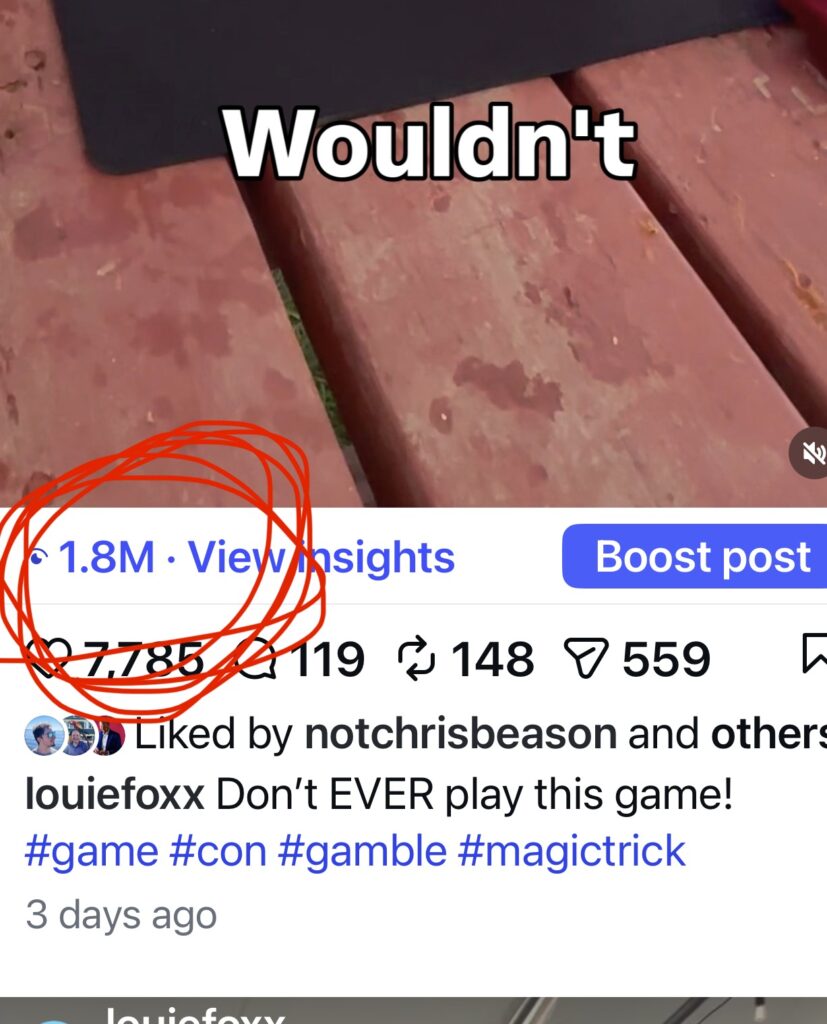
This one is currently at 1.8 million views!

instagram magician
Screenshot

So when that one popped, I decided to follow the format again and use a third chunk from the video.

This one is sitting at just over 8k views. The formula worked spectacularly for the second video! I do have another phase or two from the original video, I might put them up to see what happens.

I guess I’m going to parrot the advice, that if something works, do it again and repeat until it stops working!

-Louie

3d Printed Shell Game!

A while ago, I made a set of natural shells for the three shell game, and then made a silicone mold of them. I used that mold to make a bunch of resin shells for a shell game workshop. One of those resin shells recently got 3d scanned and I’ve started printing them!

three shell game

These are a great beginner set or set to throw in your backpack to carry around and not beat up a nicer set.

You can find or more or order a set at:
https://www.magicshow.tips/shell-game/

-Louie

Dice Sequence

I was relearning Giovanni Livera’s Shell Shocked routine. This is a three shell game routine and at the end of it you have two dice on the table. Looking at the two dice, I realized that this is a natural transition to the Sachs Dice Routine. I originally learned this as a teenager from the book Routined Manipulation Vol 1 by Lewis Ganson.

If you’re not familiar with the trick, the effect is that you hold two dice in your hand and the numbers on the dice change as you turn your hand over. It’s a great effect and one that Steve Dobson did a lot in his working repertoire. I dug out his lecture notes and grabbed some dice!

Dobson's Dimensions by Steve Dobson

The move isn’t hard to do, but Steve does it backwards from how my hands remember it from when I was a teenager. The move is better the way Steve describes it in his lecture notes.

You can learn Steve’s routine from the notes pictured above (if you can track them down) or it’s the basis for the routine taught in Reed McClintok’s Ivory Connection video.

-Louie