One of the days I was performing at the Moisture Festival, there was a delay in starting the show. The producers asked me if I could fill some time to keep the people in the theater occupied. I did my Any Card At Any Number (ACAAN). Here’s the full spot because there’s a joke that’s a callback and doesn’t make sense if you don’t see the beginning before the trick starts.
For me, ACAAN is a great stage trick; it’s solo with just me onstage, but it involves the audience, and it’s a good trick!
I must be getting better! I did a show for middle school kids at 7:40am and it went great!
Middle school (grades 6-8) are notoriously one of the hardest age groups to perform for. They don’t really relate to silly humor that I’d use for younger kids or smarter humor that I’d used for older kids. It’s just a small age group that I find really hard to perform for. Then add in the 7:40am when they’re still waking up and it sounds like a rough gig.
The show went well. Whenever I perform for a group of kids I try to aim my material slightly older than younger than the group. I’ve found kids will “age up” much easier than down. If I do material that’s designed for younger kids it will turn them off quickly and they’ll dismiss the show as a “kid show”, which they’re above.
I opened the show with my Any Card at Any Number and that immediately had their attention. I know a lot of magicians think that ACAAN is a boring trick and many are, however for this group, if it was, they’d be asleep by the time we got to the card! ACAAN done correctly, I’m not talking about routine/patter, but method is an amazing and compelling trick. Once you start adding procedure into it like rolling dice or a calculator, then it becomes less amazing. Simply saying, “name a card, name a number” and that’s where their card it without any BS is a great trick!
The moral of the story is sometimes taking a show that you know will be a challenge will help you grow as a performer.
There are some magic products that just shouldn’t exist. This is one of the products:
It’s a cheat sheet for the invisible deck. Let’s start with the memory, you really need to remember two things. You need to remember which side of the deck is even, and hearts to spades, that’s it. For the math, you need to be able to subtract a number from 13.
It’s not too hard, however, it that’s too much for you, you can eliminate the math and memory by simply opening the flap and looking at which side is towards you. Then removing them from the box the correct way and fanning them vertically while looking for the named card. Boom, no math, no memory, no need for an Invisible Deck Crib.
OK, so is this solving a problem? If you’re not going to put the time into learn a trick, you really should be doing it. I suspect that’s what’s behind all the versions of ACAAN that are marketed, it’s to try to make the trick accessible to lazy magicians.
Maybe someone has a learning disability and can’t do the math in their head? OK, there are lots of things that I don’t do because I don’t have the ability to do them. For example I can’t use memory pegs because I have a thing called Aphantasia, however I was able to learn a memorized deck. It took a lot of work and I had to create little things to help me learn it. I wanted to learn to a memorized deck, so I figured out a way.
Now let me mention the worst line in magic advertising: “eliminates memory and math (or commonly sleight of hand) to allow you to focus on performing.” This makes it seem like you can’t do the two at the same time. Let’s look at famous magicians: Darren Brown, David Copperfield, David Blaine, Doug Henning, and Criss Angel All of them do or have done technically challenging things in their shows and could still entertain with it. Why can’t you? If the answer is because it takes practice, then maybe performing magic isn’t for you.
With all the buzz about the Atomic Deck and magicians arguing whether ACAAN is a good trick or not, it got me thinking about why magicians are fascinated by ACAAN.
Here’s my theory why magicians are into it, there’s really only one way to do it and that’s a memorized deck and a displacement. That method isn’t easy to do and beyond the reach of a beginner magician. Most magicians are lazy and don’t want to put in the work, so selling a method that’s “easy” for something that’s beyond most magicians skill level solves a problem and leads to sales.
That’s it, it’ makes the difficult attainable for people who don’t want to put in the work.
The problem is there compromises that are made to make the trick easy that change the trick from an Any Card At Any Number to something else. Usually a Selected Card at a Any Number, or Any Card at Selected Number or combination of the two. There’s nothing specifically wrong with those effects, but they’re not ACAAN.
The things added to make the trick easy take away what makes the trick amazing, and that’s how simple the trick is. Name a card, name a number and boom the card is there. Not name a card, now roll these dice, multiply that by nine and add 13, now deal to the number and your card is there. The added procedure kills the effect. Magicians who think the plot is boring are bored by the added procedure that makes the trick easy.
Magicians love to say, “it’s not the effect it’s the presentation that matters” are the same ones that say ACAAN is boring. Those are the magicians that aren’t putting in the work. The effect matters! What would you rather have:
1: Strong effect with a weak presentation 2: Weak effect with a strong presentation 3: Strong effect with strong presentation
I think we can all agree that number 3 is the goal. That means you need to put in the work! -Louie
The new hot trick right now is the Atomic Deck, which is an ACAAN, here’s the trailer, then I’ll give you my thoughts on it:
When I watched the trailer and the first thing that jumped out at me was this:
That’s a very specific statement, not “NO ROUGH AND SMOOTH”, so that instantly tells me that it’s roughed, just not by traditional methods. I don’t know how I feel about that in its marketing as it’s technically correct, but very misleading.
That aside, the trailer above leaves out something very important, this trick requires a phone or computer. Of course this part of the trick is completely left out of the trailer. It is mentioned in the ad copy, so it’s only sorta deceptive in its omission from the video.
With the current issues that Inject 2 is having, relying on app or website isn’t a good long term solution. The site is only good as long as the deck is selling and they’re paying for the hosting. You’re relying on something outside of your control for the trick to work.
OK, not to the effect, it’s not a true ACAAN in my opinion. You have multiple cards named and multiple numbers and then you essentially pick the combination that will work the best. So instead of Any Card at Any Number, it’s more of a “Selected Card from a Selected Group of Cards at a Number from a Selected Group of Numbers“. That’s a huge thing that to me distances this from the Berglas Effect.
It should look like this: Spectator names a card and a number. The cards are dealt and the card is at that number!
Here’s a video of me doing ACAAN at a gig that I was just supposed to be playing the organ at, however someone requested I do a magic trick.
An upcoming roving gig I have wanted a mentalist, not a magician for their event. The agent who contacted me about it knows what I do in my show very well and asked if I could do it. My stage show has many mentalism things in it that just aren’t really presented as mentalism and my roving is the same.
I said “yes” to the gig, but need to reframe what I do a little bit to put it into the context the client wants. The material that I’m planning on taking out with me:
ACAAN – I published an old version of what I do in a linking ring from 15 or so years ago
Spoon/fork bending – I published this as The Perceptive Bend in Vanish Magazine around April 2019
Paint Swatch Matching – I published this as Pick Our Rooms Paint in Vanish Magazine in I think July 2024
Color Block Prediction – This uses a small block with different colors on it and it uses up to three different methods throughout the routine. One of the methods is original to me, the other two are based on marketed items.
Number prediction – This is basically Acidus Novus for the method and a follow up to the color block trick
Pet’s Name Divination – This is my routine using Peeked by Joel Dickinson. Peeked is a really clever effect/method to gain information on a card in the context of a divination type routine.
That’s the roving set and it’s way more material than I’ll need for two 45 minute sets for 400 people. I think that I’ll do two different sets for each time I’m out. That will solve the problem of people mixing with other groups and having seen something before.
A few days ago I was at a booking event and Chubby Checker was there. He’s 82 years old and been in showbiz for over 60 years!
I was chit chatting with his manager and she told me that Chubby loves magic and asked if I could show him a trick. I went over and did Any Card at Any Number for him and he loved it. He bugged me the whole event to do it again and I did and each time he was more amazed.
Magicians who have never done a pure ACAAN where it’s simply “name a card, name a number” and their card is at their number don’t understand how good of a card trick it is. It’s an impossible trick.
Many magicians say that audiences don’t like it and it’s a trick for magicians are totally wrong. I think there are so many bad tricks that pretend to be an ACCAN, but aren’t and dilute the effect. Once you get dice, your phone or convoluted processes into the trick to make it easier, the trick isn’t as clear or nearly as impossible.
Doing ACAAN correctly where there’s no process, or additional props, just a card, number and a deck of cards isn’t easy to do. It’s out of range of the average performer as you need to improvise a lot and have a huge toolbox card magic knowledge to draw from.
It’s totally worth learning to do correctly, it’s an incredible trick that audience do like!
If you’re interested in doing ACAAN, I recommend tracking down the book Any Card by Alain Nu. It’s a great overview of how to work ACAAN.
Recently I wrapped up a twelve day run at a fair. I was doing 30 minute stage magic shows. Here’s what my case and tabletop set up looks like:
The show set list is pretty simple:
ACAAN Rope Trick Cup Trick Drawing Routine Tape Measure Prediction Marshmallow, blindfold, or whip and safety pin routines Hoop and Cup
The second to the end position is a variable spot in the set let. It could be one of three routines based on time, how much of the audience are repeat, and general vibe I’m feeling. That variable is great when there are people who just saw the show, you can have a slightly different show for them!
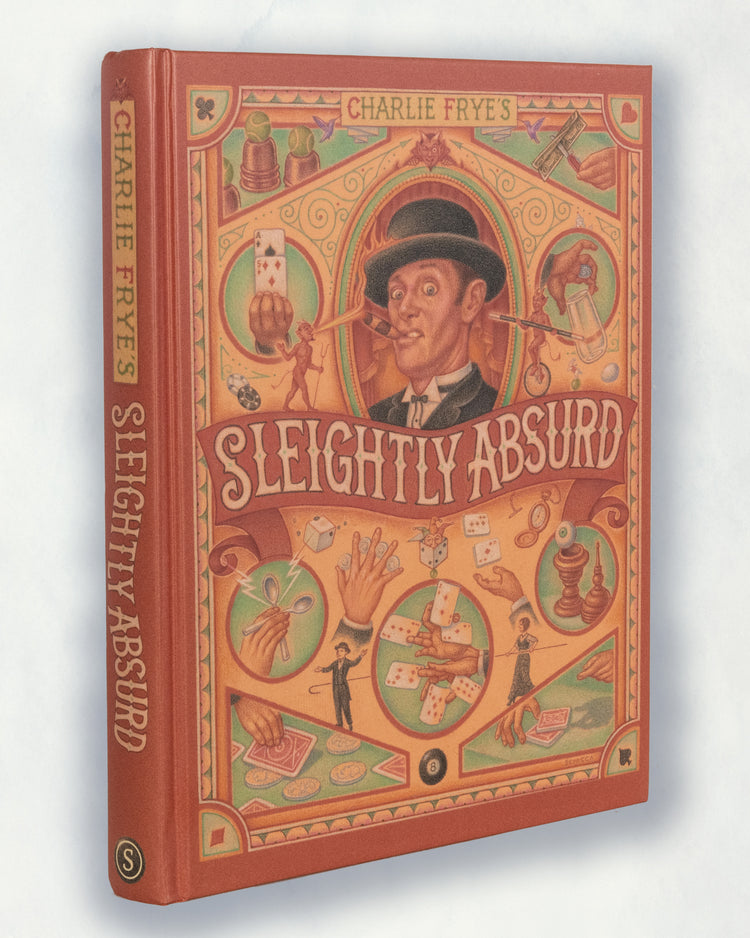
I’m finally wrapping up reading Charlie Frye‘s magic book Sleightly Absurd. I picked this up at Hocus Pocus in Fresno way back in October when I was visiting their shop.
This book is a fun read and it has a lot of “non traditional” magic book feeling routines in it. The routines have endings to them, which is something that lacks in many magic books by magicians who aren’t out there working. The other thing is that Charlie isn’t a “I do easy stuff so I can concentrate on performing” type of person. He’s doing things with whatever level of difficulty that the trick requires to make the trick the best. Sometimes that’s means hard sleight of hand and sometimes it’s a math principle. I totally respect that approach!
One of the interesting things for me is towards the back of the book there’s Charlie’s approach to Any Card at Any Number. It’s a fairly standard approach where you use a memorized deck and a variety of techniques to get the card at the desired number. He does a great job of breaking down his thought process how determines the best way to go about it and describes many scenarios.
For me the best part is how he calculates the stack number backwards (from the face of the deck).
I had to read that part about half a dozen times for it to make sense for me and once I did, it made total sense! I also figured out a way to get rid of having to remember the pairs, they all all up to 3 or 13, so there’s no memorization of the five pairs, just remembering one rule. This is a game changer for me, it makes the doing the math from the face of the deck insanely easy! This one little thing is worth the price of the book if you use a memorized deck!
This is a great book and totally worth the $75 it sells for!
One of the things I’m trying to do is carry around less stuff. For example, for a 45 mins show, I used to travel with 60+ mins of material. That’s a habit from when I was younger and the time it took to do routines would vary wildly show to how. With years and thousands of shows under my belt, I’m much more consistent with the minimum time that routines take.
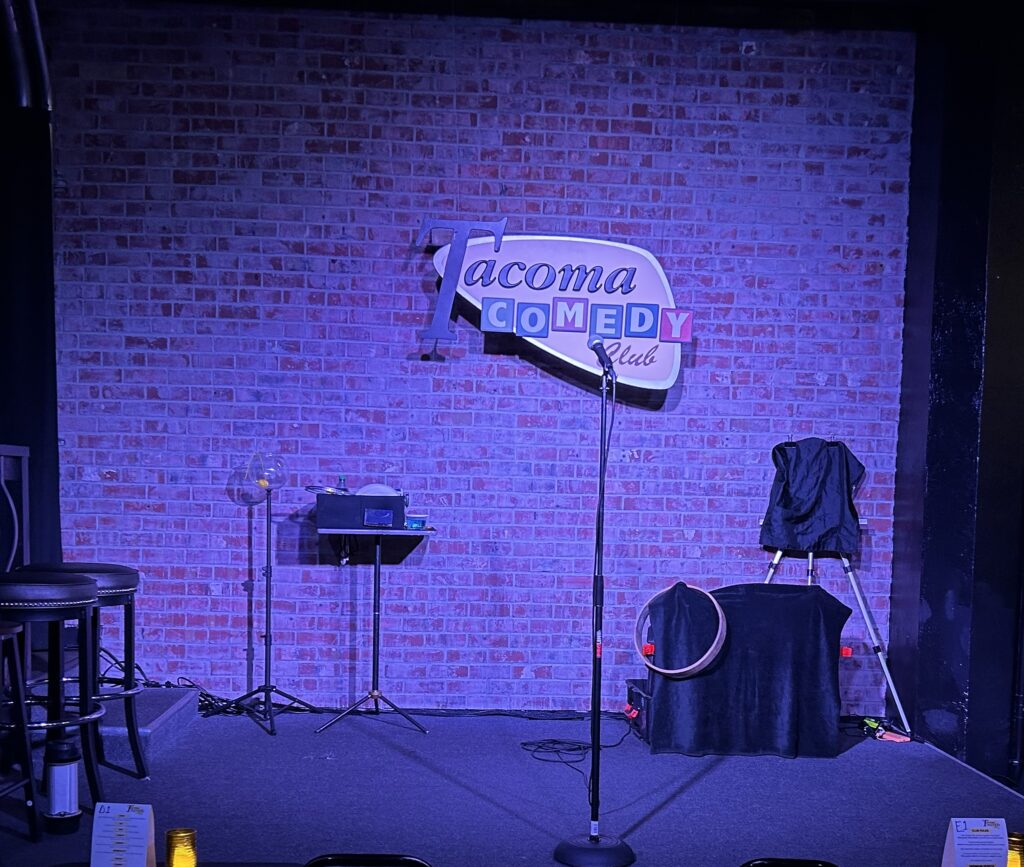
Here’s my set up from a recent show at a comedy club:
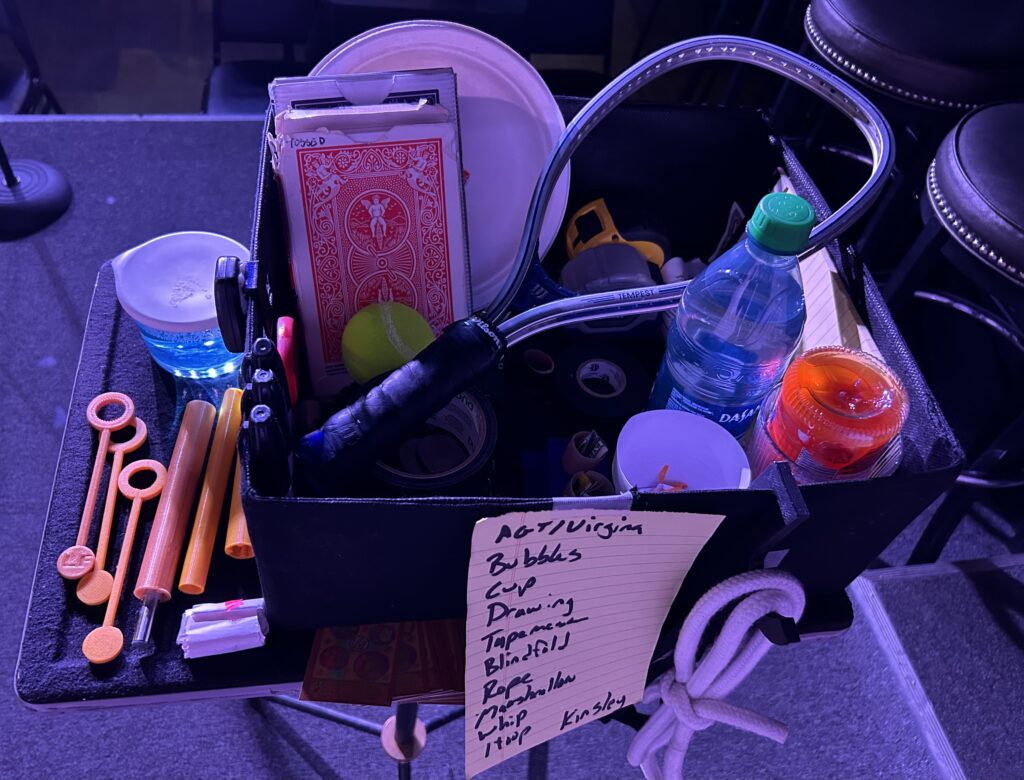
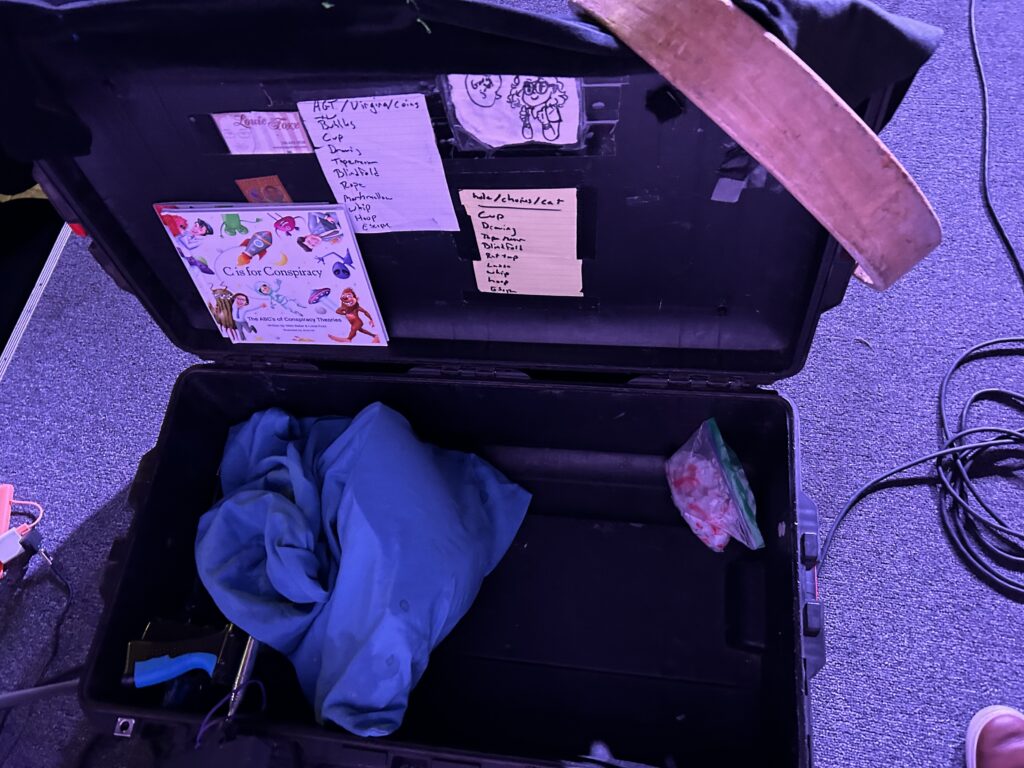
In the past, my table top bin would be filled with soo much extra crap that I never used. That’s just extra weight I’m lugging around. Now there are only two extra tricks that I’m travelling with.
Here’s the what my two prop bins look like:
The two extra routines I have are the gypsy thread and my ACAAN with a jumbo deck and I rarely use those. Frequently I’m finding myself cutting a planned routine out of the show because I’m running long!
Having less clutter in my gear is super helpful for reducing set up and tear down times and having less stuff onstage makes everything much more efficient!