
The Three Shell Game is a classic gambling con game where, traditionally, a pea is put underneath a hollowed-out walnut shell, which is then covered with two other empty walnut shells. The three are mixed, and the player tries to guess which shell the pea is under.
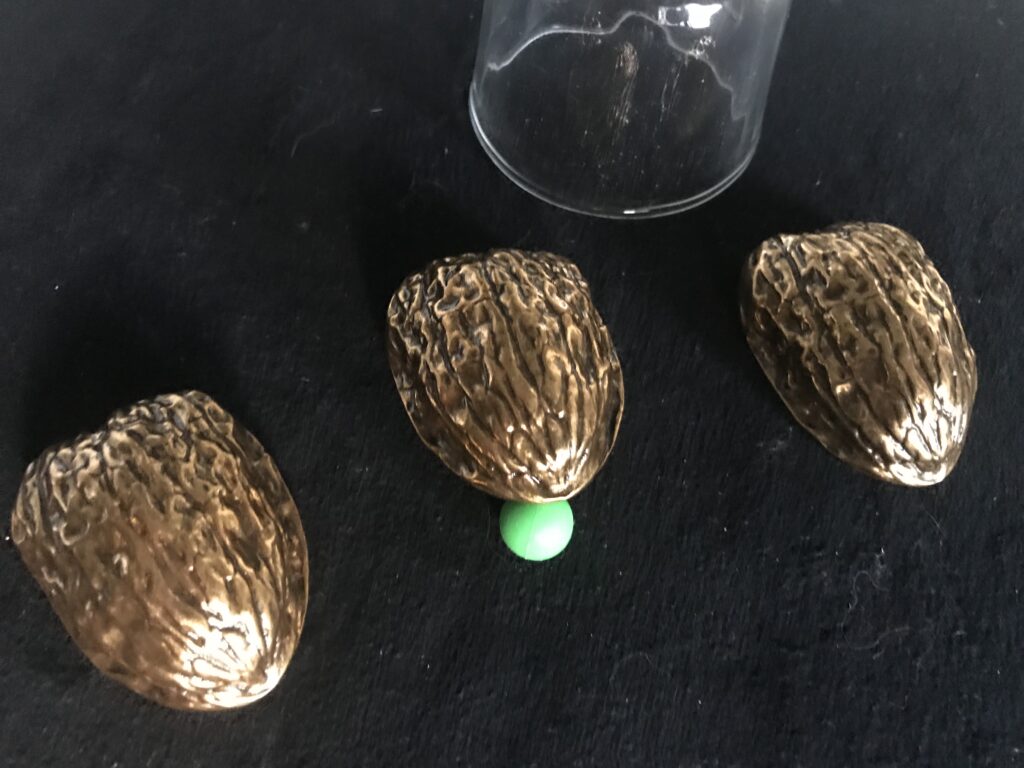
There are legit versions of this game, like those played on the Jumbotron at a sporting event; most in-person versions involve sleight of hand or a gimmicked shell.
In a nutshell (pun intended), you are sneaking the pea out of one shell and into another. That’s it, that’s all there is to it. The props you chose to use will make a huge difference in your success.
When doing the shell game, there are really three things to consider:
1: The surface
All three of these are important and will have an effect on your success performing the three shell game.
The Surface for the Three Shell Game
With modern peas (more about them in the pea section) the surface is a lot less of an issue. You can work them on harder surfaces. Some things to be aware of, the slicker the surface, the harder it is to do. The harder the surface, the noisier it may be as the shells might click and they lever up and down.
Personally, I have no problem doing the shell game on a bare tabletop, if I’m in a space where there’s a bit of noise to cover the clicking of the shells. It doesn’t need to be very loud, but a silent room wouldn’t work. You can also talk over the clicks to hide them.
The table used in the picture below is a hard top with a fabric cover that’s glued to the table. That table top was made by Viking Magic for me in a custom size. This is my preferred surface. I don’t need the squish that a close up mat has, and I like the thump that the shells make if I pick them up and set them down firmly on the tabletop.
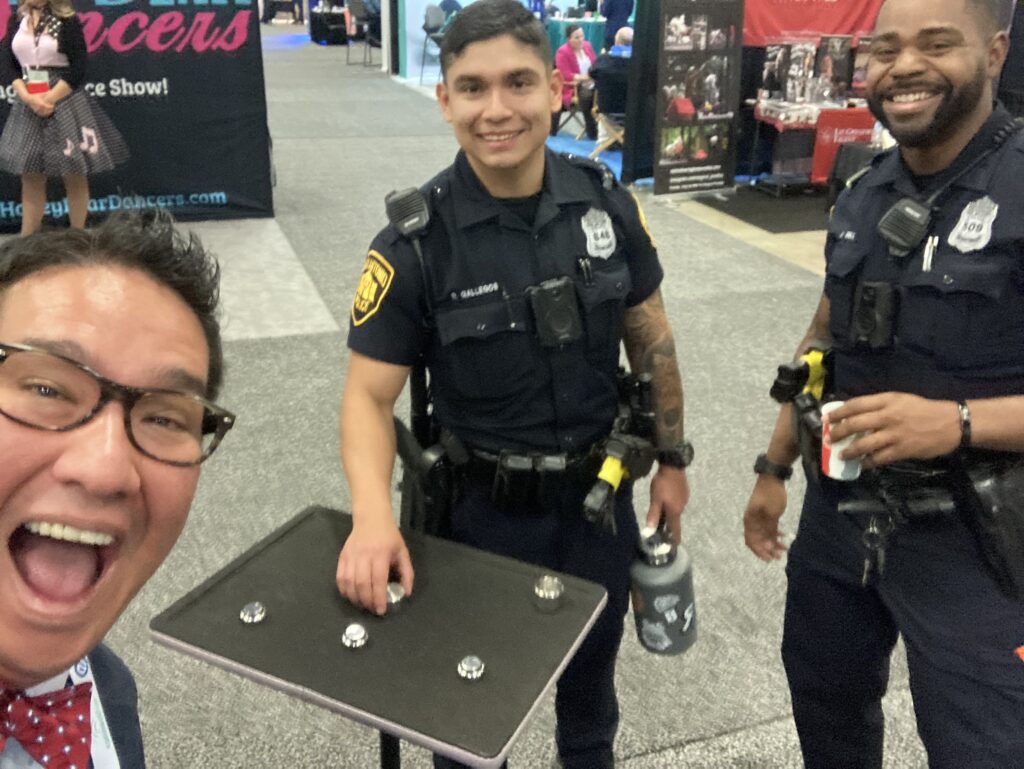
One of the surfaces that I have challenges with is a banquet room table with a tablecloth. The tablecloth tends to bunch up as I’m trying to load/steal the pea. It’s not impossible, but you need to work a little bit harder and really be aware of what the tablecloth is doing.
For most magicians, a normal close up mat is a perfect surface for the shell game.
The Pea for the Three Shell Game
The Pea in the three shell game hasn’t been a real pea in my lifetime (I don’t know if it ever was an actual pea) and most magicians use a ball of some sort. These balls are often colored green and referred to as a pea, and are available in a range of colors.
I’m going to refer to the ball as a pea for the rest of this post.
A very easy and cheap way to make your own peas is to get some cosmetic sponge wedges and cut them into tiny balls using scissors.
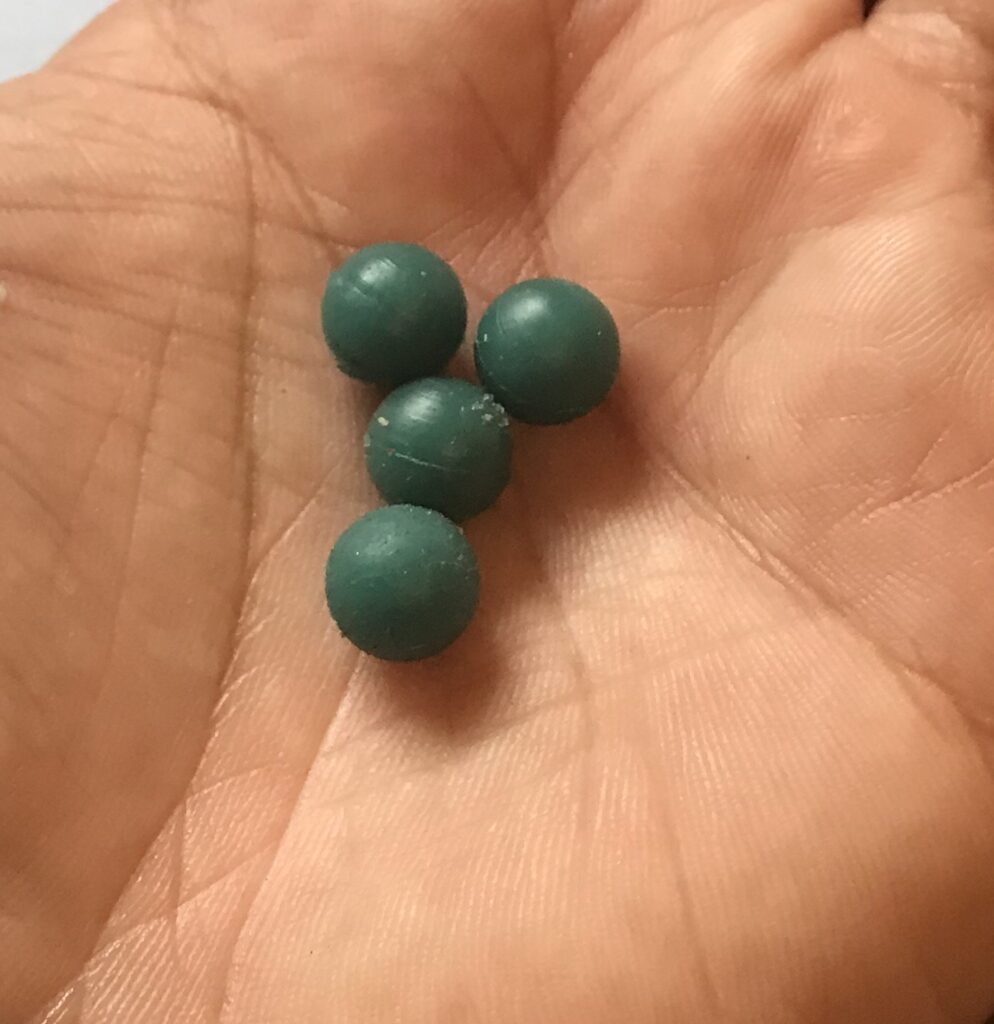
The peas that are available to purchase are typically rubber, silicone or other similar material.
I’ve made my own in the past out of urethane. The picture to the right are some of the peas that I made.
You can read a little bit about making them on this blog post.
The standard pea for a long time was the School For Scoundrels Perfect Pea. These are come in sets of 7 peas, five are the softer working peas and you get two peas that are hard plastic that can be examined.
Another great pea is Rolando Medina’s RM Peas. These aren’t perfectly round like most peas for the shell game, so they resemble a real dried pea.
The School For Scoundrel’s Perfect Pea has been my working set for years. I’m starting to use some of the really squishy peas. I was first introduced to the very squishy peas from the ones made by Michael Stehle. Currently, Leo Smetsers makes a set of soft peas, and so does John Carlson, who sells his Fika Peas on eBay in a variety of colors and sizes (pictured below).
I’m really liking the Carlson’s Fika Peas!
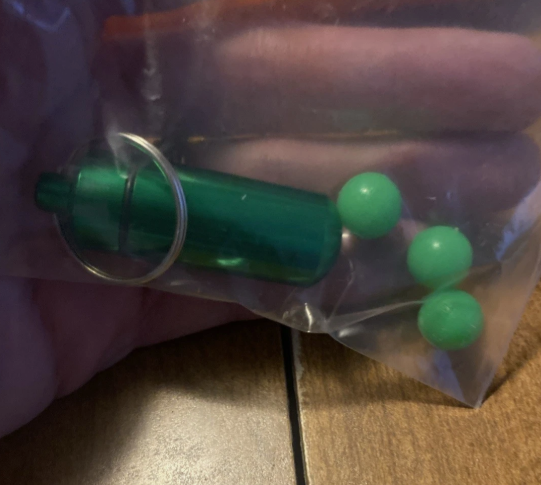
There are a lot of other peas, for example, some are foam that are coated in something to make them appear more solid, or ones with magnets in them. The ones mentioned above are currently available to purchase as just the peas, and not as a set with the shells.
The Shell for the Three Shell Game
There are many types of shells used for the three shell game. I’m using the term shell to just mean cover, not specifically a walnut shell.
To me, there are essentially three types of shells:
Nuts: This would be a walnut, or some sort of nut. There are two type of nuts: natural which are real nuts that are hollowed out and artificial which are usually a resin of some sort made in a mold.
Bowls: These are bowl-shaped, and typically metal.
Novelty: These are shell game sets that are themed, like little hats, or scarabs.
Below is an example of each:
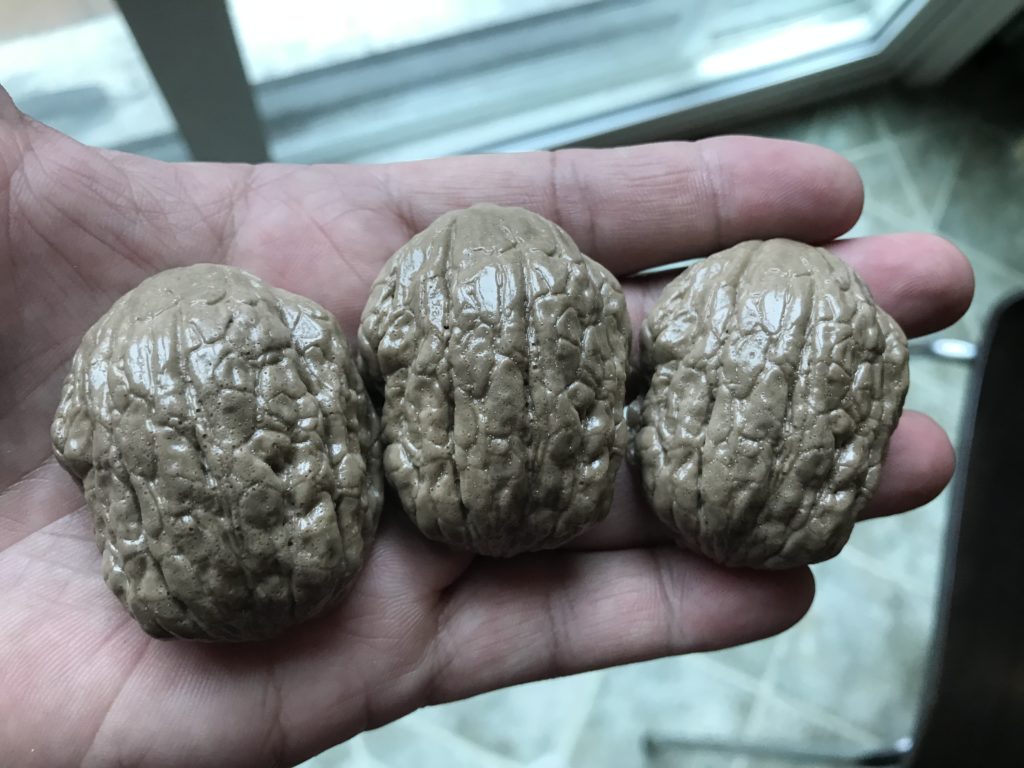
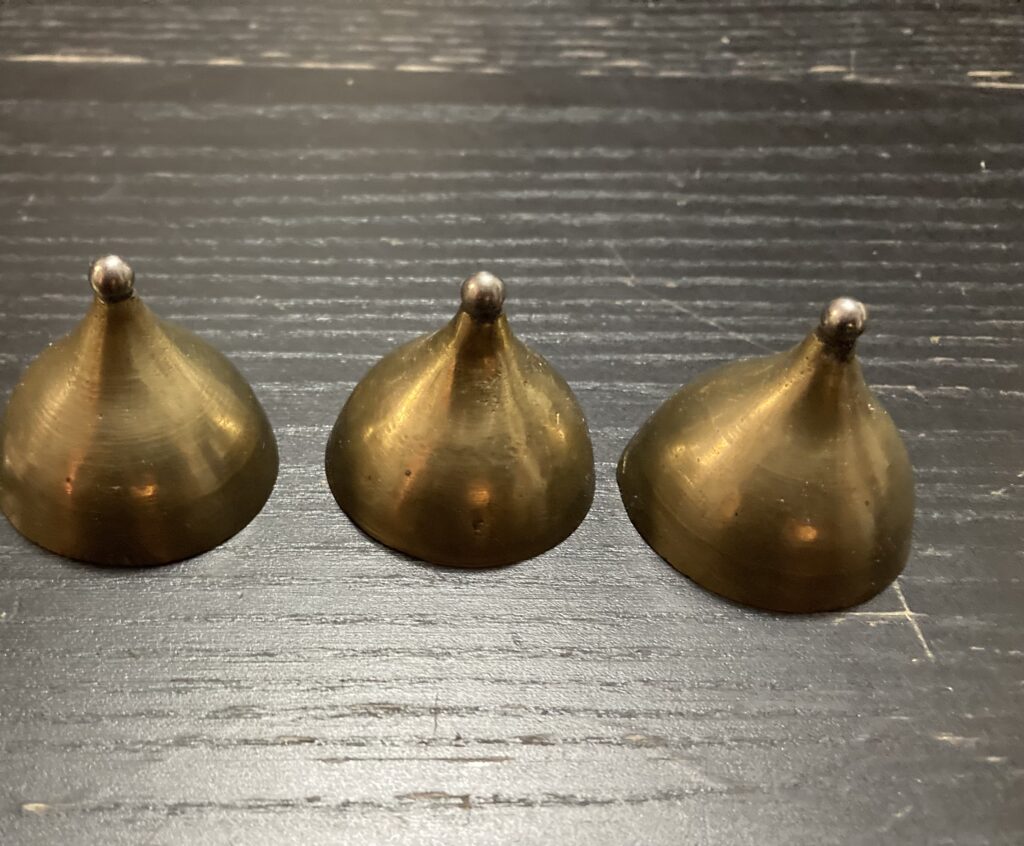
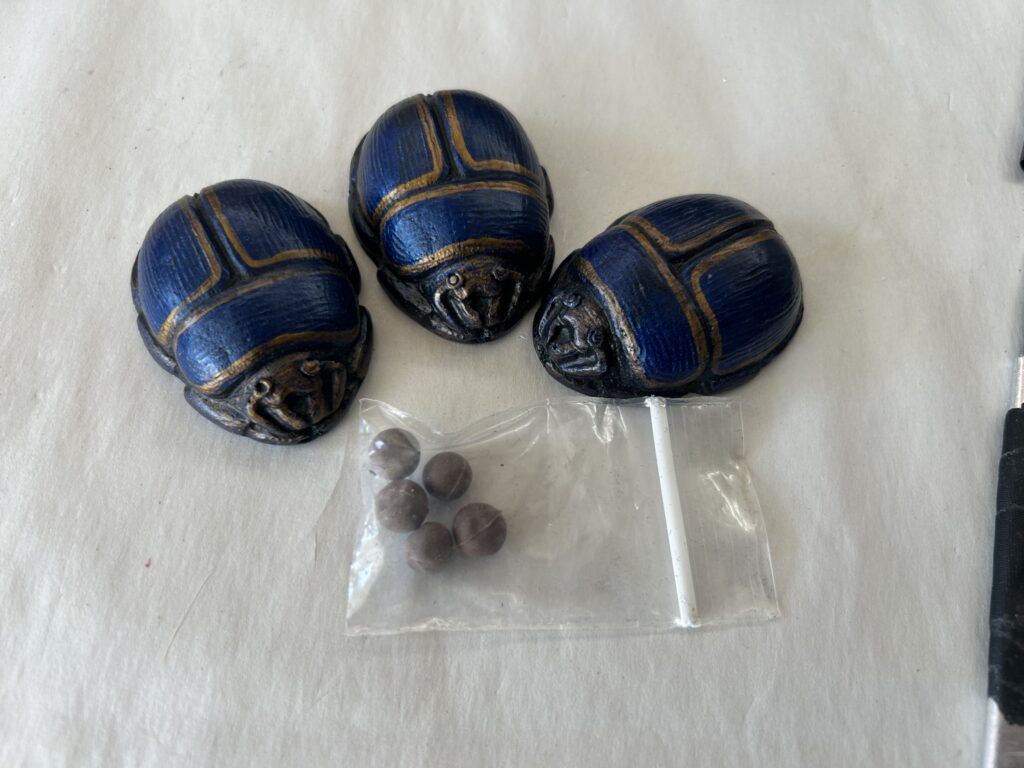
There’s really no advantage of one type of shell game set, it comes down to visually what you want it to look like. In my routine, I want it to look like the classic game and when people see the three shells or bowls and a little ball on the table, they know what’s going on. If someone sees three tiny construction worker helmets and a ball, it’s less clear.
I collect nut and bowl three shell game sets, and here’s a picture of my collection that Doug Conn took:
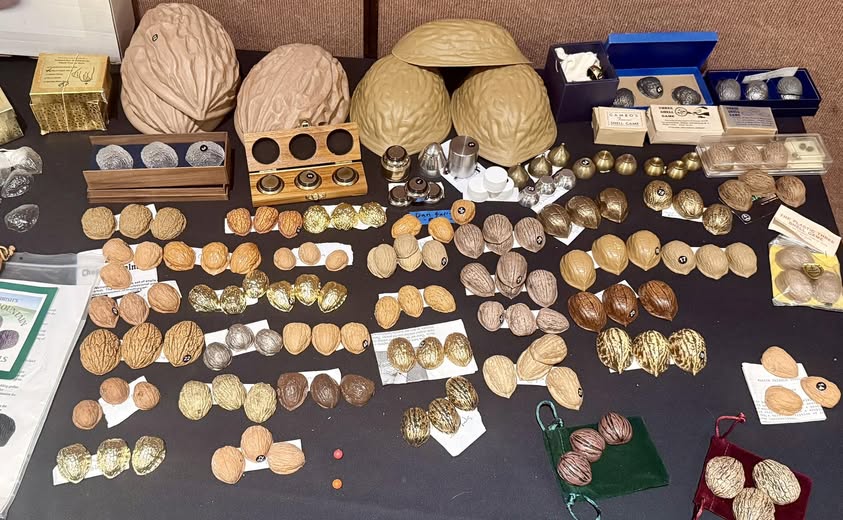
When choosing a shell game set, there are several things to consider.
1: The size of the shell, for example, the School For Scoundrels Street Shells is a very common set. Personally, I think they’re too small for me, and I favor a larger shell like the La Maggiore shells for a nut shell.
2: The shape of the shell can make a difference. I find that I prefer a bowl shape for how I grip the shells and the moves that I do. When I’m doing roving magic and working out of my pockets, I use Leo Smetsers Three Shell game. What I like about this set is that it has a case that I can use as an additional cover and it keeps everything together in my pocket.
For shows where I’m not working out of my pockets, but bring a small case with me, I recently started using John Carlson’s Conquistador Shells. These look like a nut shell, but have a shape that’s more like a bowl.
Here’s a quick review of the Conquistador Shells and the Fika Pea:
3: The weight of the shell makes a difference. Jack Chanin used to fill his shells with some sort of plaster-like substance to give them extra weight. I like a shell with a bit of weight to it. For me, shells like the Vernet Shells are too light. This is really a personal preference thing and the moves you will do guide you to what weight works best for you.
4: What extras does the shell have? I use plain ol’ shells without any bells and whistles. There are shells that rock back and forth (Chanin Dip) or have a small notch, which makes stealing the pea easier. There are shells with magnets in them that can grab a pea that also has a magnet in it, or things like Bottom Ridge Shells, which can hide the pea without a magnet. Those are a few examples of “gimmicks” for the three shell game.
At the end of the day, you gotta play around with different shell game sets to find what you like. The best for one person may not be the best for you. This is where going to your local magic shop or magic club is handy; they’re a great way to actually handle shell game sets.
Want To Learn The Three Shell Game?
The first step is getting a set of shells and pea. The next step is learning the maneuvers. Many sets come with basic instructions, and then there are some DVD’s and streaming video. For some basics check out this video:
https://vimeo.com/1210279913 you’ll need the password: thimblerig
Hope this helps you get started on your journey to doing the three shell game, it’s a lot of fun to do!
-Louie
P.S. If you’re looking for a simple starter three shell game set, I make a set that’s 3D printed, comes with a School For Scoundrels Perfect Pea and an link to basic video instructions.