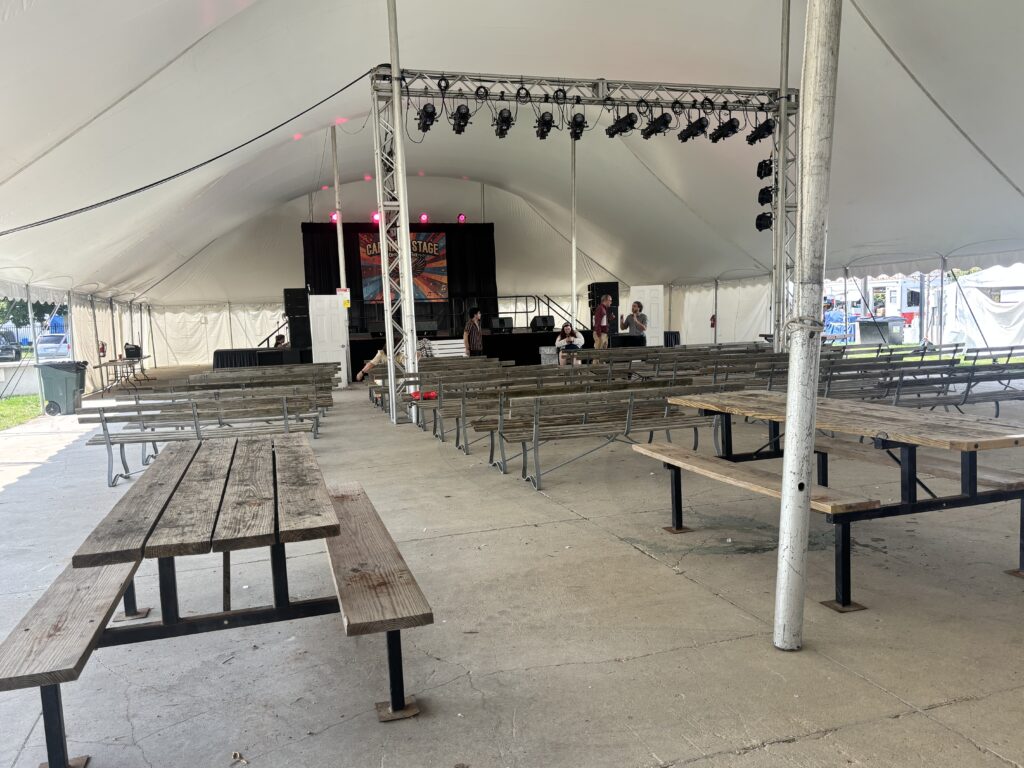
There was an act at a fair that I performed at last summer that couldn’t pull a crowd. Like zero people, aside from someone in the act’s parent. I’m not going to talk bad about the act, because that’s not what this post is about. This post is about what works and doesn’t work at a fair or show with a transient audience.
Let’s start with some basic info about what they did. They were a long form theater show that normally tours middle and high schools with an anti-cyberbullying message.
In theory, that sounds fine until you get to the reality of it at the fair.
A 45 minute show is really long for a fair, and since people will stumble upon your show, if they can’t figure out what’s happening within a minute or two, they won’t stay. A long form show like this will have a hard time building from its initial crowd. A show full of shorter things works better. A magic show built on routines works better, as the late arriving group can quickly get up to speed with what is happening.
The content of their show is kinda rough for a fair. You go to the fair to pet cows or ride the rides, not to learn about cyberbullying. Ask any family at the fair if they want to see a baby pig or to watch a 45 minute show about cyberbullying; I’m going to guess that 99% will say they want to see the baby pig.
Then they made a few choices that were interesting. They did the show on the floor, not the stage. The height of the stage gives you importance and unless you have an audience there, it doesn’t really look like a show is going on if you’re walking by.
Then they didn’t use microphones. I have a little inside information, but basically they didn’t “advance” their show and let the sound company know what they needed, so the sound company didn’t have them. This is an important part of performing at fairs, letting the sound company know what you need!
If you want to work fairs, look at your show and think about two things:
1: How would you engage a transient audience? 2: If you show is themed, is that what people attending a fair want to see?
With those two things in mind, you’re off to a good start!
The Crystal Cube magic trick is something that I thought didn’t look like anything that existed in real life.
It’s one of those props like Lester Lake’s Discecto, that to me look like they were created for a magic show…until you see what actual item they’re trying to look like!
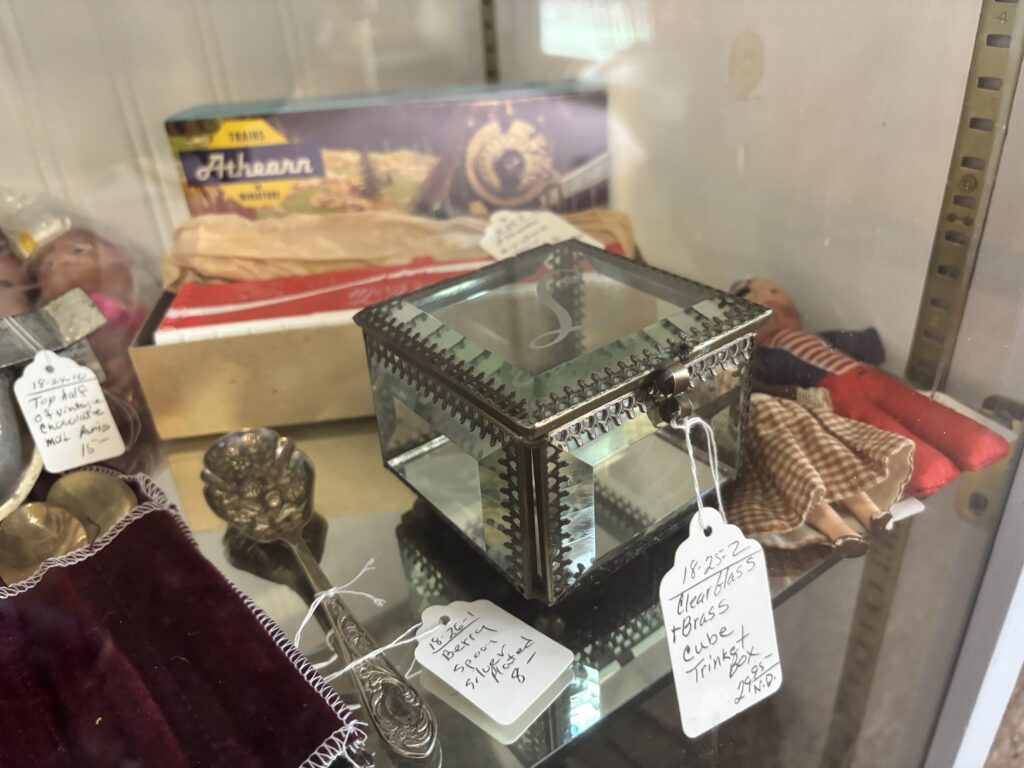
Here’s a clear trinket box that I saw at an antique mall that looks like the Crystal Cube magic prop!
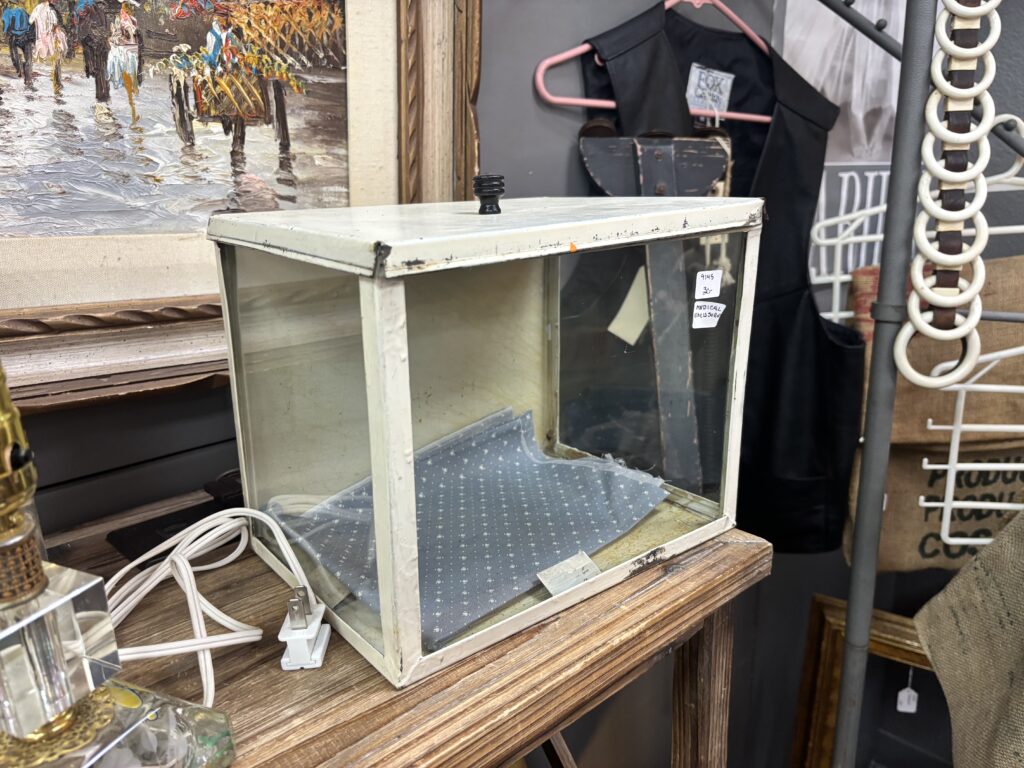
and here’s medical specimen box that looks like the crystal cube magic trick:
Sometimes these strange objects that are used in magic actually look sorta like something that existed for non-magic purposes! I love making that connection!
Personally, I dislike bureaucracy; however, sometimes you need to wade through the red tape. A recent instance of this is that, in Oregon, to work in retirement communities you are supposed to have completed a diversity training that is required by the state. Honestly, I’m all for inclusion and treating people nicely, but do I NEED to have sat through this online class?
Probably not, but I guess there were probably some people at some point who did. When you perform for the public, you need to treat people with respect, especially when performing for seniors. It doesn’t matter if their values aren’t what your values are, judging people isn’t why you were hired to do a magic show.
As I’m working my way through Max Mavens book Ansology, I think my favorite trick in it is called Out of Sorts. This is a trick where a spectator thinks of a card and they never say it out loud, then after a few shuffles, You then tell them what their card is and where it is in the pack.
I’m really liking this trick, it can be done hands off or with the dealing done yourself. I was trying to think of a way to do it so that it wasn’t a card trick and I came up with a way to do it with postcards. The postcards I’m using are national park postcards.
If you are familiar with the trick, you know you need pairs of cards. In the picture above, you’ll see that the postcards are kind of in pairs in columns. Once you know one, it’s pretty easy to know the other. The challenge with this specific set of postcards is that the writing isn’t very big. I think if this is something I was going to pursue, I’d find something with a larger print of the name of the place.
Using these postcards the method doesn’t change. If you have the book, I recommend looking into the trick out of sorts, even with playing cards it’s still great!
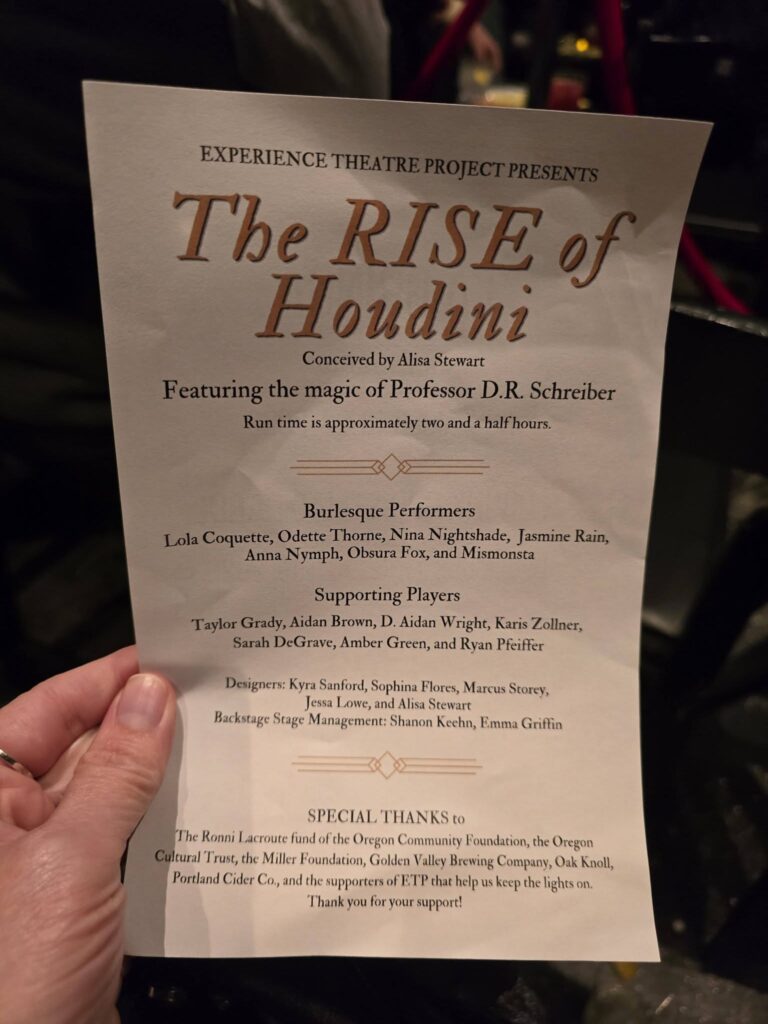
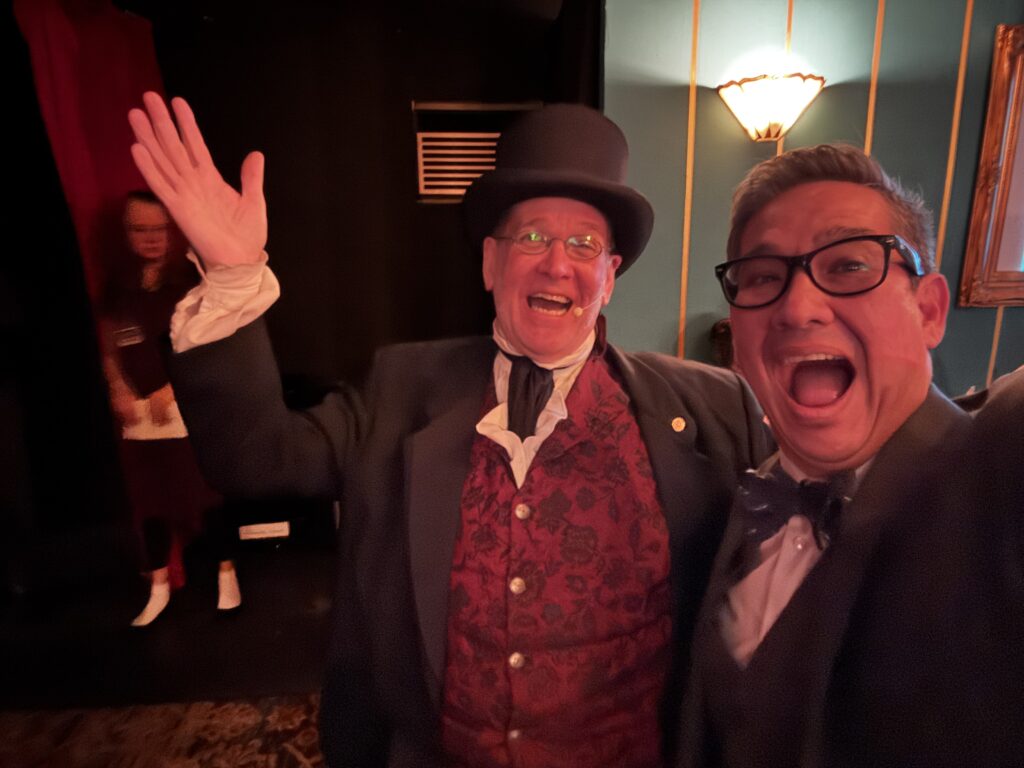
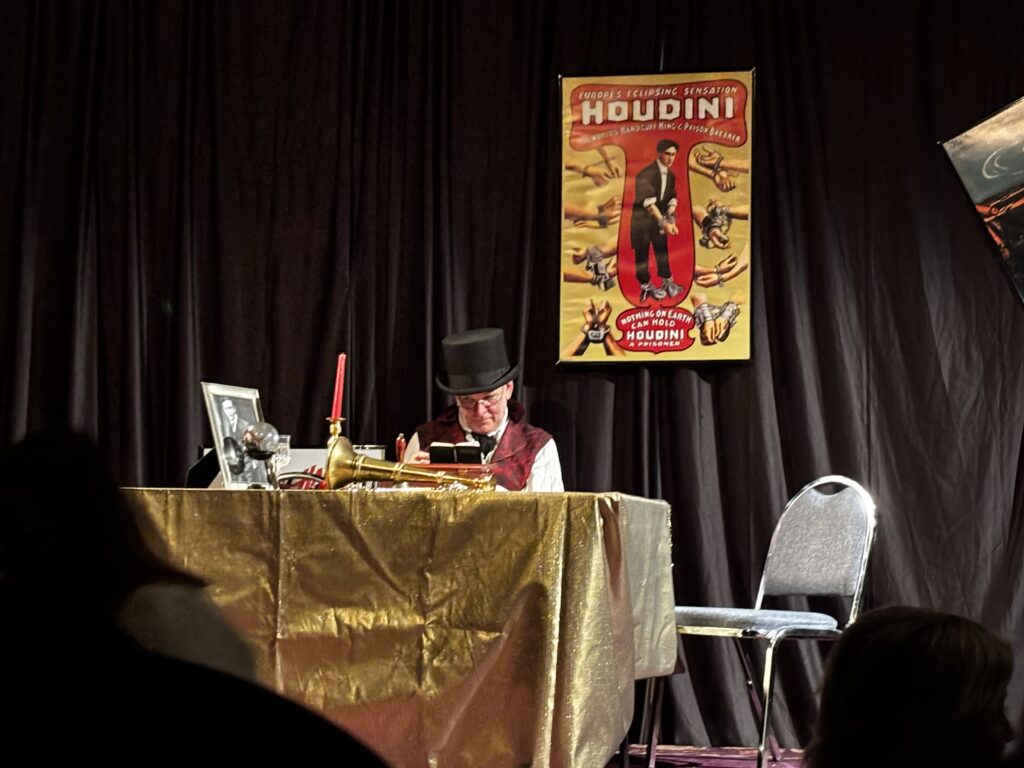
On Friday, my wife and I went to see the show The Rise of Houdini in Portland, Oregon. This show was part burlesque, part magic show, and part scripted show about a séance. The magician in the show was D.R. Schrieber.
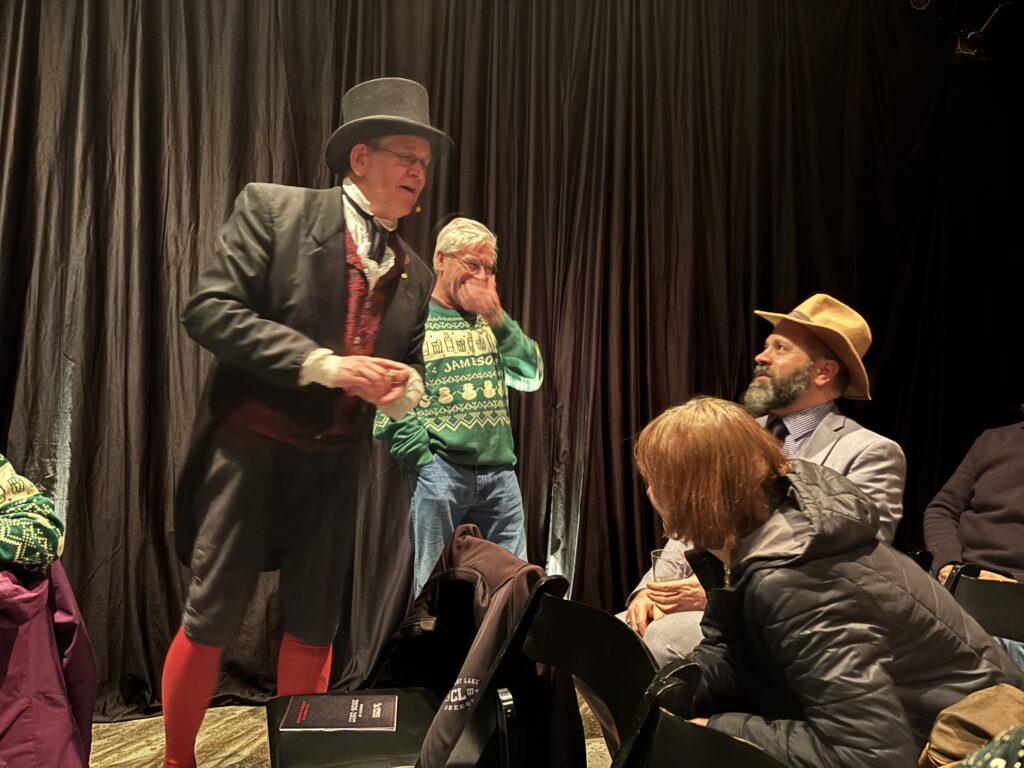
Before the show D.R. did some close up magic for the crowd.
The magic show was good. D.R. does a great job with his character, and the audience was into it. The third act, which was the play about a séance trying to contact Houdini, was interesting. There was a fake heckler, which I think surprised a lot of the audience, that he was part of the show.
There was a point where there was an intermission during the play, but D.R. was on stage as his character in this play, and he was reading a book. That book was used previously as a book of magic spells. From the audience, the book looked really familiar to me. I asked after the show, and it was, in fact, the pocket edition of Expert at the Card Table!
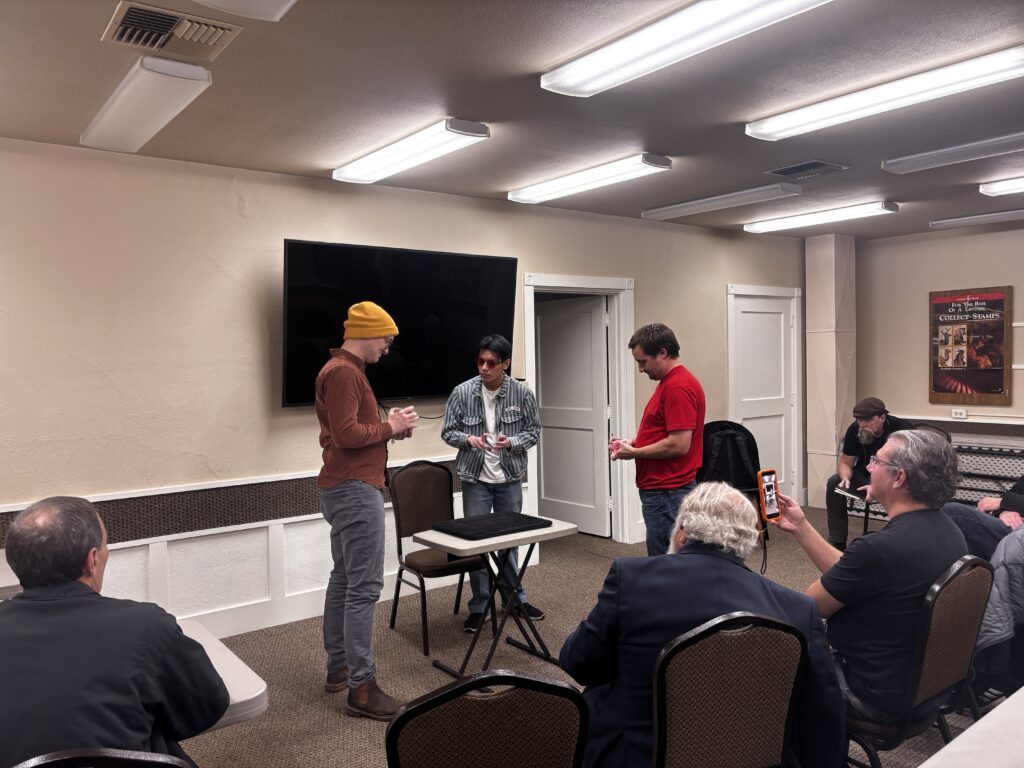
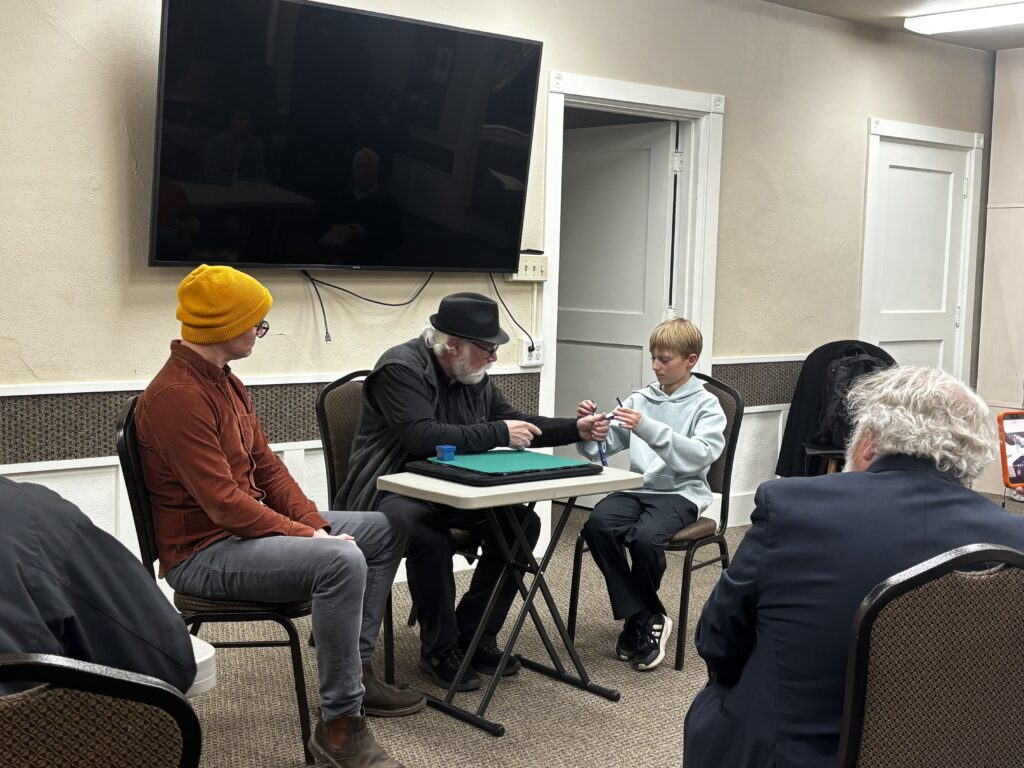
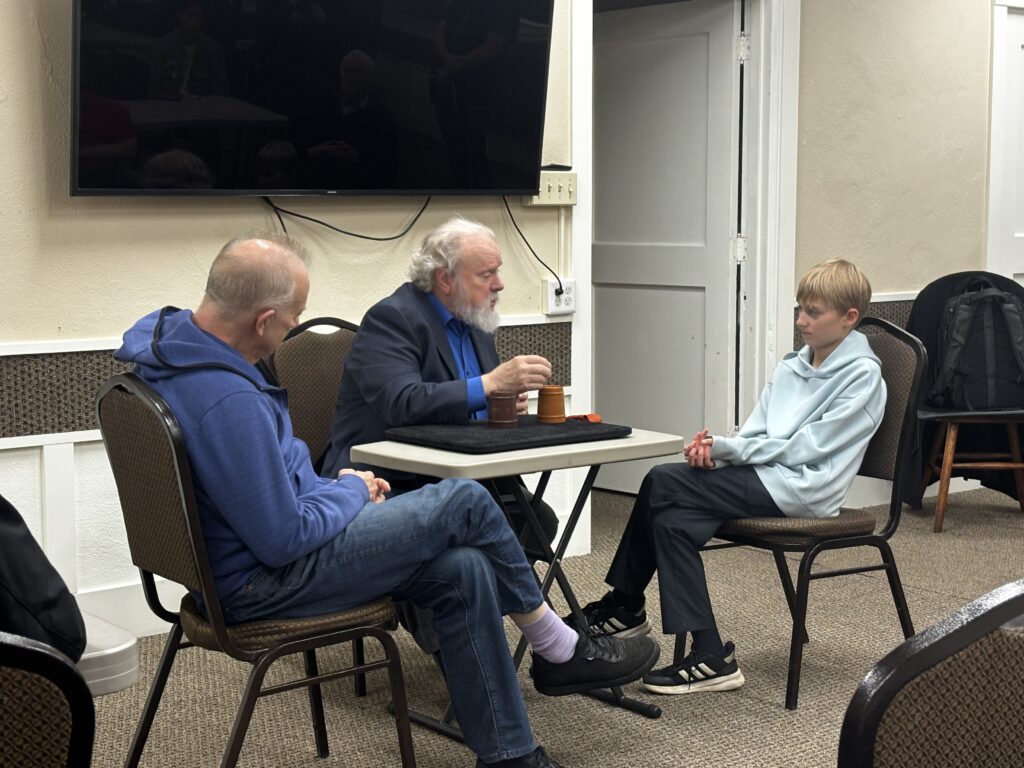
With my hand out of commission due to surgery, I’m trying not to let it slow me down too much. On Wednesday night, I went to the Portland Society of American Magicians magic club meeting. It was a lot of fun and I saw a lot of great and fun magic.
That night was the Close Up Magic contest, and congratulations to Mel, who was the winner. Mel did a really cool coin box routine that he said he had been doing since about 1980! What I really liked about this coin box routine was that it wasn’t your standard Okito box routine.
I also tried out a routine I’m playing with. This is the second time I’ve done it, and it’s coming along nicely. This is a routine that I’m working on that only uses one hand, which is another attempt by me to find the silver lining of not being able to use a hand for two to six weeks. I’ll write more about this routine another time.
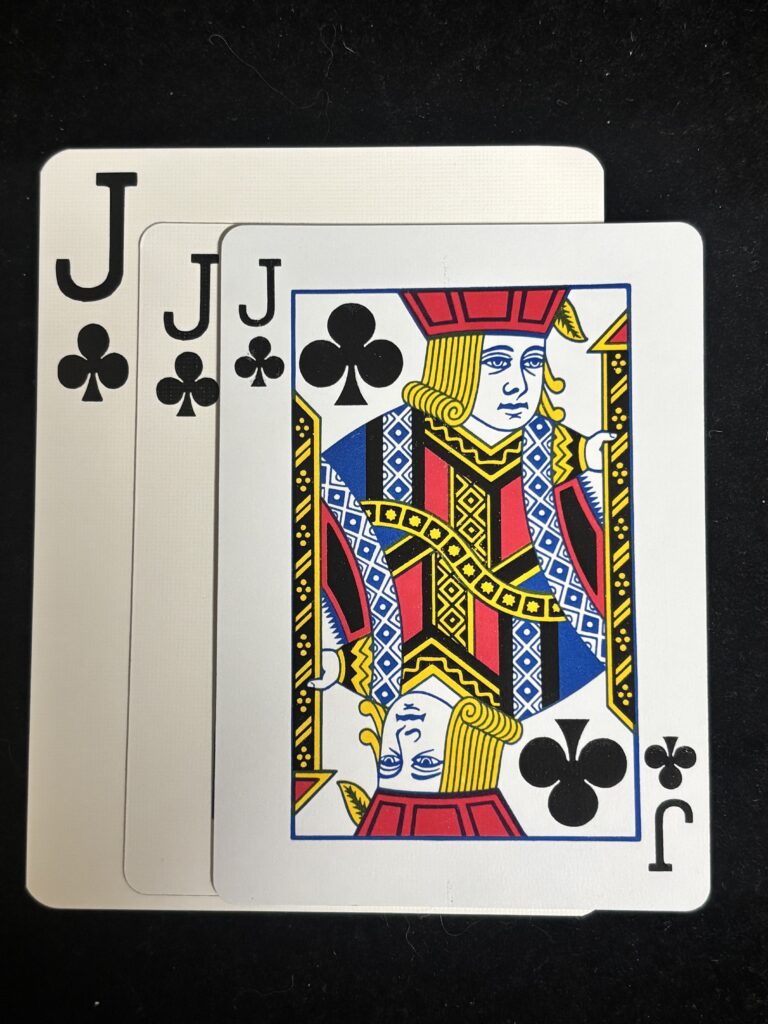
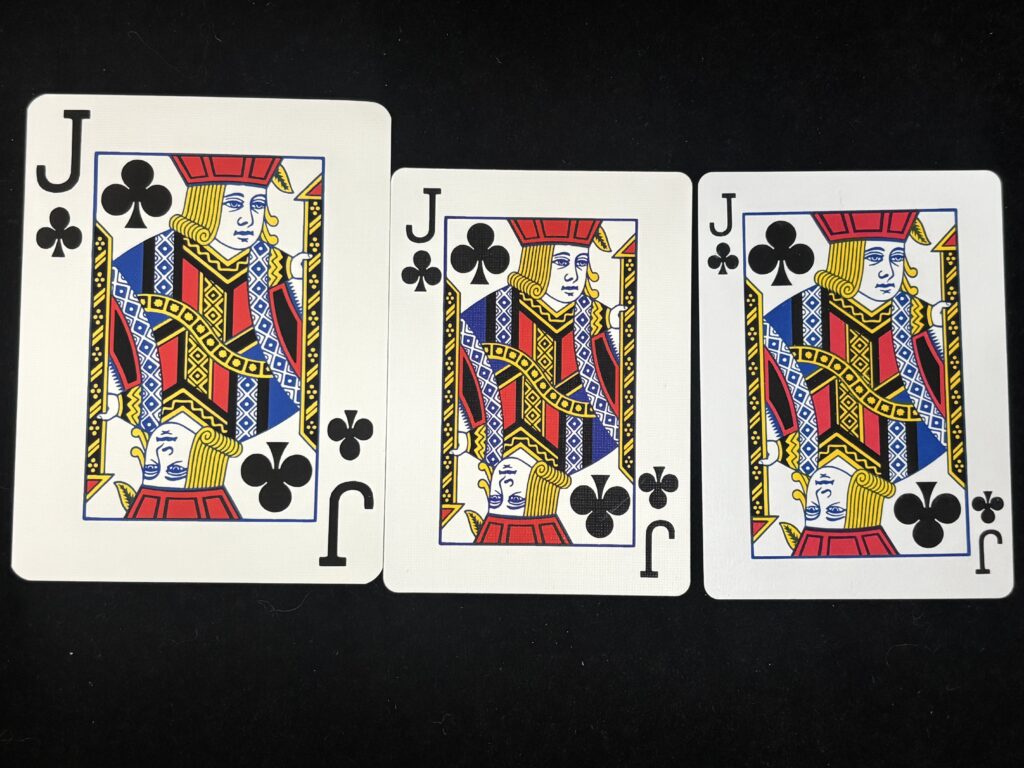
This is going to be an angry old man post. If you’re doing card tricks onstage and the audience needs to be able to tell what a specific card is, DON’T use normal poker-size cards. I can’t clearly see them from the third row.
There are options to make things play further back into the audience. Card-Shark makes two great options. Number one are large index cards, those have indexes that are a little bit bigger than standard cards. The best option to still keep the feel of a normal card trick, without going to jumbo cards are the Phoenix Parlour sized cards. These have larger indexes and are physically larger than poker sized cards.
Here’s a picture of the different card’s indexes:
And here they are lined up:
You can do *most* sleight of hand moves with the Parlour sized cards. I’ve done my card to pocket routine with them and that involves palming a card!
Today I’m heading into surgery to get my trigger finger hopefully fixed. It’s been a chronic problem for a couple of years, and we’ve tried everything else to fix or manage it, but nothing worked, so it’s time for surgery.
It’s been challenging, basically losing the use of my middle finger on my right (dominant) hand. I’ve had to learn to classic palm a coin, using my ring finger to move a coin from the fingertips into palm position.
After today, I have about a two week recovery period.