Snappy Flappy Card Transposition!

In my virtual shows I started doing a card change with a flap card. I was isolating the card in a glass, then shaking the glass and the card changes to another card. I really like this, as it makes the change really impossible. The method is simple, it uses a flap card and the card it sitting at an angle. The weight of the card keeps the flap from flipping. Then simply shaking the glass allows the flap to flip for the change.

The other night I was watching a hockey game and playing around with using the flap card in the glass as a card transposition. Here’s what I came up with:

Here’s what the trick needs: It needs some scripting to call attention to just one of the cards. Mention that that jack of diamonds is in the glass, so that when it’s appears in your hand, they know something has happened. I think if you mention both cards, it gets confusing.

-Louie
Double Action Pull – Take Two

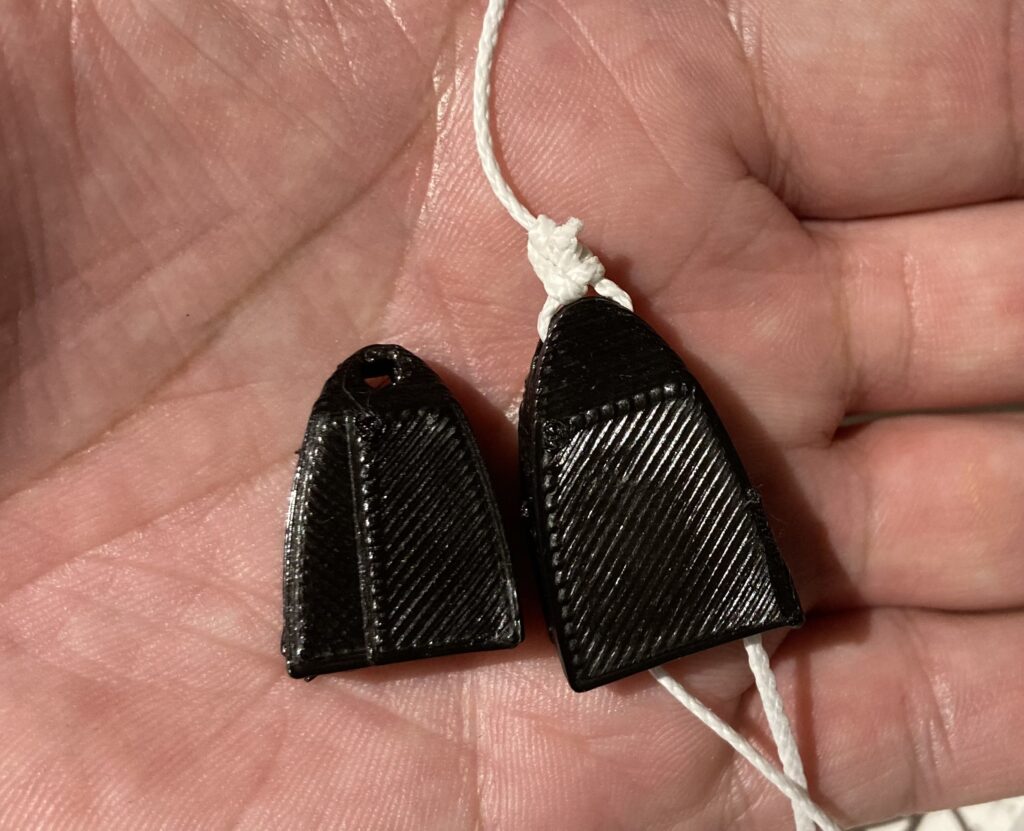
I redesigned the pulley for the double action vanishing birdcage pull that I made yesterday. The main difference is that it’s slightly larger and the hole on the non pulley side has been moved 90 degrees.

Here’s a side by side comparison with the one that I made yesterday. The old one is on the left and the new design is on the right with the strings on it.

double action birdcage pull

I foreseeing possibly making it wider with the ends flaring out, so that it doesn’t roll inside the jacket and twist the line. We’ll see if that actually ends up being a problem, or if tension alone will straighten out or keep the lines straight. I’ll play with it a bit and see what happens.

If you’re curious about this style of pull, I think I first read about it in Jim Steinmeyer‘s book The Magic of Alan Wakeling. In that book it’s used to vanish a fan, however I think using a pulley on a wrist to wrist pull is much older than Wakeling using it.

-Louie

Double Action Pull…

For some reason I’ve been thinking of the “double action” birdcage pull lately. I’ve used one a long time ago, and never really felt it contributed much to the vanish. Essentially what a double action pull does is give you more pulling power with less motion. It converts your motion 2 to 1, so you move one inch and the line moves two inches! It’s a great way to reduce arm motion for the vanishing birdcage, but adds complexity to the setup. Every bit of complexity you add, it’s another thing that can potentially go wrong. This may be the issue I have with it, the gain of having reduced motion isn’t worth the risk.

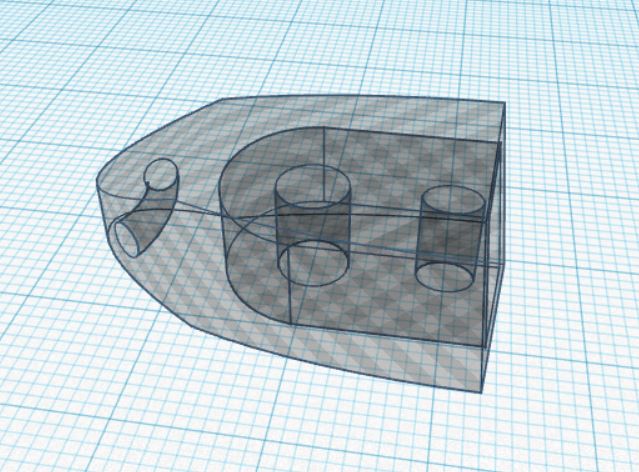
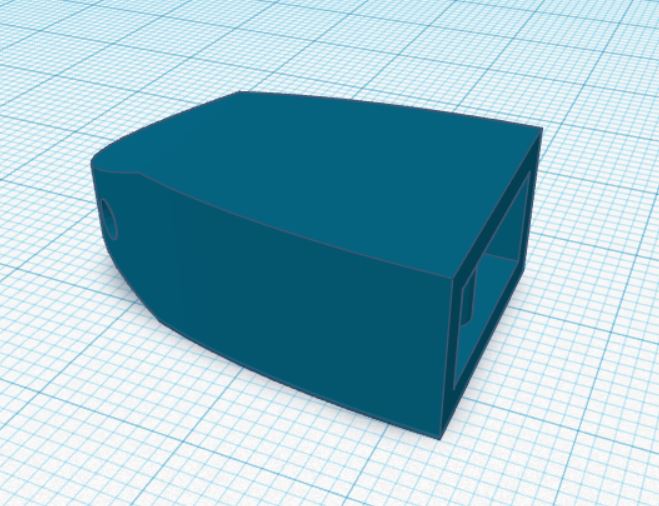
I haven’t used one in 15+years. Tonight I decided to make one, so I designed this one to be 3d printed:

double action birdcage pull

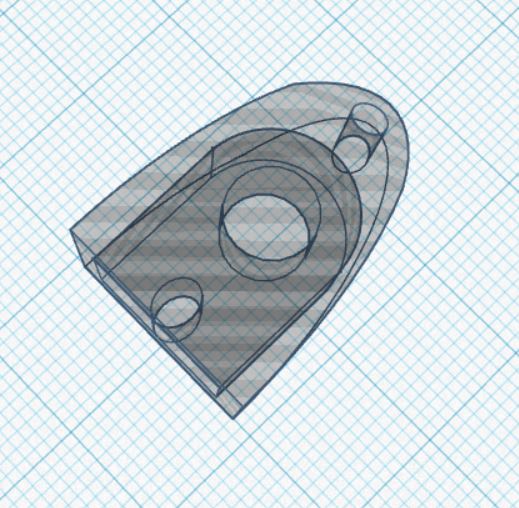
Here’s what the insides look like:

double action birdcage pull

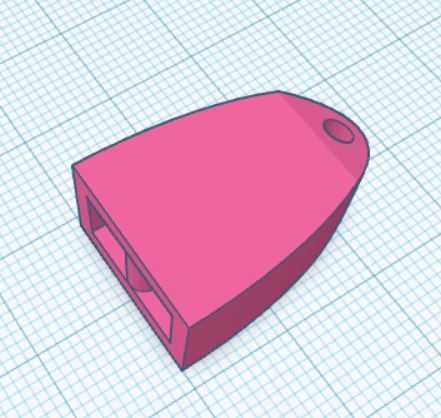
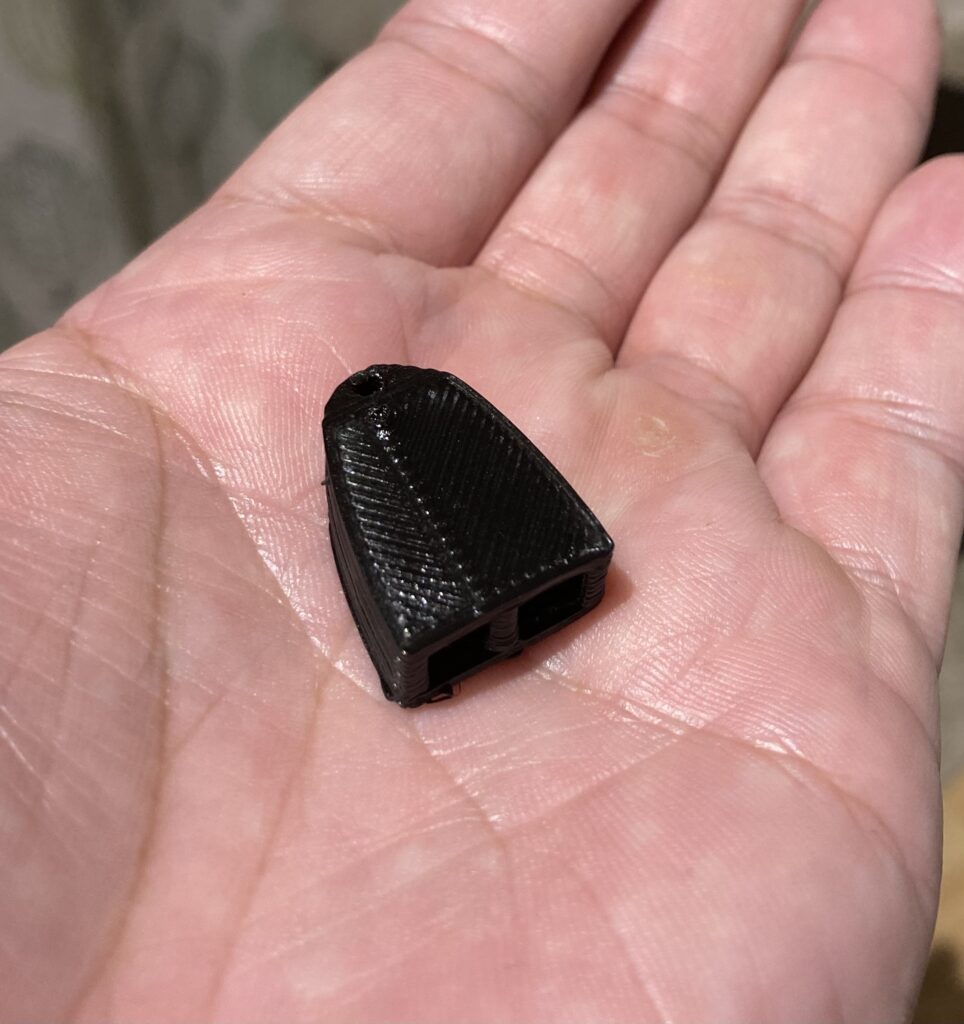
There’s not really too much to it, it was a simple design and a quick print. Here’s the printed version:

There are a couple of things I want to change after printing the first one. The big change is that I want it just a little bit larger, so that I can fit a bearing inside for the pulley.

I’ll do a new design later today and hopefully I’ll nail it the second time!

-Louie
Click here to learn more about the vanishing birdcage!

Covering the Spot…

One thing that I’m always looking for a games (legit or not) that I can play with people when I’m doing roving magic. For longer gigs, or events when it’s slow when I’m scheduled to rove, being able play a game is a great way to create energy beyond my roving magic set.

Cover the Spot carnival game

Recently I picked up Cover The Spot by Ian Kendall. This is the classic carnival game of the same name. The nice thing about this version over the traditional carnival game is that it’s simply 6 disks and not a large board with 5 disks. It’s portability is a huge plus for me!

The instructions are clear and Ian gives strategies for for different scenarios that may come up. This isn’t a “self working” thing, it will take some work to learn to do it correctly and consistently, but that’s a good thing. If it was easy to do, it’d be easy for your audience to do. Don’t misinterpret what I mean by it not being easy to do, it’s easy to do…once you practice a little bit. It’s not hard to do.

Unfortunately it’ll be a couple of weeks before I can get to try it for an audience, but I’m excited for when I get to try!

Committing to the Cage…

When I was driving home from Abbott’s Magic Get Together, I stopped and visited a magician in Minnesota to talk about the vanishing birdcage. He was thinking of adding it to his show.

His fear was the cage hanging up on his sleeve. The thing with the cage vanish is that people think it’s easy, until they start to work with it and then realize how hard of a trick it is to do. The first thing you do is try to eliminate anything that will snag on your sleeve. The second thing you do is use proper technique for the vanish. That’s putting a lot of tension on the pull and making the “hand tunnel” correctly.

Here’s me vanishing the cage at the fair yesterday:

Once you’ve gotten the snags removed and the technique down, the last thing you have to do is commit to the vanish. When you make the cage disappear you don’t do it timidly, you vanish it like it’s going to go up your sleeve. Committing to the vanish is where I think a lot of people have trouble. They’re worried about it not going up the sleeve, so the don’t pull as hard as they should.

Eye-Balling the Problem…

In my show I do a joke about a kid losing a glass eye during the show. I thought it would be funny to add a visual gag to the verbal joke. The gag works for when you’re doing a multi show type of gig, but it doesn’t work for single show. I ordered a glass eye, and now I have one in my prop case!

The gag works, and I’m glad I spent the $25 on a glass eye, however the gag can be better. Most people don’t know that a glass eye is basically flat, it’s just the front 1/4 of the eye. People think it’s a whole globe that would be a sphere. I think if I managed to find a good looking sphere, the gag would play better.

I guess there’s only one way to find out…track down a round glass eye!

-Louie

Briefcase Magic Show…

One of my least favorite tropes in magic ads is “packs flat and plays big“. I don’t like it because you should be selecting material that is right for your show, not right for the size of a case that fits under the seat of an airplane. I had a saying, “fits my artistic vision and packs as small as it can“. Some props are simply large and there’s no realistic way to make them any smaller. If that big prop is part of your art, then lug it around.

In the past, for a specific gig I needed a “briefcase magic show” that I could carry onto an airplane and when I got to the gig all I had to do was open the case and it was good to go. It worked for that gig, and I used it for a few more gigs. What I didn’t like was a lot of the material was selected for its size and lack of set up at the show. I wasn’t picking tricks because they were best for the show, but best for the travel and set up.

One of the things I want to work on right now is making a briefcase magic show that can live in the trunk of my car and has minimal set up when I arrive at the gig. I’m going to start the show length at 30 mins and hopefully work it up to 45 mins. The goal is for the show to have some texture. Most of the pack flat, play big shows I’ve seen lack texture. Most of the props are flat cards, and the show (to me) feels flat.

The other goal for the show would be something that could play in a black box theater, so up to about 100 people, and could be done with just a handheld microphone. That would allow me to not have to bring audio and spend time setting it up. I’m hoping for a 5 min set up and 5 min take down.

Quick set up, that plays big, that’s the goal.

-Louie
Click here to learn more about building your own magic props!

Hanging Out…

Whenever I’m out doing shows, I always try to spend time any magicians that are in the audience. Sometimes I don’t know who is a magician, so I apologize in advance if I don’t hang after the show.

I am still very passionate about magic and really enjoy watching and learning it. If you come out to one of my shows and be sure to mention you are a magician. Sometimes I don’t have time to hang after the show…but if I am available, I always love to jam for a little bit!

Dr. Strange Magic Show…

Last week I was at Disneyland and went over to the California Adventure park to see the Dr. Strange show. Essentially this was a 12 minute magic show. The magic trick were essentially used as “live special effects”, and not as magic tricks. I don’t think there’s anything wrong with doing them this way, it’s just a different mindset.

There were basically four tricks: Devils Hank, Ring to Flower, Zombie, and an Appearing Pole. This show was a great example of a themed magic show. Every trick was used with a purpose to further along the story. The Zombie was well motivated, but went way longer than it should have gone.

Here’s video I found online of the full show:

This show is also a good example of why when I do themed shows my role is more of a lecturer than a character that’s presenting a show. Performing as someone other than me doesn’t really interest me, and I’m not a good enough actor to do that.