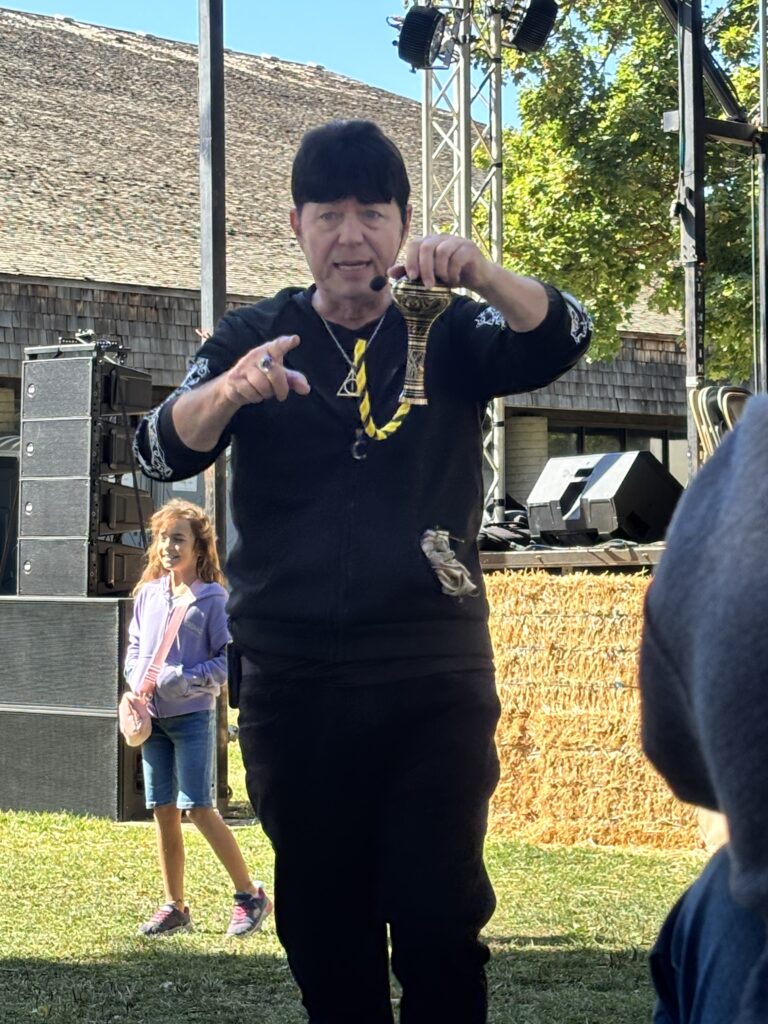
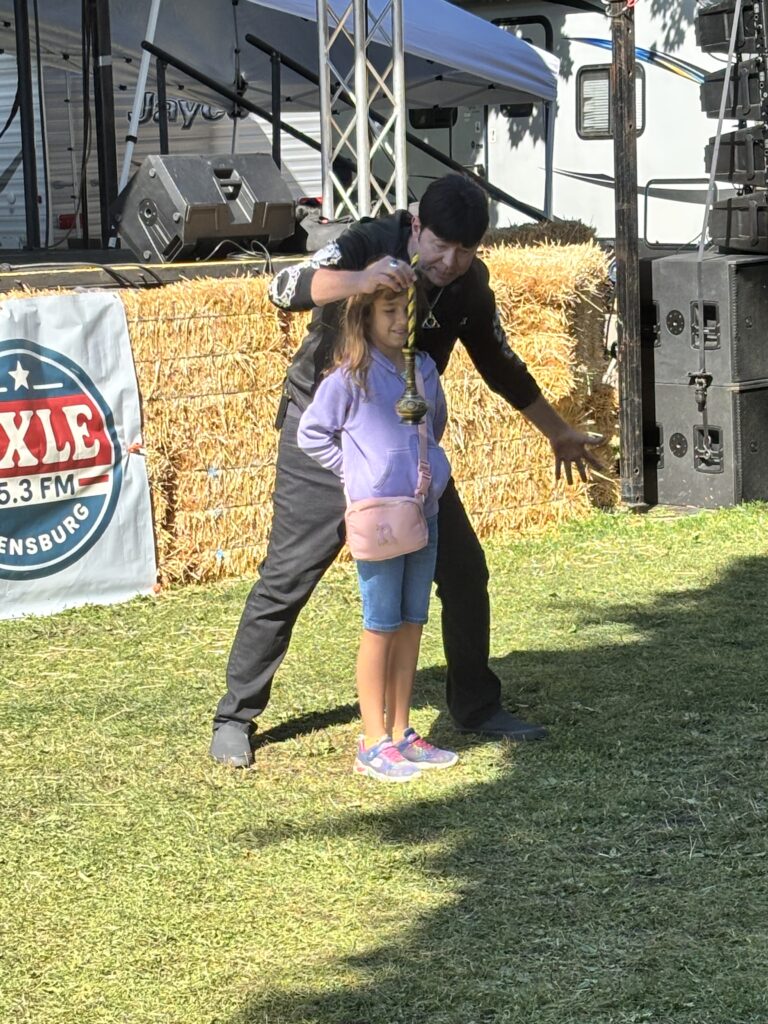
When I see a magician perform an old trick and really wow an audience, it really makes me happy. By old trick, I don’t mean an overdone trick, but a trick everyone has had, but no one actually does. Recently, I worked with Michael Mesmer and in his early show he does the Prayer Vase magic trick.
This is a trick most magicians had when they were kids and haven’t thought about since. Michael has a great routine with it, and it really connects with an audience!
Sometimes the easiest way to create something that feels new is to look to the past!
I think magicians try to overcomplicate things with the card magic they do. You can get amazing reactions with a couple of very simple things. Here’s a quick three beat trick that gets great reactions:
There’s not much to it: two forces, a top change, and then a double lift. I don’t do a double turnover. The reason for that is that most people who have had a passing interest in magic tricks learn a double turnover in the context of either an ambitious card or simply changing the card. When I do this sequence, it looks nothing like what they’d learned in a YouTube tutorial. While I’m using techniques that they may know, they don’t look like what they’d learned.
This is a good lesson: if you keep getting busted doing something like a double turnover, either find a way to eliminate it or make it look different.
-Louie PS: If you want to learn about my thoughts on the classic force, it’s in my 2025 PCAM lecture notes.
A little over a decade ago, I released my Snake Wand Surprise. If you don’t know what it is, it’s a comedy magic wand that has a big surprise ending! Here’s what the routine looks like:
After over a dozen years of using it in my shows, there’s really not much about it that I didn’t like. The main thing I didn’t like was how bulky it was. I try to be a one trip from the car to load in and one trip to load out. The larger wand didn’t fit into a case, and it was awkward to move around.
Here’s a comparison between the original and the new one:
The smaller size takes up less space and will fit in more varieties of cases, but still oversized enough to get a reaction when you bring it out! The other thing that the smaller diameter wand does is reduce jams, there’s less room inside for the snakes to get stuck!
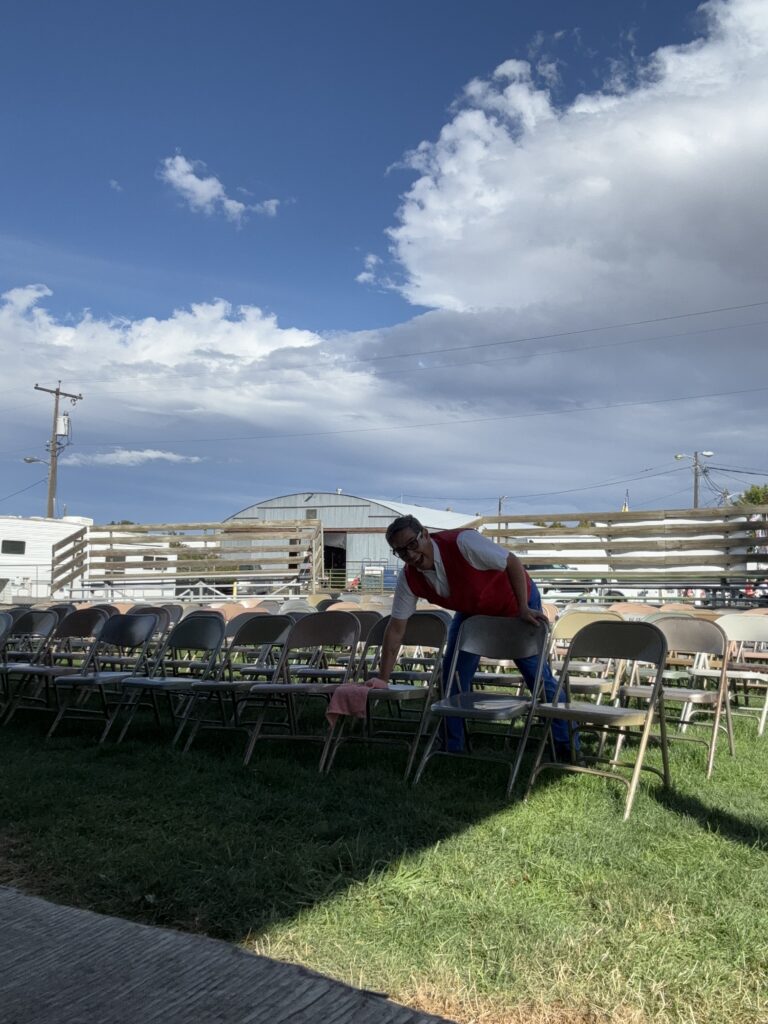
Last week, at the fair where I was performing, it rained one morning. The sun came out right before my show, so my show was going to happen. The only problem was that all of my seating was wet. No one will sit on a seat that’s wet and has a pool of water. So I tracked down a rag and wiped down the chairs!
Wiping down chairs isn’t my job, but it’s something that needed to happen for my show to happen. Sometimes doing something like wiping down chairs makes the difference between no audience and getting a big audience (which is what I had that show!).
There are times to not be helpful, sometimes there are union rules or the task could get your costume or hands stained. Wiping water off a chair wasn’t a big deal, so I did it.
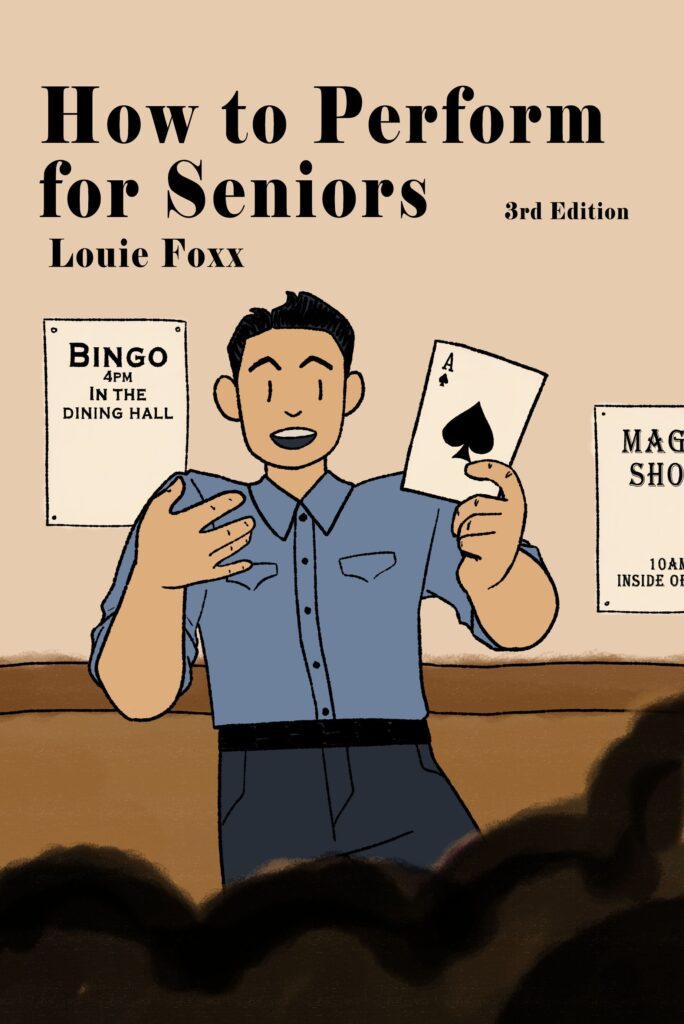
This was originally written in 2005, then updated with a second edition in 2011. When the first two editions came out, hardly any of the activity directors had work emails, and the fax machine was still commonly used!
This third edition of the How To Perform for Seniors has updated information. There’s more about contacting these facilities by email, as well as things like using video projection in your show!
The estimated ship date is October 13th, 2026. If you want to preorder the book, it’s on sale for $30 now until October 12th, or whenever the books arrive from the printer, whichever is first!
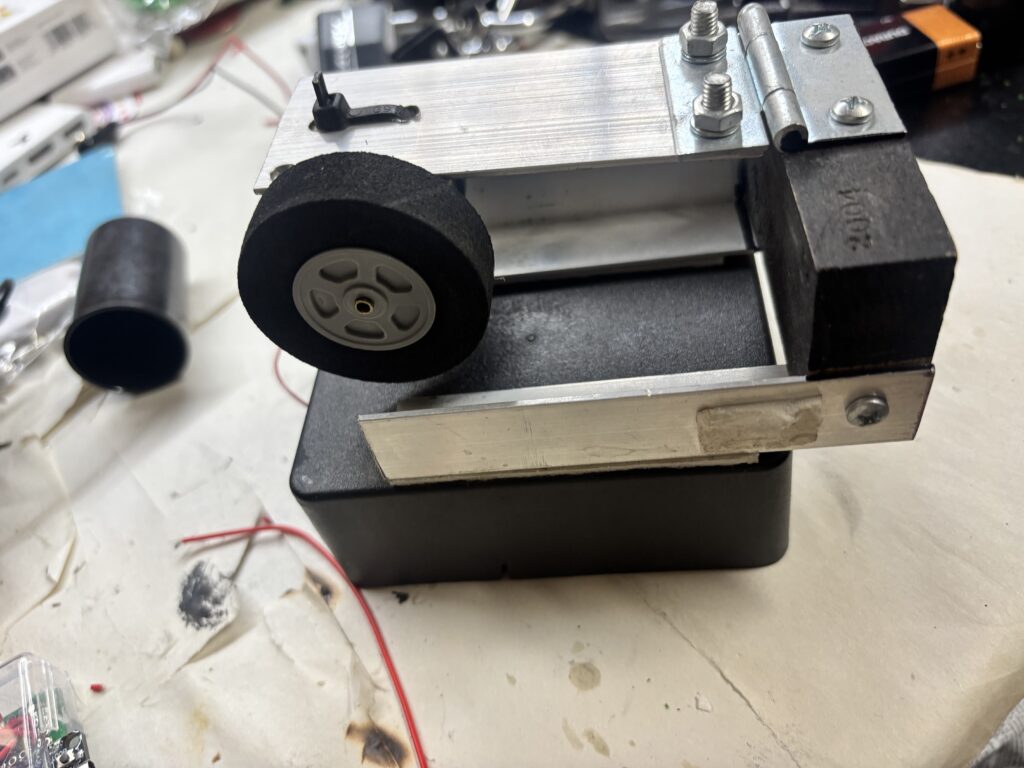
A couple of weeks ago, I picked up an old card fountain. This one was non-working without the remote control.
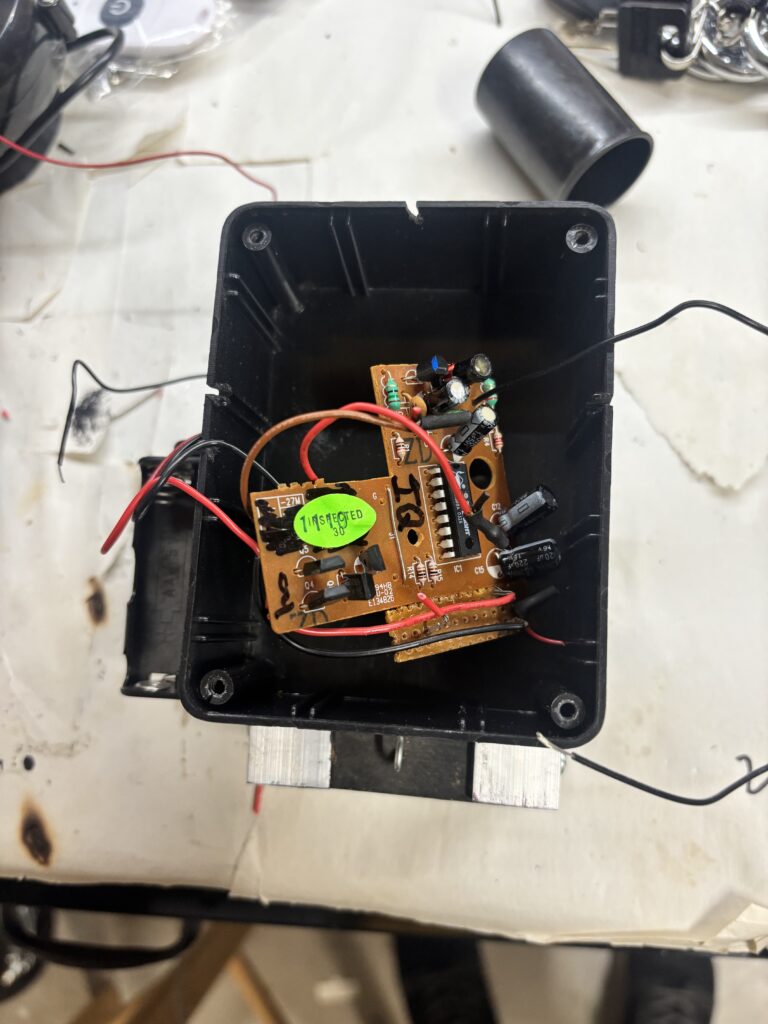
I opened it up and it had some older guts, I’m guessing from the stamp on the base of it, it’s from 2004.
My original plan was to just replace the electronics with a more modern remote control unit. Once I got it apart, I started thinking that maybe I should build it into a more complex unit, like integrating it into a snake basket or something like that.
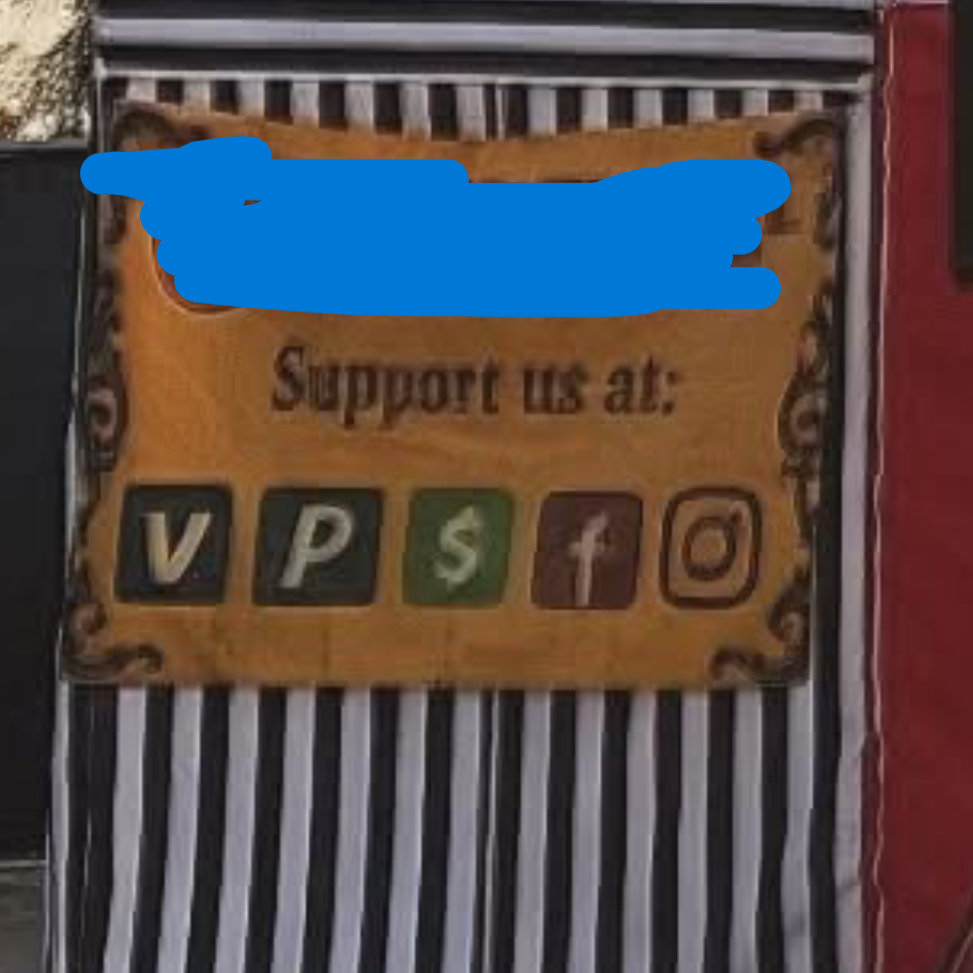
Someone who was performing with a circus posted a picture of them performing, and I noticed this banner in the background:
Let me start by saying that they were performing in a location that should be paying the circus a decent fee. There are many other circuses and sideshows working in similar spots that are paid a great contract price. My question is: why is this circus soliciting tips? Did they take a gig for less so that they could try to make up the difference in tips? Or is this just a money grab?
If you need bonus money, make some stickers and sell those. Virtually the same profit margin as a tip; however, then you’re not contributing to the “starving artist” stereotype. If you have a banner like this in your show (unless you’re a true street busking act), you can’t be upset when people ask you what your other job is because your banner makes them think your wage is tips.
About a month ago, I had an idea for a routine that’s a three shell game sort of routine, but with juggling. You can read about it here. The premise is that a prize is put into a slit in a tennis ball. That ball is then juggled with two other tennis balls that also have something less valuable in them. The person from the audience needs to track the one with the prize, but can’t and end up winning the two lesser value prizes.
I had an idea, what if instead of prizes, I had predictions. Inside the first tennis ball was a piece of paper that said, “You Will Pick This One First” and the second that says, “You Will Pick This One Second” or something like that. That gives a magic (mentalism) payoff for each selection.
To my surprise, when I actually tried this, it fell totally flat. I’m guessing because the trick took the surprise turn, and the bonus effect wasn’t expected…and probably not that good.
Testing ideas in front of the audience is part of the creative process for me. Sometimes it hits, and sometimes is misses!
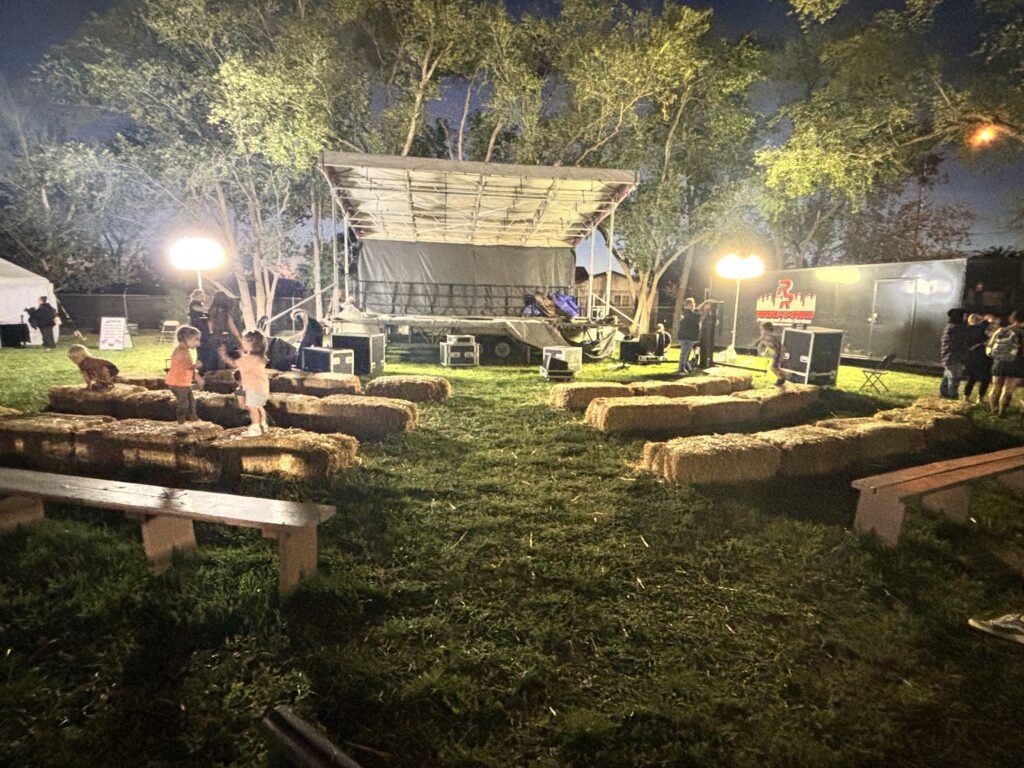
It’s been a while since I had hale bale seating for my audience.
Yes, I know these are straw bales, but no one calls them that, so I’m going to refer to them as hay bales. There are a lot of challenges that come with the audience sitting on hay bales. First, they’re pokey, so not fun to sit on if you’re wearing shorts. Next, they give kids stuff to fidget with, which is a distraction. Finally, kids and parents look at them as a jungle gym, and they let their kids play on them and generally destroy them.
Parents will let kids run around, jump from bale to bale, and that’s not conducive to building a crowd. People don’t want to make the kids stop playing, so they sit in the bleachers in the back, which isn’t the best scenario for engagement of the show.
When I noticed this, I tried something. When I got on mic, I said, “Just a heads up, now that I’m on the mic, my insurance doesn’t allow me to have you all play on the hay bales. I’m sorry, but once I start talking on the mic, it’s now my show, and if anyone falls off, it’s on my insurance. Once the show is over, it’s the fairs insurance, and you can jump all you want; it’s not my problem, but unfortunately, my insurance requires me to have you stop now or we can’t start the show.” Once I said that, all the parents got their kids and made them stop. That’s compared to simply asking them to stop because the show is starting. In the past, when I’ve done that, I think people think that since the show hasn’t started, I’ll just let them continue to play until the show starts and the rate of people stopping their kids from playing was virtually none.
This is the classic thing where if you give people a good reason why to do or not do something, you’ll get much higher compliance.
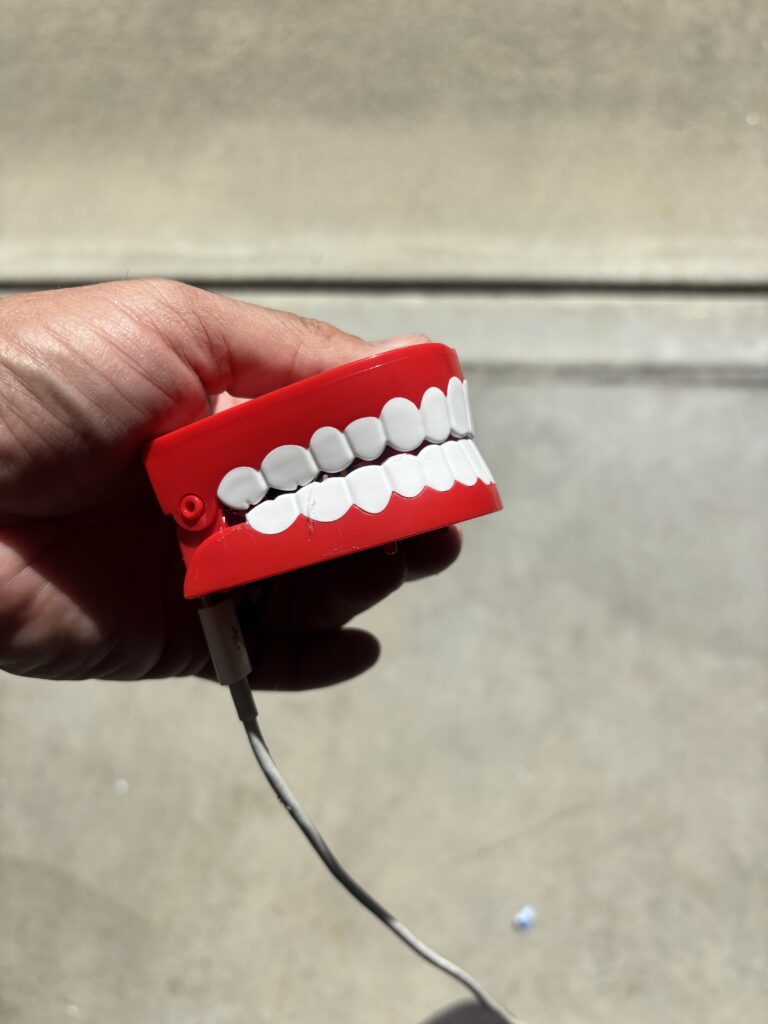
One of the most requested products I get from magicians is for me to make a USB-chargeable set of Remote Control Chattering Teeth. There’s a reason that I haven’t made them before, and that’s because I sell what I use. Personally, I prefer using disposable batteries. If I forget to charge them, it’s not a big deal; I just swap them out.
Well, in my show, I’m having more and more things that use batteries that need to be charged. From things like the phone that I use to run the production of my show to mic pack batteries. Charging things is now a bigger part of the end of my performing day than it was a few years ago.
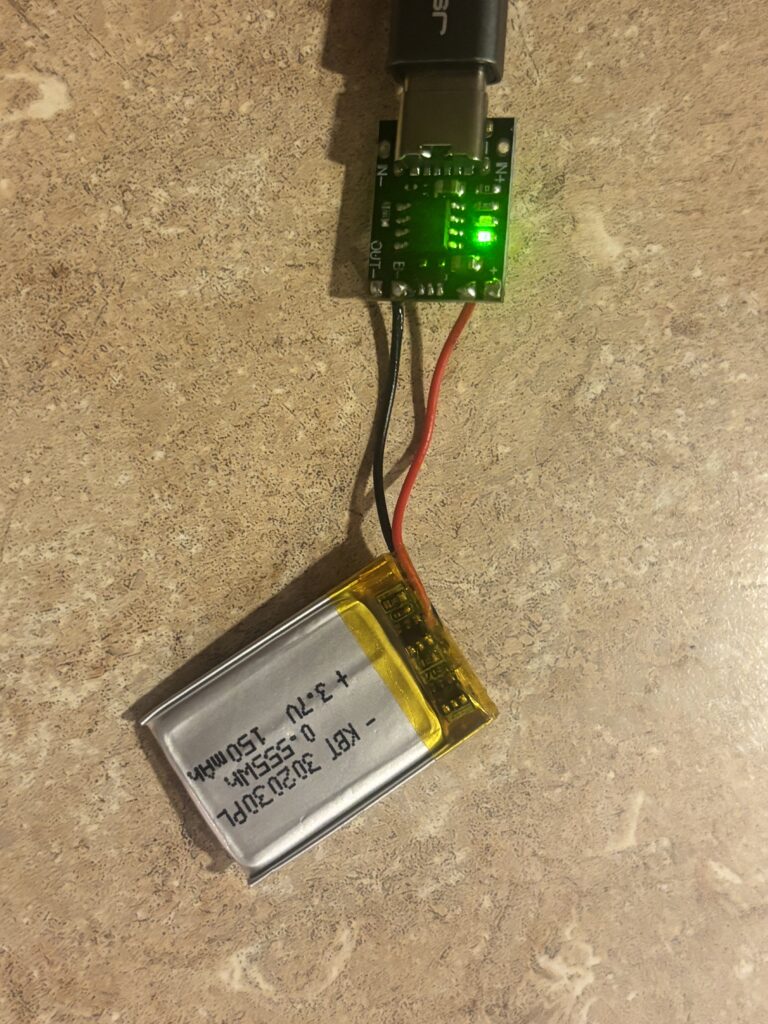
I’m learning to install the battery and charger, and I have my first working set of USB-chargeable Remote Control Chattering Teeth.
The next step is for me to use them so I can gain some confidence with my design. I already noticed one thing to change. I have an on/off button and not a switch. With it as a button, you don’t know if it’s on or off. Going forward, future sets will have a switch!