A Gag Saves the Show!!

Right now some of the only live, in person performing that’s available to do are masked, no contact, socially distant, small group magic shows. These are magic shows for kids. The big challenge with these shows is wearing a mask when performing for younger children (ages 3-5).

One thing that I’ve added to the show is a prop that I built for a show a couple of summers ago, but the routine never played well. The prop that I build are Remote Control Chattering Teeth!

I started out using them as a warm up, which is right out of David Ginn’s book Comedy Warm Ups for Children’s Shows. However, I quickly moved the routine deeper into the show, and it’s not a warm up, but part of a full routine that I was working on.

The teeth are now used in the Silk to Peach routine, and that routine has built out into a 7 minute routine full of laughs! I’m glad I dug the teeth out again and started using them!
Using a Set list!

One thing I love to do is talk magic and share what I know about it. Last week I got to do an online lecture for the Vancouver Magic Circle and it was a ton of fun! My lecture isn’t just about the tricks, while I do teach some interesting tricks, it’s about how I created them and how you can create your own tricks.

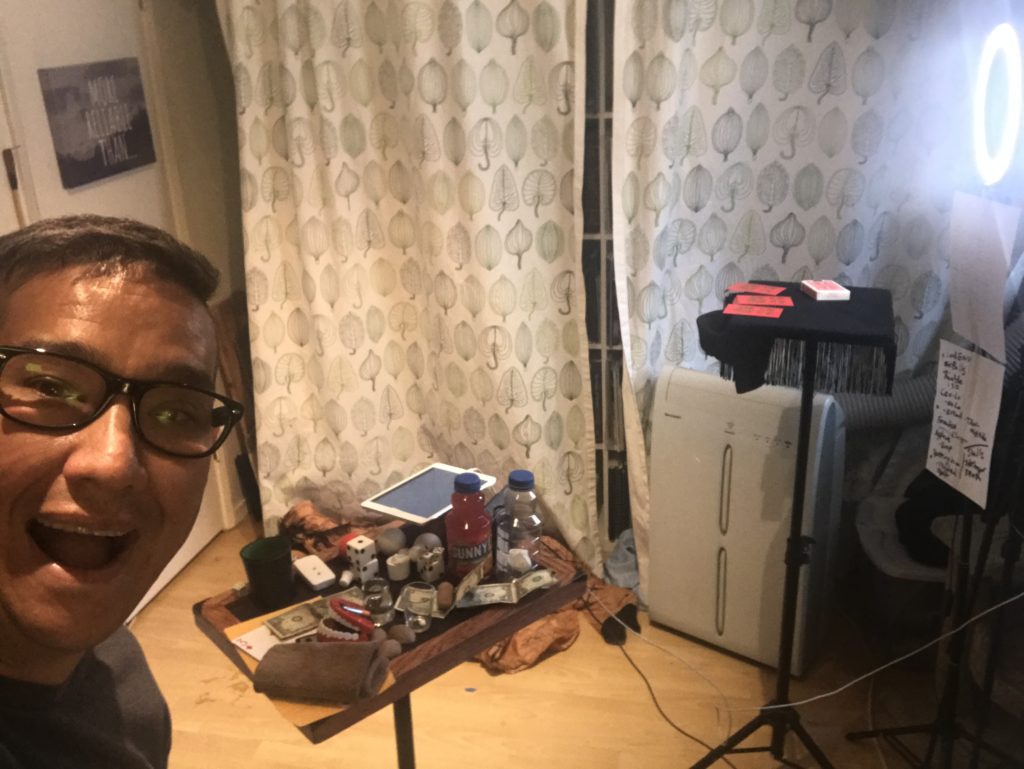
Here’s a side view of the lecture, I’ve got my main working table on right side of the picture and then the table that holds my props that aren’t currently being used. The prop table is out of the camera’s view.

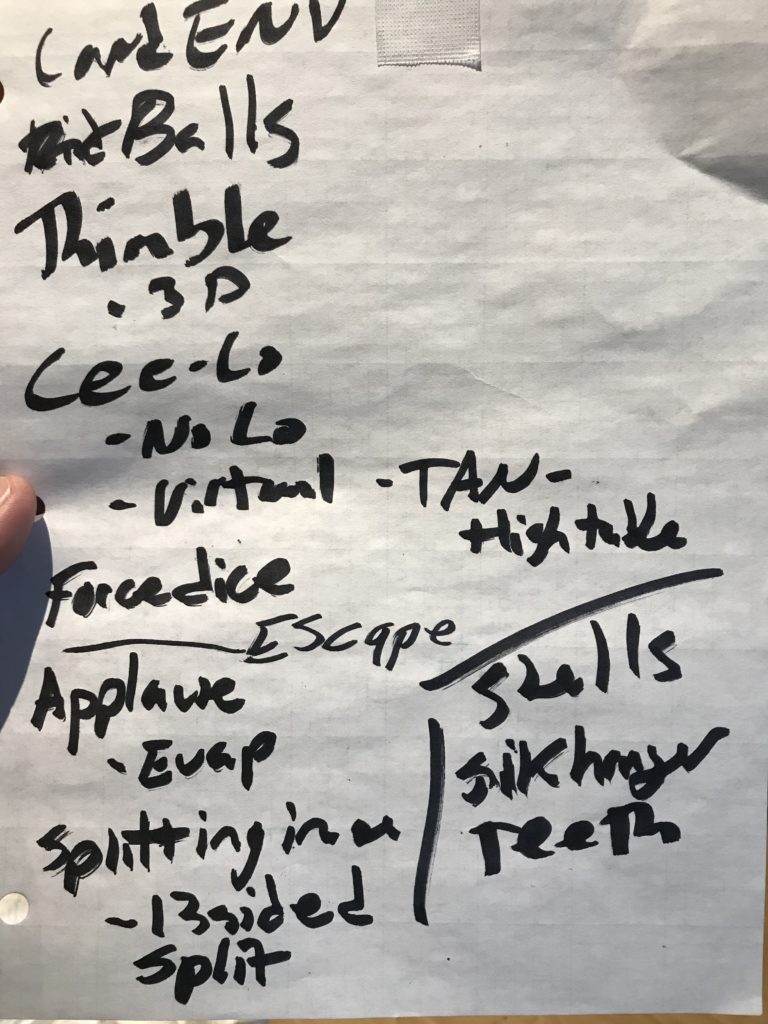
You’ll also notice that taped to the light are some pieces of paper. One is for a trick that I teach and the other are my lecture notes. Here’s what I planned to cover in the lecture:

We got to pretty much everything I had planned! When I lecture of do a show, I always use a hand written (in sharpie) set list. It really helps keep me on track and from forgetting things. Using a set list also helps me during the show make decisions about skipping bits and reminding me of new jokes or bits to try out.

If you don’t use a set let, you should try one out!

Magic With a Message…

It’s been over four months since the government essentially shut down the performing arts industry. It’s open in a very limited capacity right now in the USA. Last week was the last week I was able to claim the federal PUA in addition to my state unemployment benefits. Here’s a little video I made about it:

As far as a production goes, it’s a fairly understated shotglass production. The tube it’s produced from is about half the size of the shotglass. However as far as scale goes, it’s pretty small on the screen and the magic isn’t as strong as it could be…but the message is solid.

Flattening The Curve…

The whole virtual magic show is changing what you can do in your shows. Tricks that really weren’t practical to set up in a venue now make sense. Tricks with bad angles now have a place to be performed deceptively.

A few years ago they Stewart Semple came out with the Black 2.0 paint. This is a flat black paint. It doesn’t have a lot of use in a live magic show because it doesn’t trap light like a velvet does, but it turns out it works pretty well in videos.

Here’s a trick that uses Black 2.0:

I think I wrote this trick up in Vanish Magazine a couple of years ago. It uses the 2d of the screen you are watching on to hide the 3d of the “black hole”. I like the idea of switching a flat object for something that’s round and using that space to hold a production.

I really like the idea of hiding the production in plain sight.

Bigger or Smaller??

I’m working on a trick right now where an object changes either from something small to something large. In the routine there are multiple phases of it changing, which make me wonder which way is better, from large to small or from small to large? It also changes shape, so that adds a another factor to this If it was simply one change in size and not shape, it’s definitely be from small to large as that has more impact.

It got me thinking about Quick Change Acts, as the act moves along the dresses tend to get shorter and shorter. However most do have some variation and usually the final dress is a gown. When watching these acts on TV my family will always comment on the shrinking of the dress during the act, so it’s something that’s noticed. Not that it’s a bad thing, because I think it adds impact to the final change.

For my trick, I think I’m going from small to large as the final change the object only changes in size. So it’s got a finale feel to it.

Vintage Louie…

One of the first routines that I really thought out and wrote a script for was my Card to Mouth Routine. I published it a few years ago in Vanish Magazine and I’ve taught it in my lectures for a long time.

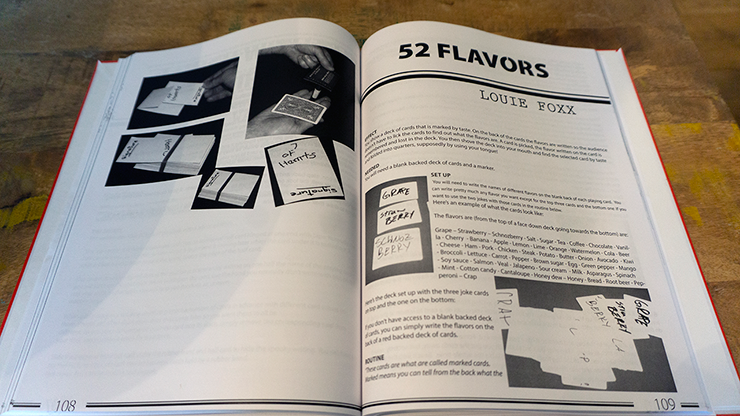
Vanish Magazine just put out a collection of the second year of their magazine and my trick is in one of their promo pics for the book!

This is a fun routine and while Card to Mouth might not be a trick that’s currently socially acceptable to do, it’s still worth looking at how I put a frame around the card to mouth premise.

Fooling Myself…

When I used to travel frequently one of the things that I did to keep myself busy was invent magic tricks. I has some guidelines, the main one was to use things found in my hotel room. Here’s one from a few years ago:

One thing I really like about this trick is the visual of pulling the bill through the straw. Once I had the idea of the sideways penetration, then I had to figure out a method. I can’t find any notes I wrote for this trick and honestly I’m not 100% sure how I did it. I have an idea of how I probably did it as there are only a few ways you can slide a bill through as straw.

Doing these hotel room videos were a fun creative challenge because you are really limited prop wise with what you can do.

Bad Magic…

Howard Hamburg D Lecture notes

A while ago I picked up a used copy of Howard Hamburg’s D Lecture notes. One of the things the mentions in it was that Dai Vernon didn’t like was kicker endings. Vernon’s thinking was here’s the trick I’m showing you, and now here’s something completely different that doesn’t make sense…ta-dah!

Now let’s fast forward to a magic video that was posted in a facebook magic group recently. Watch this:

Did he get your card?

He didn’t find mine.

Now let me tell you what’s wrong with the video of the trick:

First of all, he didn’t find my card! If you tell me to pick a card and don’t find it, I don’t care what else happens, it’s going feel unresolved.

Next, the switch out of the pocket is sloppy. It may work in a in-person context where you are talking to people, but not in a video with zero presentation.

Finally the reveal of the fan of cards changing is just bad magic. When the hand holding 4 cards drops out of frame multiple times and for an extended period of time right before you reveal the change, it’s just not good magic.

Add these up and it’s a bad presentation of a trick.

This trick needs a presentation that’s not a promise that will be unfulfilled (unless you get lucky). Also, t he performer needs to be aware that their need to keep their props in frame. It doesn’t matter if you don’t need to drop out of frame or not, it detracts from the magic. Or if you do need to move out of frame, try to hide it and don’t to it immediately before the reveal.

Now go out and do good magic.

Small Changes…

In the past on this blog I’ve written about progressive anagrams and fishing as a great methods for virtual shows. Here’s another video of me using the Mind Power Deck by John Kennedy.

The small change that I have made in this trick from the video I posted a few weeks ago is that I’m revealing the card before I ask them what card they are thinking of. I think it’s a way stronger trick because I’ve committed to the prediction before they reveal what they are thinking of.

Yes, there are risks doing it this way, but I think the benefits outweigh the risks.

Make It Work…

In my different shows I have many different table tops, but only one main base. It’s a Collector’s Workshop table base and I just screw the correct table top to the base for the show I’m doing. In my small group, no contact, socially distant magic show, I’m using the base on my small case.

A friend of mine saw what I was doing a he had an old base from a Jumbo Sidekick that no longer exists that he gave me. Unfortunately at some point Collector’s Workshop changed the diameter of the pole that screws into the flange that’s attached to the table.

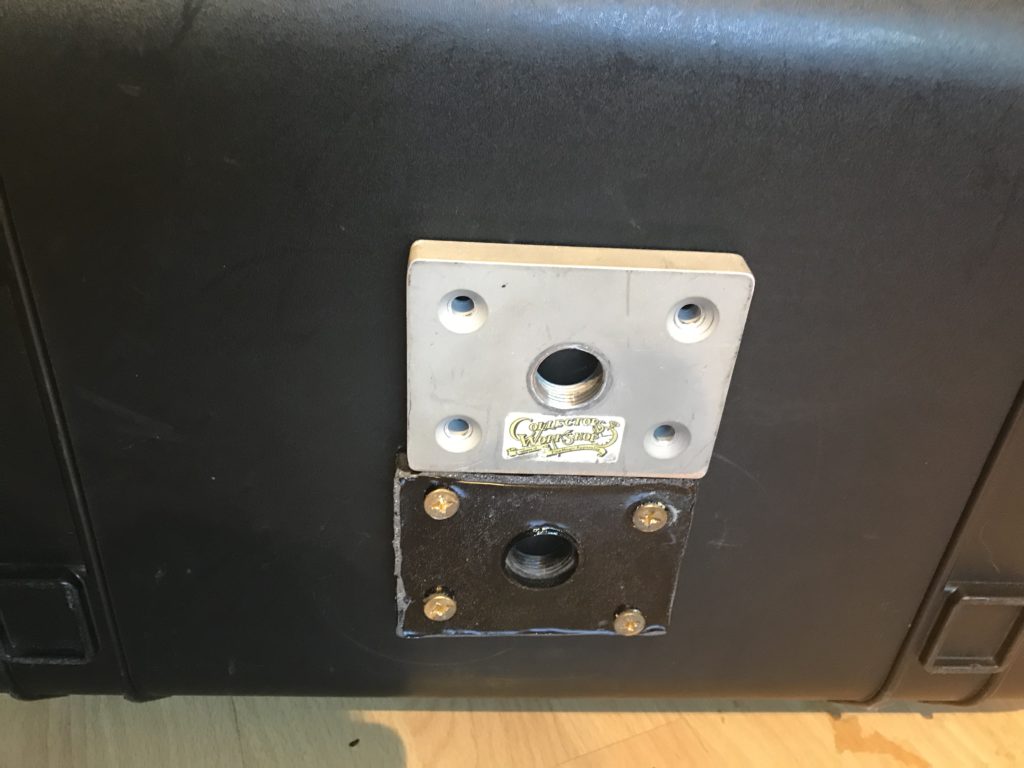
To fix the problem, I made the flange out of clay with threads that match the larger pole. I then made a mold of this flange and cast it in resin.

Here’s the two flanges:

What I made took about an hour to make, and cost only a few bucks in material. It’s probably not as durable as the metal flange is, however the case isn’t heavy, so it works.

It’s nice to not have to keep moving around the table base. The show that uses this case doesn’t have a table, so now the case is totally self contained!