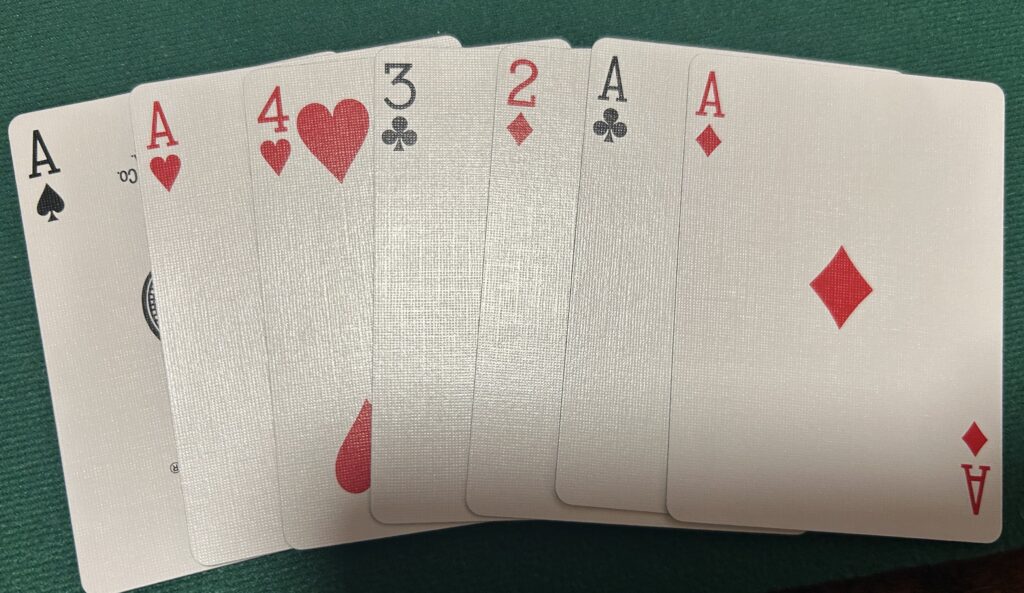
Recently, I posted a trick where four aces turn into an ace, two, three, and four. That trick felt like it needed some sort of kicker ending, like the cards having a different colored back or something. Well, I tried making the cards work backwards, going from an ace, two, three, and four into four aces and that fixed the problem. The trick feels complete at the end.
Here’s a demo of the trick:
There’s only one move in the trick, which is an Ascenio Spread. That move is repeated, so it’s not very hard.
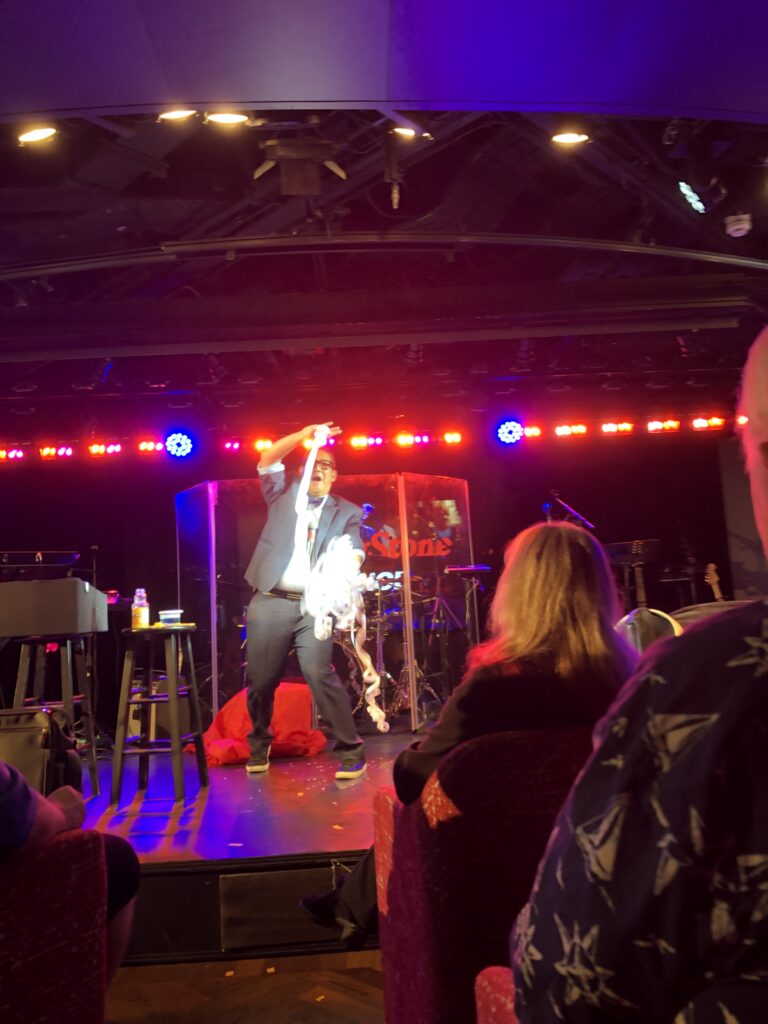
Awhile ago I picked up The Scoop by Dan Harlan for a show that I’m going to be doing in the spring/summer of 2026. It’s been sitting in my office and on Halloween I had an idea, here’s what it was:
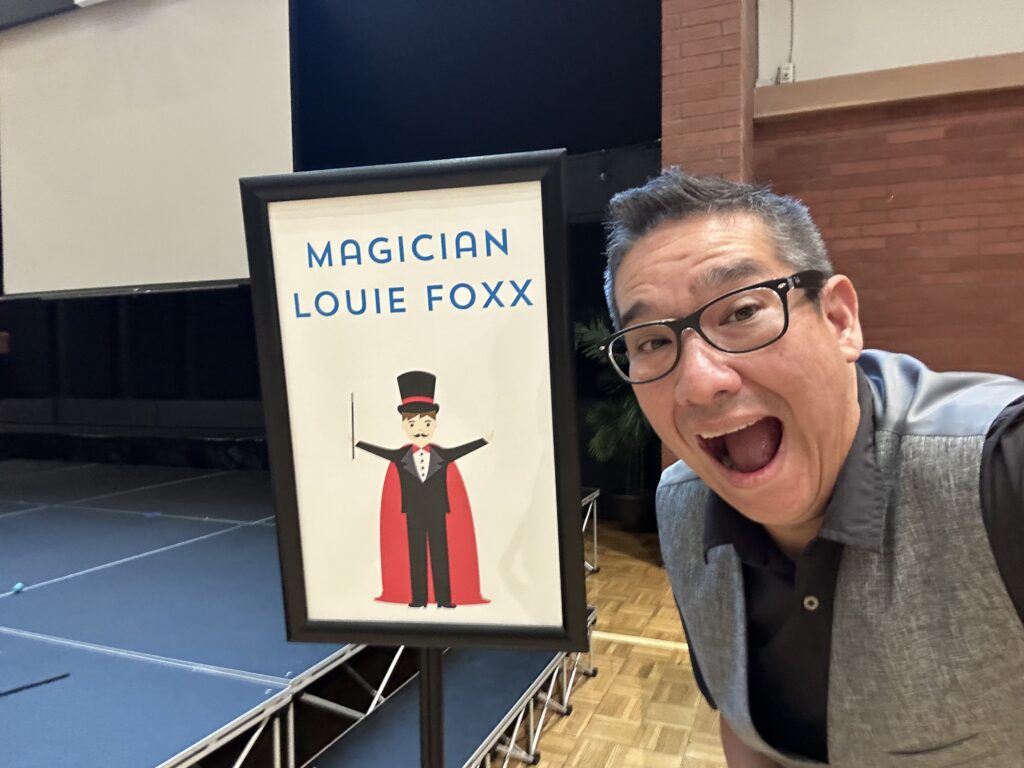
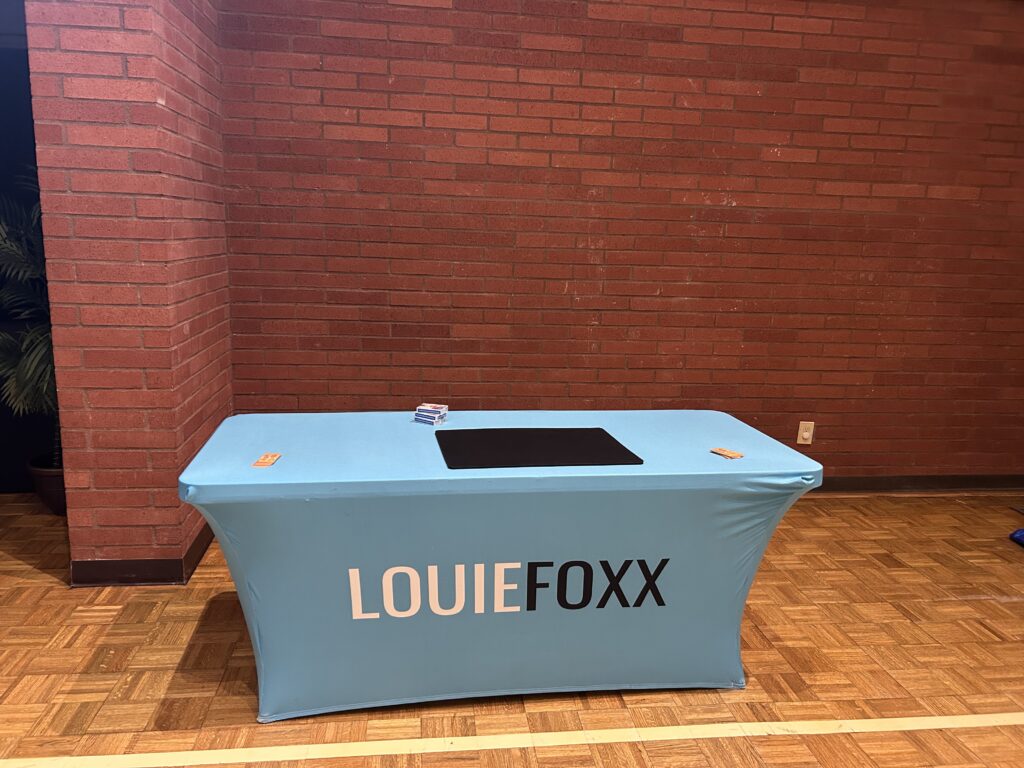
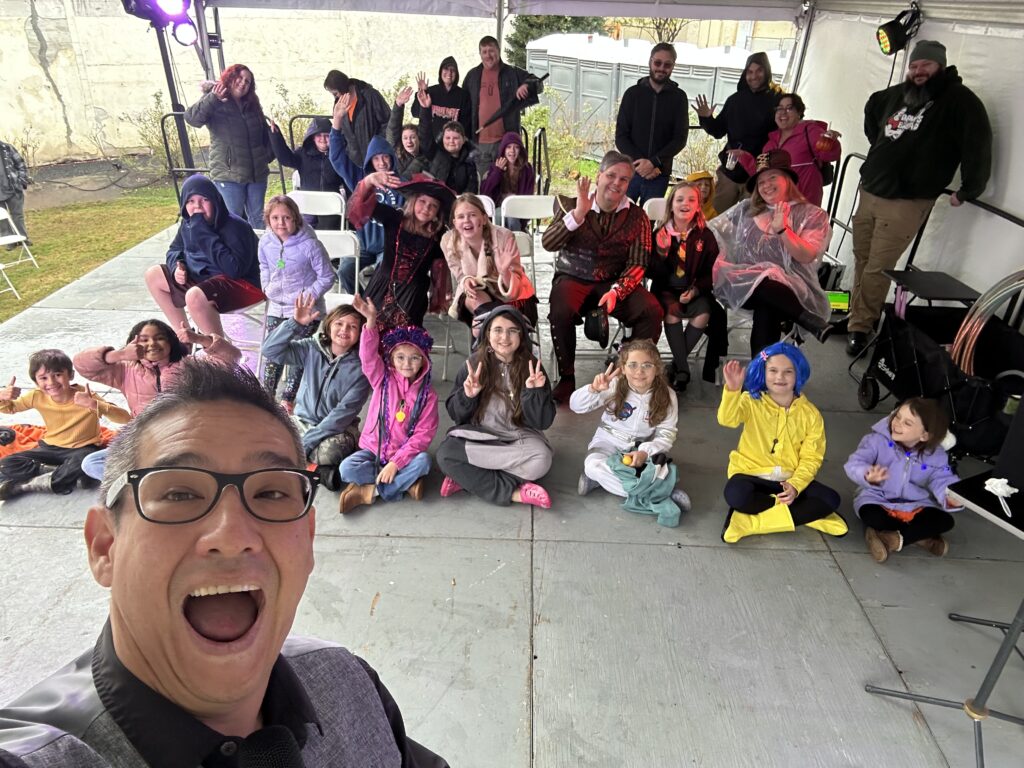
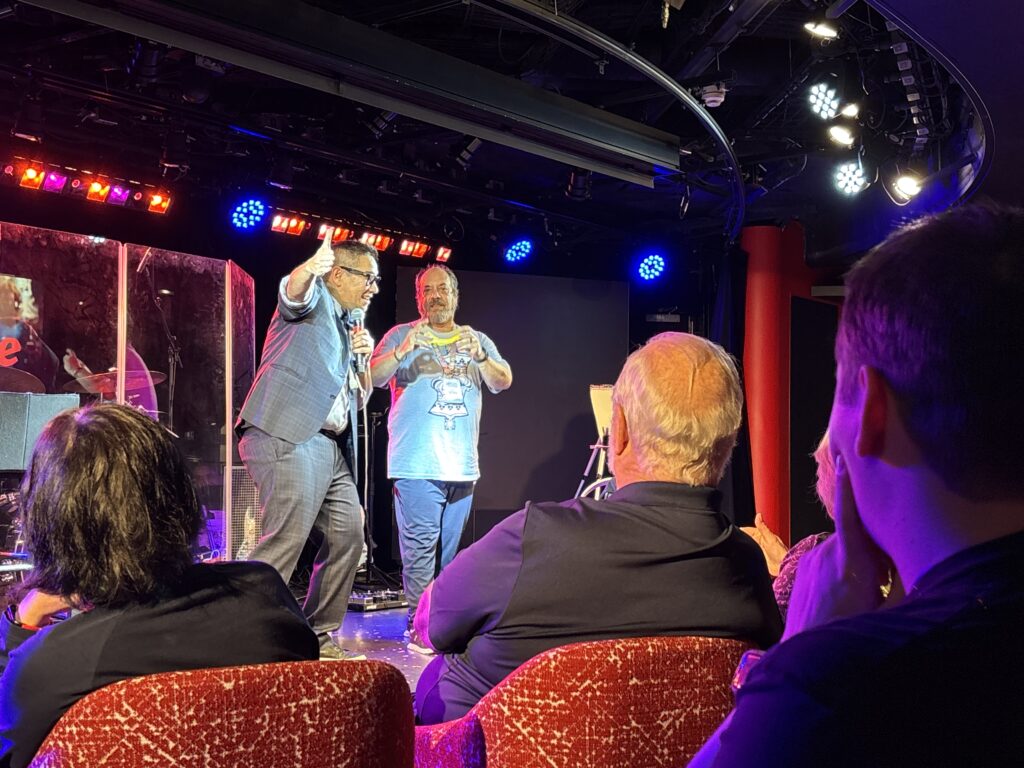
At a recent Halloween event, I was hired to perform at a close up magic station. This was simply a table that kids came by and I did close up magic for them.
This was a fun format to perform in, and with the table, I had more props with me than I would usually for a roving gig. When the crowd grew bigger, I did a couple of bigger tricks.
Another thing you can’t see in the picture is that I brought a speaker with me and used it to amplify my voice. The event was in a noisy gym, so a bit of audio support was nice!
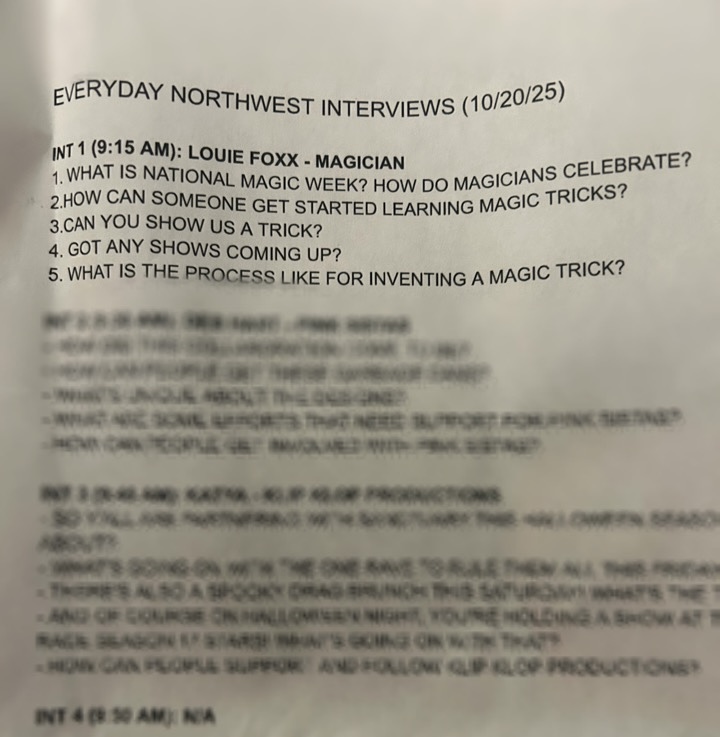
When I visit a television show, I try to be a good guest. Last week, I visited Everyday Northwest in the Portland, OR area to promote National Magic Week. Before the interview, they give out a sheet with the show’s timing and some of the questions that they’ll ask you.
Once I got the sheet and saw the questions, I started writing my answers in my notebook. The act of writing them down puts them in my head, and I fumble a little bit less when saying them. It’s like a mini rehearsal for me.
Also, when I see the questions, I try to write some jokes. In the interview, I’m asked “how magicians celebrate National Magic Week” and I have an answer with a joke. That’s part of the effort I put into these media spots: I try to be prepared and offer them more than just flat answers.
If you do a TV spot, make it a unique experience; don’t just rehash what you’ve done a million times.
On a TV appearance last week I did The Fortune Teller trick from my 2025 lecture notes. You can watch the appearance here:
What I like about this trick is that the moment you bring out the prop, the audience gets a hit of nostalgia. That makes it a trick that instantly connects with the audience.
Then my card routine with it has a three-reveal punch. The card routine I did in this TV spot is different from my stage routine, which wouldn’t work with this setup, with the host standing next to me.
This month I’m doing a few dates at a Halloween festival that runs 5 weekends. One of the days that I was performing, it was raining, and this was an outdoor festival. The stage was covered, but the audience seating was not covered.
The act before me performed for a few people with umbrellas that were standing behind the wet seats. What I did was move a bunch of seats onto the stage and dry them off.
I managed to fill up the stage seating and had great shows!
When you arrive at a show and the scenario isn’t ideal, consider how to improve it. I’ll usually run the idea by my contact at the gig to ensure there’s no reason why I shouldn’t do that.
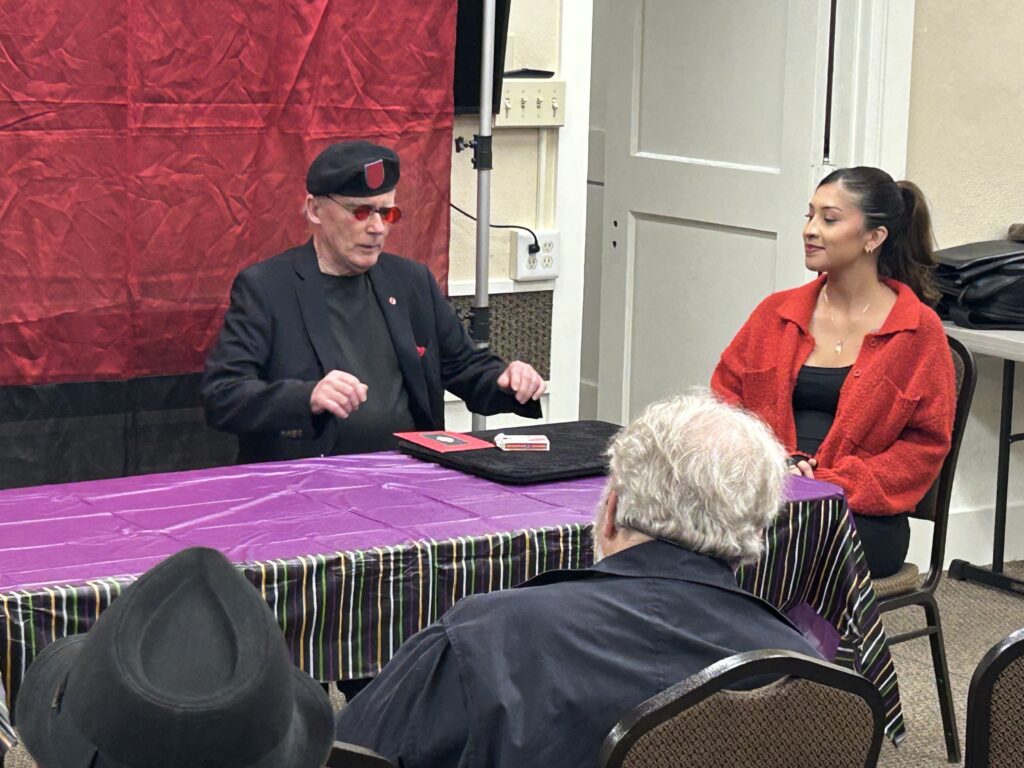
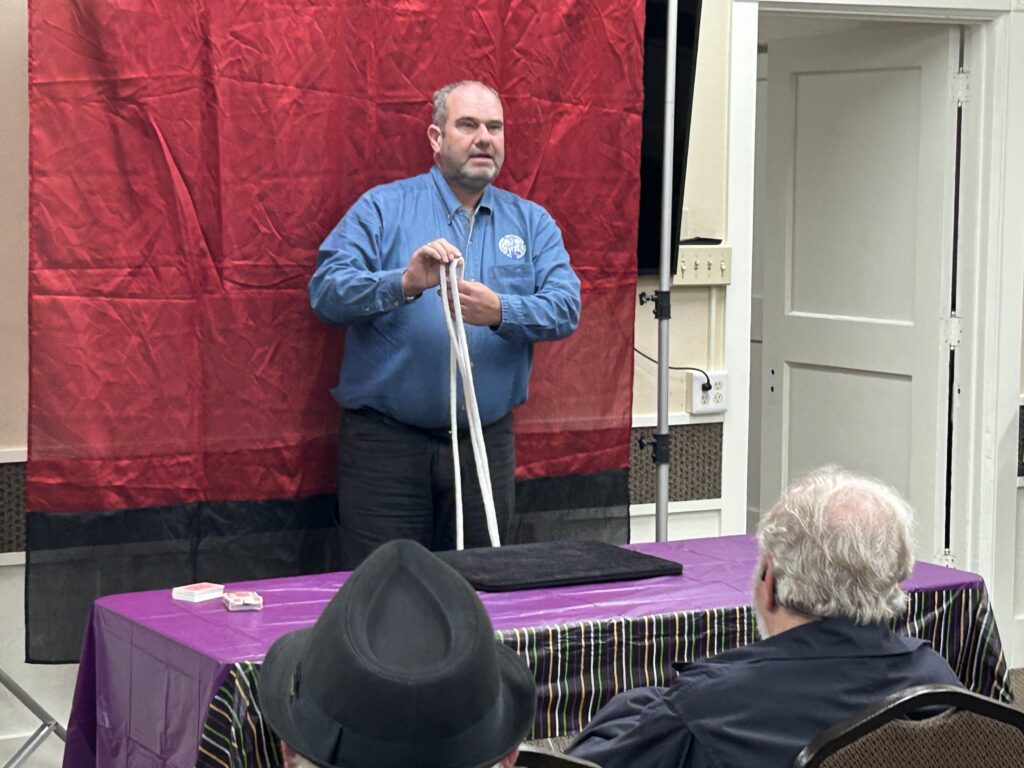
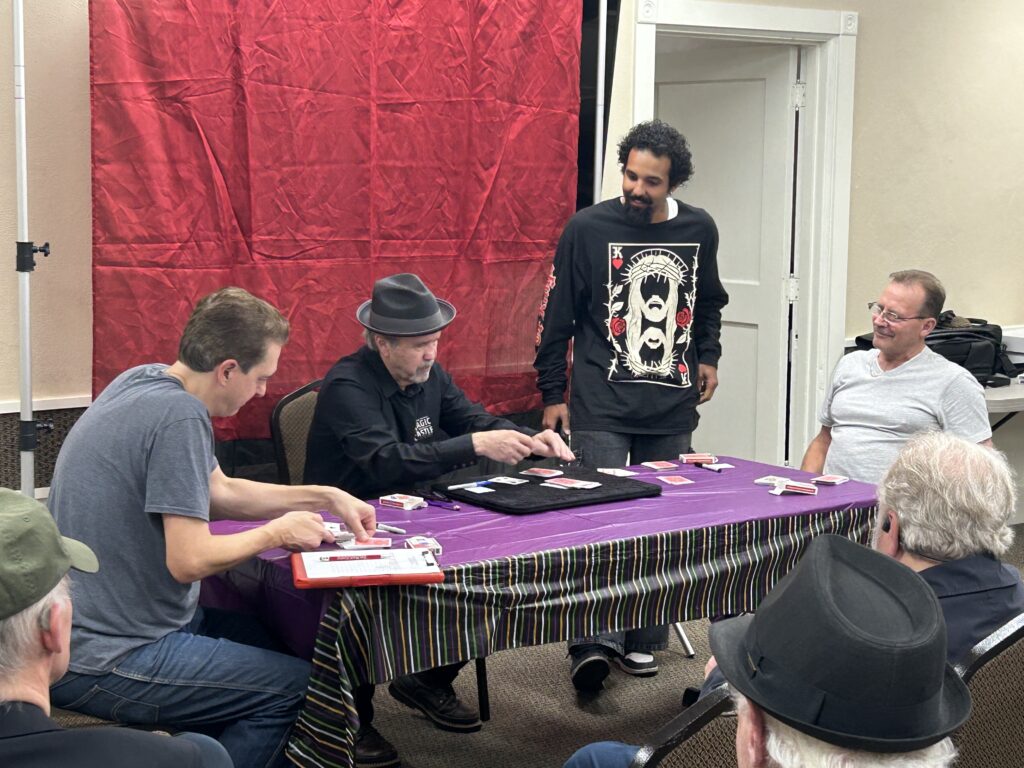
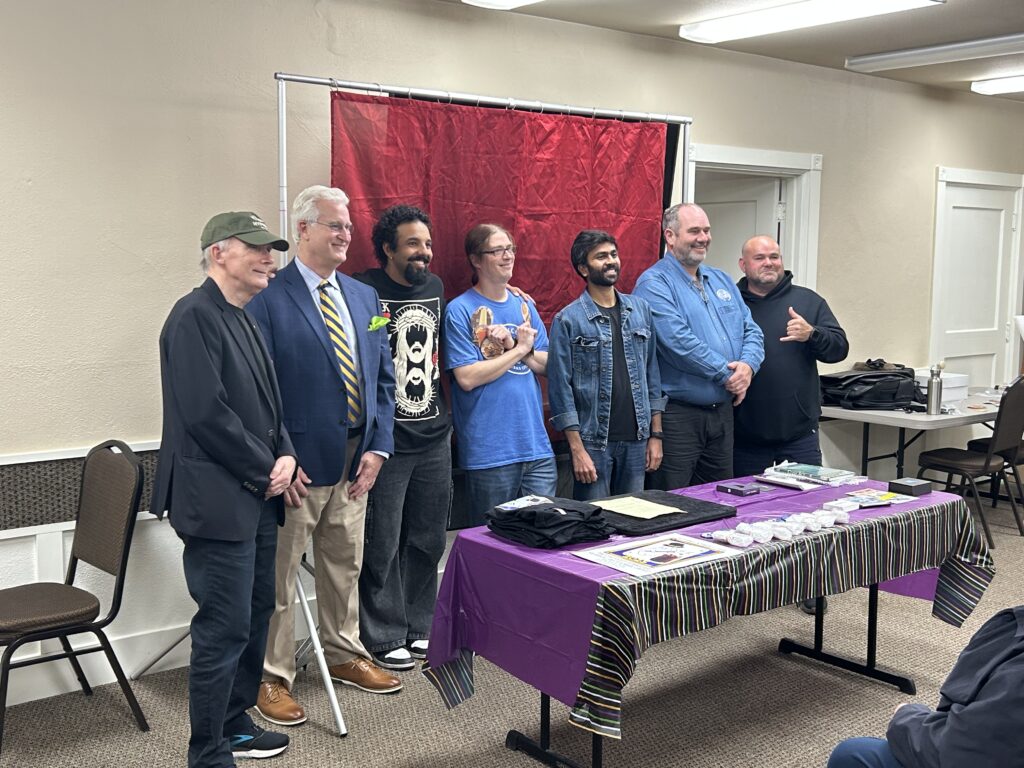
Recently the Portland Society of Magicians has their amateur magic contest. This was for people who don’t really perform for pay.
What I love about things like this is getting to see all the different styles of magic that are performed. Also, it lets me see the various trends that are going around magic.
One thing I noticed in the contest was that there were two acts where the trick didn’t work, and they ended at that point. That’s something that separates pros from amateurs: how they deal with mistakes. A pro will plow on and figure out a way out of it, whereas the amateur doesn’t necessarily have that “toolbox” to get them out of the situation. How do you get the “toolbox” of outs, simple, you fail a lot! Failure is part of the learning process and a very important part of it!
I was playing around with some cards the other night and came up with a very 1980’s feeling packet trick. The effect is you show four aces. The ace of diamonds changes to a two of diamonds. Then the ace of clubs changes to the three of clubs. For the finale, the ace of hearts turns into the four of hearts, giving you a one (ace), two, three and four.
This trick uses a series of Ascanio Spreads. I’m not going to go teach that move here, but you can look it up and find a tutorial for it online.
Here’s the starting order of the cards:
Hold them face up in your left hand in dealing grip. Do an Ascanio Spread to show four aces, putting the four card block on top of the packet .
Do a second Ascanio Spread to show that the ace of diamonds is now a two. Put the four card block top of the spread.
Next do a third Ascanio Spread to show that the ace of clubs is now a three. This time, you will switch places of the middle two cards. I openly displace them, and then put the four card block on top.
Finally, do a fourth Ascenio Spread to show that the ace of hearts is now the four!
That’s it, there’s really not much to this trick, and it feels like it needs an ending. I have played with having the backs change colors and have a method for that, but I’m not really happy with it.
Additionally, I’d be surprised if this sequence had not been created before. It seems fairly obvious that this result can be achieved with just Ascenio Spreads.
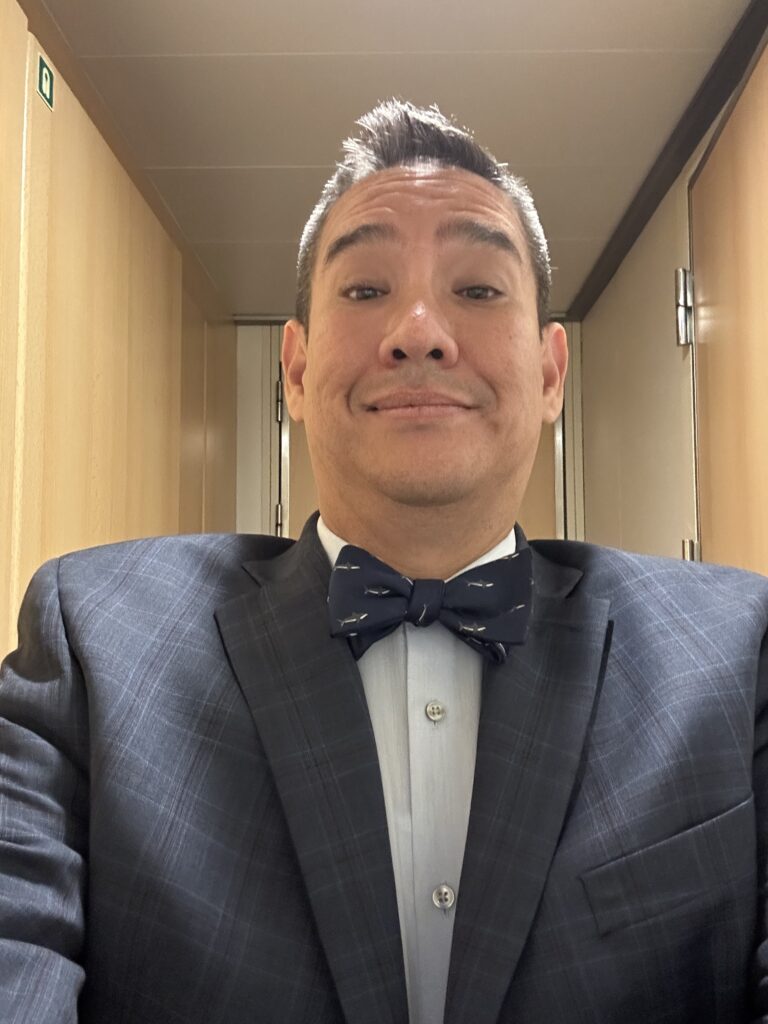
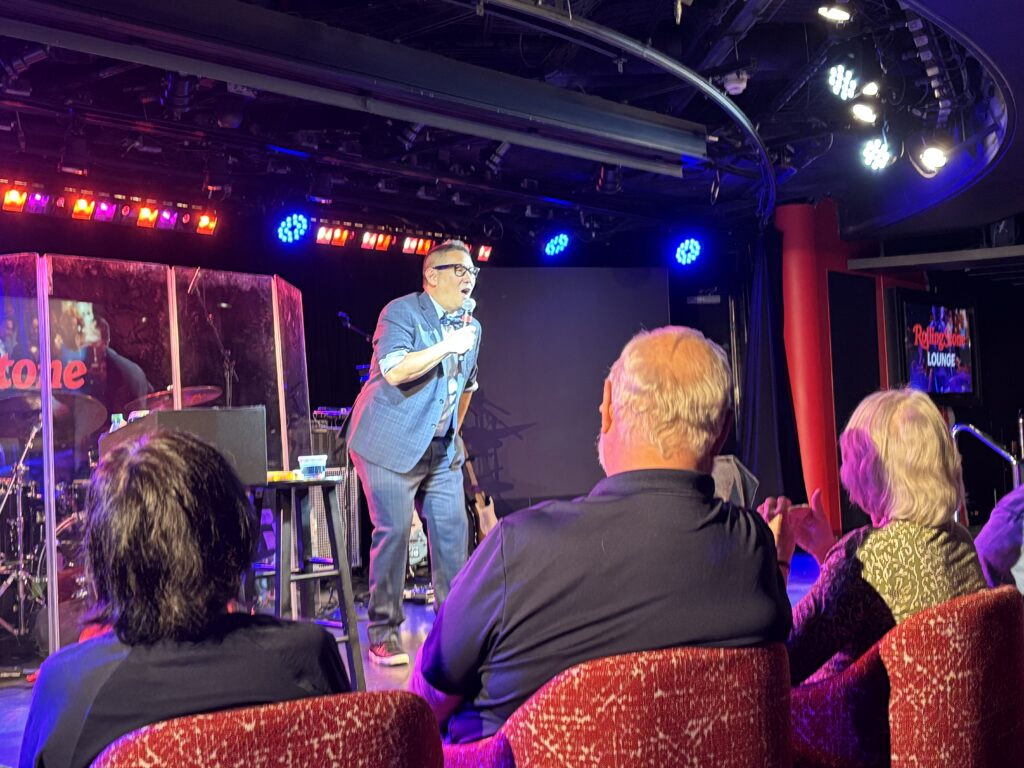
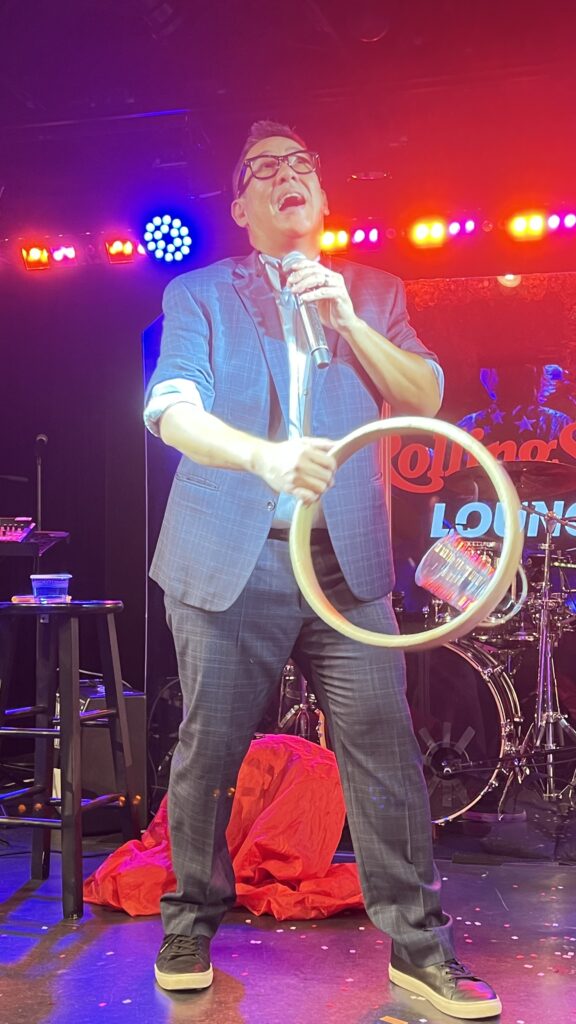
The final day at the Pacific Coast Association of Magicians (PCAM) convention was a show day for me. I skipped the card clinic in the morning to prep my show for the afternoon. Here’s what I look like before showtime (I’ll add the after later in this post)!
The show went well, it took a few minutes to warm up the audience, but they were great!
A lot of magicians are nervous about performing for magicians. One way to look at it is that they are just people, and in theory, if they’re at a magic convention, they are magic fans. That should give you a head start, as they’ll likely appreciate what you’re doing, unlike a dentist convention.
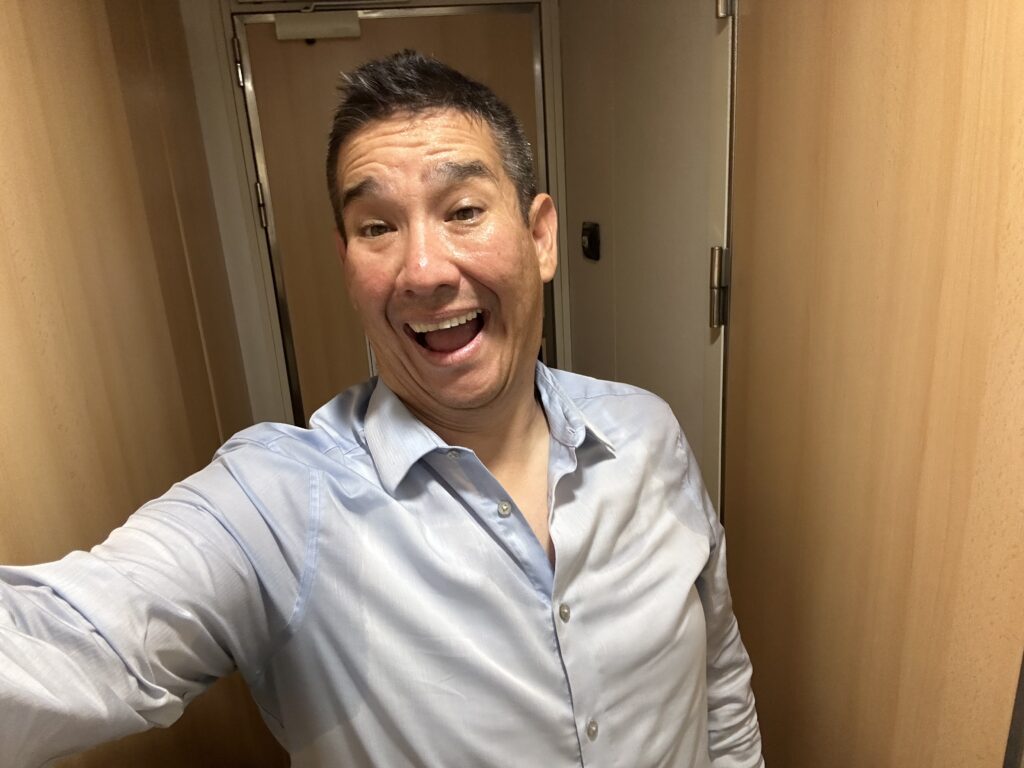
Here I am after the show, a sweaty mess!
After my show, it was a dinner break, then wrapping up the evening was the One Handed Cut A Thon and the Bag of Tricks contest.
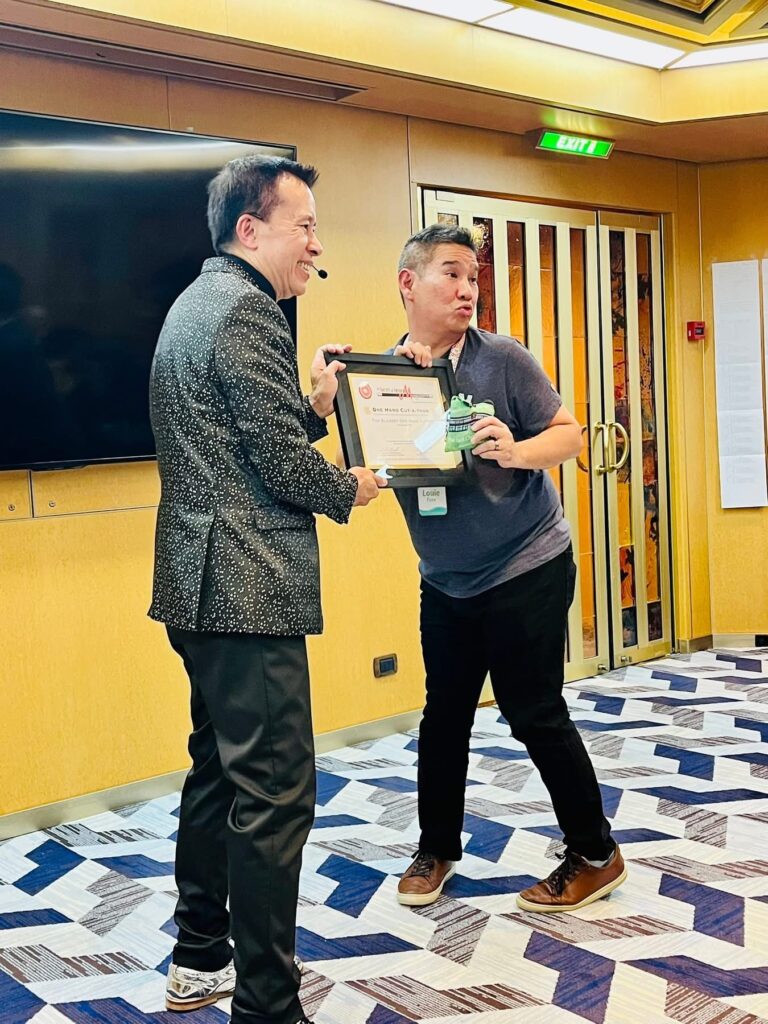
The One-Handed Cut-A-Thon was for whoever could do the most charlier cuts in a minute for the first round and the most in 90 seconds for the final round.
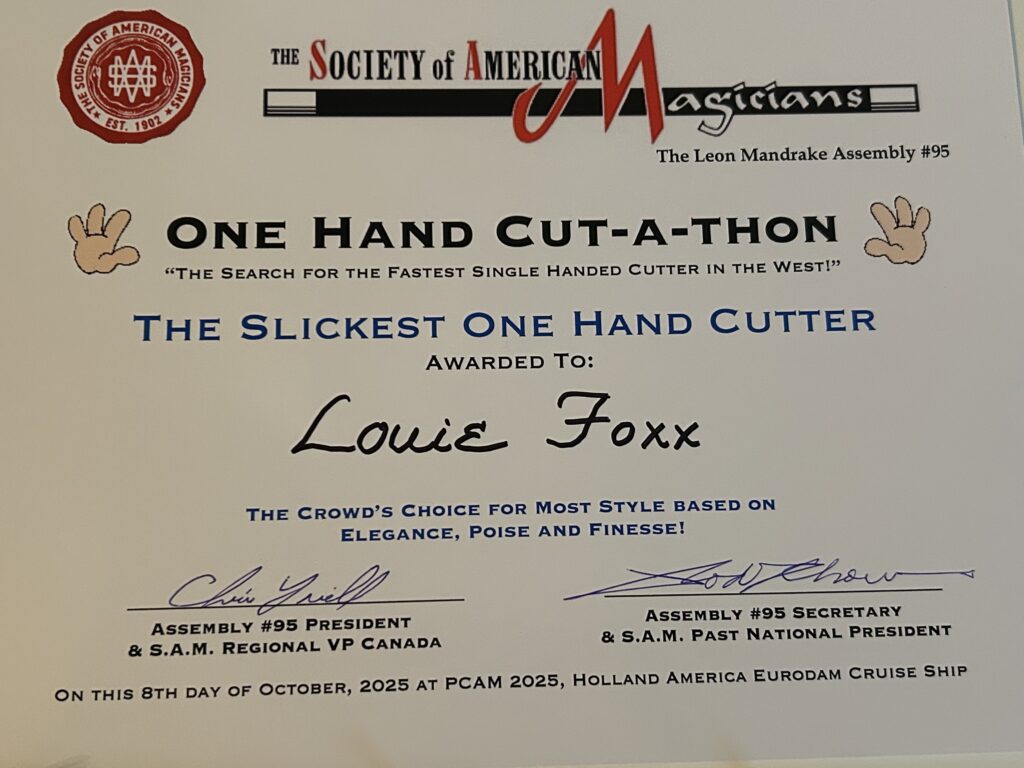
I made it to the final round, but unfortunately, I didn’t win. I did win the Slickest One-Hand Cut award!
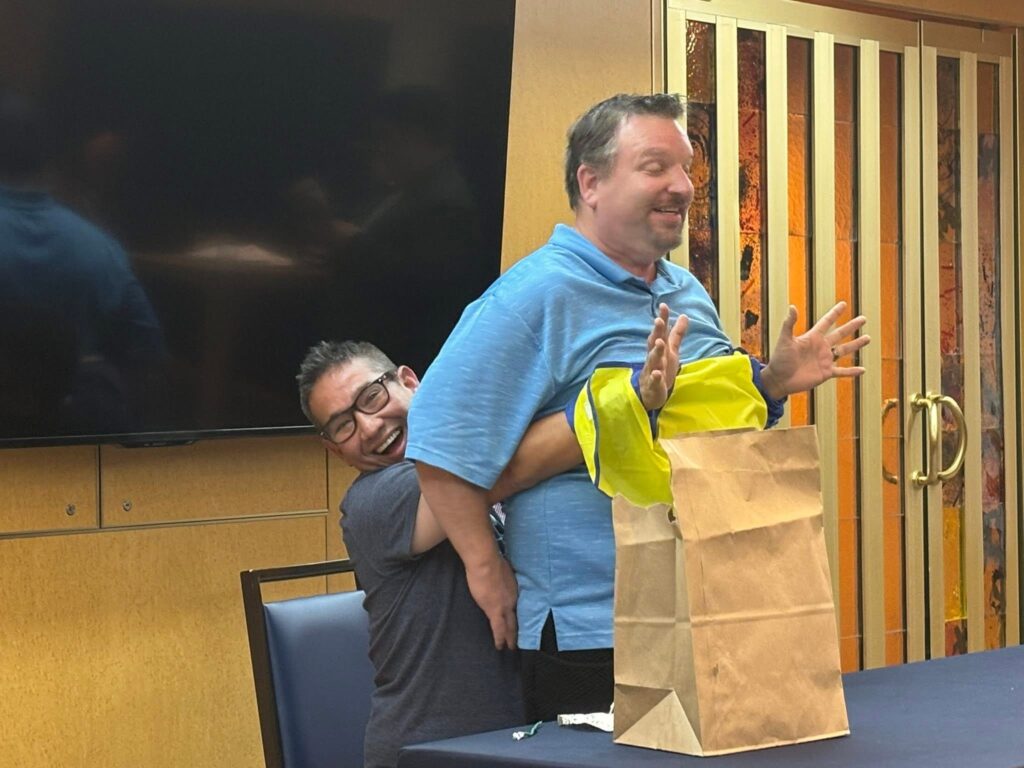
Then it was the Bag of Tricks contest. In this contest you get a paper bag with about 14 items and you have to come up with an routine using only those items. You have to use all 14 items or you get a deduction. All the bags were the same, except that each bag had one wild card item, that was different in each bag.
I entered as a team with Mike Norden. Our wildcard item was a tiny smock.
We ended up getting second place, but it was a ton of fun!
The PCAM convention was a ton of fun, and it’s really a family there. Everyone is cool and open to hang out with anyone! I highly recommend this convention to anyone!