Working on a Briefcase Show…

A while ago I started thinking about putting together a “briefcase magic show”. This would be a show that would fit in a briefcase and have minimal set up and take down. Ideally there wouldn’t be much more set up than simply opening the case.

You can read my previous post about it here.

The end goal would have this show as a totally different show from my normal show, so there is no duplication between the two shows. Right now the set list I’ve written for it is:

  • Ruler prediction
  • Choices Card Trick*
  • Ball of Yarn*
  • Lotto Prediction
  • Spoon/Fork/Knife*
  • Game Show
  • Vanishing birdcage

The things with the asterisk after them are tricks that are also in my current main show. That means I need to figure out how to either move them out of the main show, or out of the briefcase show. It’s a fairly mentalism heavy show, with 4 predictions (if you count the card trick as a prediction).

I think I might need to add another magic trick to it…not sure what. I guess that means it’s time to get to work on that.

-Louie

Double Action Pull – Take Two

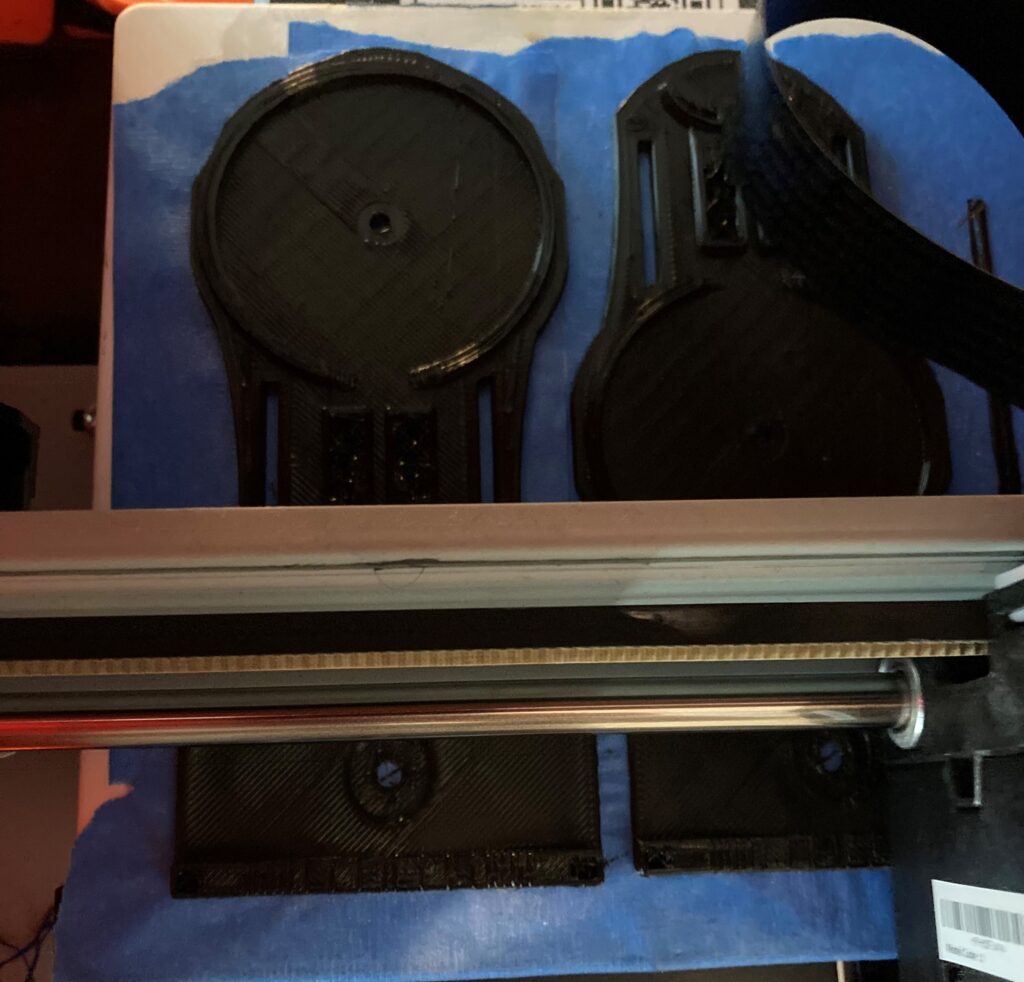
I redesigned the pulley for the double action vanishing birdcage pull that I made yesterday. The main difference is that it’s slightly larger and the hole on the non pulley side has been moved 90 degrees.

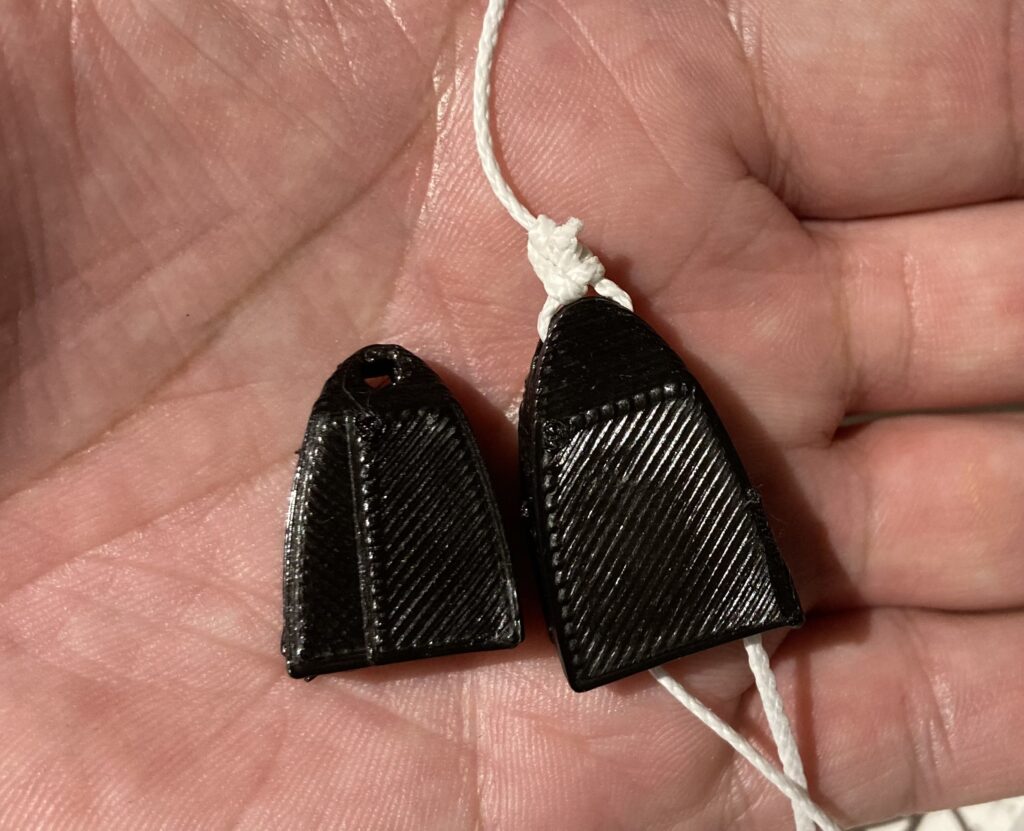
Here’s a side by side comparison with the one that I made yesterday. The old one is on the left and the new design is on the right with the strings on it.

double action birdcage pull

I foreseeing possibly making it wider with the ends flaring out, so that it doesn’t roll inside the jacket and twist the line. We’ll see if that actually ends up being a problem, or if tension alone will straighten out or keep the lines straight. I’ll play with it a bit and see what happens.

If you’re curious about this style of pull, I think I first read about it in Jim Steinmeyer‘s book The Magic of Alan Wakeling. In that book it’s used to vanish a fan, however I think using a pulley on a wrist to wrist pull is much older than Wakeling using it.

-Louie

Double Action Pull…

For some reason I’ve been thinking of the “double action” birdcage pull lately. I’ve used one a long time ago, and never really felt it contributed much to the vanish. Essentially what a double action pull does is give you more pulling power with less motion. It converts your motion 2 to 1, so you move one inch and the line moves two inches! It’s a great way to reduce arm motion for the vanishing birdcage, but adds complexity to the setup. Every bit of complexity you add, it’s another thing that can potentially go wrong. This may be the issue I have with it, the gain of having reduced motion isn’t worth the risk.

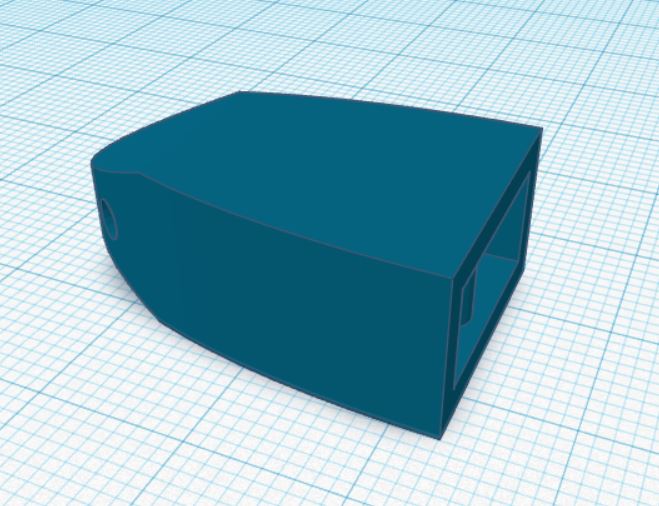
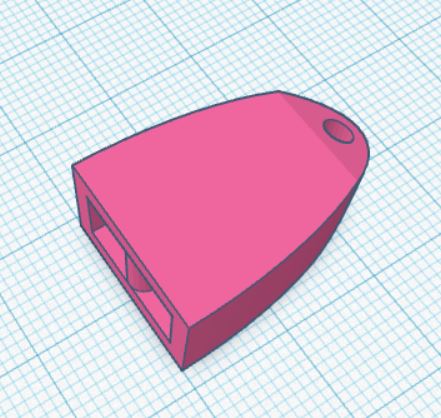
I haven’t used one in 15+years. Tonight I decided to make one, so I designed this one to be 3d printed:

double action birdcage pull

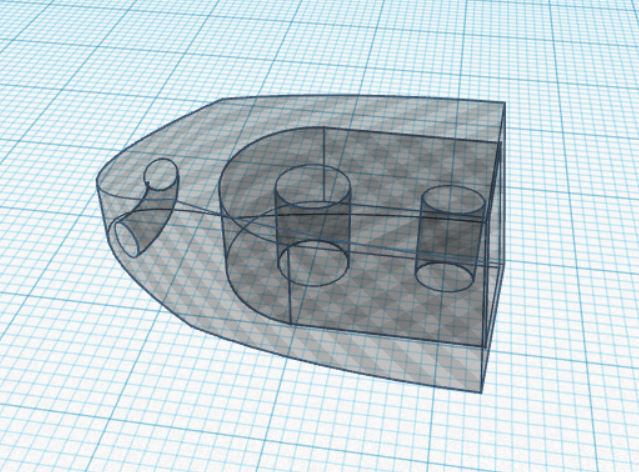
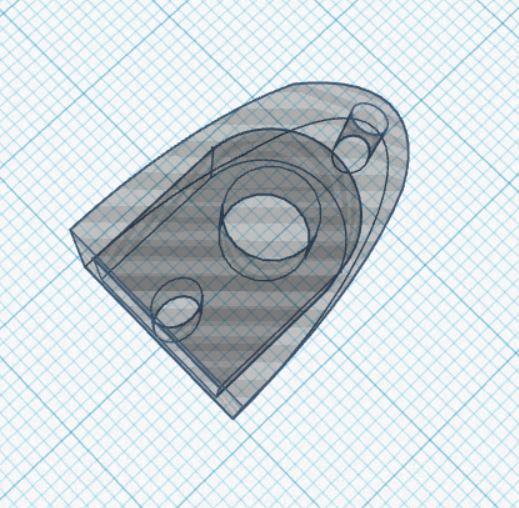
Here’s what the insides look like:

double action birdcage pull

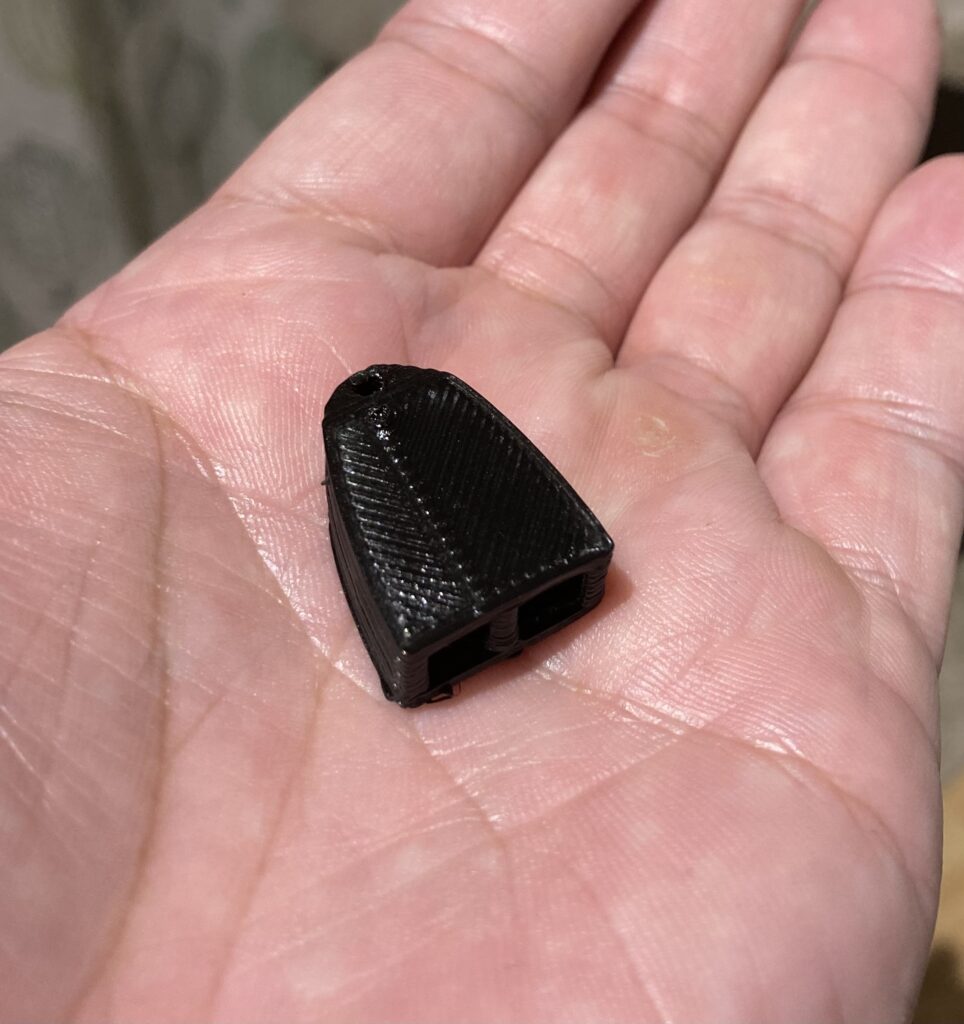
There’s not really too much to it, it was a simple design and a quick print. Here’s the printed version:

There are a couple of things I want to change after printing the first one. The big change is that I want it just a little bit larger, so that I can fit a bearing inside for the pulley.

I’ll do a new design later today and hopefully I’ll nail it the second time!

-Louie
Click here to learn more about the vanishing birdcage!

Committing to the Cage…

When I was driving home from Abbott’s Magic Get Together, I stopped and visited a magician in Minnesota to talk about the vanishing birdcage. He was thinking of adding it to his show.

His fear was the cage hanging up on his sleeve. The thing with the cage vanish is that people think it’s easy, until they start to work with it and then realize how hard of a trick it is to do. The first thing you do is try to eliminate anything that will snag on your sleeve. The second thing you do is use proper technique for the vanish. That’s putting a lot of tension on the pull and making the “hand tunnel” correctly.

Here’s me vanishing the cage at the fair yesterday:

Once you’ve gotten the snags removed and the technique down, the last thing you have to do is commit to the vanish. When you make the cage disappear you don’t do it timidly, you vanish it like it’s going to go up your sleeve. Committing to the vanish is where I think a lot of people have trouble. They’re worried about it not going up the sleeve, so the don’t pull as hard as they should.

Four Cages…

When I was at the Abbott’s Magic Get Together a couple of months ago, on the way home in Minneapolis, I added four new vanishing birdcages to the collection. Two were the older rigid styles and two were the more modern semi rigid style cages.

We’ll start with talking about the most modern cage of the bunch. It’s one of the semi rigid cages made in the style of the Milson Worth Silver Meteor vanishing cage.

I think the Indian design is slightly better than the original as the bars don’t stick out as far as on the Milson Worth cage. The problem with the Indian cage is that whatever metal it’s made from is very heavy when compared to the original Milson Worth cage. When you vanish it, it drops like a ton of bricks!

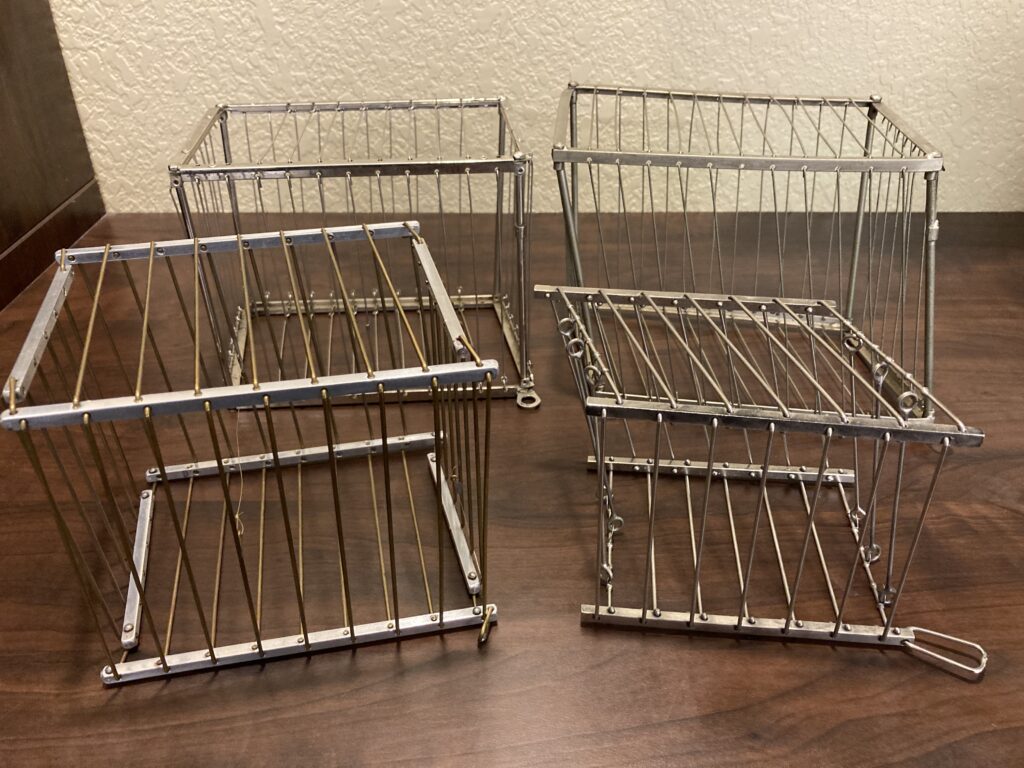
Now let’s look at the two rigid cages:

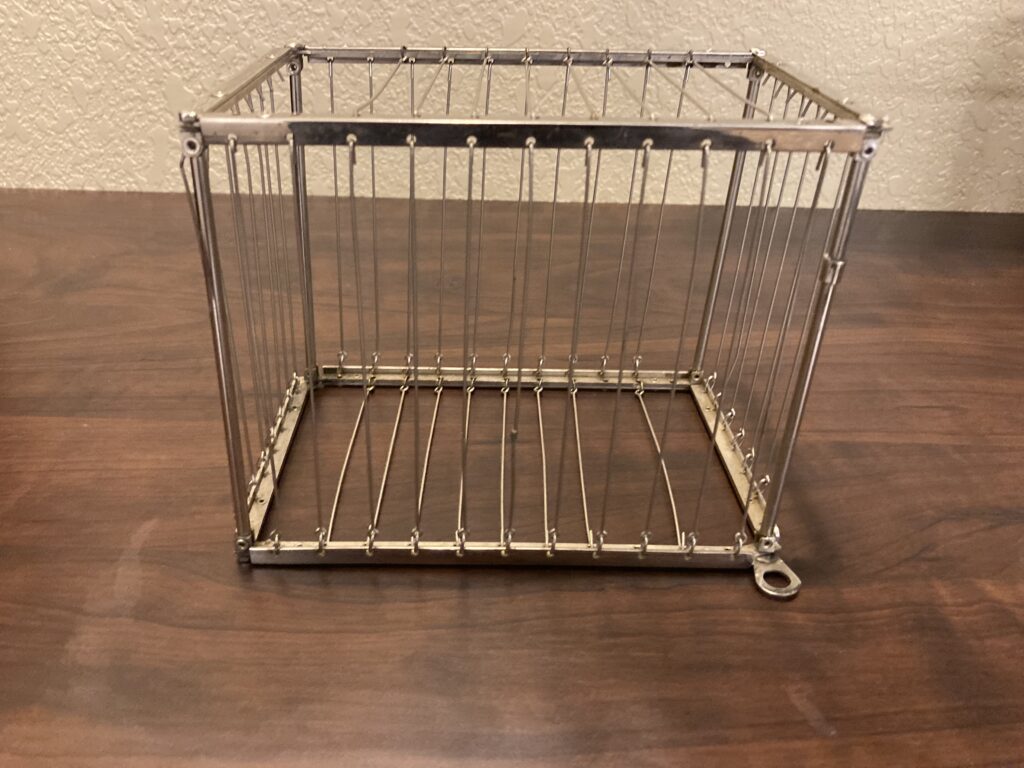
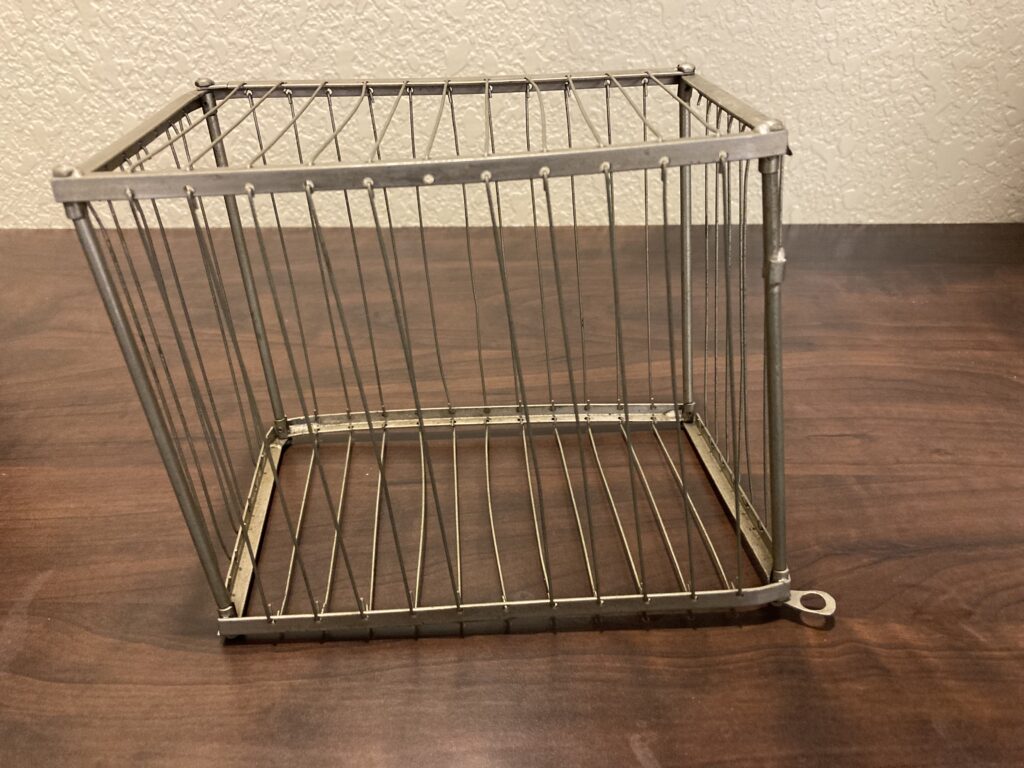
Both of these cages are made is similar styles and both have the “spoon” broken off of the front right corner. The spoon tries to eliminate some snags on the sleeve as the cage goes up your sleeve.

The cage on the left is polished metal and the has a little bit more care taken in putting in the bars. It also weighs a ton!

The cage on the right isn’t polished and is slightly bigger, but was made of lighter metal.

Honestly, I can’t imagine using this style of cage compare to the modern semi rigid lindhurst style vanishing cages. They are very heavy, and don’t collapse well.

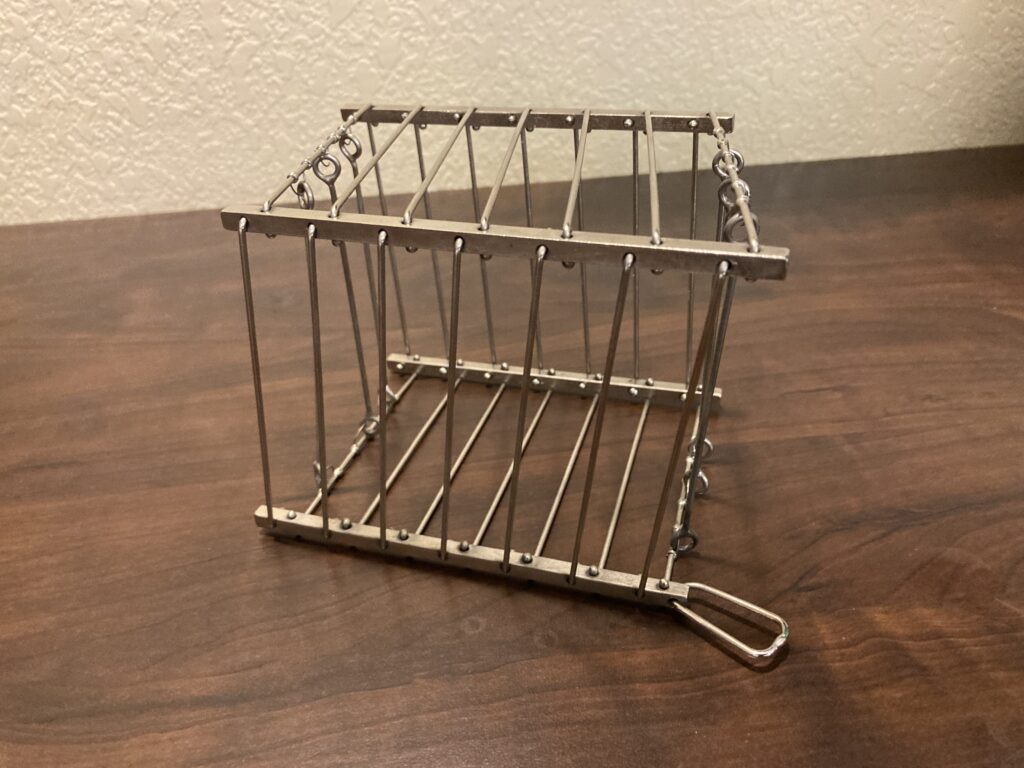
Now let’s chat about the final cage, which is the linhurst style cage.

This is the same style of cage that I’ve been using for a while. The only difference is that this cage has all of it’s bars! It also has some loops added to hang the bird on. I think these loops were added by whoever bought the cage, and not the manufacturer (but I could be wrong)

This cage is virtually the same dimensions as an Owen’s Challenge Cage and it has a great collapsing action. This cage is going to be my main working cage from here on! I totally lucked out on finding it and the price it was sold to me for.

Thayer Cage…

I just added a new cage to my vanishing birdcage collection.

Thayer vanishing birdcage

This is a Thayer Vanishing Birdcage and is the non-rigid style cage. For some reason, I thought that Abbotts was the only one that made a non-rigid vanishing birdcage. I don’t know who made them first, however based on the timelines of the two companies, I think Thayer made them before Abbotts, however someone could have made them before both.

This cage is a bridge between the older metal rigid cages and the semi rigid cages, like the Lindhurst cage. This is rectangular and has the fixed perch, where the abbots which I think came after was square and eliminated the fixed perch. I think then the Lindurst style cage grew from the Abbott’s cage.

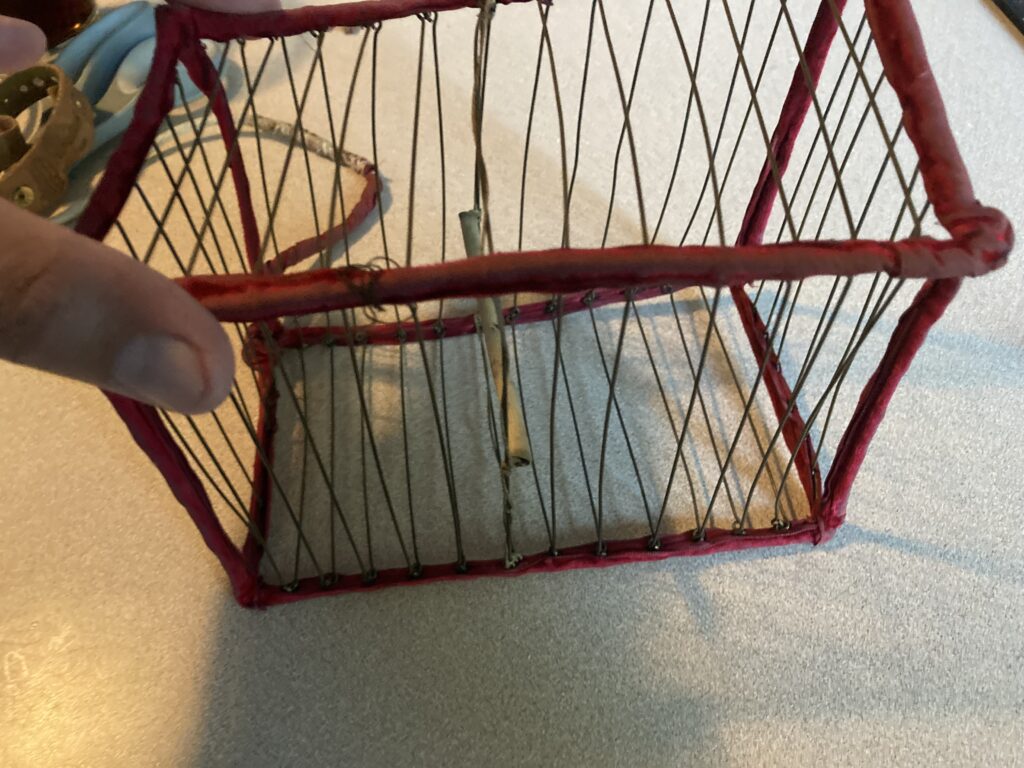
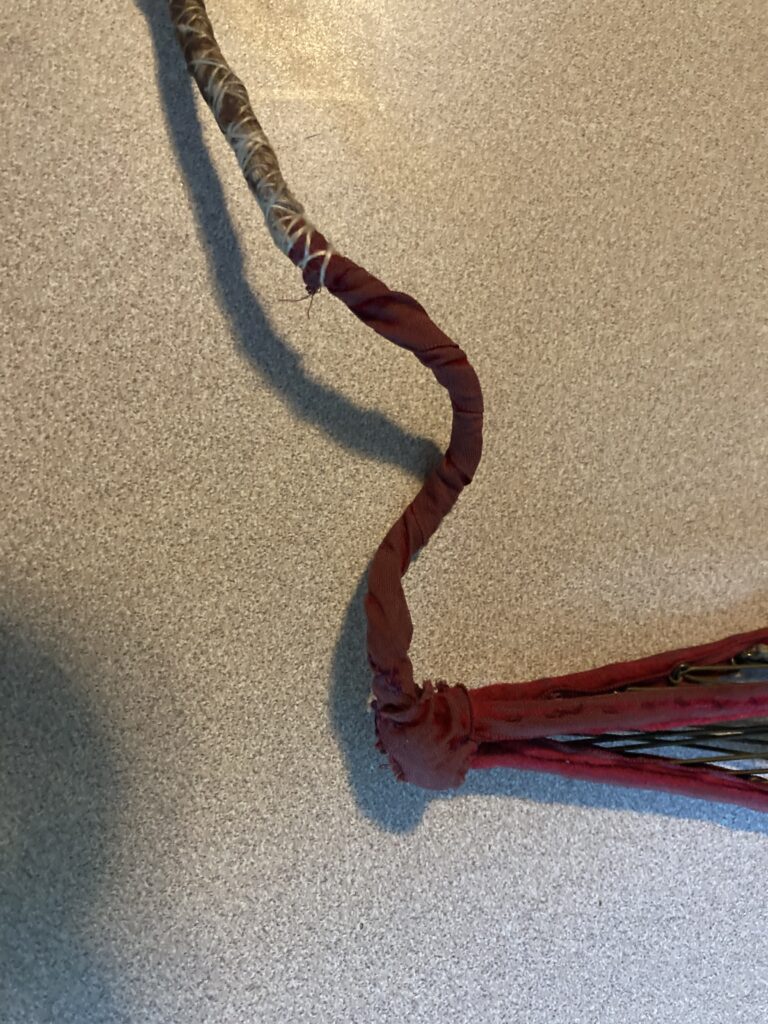
Another neat thing about the Thayer vanishing birdcage is how the pull is connected to the cage:

It’s permanently attached to the cage, and not clipped on. The red ribbon extends down the cage onto the pull. This in theory smooths out the cage going up the sleeve and eliminates some possible snag points. Having a clip like a modern cage adds places for the cage to snag.

I’m glad to add this to my collection, as I think it’s a missing link from the older style cage to the more modern cages.

Brass Vanishing Bird Cage…

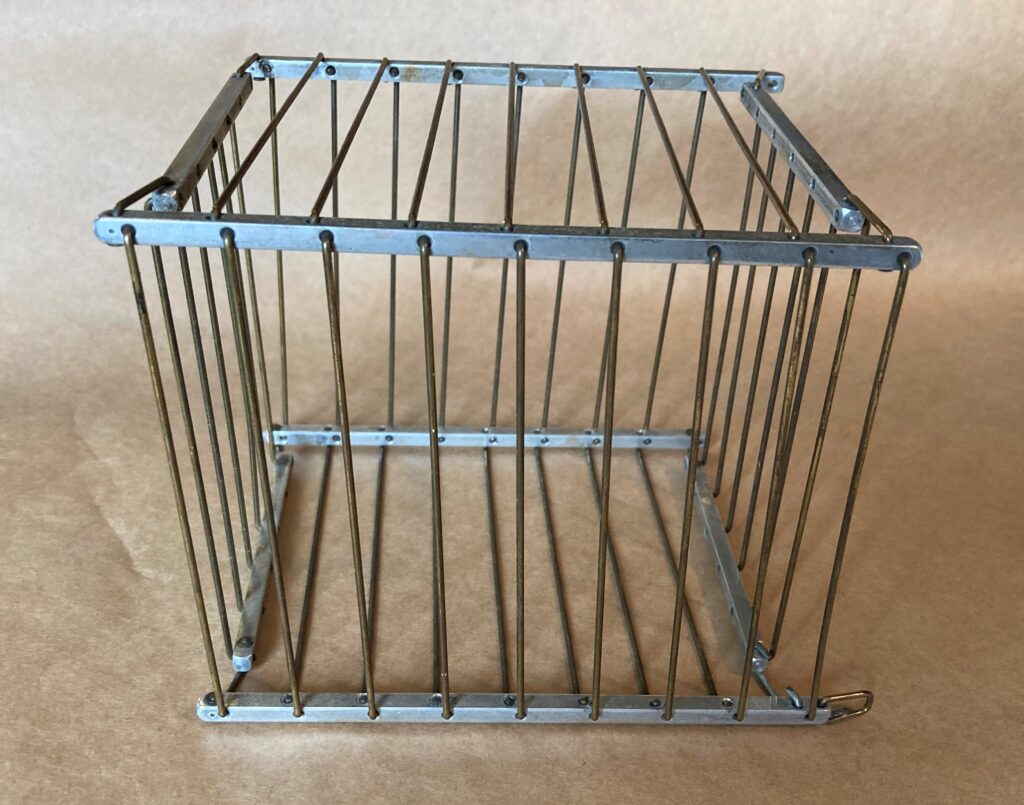
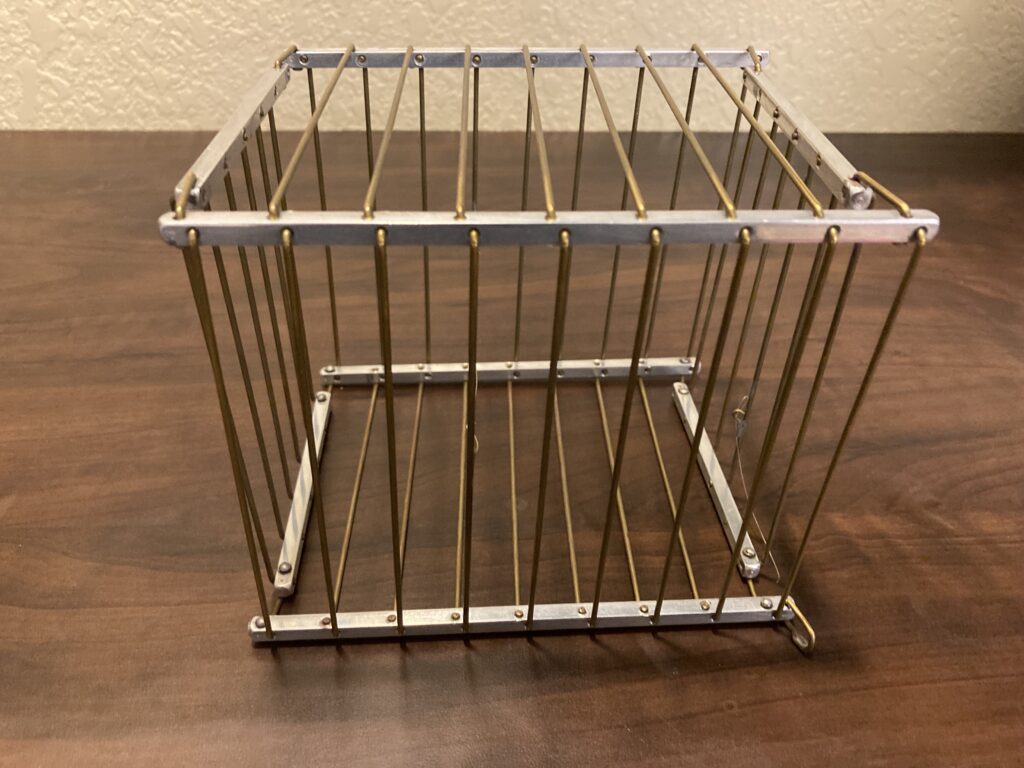
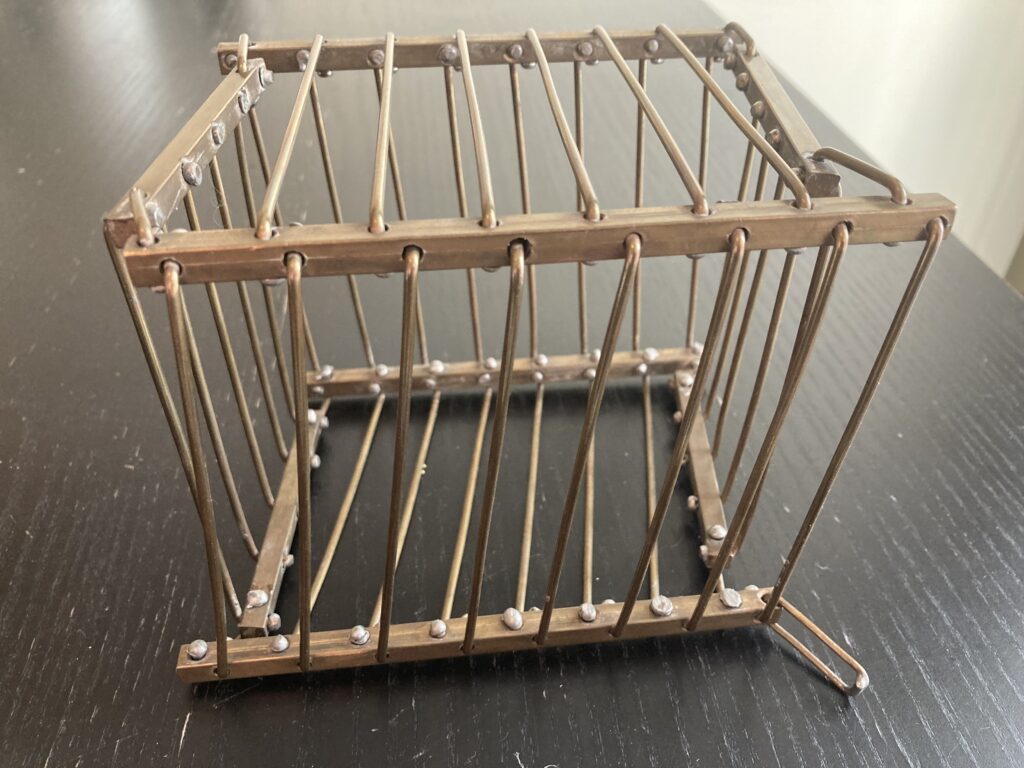
The vanishing bird cage that I won at the recent Potter and Potter auction showed up! The description said they thought it was from the 1930’s, I think it’s a little bit later than than, but it’s really hard to say.

The cage is 5 inches by 4 inches and 4 inches tall and made of brass. That makes this thing HEAVY! When you’re doing the vanishing bird cage, one of the things that you are fighting during the vanish is gravity. The weight of the cage doesn’t help you win that fight!

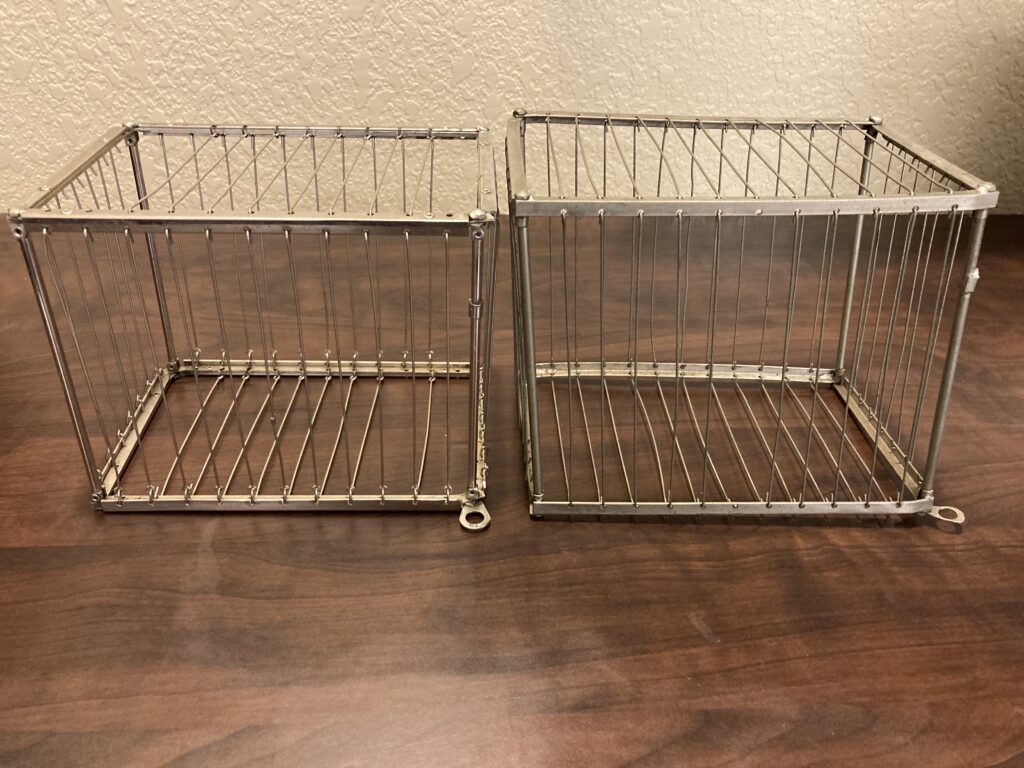
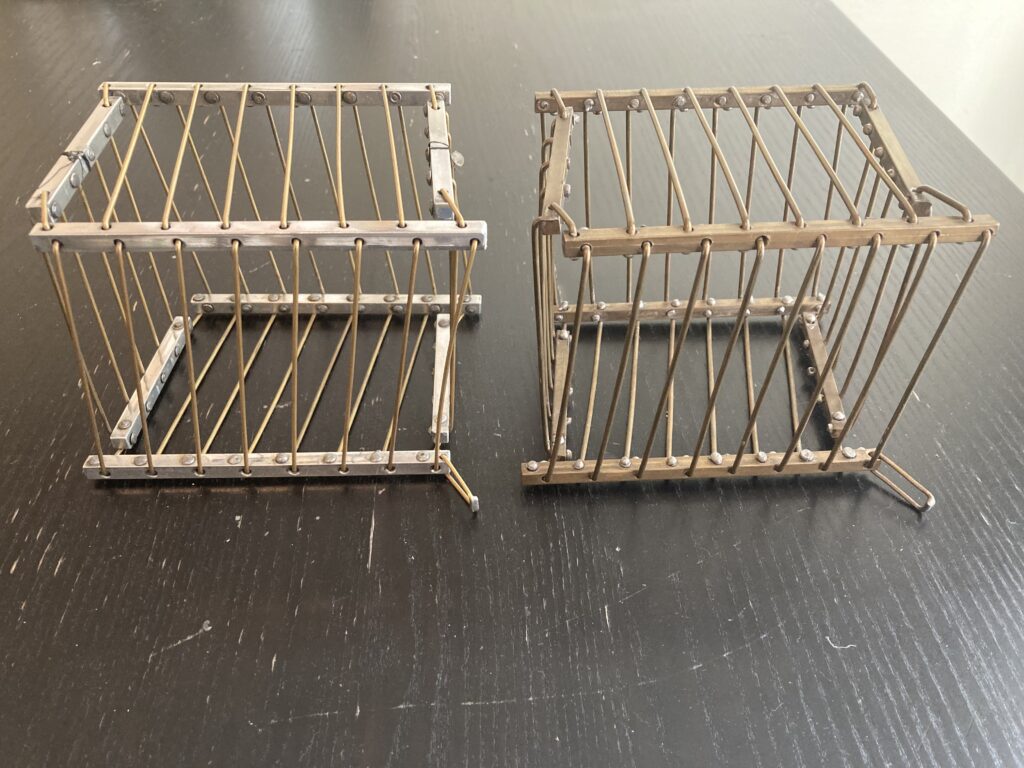
To put it in perspective, I have another cage of similar construction and dimensions.

The brass cage on the right is 337 grams or almost 3/4 of a pound! The cage on the left is 165 grams, that’s essentially half the weight of the brass cage. The cage on the left also collapses into a thinner profile. I suspect the brass cage was made as a DIY vanishing birdcage, and not something that was mass produced for sale to other magicians.

I’m glad to have added this to my collection, and gotten to compare it to something similar, but half the weight to really confirm my suspicion that weight does matter in a vanishing cage!

Rectangle Vanishing Bird Cages…

I was going through my vanishing birdcage collection the other day. It’s interesting the different styles and how the cage has evolved. Going from rigid, to floppy to semi rigid. There has definitely been an evolution in how the vanishing birdcages have been made.

I think the Thayer cage, which is more rectangular than a modern semi rigid cage is the best shape. A modern cage, it more square (still rectangular) than the Thayer vanishing birdcage. When collapsed, it has less bulk because of the shorter ends, which is good. However there might be some engineering challenge that the more rectangular shape presents when making it as a rigid cage.

I’d love to try to make a semi rigid cage with the proportions of a Thayer cage, but unfortunately the skills to make a vanishing bird cage are beyond me…

Another Cage…

Awhile ago I realized I collected vanishing birdcages. At the last Potter and Potter auction they had an old brass vanishing birdcage.

The description said they think it’s from the 1930’s. I personally think it’s more modern than that. I decided to bid on it, and I’m the only one that bid, so I got it for next to nothing, which is great for me!

I’m very curious how heavy it is and how well it collapses.

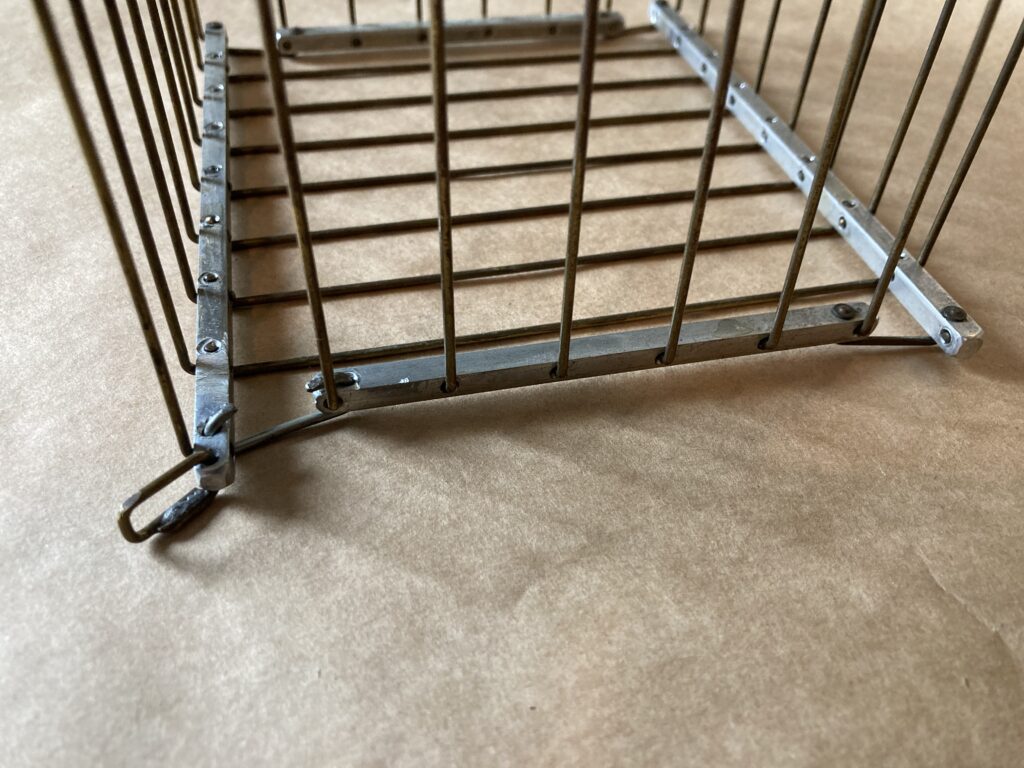
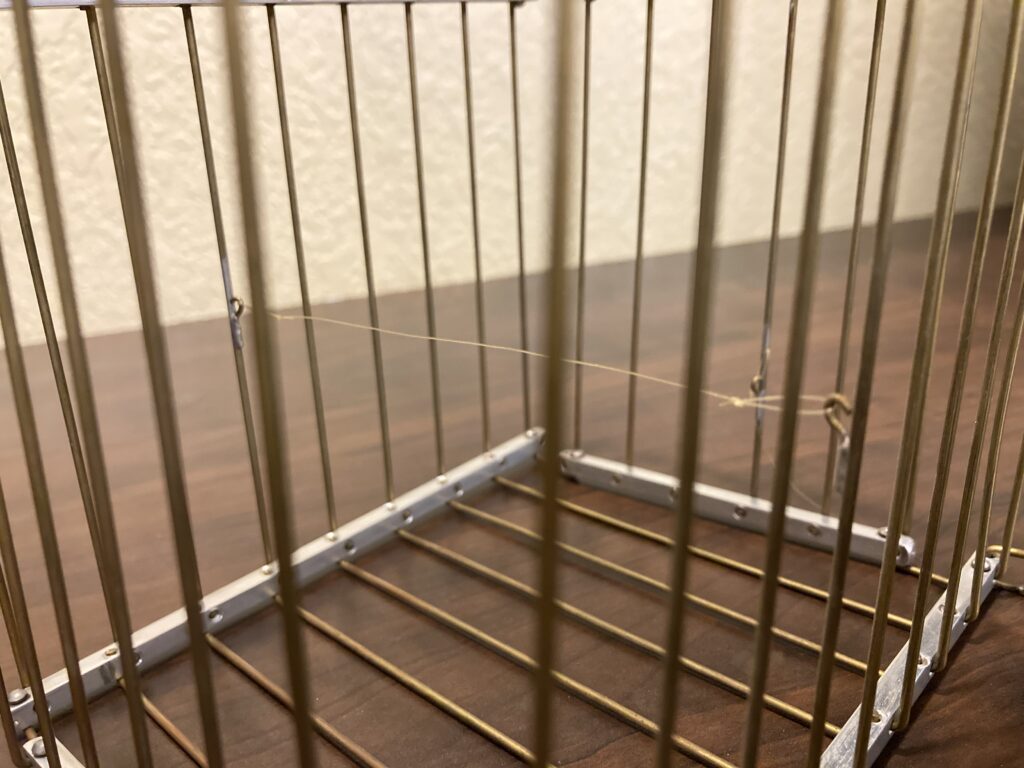
The blobs of solder look like they’ll rip your forearm open if you vanish it with any force. I wish I knew a little bit more about the cage’s history. That’s the thing, so many makers worked for different companies and people. It’s hard to know what came from who. When I was at Abbott’s Magic Get Together, I chatted with a lot of people who are very knowledgeable about the vanishing birdcage to try to figure out who made the one I use. Everyone gave me a different answer and told me that the other people were wrong.

Do I need to know who made it?

Not really, since they aren’t made anymore, I can’t just go out and buy one. Knowing the history of your props does make you a better performer. I’m not sure why, but I think when you know your props on a deeper level, the audience can sense that. The prop becomes something more to you, and that comes through when you use them.

Knowing the Trick…

The fair that I’m performing at has me staying at a rental house with a couple of other performers. There’s another magician and a couple of musicians. The magician asked about my Take Up Reel one night and I got it out and chatted with him about it. The musicians asked what it was, and I explained what it did. One them them wanted to me to show them the trick, so I grabbed a coat and did the vanishing bird cage.

This led to something very interesting. The musicians knew how the trick worked, but were blown away when I did the trick. They knew the cage went up my sleeve, but had not idea how that was possible. The had seen the gimmicks, and how they operated and they trick still fooled them.

So what’s the lesson?

You don’t need to be super protective of every little secret in things that you do. Some tricks will stand the test of still being a fooler when the audience knows how the trick works.