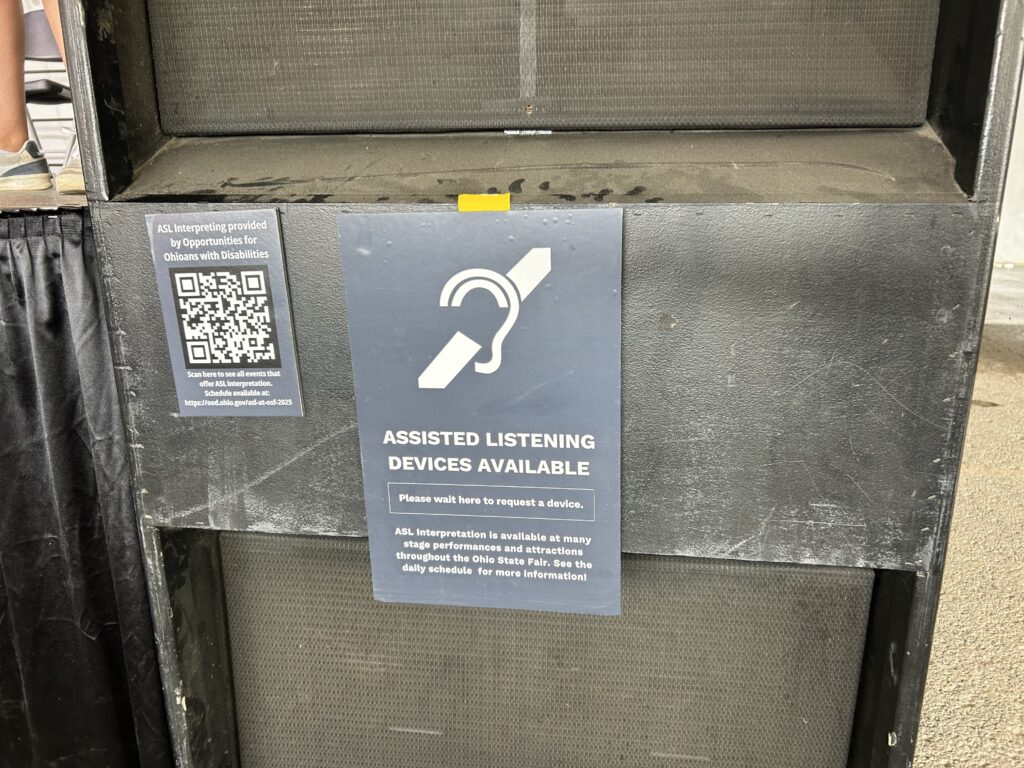
Chinese Laundry Ticket

I found a stack of Chinese Laundry Ticket papers in a box of old magic from the early 1960s. This is a torn and restored paper effect with a strip of paper. The theme of this trick is a ticket from a Chinese laundry that’s torn and restored, and this routine is typically filled with offensive (racist) patter lines. A better themed version would be Arnold Furst’s Fresh Fish paper tear.

Anyway, I have these Chinese laundry ticket papers, and I was curious what they actually said, so I ran them through Google Translate and here’s what they say:
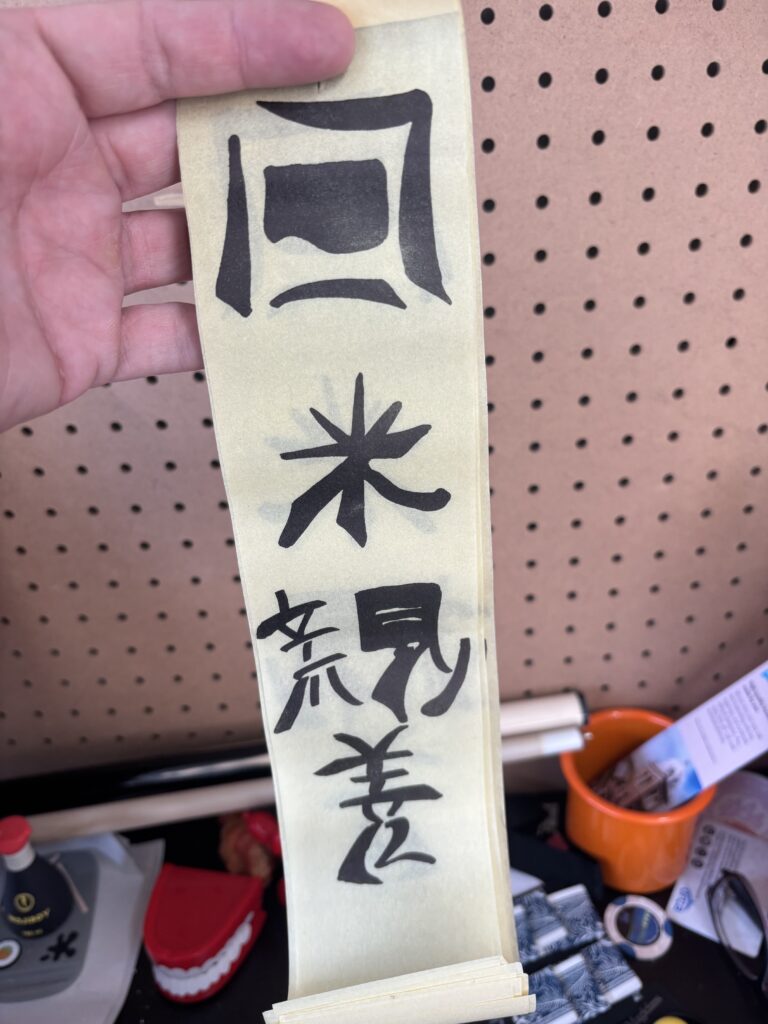
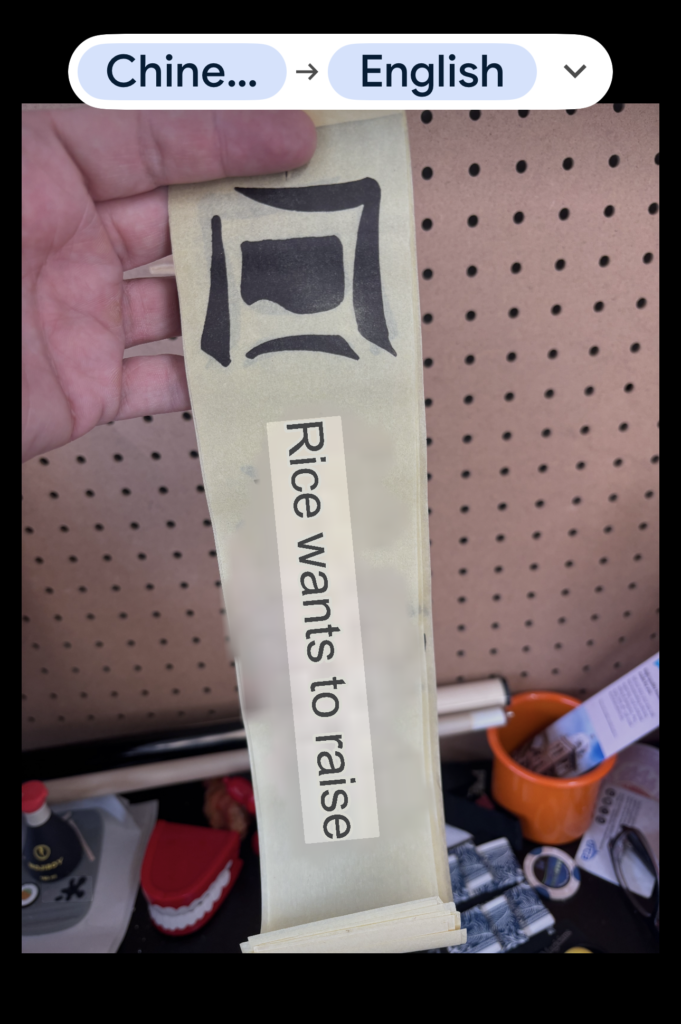
This is one of the things that’s problematic with these older magic tricks, is that what’s actually written on them isn’t what it’s supposed to be in the trick. This trick, if it actually had numbers on it instead of talking about rice, would be slightly less offensive. The simple fact that the trick is taking something from another culture, but not taking the most basic step of making sure it’s correct, is just one of the reasons I dislike this trick.

Go out there and be a better human.

-Louie

Vintage Magic Trick from Glen!

My buddy Glen knows that I love old magic tricks. He brought one to show me in Reno, so here’s The Farmer’s Daughter:

It’s a great little packet trick with a story that’s consistent with the time it was created. Thanks Glen for sharing it with me!

-Louie

What’s Wrong With Magicians?

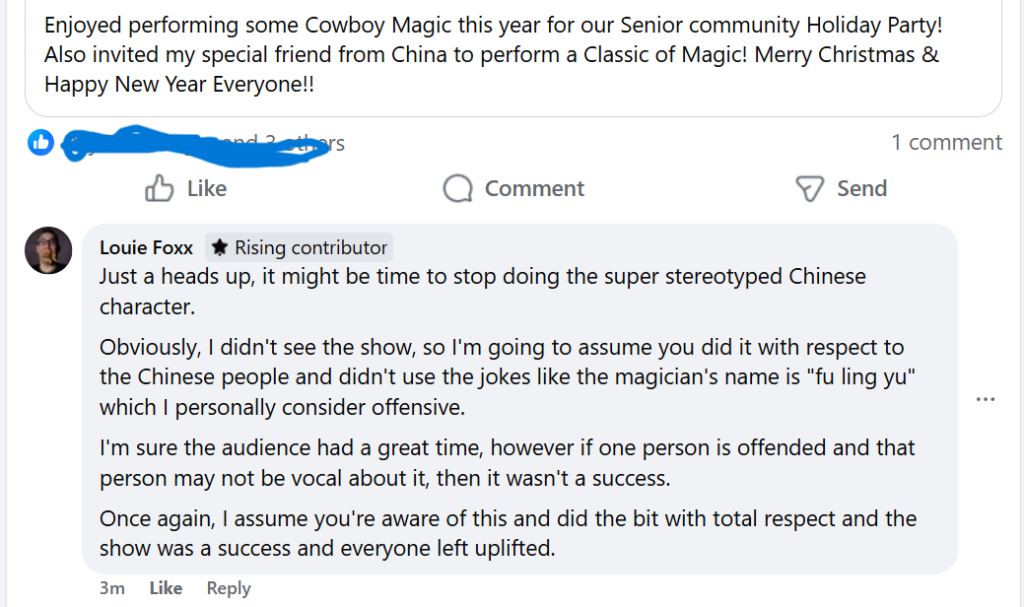
A magician posted these pictures of himself performing as a Chinese person.

Here’s my response to the picture, which I replied to in a private magician’s group, and not on his public, personal FB page:

magic

I really dislike that magicians still think this is an acceptable way to perform. Performing in “yellow face” has a long history in magic and one that needs to end.

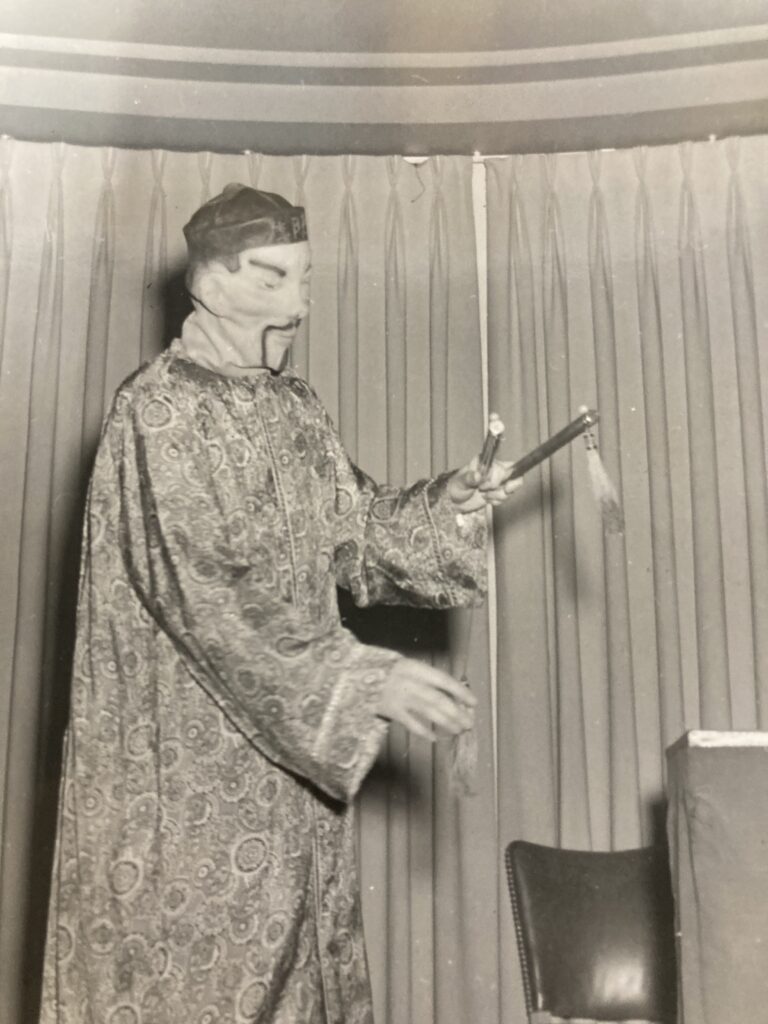
Here’s Jack Chanin (I think, and if I’m wrong, let me know) performing in Yellowface (yellowmask?):

yellow face magician

These “characters” are outdated stereotypes. Part of the history of yellowface was to portray the Chinese as monsters and to give them frightening physical features. The long mustaches and fingernails, the bright yellow skin color were to make Chinese people look less human.

Why would any performer who knew its history want to continue doing that?

In my opinion, it’s lazy creativity. In both pictures above, the performer is using the Chinese sticks prop; however, that trick isn’t from China! Instead of putting the energy into creating a unique routine, the performer does something that they’ve seen done before. The thinking is that if someone else has done it, then that’s the way to do it.

I’ve personally walked out of several shows when a performer did stereotype material. There is an exception to this, does the performer have a point of view with what they are doing. Is it social commentary, relating an actual experience, or something like that? In all of the exceptions to this that I have seen, the person never put on a costume.

The moral of the story is don’t do stuff like this.

-Louie

Stock Magic Jokes and Gags

Social media has created lazy performers. They crowdsource their research without doing the most basic research first, or worst they crowdsource their show!

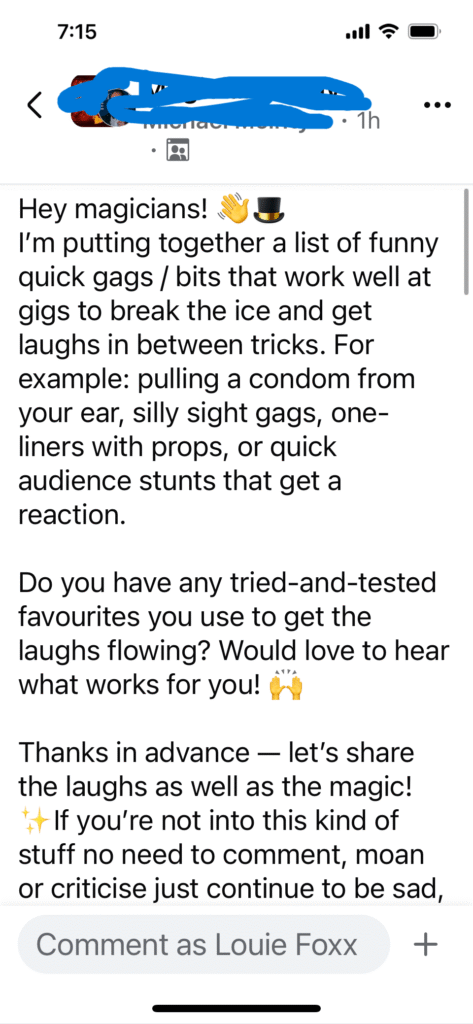
Here’s an example of a post recently in a magic group:

Magic show jokes

First of all…pulling a condom from the ear????? Without context that wouldn’t fly in the USA.

Now let’s get to the meat of what they are saying, they want to put together a list of bits that magicians use. Here’s what’s wrong with that, most of the bits magicians consider “stock” are simply lines that have been stolen over and over again and no one thought to look for the joke originator for permission.

Here’s a publicly posted video from the magician that made that post’s FB page:

Do you think he wrote that joke?

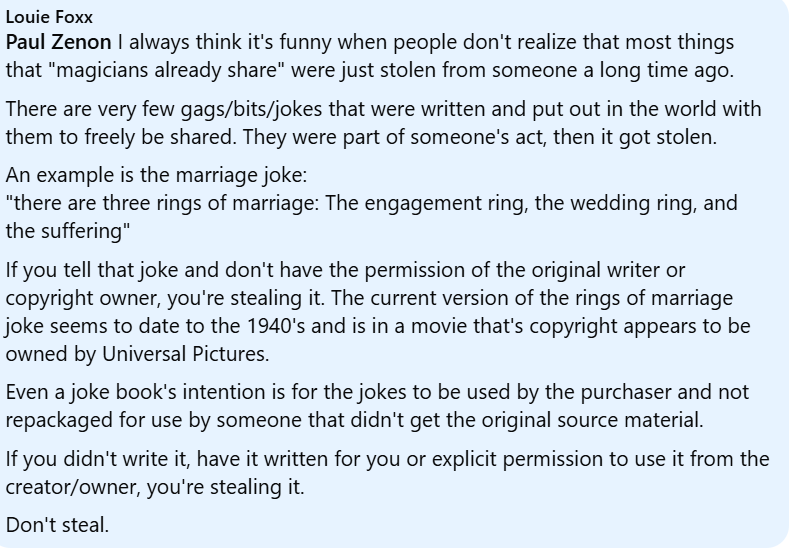
No, he heard someone else say it and he put it into his act. I know the defense is that “it’s so old, no one knows who came up with it“. That’s not true, with a little bit of research the history of that specific joke can be found, it’s a little murky as it has evolved, but some of the history is out there.

Magic show jokes

That’s all for today, I’ll get off my soapbox.

-Louie

Sign Language Interpreter For Magic Shows

All of my shows at the Ohio State Fair had a sign language interpreter. It’s a really cool thing to have and there were a lot of deaf people in my audience because of this. It was great to have my show, which is very verbal to reach people who probably wouldn’t normally watch it.

sign language interpreter for magic show

There were 4 or 5 interpreters who cycled through the 24 shows that I did over 12 days and they got to know my show pretty well. At one point my show got off track and I was trying to bring the routine back so we could wrap up and I totally forgot where I was in the show. I asked the interpreter and she told me what the next part of the routine was!

Everyone from the Opportunities for Ohioans with Disabilities did a great job, and I even learned to tell a joke in sign language, and I have the sign language interpreter verbally tell it on the mic while I signed it. Not only that, but I learned a lot about sign language!

I really wish more events would offer this, and it does open the show up to more people!

-Louie

Wasn’t it Houdini?

I was performing at an event and they had an exhibit about robots. Part of the exhibit was a timeline of robots on film. The list 1927’s Metropolis as the first robot to appear on film.

robots in the movies

I always thought the fun magic fact was that it was Houdini put the first robot in a movie in his The Master Mystery which came out in 1919.

The Master Mystery - houdini

There could be some technicality about this as to why Houdini wasn’t listed. His robot was called an “automaton” and had a brain inside, so more of a cyborg than pure robot and at the end is revealed to not be a robot.

You can see the robot at the end of this clip:

You can find the whole movie in parts on YouTube.

-Louie

How to be Introduced

A bit ago I was at a gig and before the show the MC told me the introduction there were going to use for me. It don’t remember the exact wording, but it essentially said that I was “slumming it” to perform for that audience.

Personally I don’t like putting down the audience before I even start. You don’t know about the audience, for some people it could be their big night out for the month or year. I don’t want to do that. I’ll put myself down all day in the show, but not the audience, and especially not before I’ve taken the stage. The audience doesn’t know me or my vibe.

An introduction should build up the performer or inform the audience about what they’re going to see. Not put down the audience.

I politely asked the MC to use the prepared introduction.

Don’t be afraid to tell an MC or show host exactly how you want to be introduced. There are times when I’m the MC and an act insists that I use something that I know is wrong. Like when they hand me four paragraphs to read. I’ll ask if I can shorten it, but if they insist, I read what they gave me.

-Louie

Cemetery Tour Guide

When I was in New Orleans with the family and one of the things we did was a cemetery tour. The first thing that he did was tell us about himself and his connection to the city.

tour guide

That’s something that many magicians miss, they don’t tell the audience about them or their connection to whatever they’re doing onstage. When you start performing on a more national scale, the “where you’re from” becomes a lot more important. It doesn’t need to be a while chunk of your show, sometime it can be a little aside about being from where ever.

The one thing that I didn’t like, but it’s a common tour guide and magician joke was at the end he was asking us to review him. He said, “if you didn’t like the tour my name is Joe, if you did like the tour my name is _____“. There’s a lot wrong with that joke, first of all you shouldn’t use anyone else’s name in your closing remarks if you want the audience to remember your name. The tour guide is a great example, in the hack line above I left his name blank, and that’s because I remember the fake name he said, but not his real one. The line got a laugh, but in the long run it hurt him as I can’t leave him a positive review because I don’t remember his name.

It was a short term win (laugh) with a long term loss (me not remembering his name). If you use this line, you really consider if using that line is worth it the little laugh it gets. If that line gets a huge laugh in your show, you really should reexamine your show to find out why your other lines aren’t getting the same reaction as the stolen line (if you didn’t write it, or have permission from the person who wrote it to use it, it’s stolen).

-Louie

The Card Clothespin!

Here’s a quick little novelty card reveal that I’ve wanted to do for a while, I just never have a clothes pin:

You can download the instructions on how to make the trick here:


If you make one, let me know how it plays for you!

-Louie