Everything Has Already Been Invented

I always hate it when people say, “Everything has already been invented.” I think it’s a way for the person who said that to:
1: Justify them not trying to be creative.
2: Used as a way to trivialize someone else’s creativity.

That said, there are a lot of ideas that are reinvented, and that’s not necessarily a bad thing. Many tricks from a long time ago weren’t complete because they couldn’t find the final piece of the puzzle. Sometimes a technique or material didn’t exist that would take the trick from just “meh” to amazing.

I was reading The Bat magic magazine from the 1940s on the plane home from Florida and read the Bowman’s Bullseye. Read the circled effect:
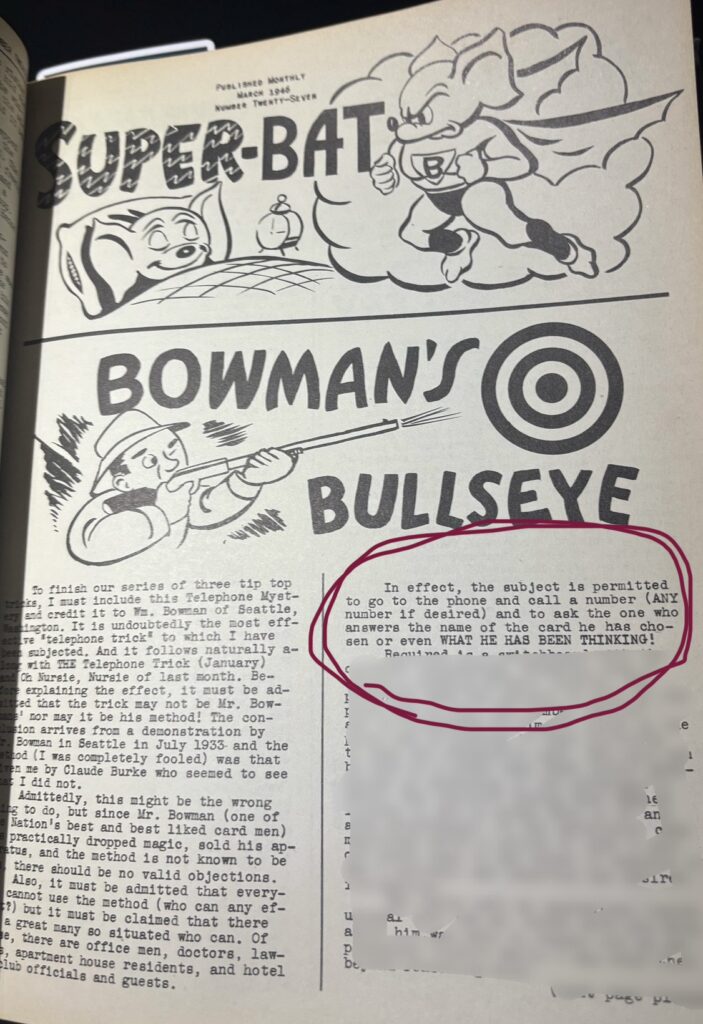
Bowman's Bullseye

Does this sound like a modern trick? If you said The Stranger, then you’re correct! The effect is the same, but the method is quite different and wouldn’t work today. In fact, I’m not sure Bowman’s Bullseye was practical in the 1940s.

What the stranger did was create the same effect, but using techniques that would have been impossible 15 years ago, and made it practical! The two tricks are light years apart (OK, actually like 90 years) and can’t be compared, other than they are both based on the telephone tricks that were invented pretty much where the telephone was.

Keep creating!

-Louie
Ah Nertz: a Card Trick From 1943

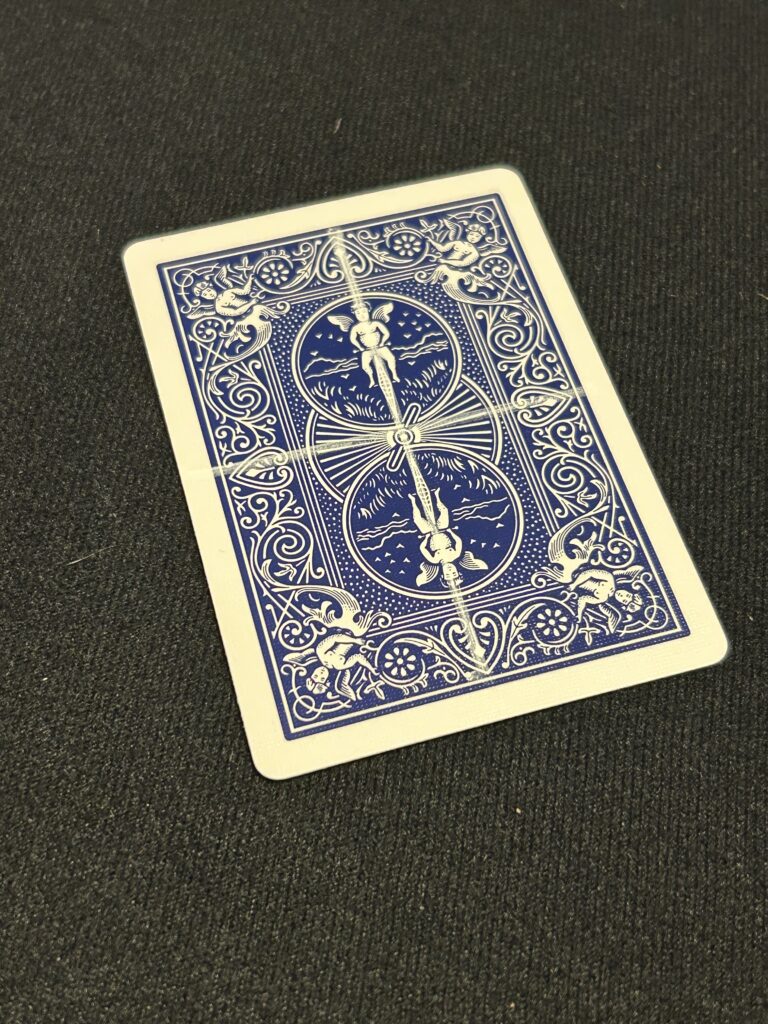
In the second issue of The Bat Magazine from 1943 there’s a packet trick called Ah Nertz. Packet tricks didn’t really exist at that point, there were things like 3 card montes or tricks with the four aces, but nothing like post 1960’s packet tricks.

Here’s Ah Nertz as written:

If you think about the effect, this is an early version of twisting the aces.

I wanted to update the trick with a few modern moves, so here’s what I came up with:

One thing that the original lacked was showing all the cards going the same way. To do that I added a modified DM Move/2 for 4 Count. I also wanted a reveal of the one the upside down cards, but where you see all of the cards. That was accomplished with an Elmsley Count.

Here’s a walk through of the updated version of Ah Nertz:

What I think is interesting is that in theory you could theme the trick very easily with customizing the last card. It could be a trade show trick, “all the options for buying X got your head spinning…”. Or a story could easily be attached to it, like a kid who always felt different. Then the reveal on the final card ties it all together!

I think this trick’s premise is one of the hidden gems in The Bat magazine!

-Louie

Folded Card Magic Trick

Sometimes I have a great idea, I send it to my workshop group, and they tell me it’s been around for a while. My idea was to do a trick after revealing a card that’d been mercury folded. Occasionally, after the card has been revealed folded, someone will ask if you can fix the card. The idea that hit me the other day that if I drew lines on the back of a card with a white pen, it would look like the creases.

mercury folded card

I could then top change the folded card for the card with the lines drawn on it. Then I could wipe the lines off, and the card is flat again!

It’s a great idea. I wish I’d been the first person to think of it. I’m still going to play with the idea.

-Louie

Slippery Cards Gag!

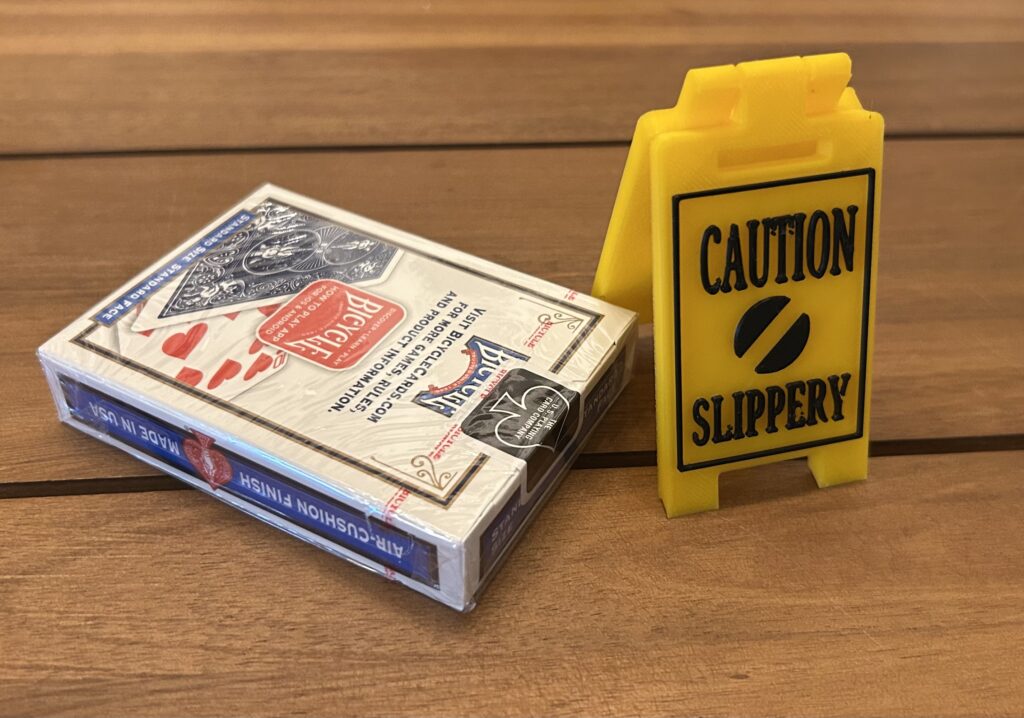
When I open a new deck of cards and have them shuffled by someone in the audience, 90% of the time they will comment that they’re slippery. That’s where this gag comes in.

slippery cards magic trick

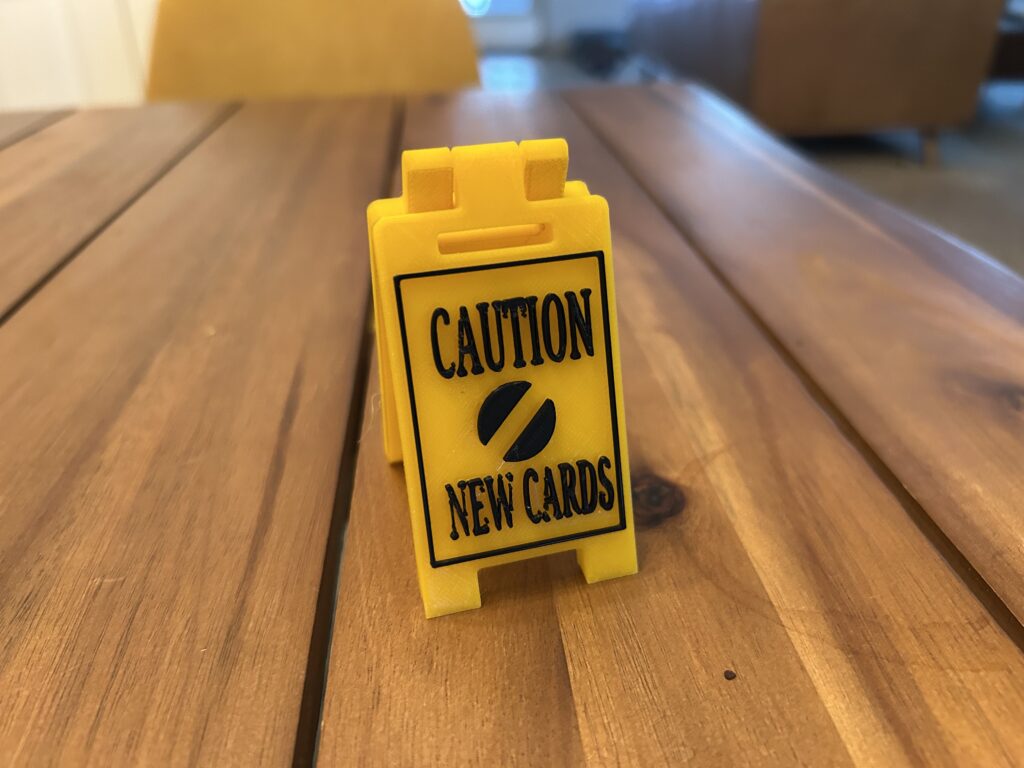
When they comment on the cards being slick, I take out a little caution sign and set it on the table. That gets a laugh, and it’s a gag that will introduce the prop. I like using a gag to introduce a prop, another example of this is my Bodega Coin Tray. Also, when you use the prop for a gag, it serves a purpose and is less suspect later, since the audience thinks it’s already fulfilled its role.

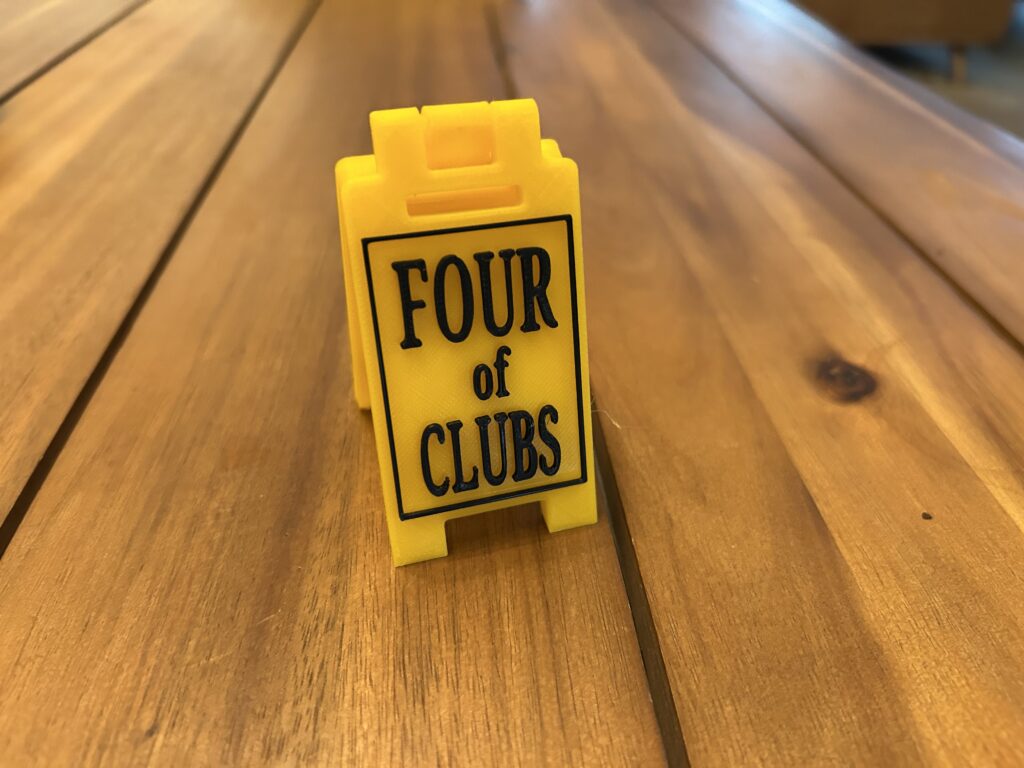
What happens is that during your card tricks, at one point, the signed card appears under the little sign (like card under glass). Then later, you say the card is under the sign, but it’s not; however, the sign has changed to say the name of their card! Then, a moment later, the signed card has reappeared under the sign again!

I’m having a lot of fun with this little prop!

-Louie

Card to Impossible Location

When it comes to the Object to Impossible Location type of tricks, I like them when the object never disappears. I don’t like how things like the next of boxes are typically presented. You borrow a watch, the watch disappears, and then you show the box. The audience knows the watch will be in the box. There’s no surprise there, it’s a puzzle at that point.

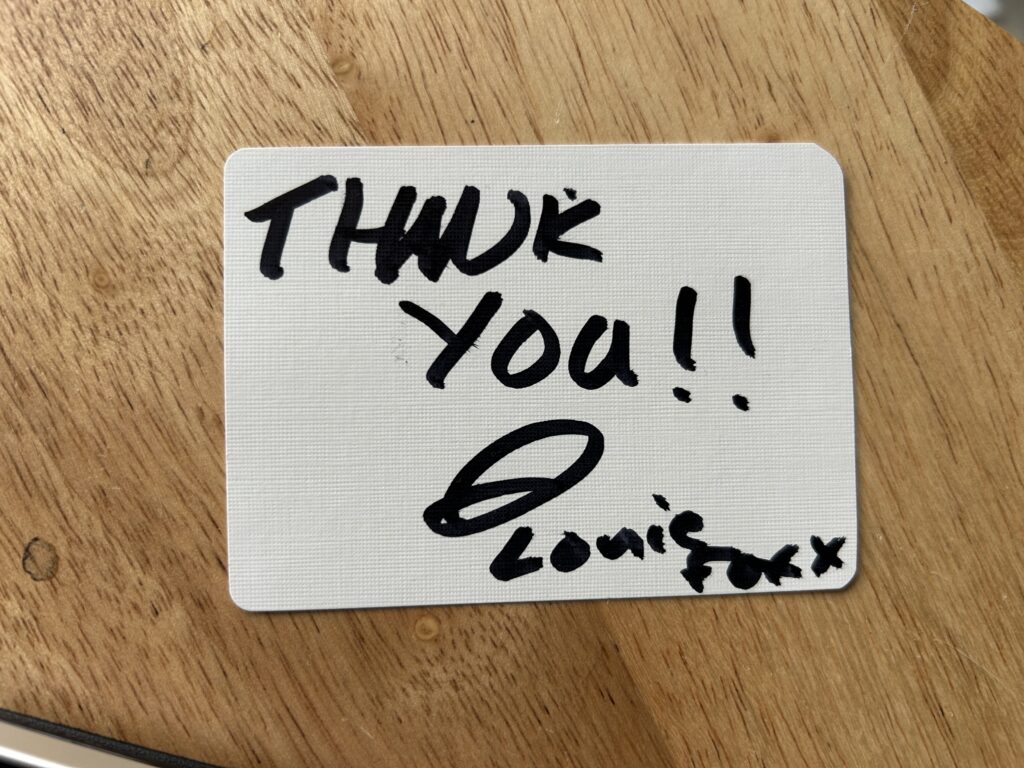
I’m working on a card to impossible location for my show. The thing about this is that I need to get the card from the person who signed it at the end of the trick, but I want the audience to think that the person who signed it gets to keep it. My solution to this is the card below:

card trick

I’m simply top changing the signed card for the thank you card. I hand it to them and say, “This is a thank you for helping me out,” and let them see the card’s face, but not the audience. I tell them they can put it into their pocket and keep it. What that does is make the audience think they walked away with the signed card, when in reality, I have it and can load it somewhere later.

I’ve done this once so far, and it worked. We’ll see how well it works long term.

-Louie

Magic TV Appearance

A couple of weeks ago I was on a local TV show to promote National Magic Week. It was a fairly quick appearance and I did one trick which was a card trick, and you can see it below:

The trick uses The Fortune Teller prop for a routine that’s in my 2025 lecture notes. What I like about this prop is that people react positively when it’s introduced, and it’s got a nice three-hit punch at the end of the trick!

When doing TV appearances, I try to do one trick with big impact over multiple tricks. It makes the appearance cleaner. I also did have other stuff in my pockets if I needed to fill time!

-Louie

Ace, Two, Three, Four to Four Aces Trick

Recently, I posted a trick where four aces turn into an ace, two, three, and four. That trick felt like it needed some sort of kicker ending, like the cards having a different colored back or something. Well, I tried making the cards work backwards, going from an ace, two, three, and four into four aces and that fixed the problem. The trick feels complete at the end.

Here’s a demo of the trick:

There’s only one move in the trick, which is an Ascenio Spread. That move is repeated, so it’s not very hard.

This is the better version of the trick.

-Louie

Magic Show Station

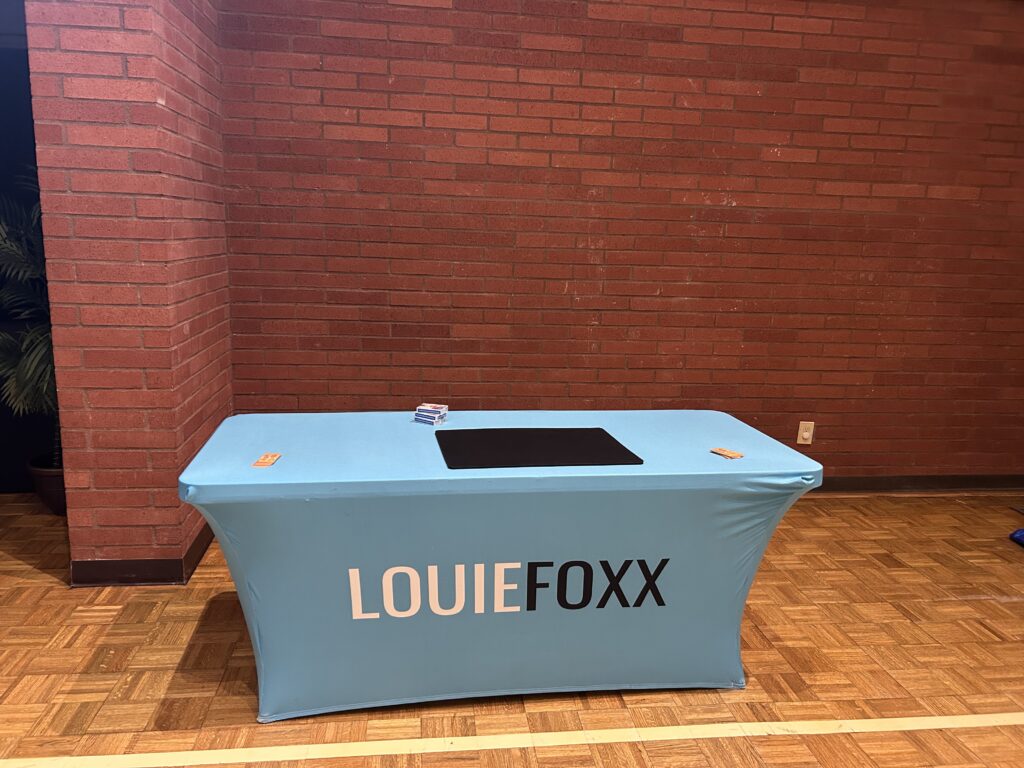
At a recent Halloween event, I was hired to perform at a close up magic station. This was simply a table that kids came by and I did close up magic for them.

This was a fun format to perform in, and with the table, I had more props with me than I would usually for a roving gig. When the crowd grew bigger, I did a couple of bigger tricks.

Another thing you can’t see in the picture is that I brought a speaker with me and used it to amplify my voice. The event was in a noisy gym, so a bit of audio support was nice!

-Louie

The Fortune Teller on TV (again)

On a TV appearance last week I did The Fortune Teller trick from my 2025 lecture notes. You can watch the appearance here:

What I like about this trick is that the moment you bring out the prop, the audience gets a hit of nostalgia. That makes it a trick that instantly connects with the audience.

Then my card routine with it has a three-reveal punch. The card routine I did in this TV spot is different from my stage routine, which wouldn’t work with this setup, with the host standing next to me.

-Louie
PS, if you like the routine, you can learn more about it at:
https://www.magicshow.tips/lecture-notes-2025/