A while ago, I made a set of natural shells and then made a silicone mold of them. I used that mold to make a bunch of resin shells for a shell game workshop. One of those resin shells recently got 3d scanned and I’ve started printing them!
These are a great beginner set or set to throw in your backpack to carry around and not beat up a nicer set.
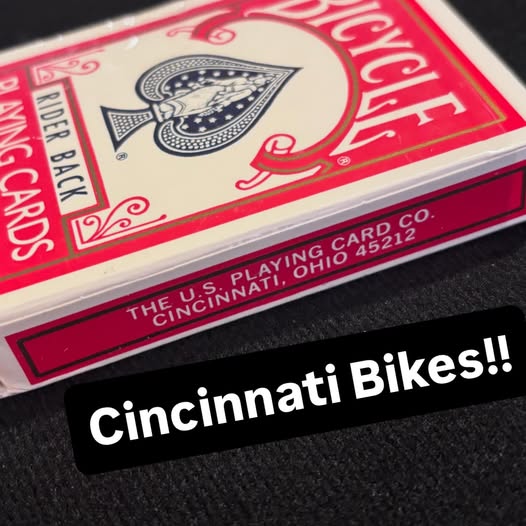
My favorite playing cards are Old Stock Bicycle Playing Cards from Cincinnati. As I travel I find sealed decks in junk shops and always try to buy them. Sometimes people want way to much for them, but usually I get them for about $2 a deck, and never pay more than $3. Over the years I’ve filled a bin of them!
These decks faro beautifully out of the box! They also last longer than the Bicycle Cards that are currently sold. I don’t use these for shows, they are for practice / play for me. When I have a good deck, I’m more motivated to practice than with a deck that’s inferior.
For shows I use new decks, these are good for about an hour (or one set), which is fine because so many cards will get destroyed in that set that I replace the deck each set.
I don’t think I wrote a post about seeing the That’s Magic at the White Rabbit Theater in Reno. This is an illusion show presented by Kaileigh and Chase Hasty. I saw the show with 17 magicians!
They do a great job with the magic show. It’s a fairly standard magic show, but they have some original “bits” with the effects they do. Chase does a great job of being in the moment during the show. With a seven day a week schedule, I’d imagine it’s easy fall into being robotic onstage.
The show is more than illusions, Chase shows he has some skill doing ball and card manipulation and Kaileigh does the aerial silks, so it’s not just “store bought” stuff, which I appreciate!
The show uses a lot of lighting cues, which really adds to the theatricality (Is that a word?) of their magic show. Lighting cues really make a show feel bigger. At some point, I should find someone to write some basic ones for me to use when I work in theaters. Just one or two, so it adds visual texture to the show.
I really enjoyed the show, and it’s worth checking out, there’s a lot you can learn by watching it.
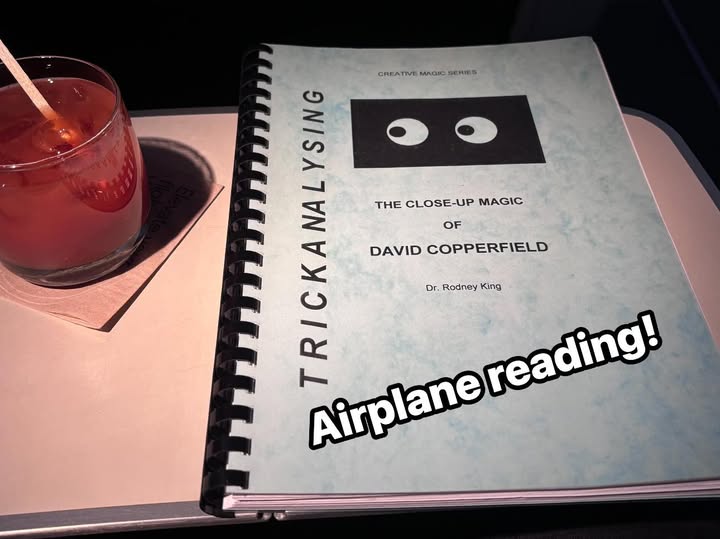
On a flight I read the book Trickanalysing The Magic of David Copperfield. This is a book from 1997 that goes through 20 of David Copperfield’s close up magic routines that he’s done on TV. This book is about the theatrical elements in the routines, not about specific methods.
The first 2/3’s of the book is the author going through and breaking down what’s theatrically happening in the routines. The final third of the book digs more into the author’s definitions of the theatrical devices used and how they could be applied to your magic. Then at the end, there are some worksheets for you to go through your magic and see what you’re using, or could be using.
Honestly, I don’t know how I feel about this book. I didn’t dislike it, however, I’m not in love with it. It was definitely interesting, but I’m not sure how much of the Trickanalysing system that I’ll personally be using. It is always neat to read about someone’s system.
In my collection of old magic stuff, I had a pack of FAKO cards. This is a deck of gaffed cards and novelty cards.
The pack I had was just the cards without the booklet, so I’m not 100% positive as to what tricks the cards do. One of the cards has a big stop sign on it, and here’s what I’ve been doing with it:
It’s just a second deal until they say stop, and then a timing force for the second time. Every time I do it, the person has a great reaction when they see the card!
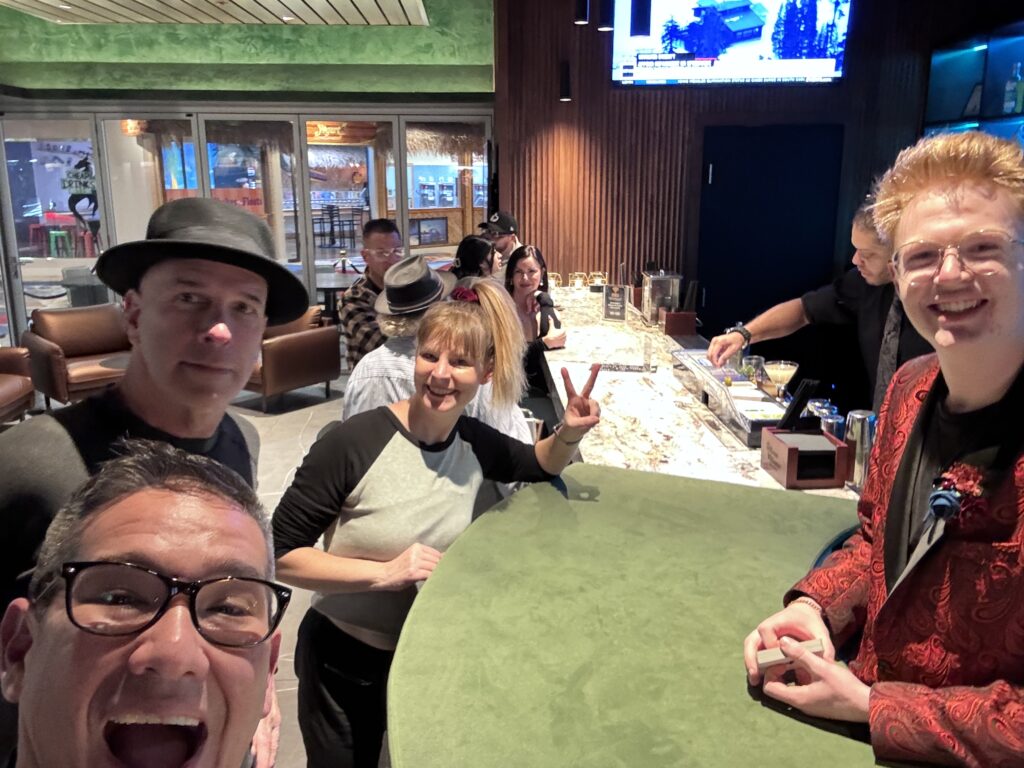
I made it to the White Rabbit Theater for a third time last week to check out close up magic by Phoenix Phenomenal in the bar. I went down with Mickey O and Bri to watch the show.
Phoenix does some great magic, and as a younger person doing 4 close up shows a night at the bar will get him a ton of real world flight time under his belt!
That’s one of the keys to performing, stage time. In comedy they say “Stage time is more precious that gold”. In magic, many people don’t see the value in stage time, and more advice you hear is “charge a lot of money” versus “get on stage and get good”.
Oh, I’m not saying Phoenix was bad, so please don’t read it that way. He’s great, he’s just younger. He doesn’t have the miles on him that someone who’s been doing it longer has. I wish I had a nightly bar gig when I was his age, I would have gotten way better sooner!
Recently, I bought an old box of magic props from the late 1950s/early 1960s, and it contained some 65ish year old flash paper. People frequently ask in magic social media groups, “Does flash paper go bad?” Well, let’s find out!
I’m amazed that it worked as well as it did and that it didn’t burn my fingers!
I think the issue that people have with flash paper is that they store it wet for safety, which is absolutely what you should do. Then dry out what you need to use a few days before you need it. That said, I think the paper sitting wet in a sealed bag over time will deteriorate. That takes years, and you really should be buying decades worth of flash paper at one time. It’s something you really should be buying a few months supply at a time. I personally wouldn’t want to store a ton of it at home.
One of the things that I’m playing with is a Coin Matrix. One thing I thought about is why the coins are in the corners of the performance area rather than in some other shape. I get that there’s a lot of tradition, as the modern coin matrix is based on Yank Hoe’s Sympathetic Coins. Then, when Al Schneider created the modern version, he called it Matrix, and I think in math, those are traditionally a square or rectangular shape.
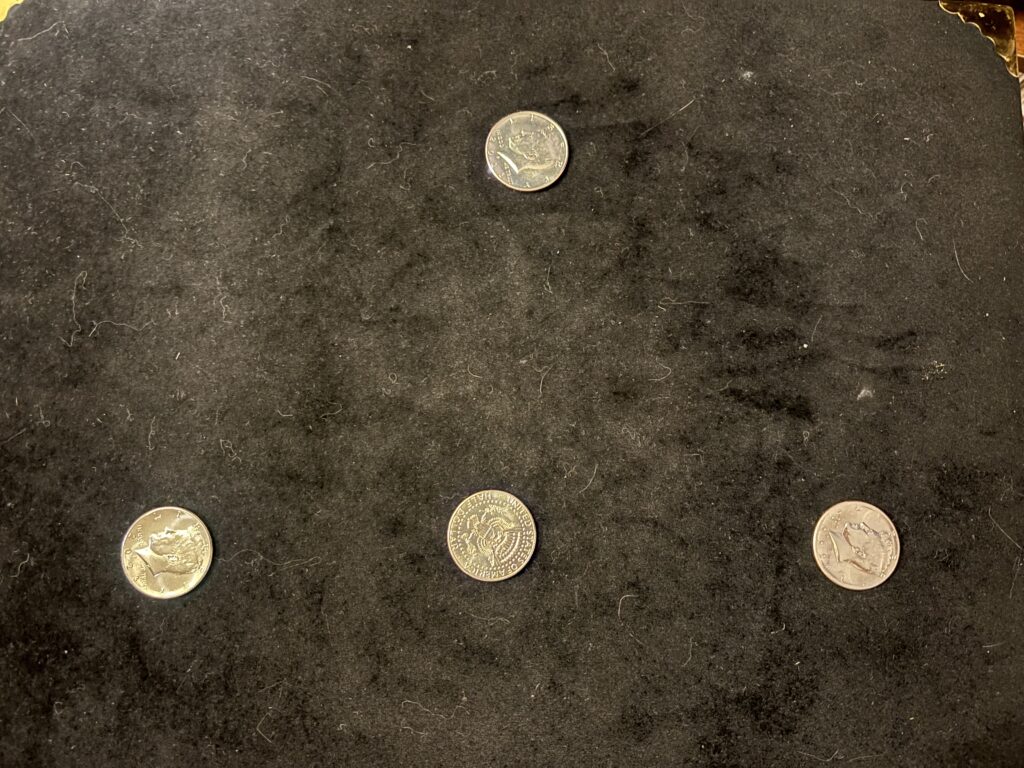
I was playing with some other shapes and layouts for the coin matrix. A straight horizontal line, a diagonal line, however I think I’ve settled on the classic Ace Assembly layout. With a leader coin in front and the three follower coins in the back.
I really like this layout, as in my routine, there’s some other stuff that needs to happen, and it moves all of the empty spaces once the coins travel to my edge of the table, which makes the next part for me a lot easier to do!
I want to say there’s nothing wrong with the standard coin matrix layout; however, there’s also nothing wrong with changing it!