I'm on the road from July 12th to August 17th.
No physical item orders will be shipped until I return on August 18th.
Digital products will still be emailed during this time
-Louie Foxx Dismiss
Normally I don’t produce shows, it’s a pain to deal with many acts that aren’t full time pros (and some full time pros as well). During the current “shelter in place” I’m co-producing a variety show that takes place over zoom. There are a lot of approaches to these streaming shows. Our theory is to do them live, and it give it the feeling that anything can happen. Also a live show that is happening while you are watching it has a different energy for the viewer than just watching a youtube video.
Here’s highlights from our last show:
We’re going to a fun, hanging out vibe and I think we’ve gotten that. It’s not just a show it’s a hangout. If you’re doing a streaming show, what separates yours from just a camera on your show?
I’ve been making tricks that I do is to make them more “bullet proof” on camera. One of the things that I’ve done is to use a gimmicked table to avoid going to the pocket to ditch or to steal things. This is changing how I think about a lot of close up magic.
One thing performing for the camera and not live close up is that it’s hard to get your face and table in frame at the same time. That is when you use a traditional table height, which is about weight height. You end up with either a very wide shot and it’s harder to see the action or just the tabletop and your crotch in frame.
Personally I’d rather people see my face open space on the table. In the past I’ve done a couple things, first having a smaller table top that’s slightly higher than normal helped. I also try squat down to physically get my head closer to the table. This is uncomfortable and wouldn’t want to do a whole show this way, but it helps allow me to get my face in the video.
Here’s an example from video of mine:
My daughter invented part of this trick a couple of years ago.She makes me pay a licensing fee to perform the trick!…..#magic #magictrick #cupsandballs #sleightofhand #dicetrick #nocameratricks #magician
You’ll see in the video above that the table is at about belly button level, instead of at the bottom of my crotch. What I’ve recently done is raise my table up to a couple of inches below my armpit and shrink the size of the tabletop. That makes it a lot easier to show both my face and the tabletop!
For me when I perform, I want to have my face in frame as much as possible, that’s just as important as the magic. Sure there are times when you want to focus on the trick, but for me the overwhelming majority of the time, I want my face also in frame. Keep in mind, this is for a static one camera video, when you have a moving or multiple cameras, you have more options to show your face and highlight the magic.
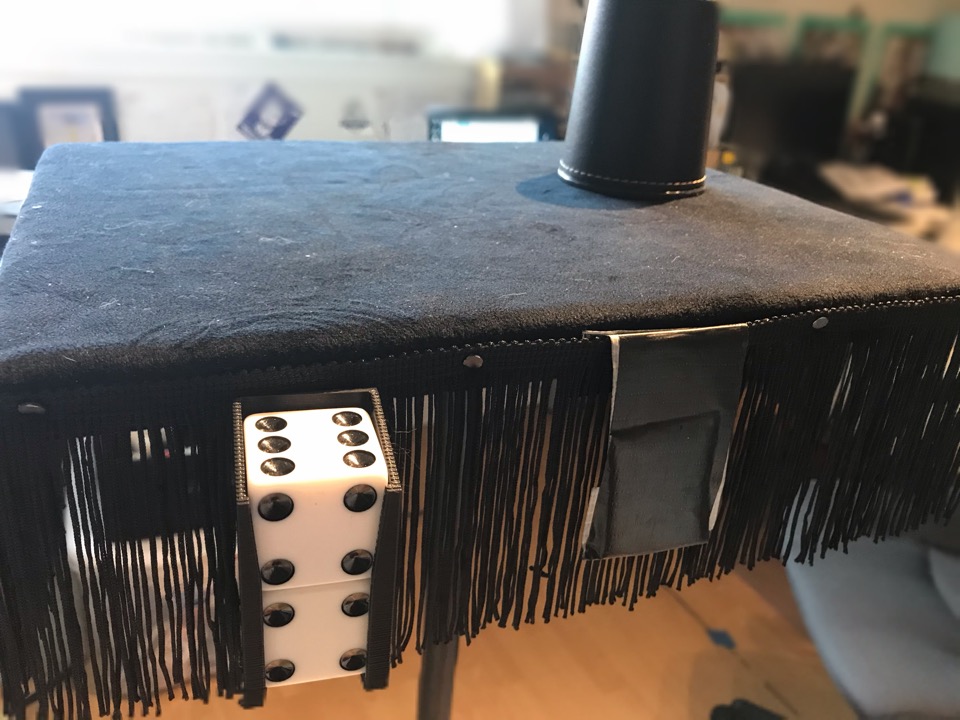
I’m excited that my table dice holder that I was 3d printing yesterday turned out and works great! It’s for the final two dice production of my Cee-lo cup and dice routine. Here’s the finished holder:
The holder has a notch in the bottom for my finger to contact the bottom of the dice and then to lift straight up to load them into the cup. Here’s this loading procedure in a test video:
This is way better than loading from the pocket for video! I’m glad I spent the time to make it and wasn’t okay with doing it the way I’ve always done it.
Not too long ago someone sent me a video of a magician doing a visual bill change. The trick in the video wasn’t very good as you only saw a small portion of the bill and didn’t see the whole bill until after the change. I sent a quick video back of how I would improve the trick, however personally I wouldn’t do the trick as I don’t think it’s a bill switch is good if you can’t show the most of the bill before it changes. If you only show me fraction of it, it’s not as impressive.
Later that night I was playing around with the gimmick I had made and added some lighter fluid to add some razzle dazzle to the bill change. I was kinda amazed that it worked, and made a new gimmicked bill where I could show the whole face of the bill. Here’s what I came up with:
The fire justified the shaking of the action for the bill, which is necessary for this gimmick to work. It adds a “magic moment” to the trick. It’s not just a visual change that happens with a shake. It also makes the trick longer than a 2 second trick, which is nice.
Every summer I try to add a trick to my show that’s something I’ve always wanted to do. Usually whatever that trick is doesn’t make it into the show long term. It does scratch the itch for doing that trick and usually there’s a reason I hadn’t done it in my show.
One of the tricks I’ve always wanted to do is the dancing handkerchief. When I was a kid I did a Sid Fleishman‘s version when I street performed. Today while driving it hit me that a virtual show is the perfect venue for the dancing handkerchief. You can easily control the lighting and the audience’s viewpoint of the trick.
I bought John Calvert’s Casper The Friendly Ghost set a couple years ago when it popped up on a used magic website. I’ve always thought this was a great routine. I remember seeing him do it, if you haven’t seen it, here it is:
I think I’m going two play around with a version of this for virtual shows this summer!
When I perform and have tried doing the solid shell kicker, it never played how I’d like. I think there’s a disconnect between the shell game and when the solid shell is reveals, it’s a little out of left field. I was playing around with an ending as a topper to the kicker of the solid shells that I found in an old notebook of mine.
Awhile ago I wrote about using progressive anagrams for streaming shows. Here’s a test show I did with the routine that was written up in those posts:
I should have handled the envelope a lot less, I’m way too fidgety with it. That and scripting it out better would have tightened it up. One of the cool things about right now is that there are soo many of these live stream shows you can get on and work out the bugs to routines before you take them in front of a paying audience!
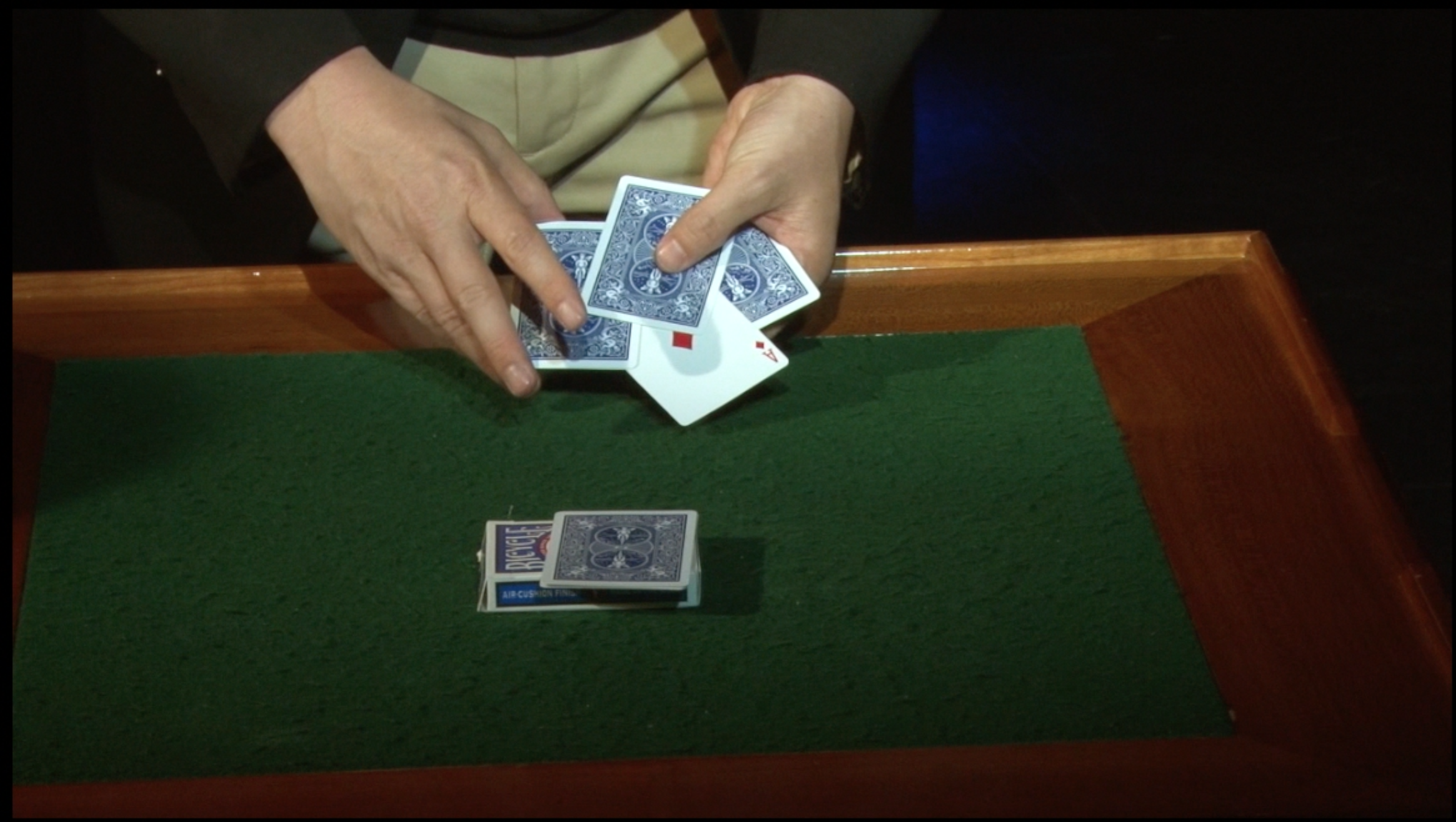
Many years ago I remember watching a VHS tape with Dan Fleshman who did his Fleshman Flash as part of his cups and balls routine. This is a cool loading move for cups and balls that is a virtually invisible way to load two balls into the cups.
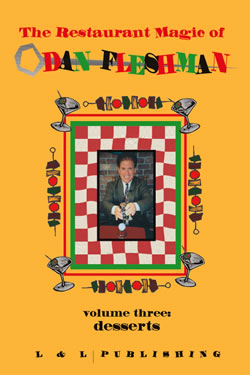
It looks like he teaches the Fleshman Flash on The Restaurant Magic of Dan Fleshman DVD vol. 3.
I remember rewinding that VHS tape over and over, the move was virtually invisible. Early on, that got me thinking about loading sequences and how you need to do more than simply put something into your pocket and steal it out the load.
Here’s and early version of my Cee-Lo Trick and at the end you can see the how the load of the second jumbo dice isn’t from my pocket.
And here’s another loading sequence that I’ve put together:
I think that varying your loading procedure is important. If they all come from the pocket at you put things away, it’s still surprising to an audience, but not as amazing. The more you go to your pockets the easier it is to backtrack. Start to think of clever ways to sneak the large production items in that aren’t all from the pocket.
Many years ago I made up some force dice for a couple of magic lectures. These dice force two numbers on command. I’ve had a few of unsold sets kicking around my office for a few years. About a week ago I was jamming with some magicians over Skype and we were talking about forcing items online. I remembered these dice and how they’d make a great way to for an object in a virtual show.
Here’s a video that I made that explains how to use them in a virtual show:
The cool thing about these dice and gimmick is that you can let the person change their mind after the first roll and reroll. That makes it seem super fair, however it doesn’t change how the force works.
The leftover batch of dice sold out immediately after listing them for sale. The demand was there and I made a second batch and those also immediately sold out. I may make another batch of the dice and gimmicks in the future. If you’re interested in a set of the force dice, contact me and I’ll put you on the list.
In my magic lecture I talk about how you should be taking your magic one step further than what’s already out there. This is especially true if you are doing stock magic tricks. One of the twists I’ve put onto a standard magic trick is my finish to the Midmade Bill trick. It’s a trick I call Splitting Image, it was just reviewed by a magic reviewer:
With everything I do, I try to move it a step beyond where the store bought version is. This is advancing the act, simply doing sponge balls doesn’t.