A while ago I wrote up the sequential twisting effect that uses what I think is an original count of mine that I’m calling the Runner Up Count. I finally made a quick video of it:
Here’s what I think the pros and cons are of it when compared to the original Twisting the Aces:
Pros: – The sequential nature makes it easy to follow what has and has not flipped -There’s no variation in the sequence, all the counts look the same.
Cons: -starting with a double deal as the first count is difficult
Honestly I don’t know if every phase looking the same is a good or bad thing. -Louie
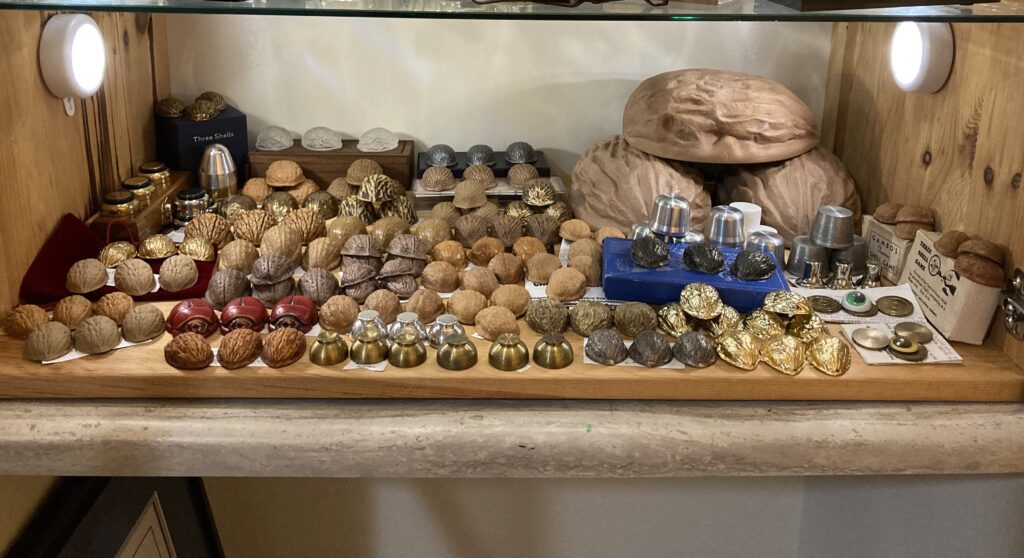
We’re wrapping up our first move for the first time in 16 years, and it’s amazing what you accumulate over a decade and half. At our new place I set up my collection of three shell game sets, and I have more than I thought I had, and in the picture below there are no duplicates:
There are some interesting sets in the collection. For example I have three sets of Rivera Shells that are all made out of very different material. There are both sets of Karl Normal Shell Game which are bowls, the original run has a divot in the top, where the second run of them doesn’t.
The shell game set I own that’s not pictured is my main working set. I really should get a second set as a back up, and to have in the display.
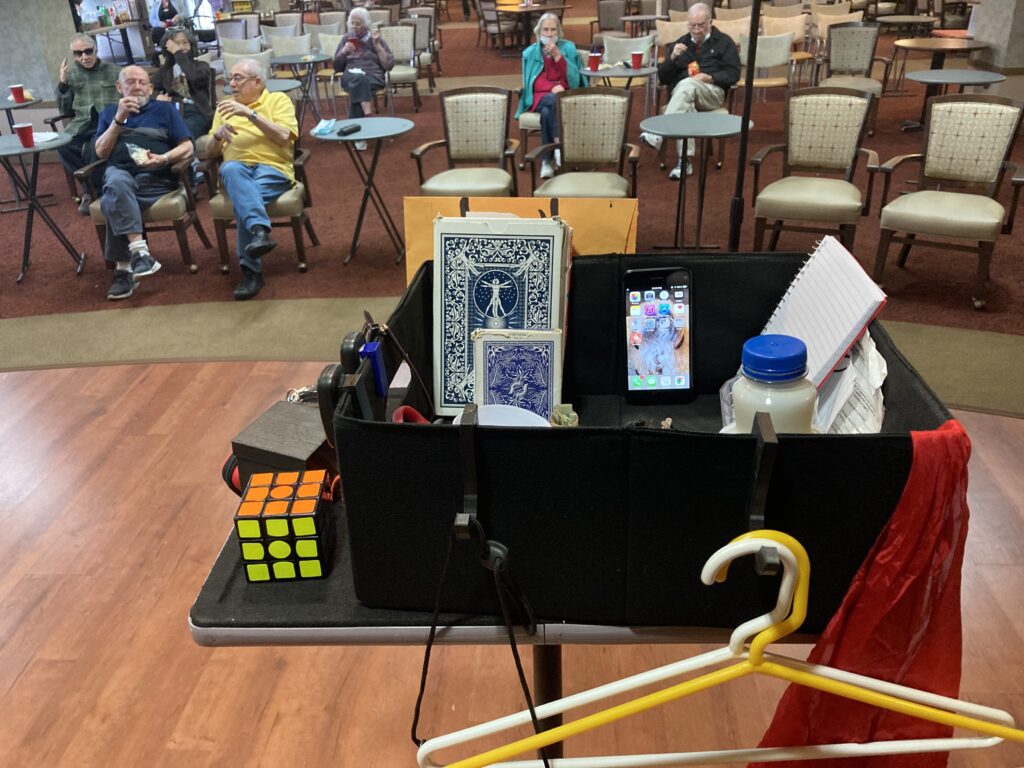
This morning I’m reflecting on the two senior shows I did over the last two days. Normally I wouldn’t put too much thought into them, however it’s been a while since I’ve done a full, in person show. I’ve been doing a lot of shorter bits lately, and that’s a different skill than 45-50 mins.
I think the areas I could improve would be to have a few more “non contact” tricks in this show. What I mean is have non contact options. There are a few spots where I needed to go into the audience, as I wasn’t allowed to bring people on stage. For procedural things, it’s not a huge deal. I’ve already added non contact options for things like “pick a card” an instead I have them name a card. It makes for some more interesting methods and makes me not be lazy.
There are some magic tricks that the person has do for the effect to really work. A good example is a I a Key R Rect / Seven Keys to Baldplate sort of trick and the impact is very much lessened when I turn the keys, versus having someone from the audience do that. The bigger problem is that the action happens in the audience, so it’s harder for people to see. The nice thing is that when it opens there’s a CLICK noise.
One solution I have though of for the Key R Rect trick is to have 3 people pick numbers from 1-4 and whoever picks the number I wrote down wins. I think it works, but in my head I feel it’s lacking something. It could just be that guessing a number doesn’t feel like a game to me. I do need to just go out and try it and see how it plays…
Yesterday I did my second day of senior shows and it was a lot of fun. I think I may finally be figuring out how to make my coat hanger thru silk routine work. I just need to let the effect marinade and sit with the audience even longer. The trick is a very strong and visual trick, and I think brains just take a long time to process it.
Another thing I’m learning is how much people use their eyes to listen. When we listen we also do a lot of lip reading. When someone is masked, it’s harder to understand them because we can’t lip read. This makes a ton of sense looking into the past. For example my wife uses the captions when she watches movies on a smaller screen like her phone. It makes it easier for her to “hear”. Because of this I’m talking a lot more slowly and deliberately in my shows.
It’s been a while since I’ve done a show at a retirement center. The main reason has been due to COVID restrictions from many of the corporation that own these facilities impose. I’m not saying I’m against the restrictions, I’m all for protecting seniors and I wouldn’t want anyone to get severely sick or die because I was asymptomatic and brought COVID into the facility.
OK, with all of that said, I did a senior show yesterday and it was a blast! Everyone was out to have a good time, and they were into the show! One thing that I added to my show that I never really did in my senior show was the vanishing birdcage. I closed my show with it and they couldn’t stop talking about it. One resident wouldn’t shut up about the trick (I’m not complaining!), he went to everyone after the show in the halls and would say, “That was a great show, but that bird trick was amazing!” I think I’m going to keep the birdcage in the senior show!
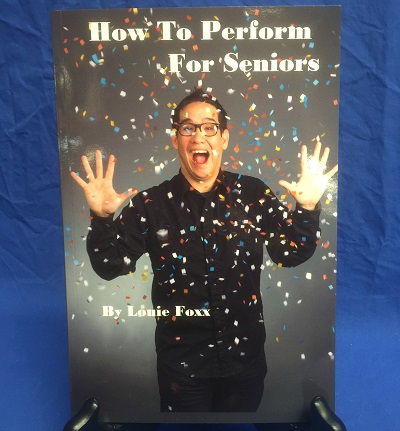
If you want more info on performing at senior facilities, I wrote a book about it called How To Perform For Seniors. This book takes you through booking, material selection, and full of tips and advice for actually doing the gig! If the senior market is something that interests you, you should check out the book!
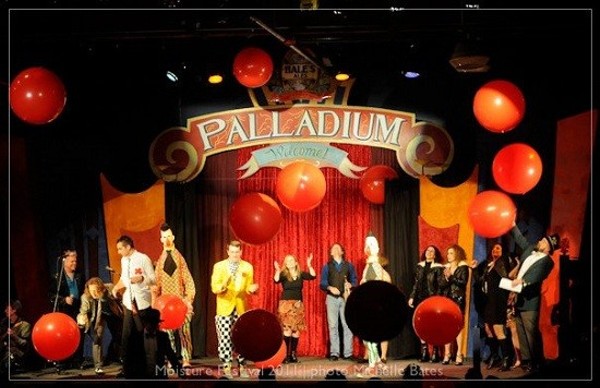
In Seattle we’re a few weeks away from the Moisture Festival. This is the largest variety arts festival in the USA (possibly the world). I’ve been involved in this festival as a performer for 8ish years and then for the last year as one of the hosts of The Moisture Festival Podcast.
I was just looking a the schedule of performers and for magic fans, there’s a lot of amazing magicians coming to the festival. In 2022 the Moisture Festival has:
Avner The Eccentric Mike Caveney Tina Lenert Skilldini Steve Owens Jamy Ian Swiss Just Felice Joey Pipia Magical Mystical Michael Master Payne Louie Foxx
This morning I was doing my daily writing and came up with cool idea for a trick…one that I have no method for. Here’s the idea:
You have a pen, you unscrew is and take out the ink cartridge, which is see thru and it’s full of black ink. The pen is reassembled. Then someone says a color and the pen writes in that color. This is done several times.
This is essentially Think a Drink where a tea kettle pours various drinks that the audience calls out, but done with a pen. I think the problem with the trick would be that the it’s a trick that would easily be explained by the audience as “color changing ink”. Even if that wasn’t your method, you’d have a hard time convincing an audience it’s that, or paper that changes the ink’s color.
A method could be a borrowed pen and using a stack of business cards set up for the out to lunch principle. The borrowed pen eliminates the possibility of color changing ink. Letting them keep the card and where they could write on it with the same pen and have it not change color would also eliminate or at least reduce the explanation of special paper.
If using the out to lunch principle, you’d need a way to make the colors called feel random. This could be a force, multiple outs or a combination of the two.
Feel free to play with this idea and if you come up with a cool method, let me know! -Louie
I just saw that World of Wonders is starting to take applications from performers to work with them this summer:
I had a blast performing with them last summer for 10 days. The people are cool and the show format is a lot of fun! You do a 3ish minute act twice in the show and you do the show three times a day.
For the 10 days I performed with World of Wonders I took a something I hadn’t done in a few years to relearn to do it and something from my current show. When doing just two acts instead of a whole show, I was really able to focus on making those two tricks better. I ended having a lot of callbacks from the first act in the second act.
If this sort of thing interests you, you should definitely email them! -Louie
This episode of the Moisture Festival Podcast we are in Portland interviewing the fascinating Jon Dutch, aka “Dutch.” We talk about how he got into the circus later in life, the physical tolls it takes on one’s body and how he got into his unique form of acrobatics.
We also discuss the circus scene in Portland, learn about the World Naked Bike Ride and learn about why he created the Rose City Circus and how they were received on the Gong Show. A great conversation with one of the staples of the Portland Circus scene.
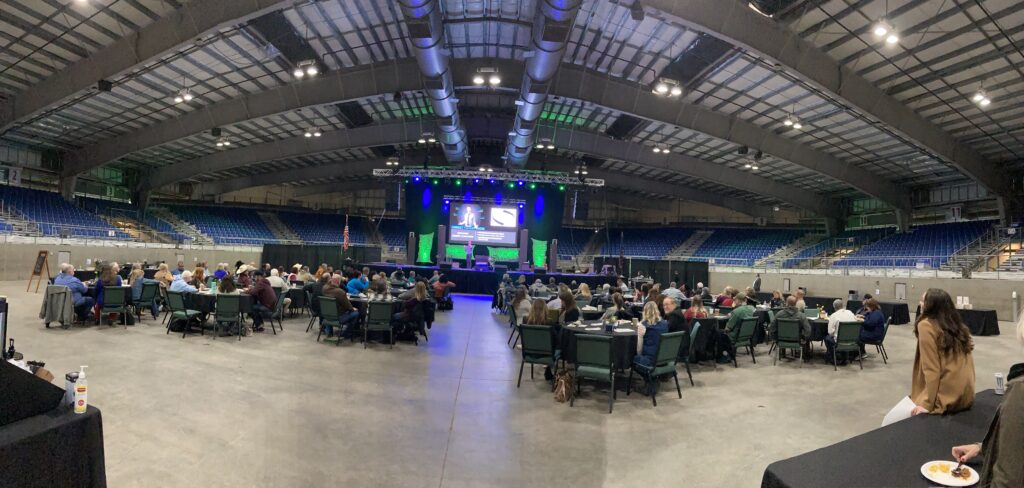
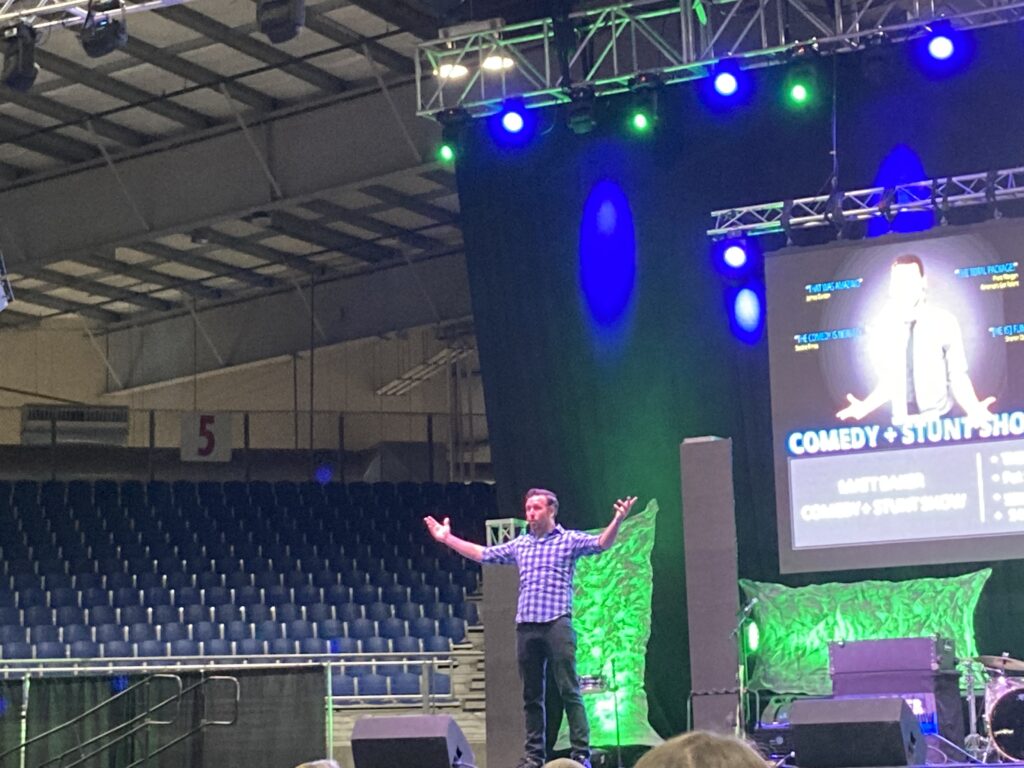
For the last few years I’ve been thinking about how to make my show play bigger. It’s a good thing to have in the back of your head when you’re working on your show. A good example was last week I saw my friend Matt Baker perform at a gig for about 80 people. Normally that’s not a huge show…however the gig was in a 15,000 seat venue!
It’s easy for a solo act to get lost on a stage like that. Matt did a great job at that show, and managed to make it work in the venue.
It comes down to how can you make what you do play bigger. This particular stage wasn’t any bigger than many stages I’ve performed on, but visually it made the performer look small. There were a couple reasons for that, the big one was that they wouldn’t turn off the venue’s lights and use the lights on the stage for the show. That meant he had the 5,000 empty chairs behind him which broadens what people are looking at, making him look tiny.
Honestly, I think most illusions shows would have looked small on that stage with the conditions he was working in. With that in mind, something like a normal card trick would be virtually invisible on the state. Little things like trying to make your card tricks work with a jumbo deck won’t hurt for smaller venues, but will really help when you find yourself in situations like this! -Louie