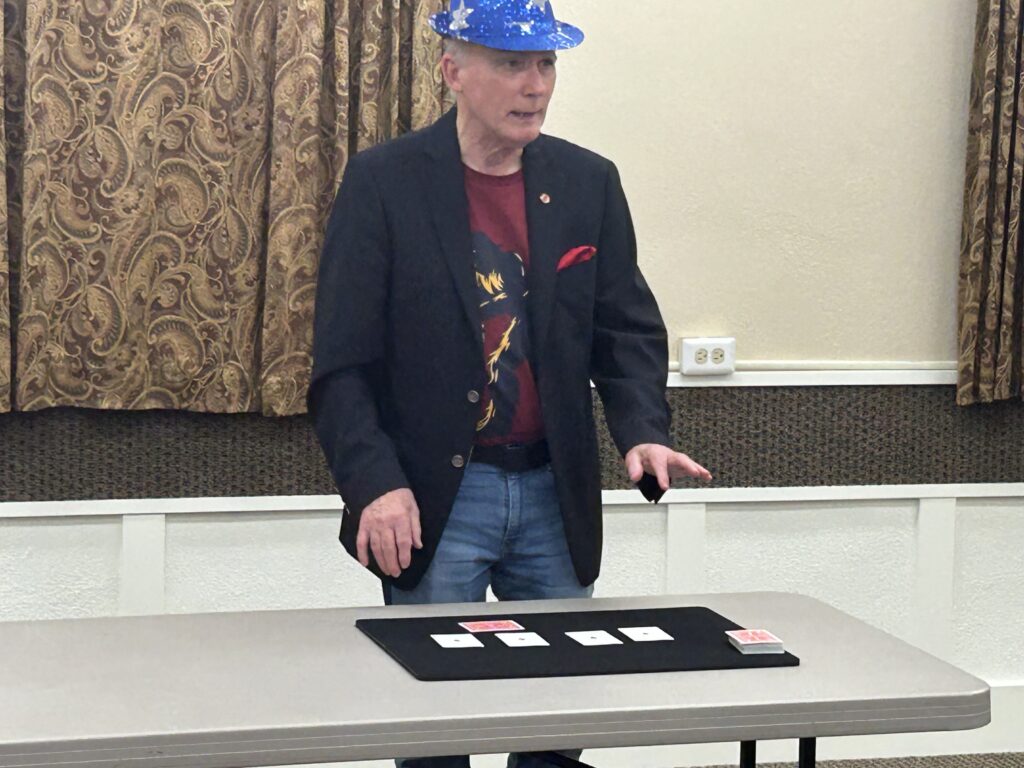
On a TV appearance last week I did The Fortune Teller trick from my 2025 lecture notes. You can watch the appearance here:
What I like about this trick is that the moment you bring out the prop, the audience gets a hit of nostalgia. That makes it a trick that instantly connects with the audience.
Then my card routine with it has a three-reveal punch. The card routine I did in this TV spot is different from my stage routine, which wouldn’t work with this setup, with the host standing next to me.
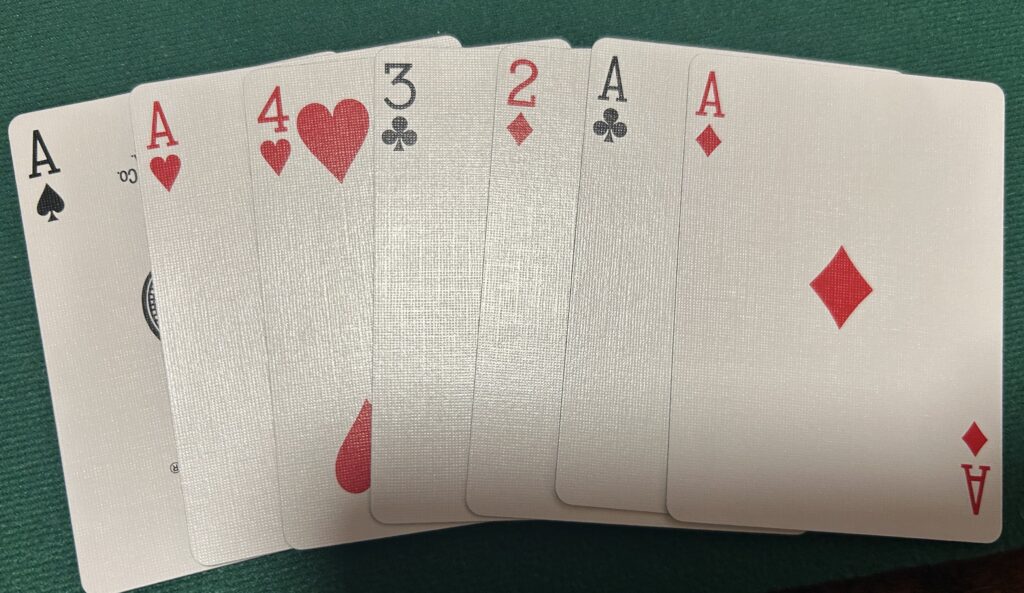
I was playing around with some cards the other night and came up with a very 1980’s feeling packet trick. The effect is you show four aces. The ace of diamonds changes to a two of diamonds. Then the ace of clubs changes to the three of clubs. For the finale, the ace of hearts turns into the four of hearts, giving you a one (ace), two, three and four.
This trick uses a series of Ascanio Spreads. I’m not going to go teach that move here, but you can look it up and find a tutorial for it online.
Here’s the starting order of the cards:
Hold them face up in your left hand in dealing grip. Do an Ascanio Spread to show four aces, putting the four card block on top of the packet .
Do a second Ascanio Spread to show that the ace of diamonds is now a two. Put the four card block top of the spread.
Next do a third Ascanio Spread to show that the ace of clubs is now a three. This time, you will switch places of the middle two cards. I openly displace them, and then put the four card block on top.
Finally, do a fourth Ascenio Spread to show that the ace of hearts is now the four!
That’s it, there’s really not much to this trick, and it feels like it needs an ending. I have played with having the backs change colors and have a method for that, but I’m not really happy with it.
Additionally, I’d be surprised if this sequence had not been created before. It seems fairly obvious that this result can be achieved with just Ascenio Spreads.
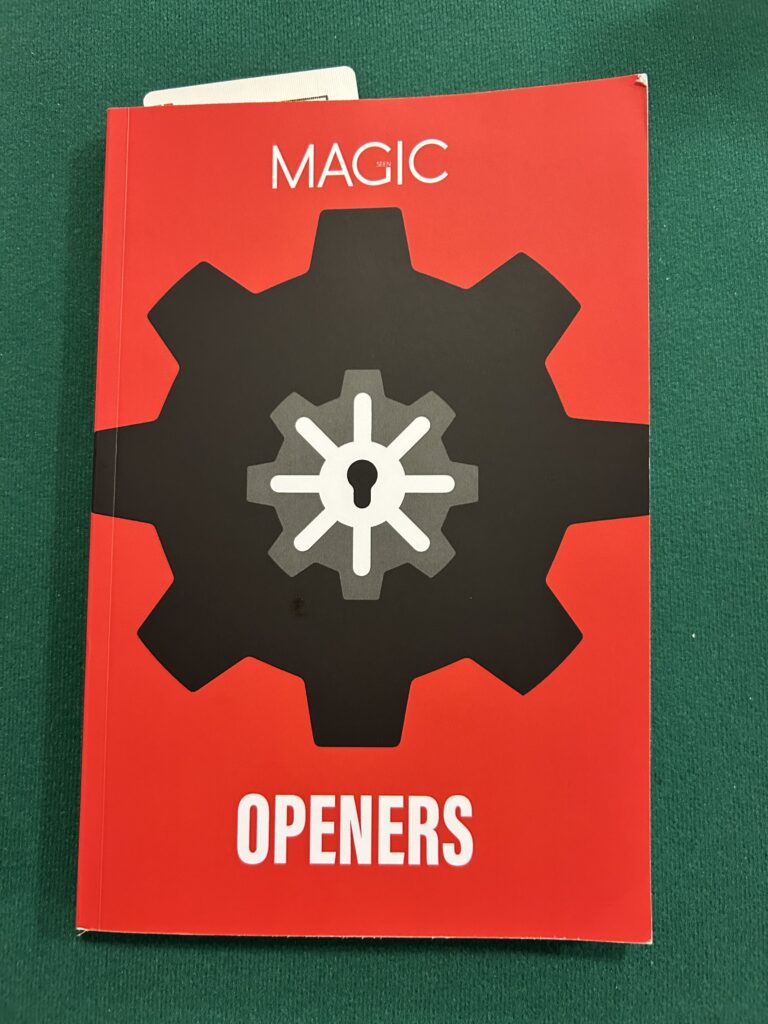
I just started reading the book Openers. This book is a compilation of “openers” for magic shows. The book is mostly close up openers so far, but I’m only about 1/3 into the book.
So far my favorites are: Virus by John Guastaferro: This is a full deck, all backs routine where one side then turns blank, then to normal playing card faces. It’s not too hard to do. I like the routine, however I think I’d need to find a new theme for it. His theme is great, just not for me.
Contender by Liam Montier: This is a quick trick where you know which card someone is thinking of. I think this is a great “bar bet” style of trick.
I should also mention that I’ve been hunting for chop cup routines that don’t use a table and there’s one in this book called The Gold Cup Con by Carl Royle. It’s a close up routine using a small chop cup that will hold a golf ball. It’s a great routine, just not for what I’m personally trying to do with a chop cup.
Currently I’m performing at the Utah State Fair until September 14th, 2025. I did a media spot on opening day to help promote the fair. Here’s the quick trick I did:
Awhile ago I found a set of lecture notes called Something From the East by Haruhito Hirata. In the notes there was an oil and water trick that wasn’t for me, but it did have one part that did appeal to me. The cards were dealt out in rows and then the rows were mixed. The cards then separated by color.
The method was fairly complex and involved. I thought the trick could be streamlined a little bit, so I came up with this:
Then I realized that I could get a bonus trick out of it if the cards had different colored backs, so here’s the second version:
I’d like to get a third effect out of it, but not sure what that would be. Maybe it’ll come to me one day…
Sometimes I see a trick and I’m not sure how I feel about it. The effect is a coins through table, but with jumbo coins.
Watch the video:
From a magician’s standpoint the jumbo coins add difficulty. From a non-magician standpoint, I’m not sure if it enhances the effect. Sure, everyone knows that doing sleight of hand with a 3 inch diameter coin is much harder than with a 1 inch diameter coin. That difference is something that doesn’t really matter in the moment, unless you sell the trick as a “try to catch me” sort of trick.
Also, why jumbo coins?
I get that it’s a coin trick made bigger, but wouldn’t drink coasters work instead of the jumbo coins. Now you have a trick with a natural object that belongs on a table.
I think the effect in the video is very well done, however not sure how I feel about the trick.
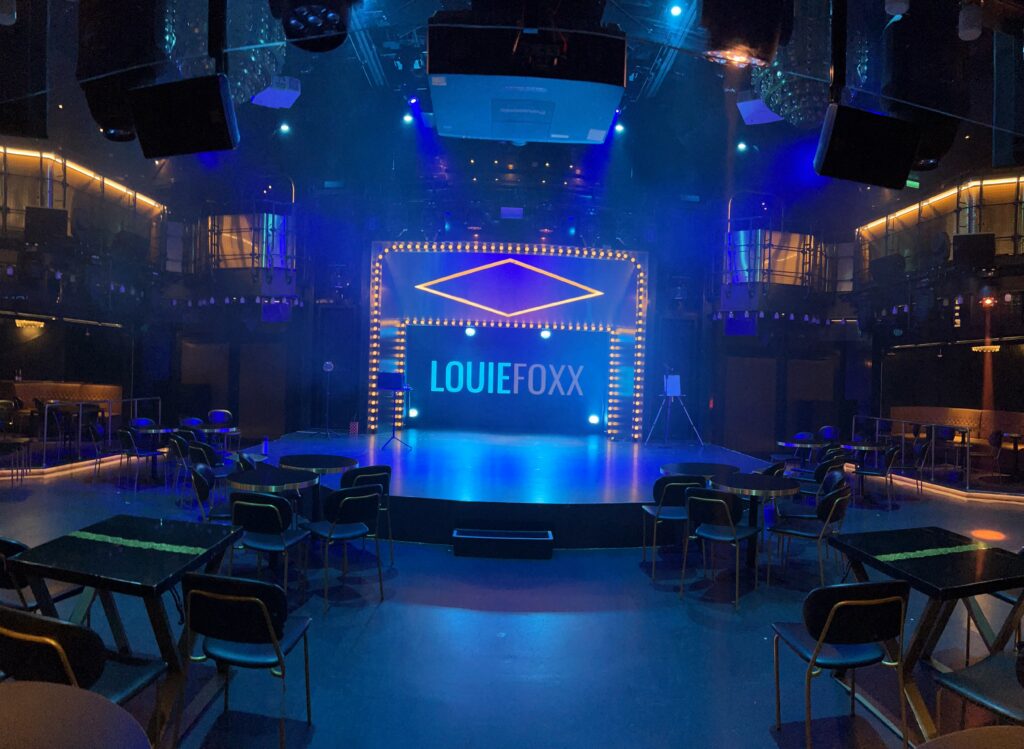
This is a cool looking stage, but a hard one to work on. In the picture you can’t see the depth of the stage behind the proscenium arch. It’s about 8 feet deep to the video wall with name on it, then the stage sticks out about 20 feet or so in front of the proscenium arch.
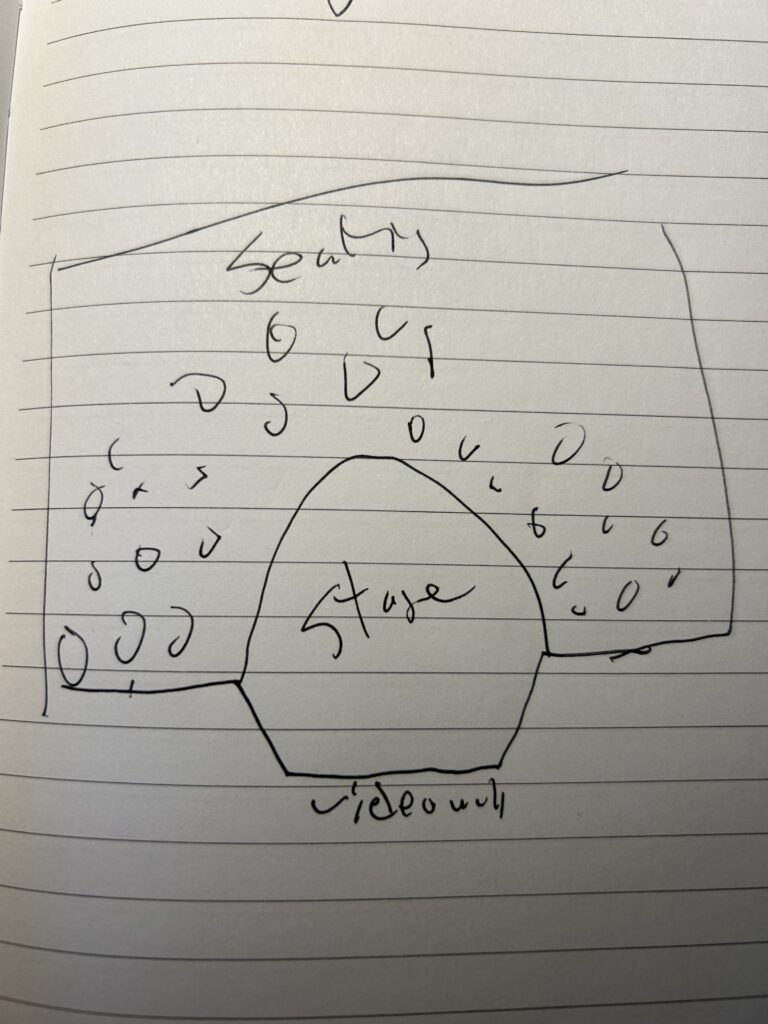
The challenge is sight lines for the audience, no matter where you stand, there are people that can’t see your face. The drawing below might help visualize what’s happening:
No matter where you are, either the side of the arch is blocking or people are behind you. That’s just the seats on the floor, there’s spots above that are almost on the same wall as the arch!
This makes showing things really difficult and time consuming as you have to show everything to the extreme right and left sides.
Challenges aside, this is a really fun room to work! I’m glad I got to do seven shows there, and was able to dial in the show to just work worked in the room. It would have been a shame if I only did one show there and that was it. This is also a good reason to travel with back up material, two of the routines that I planned to do in the room weren’t ideal for this space.
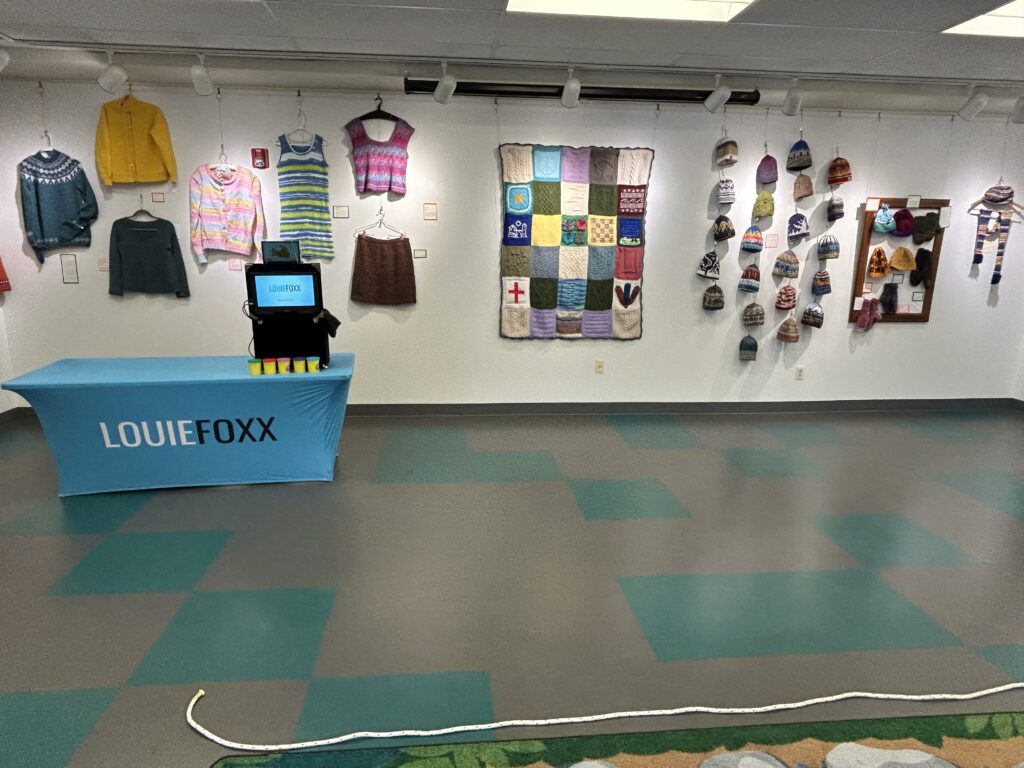
The differences in venues for library shows can be enormous! In two days I did a library show that had about 75 people in a packed meeting room.
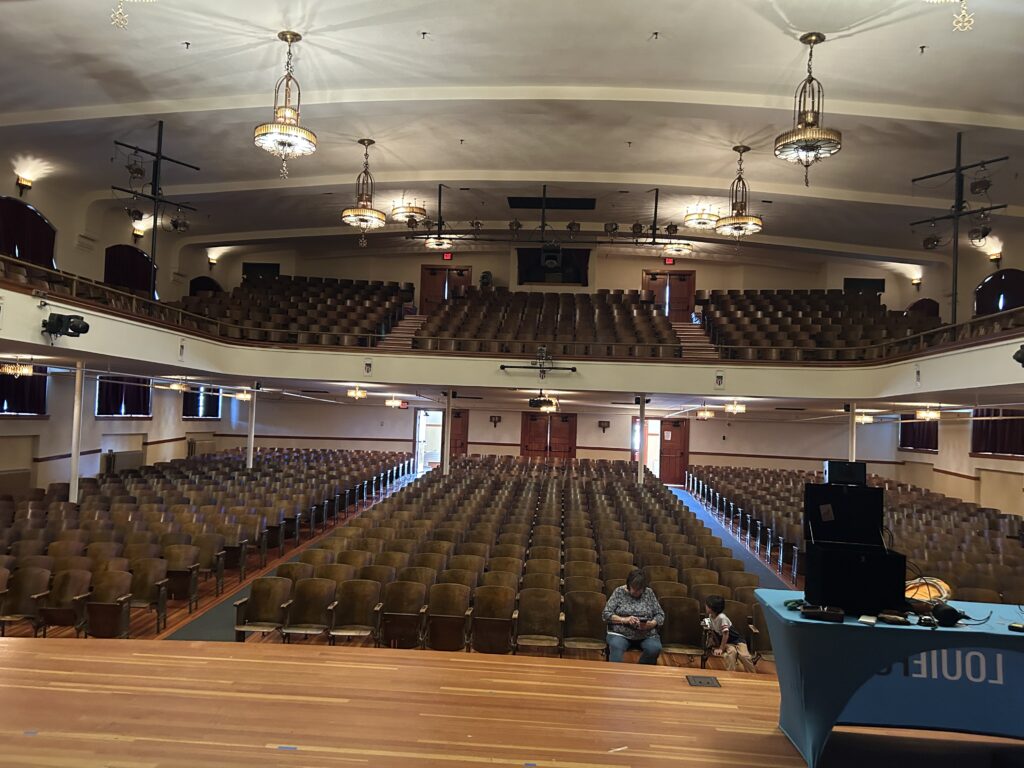
Then the next day I had a library show for over 300 people in an old auditorium!
The skills needed to work in both venues are very different. When you’re standing on the floor a few feet from the audience is easier to control that in a giant theater that’s super echoy and everything in it makes noise from the floorboards to the chairs.
I heard that a previous performer in the auditorium struggled with the echos and crowd control. Being armed with knowledge of this, I really had to keep on top of crowd management and my expectations of the audience. In a giant room with a lot of echo, it’s really easy to lose control and hard to get it back!