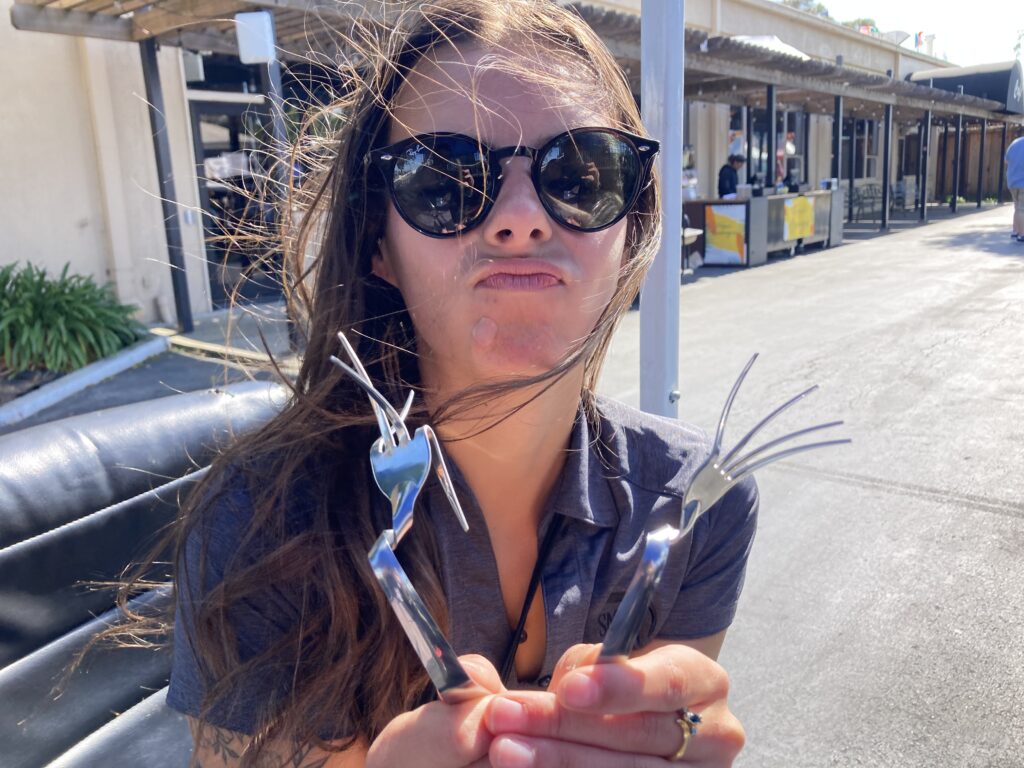
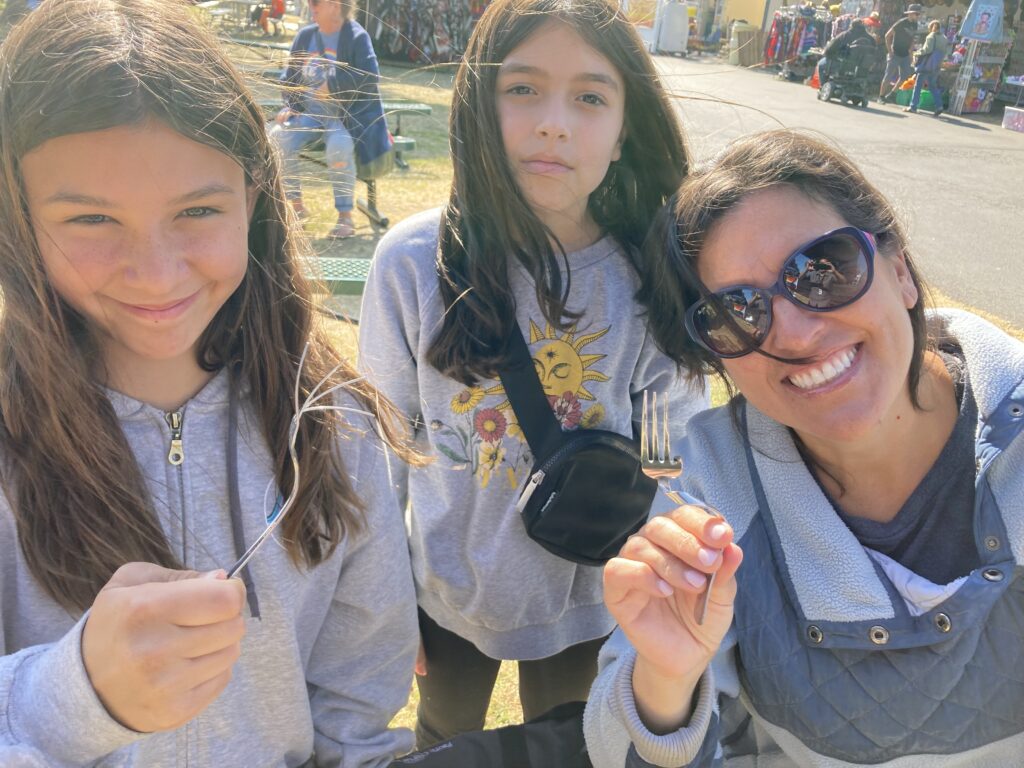
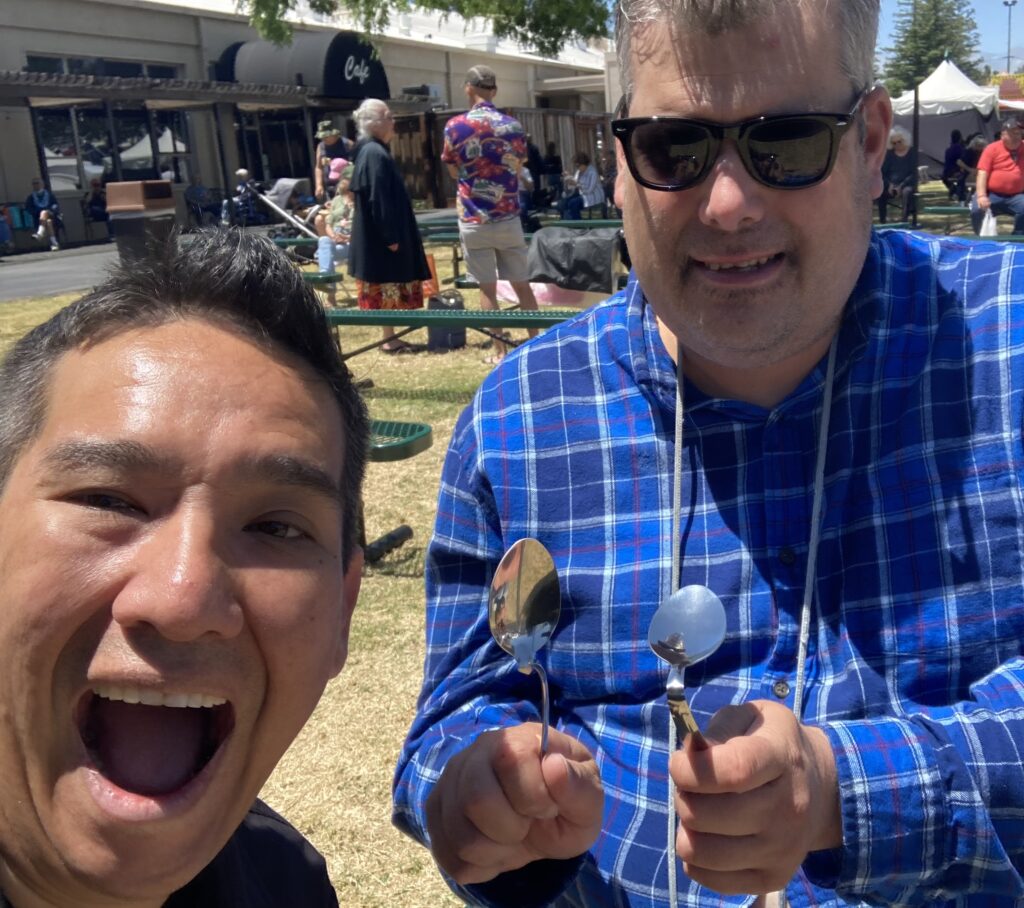
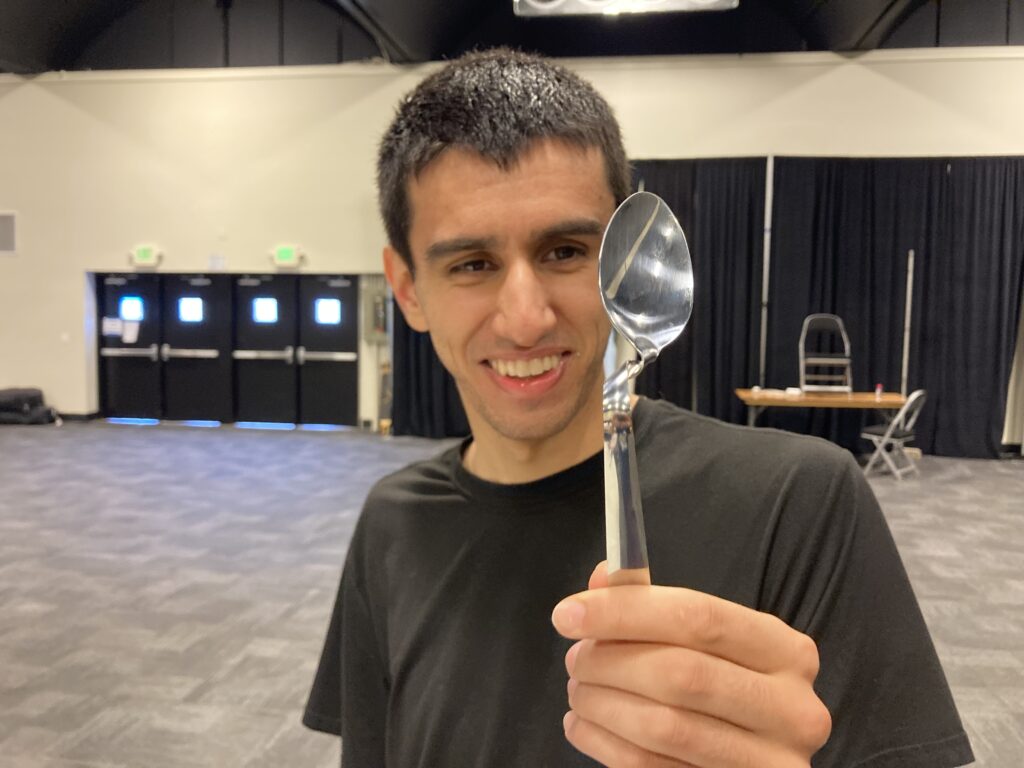
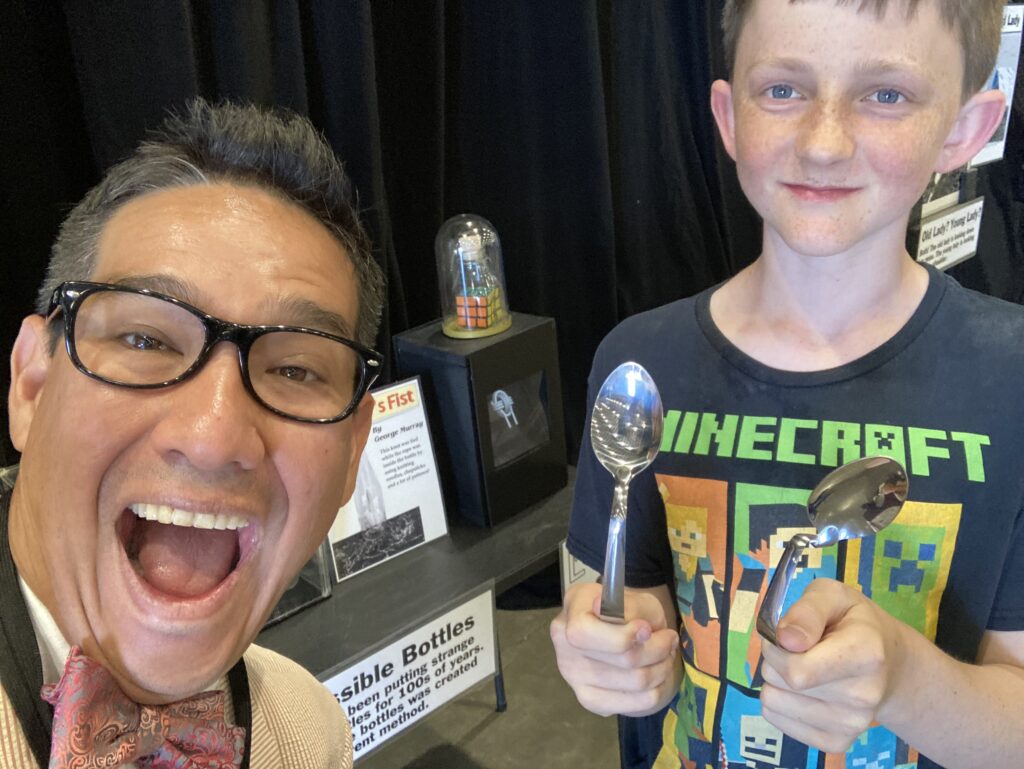
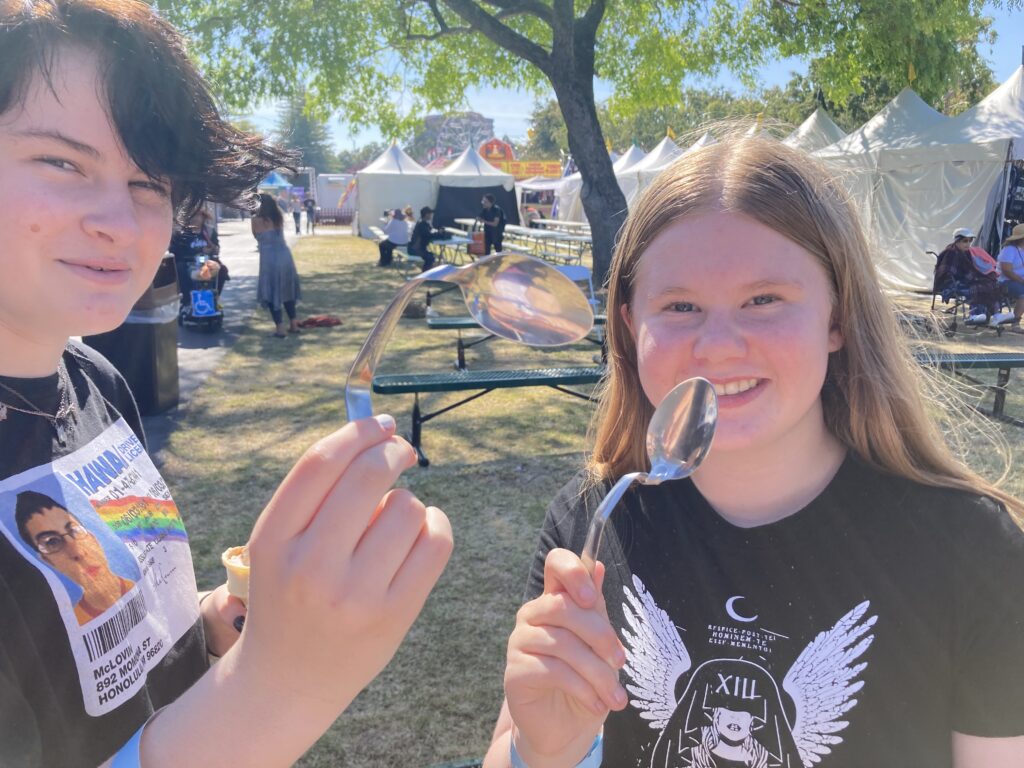
Last week at the fair I was performing at, I decided to to carry my vanishing birdcage on my walk from the dressing room to the stage I was on. Whenever anyone asked me about it, I made it disappear!
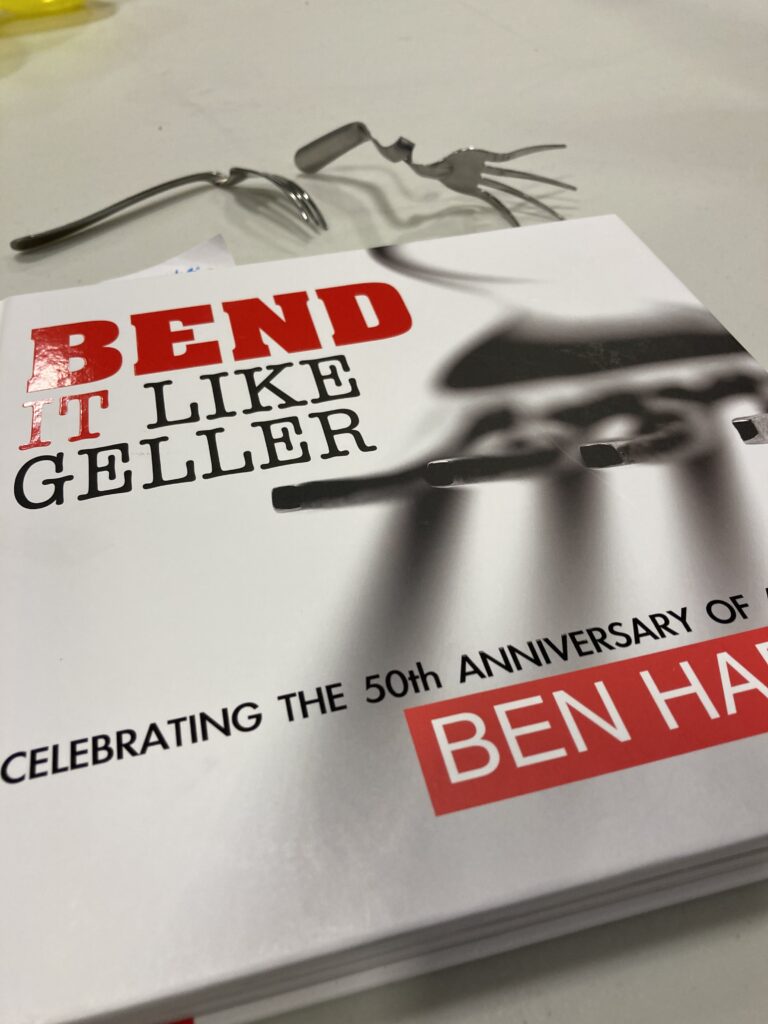
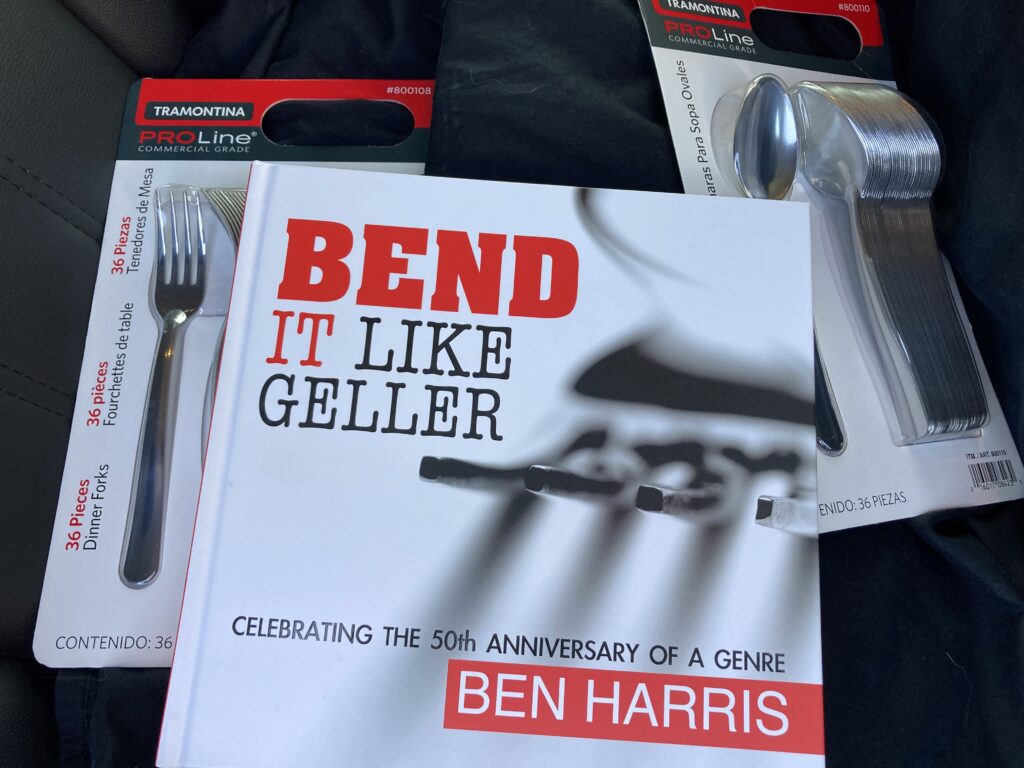
I’m about halfway through Ben Harris‘s book Bend it Like Geller and it’s a fun read. I didn’t know a lot about David Berglas and Uri Gellar‘s meetings and eventual friendship. It’s a fun read, just for the history of spoon bending.
I really liked Richard Busch‘s essay and while I think I got what he was talking about, it might be worth a reread. The Busch Effect as he calls it, got me to add something presentational to my spoon/fork bending.
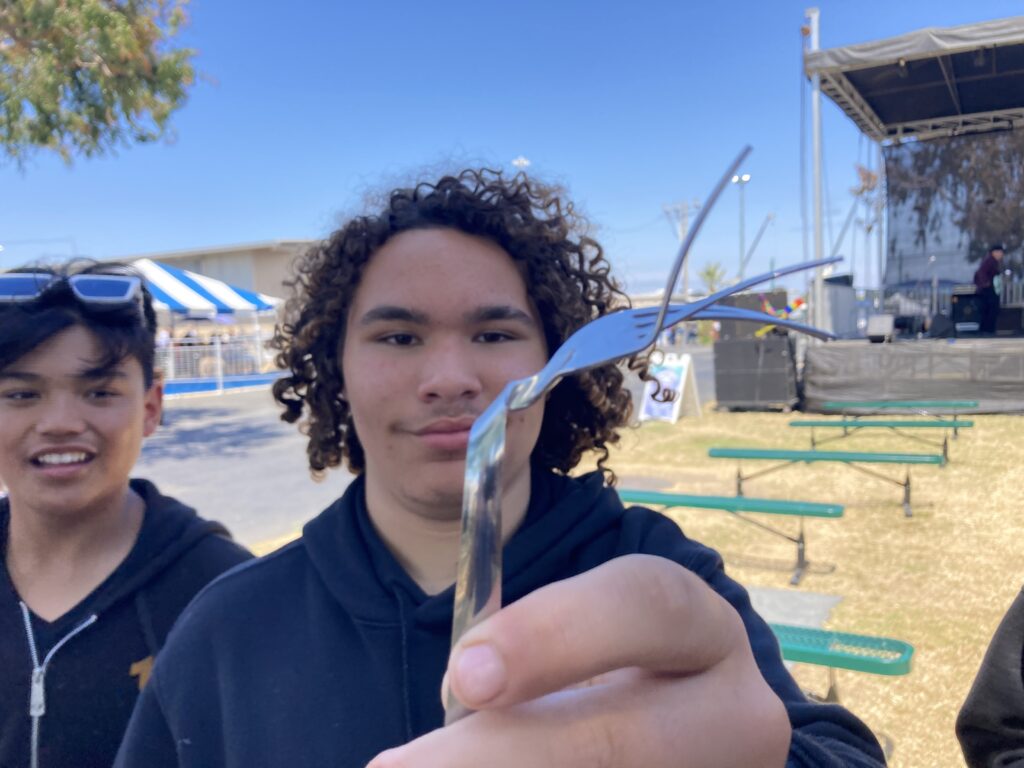
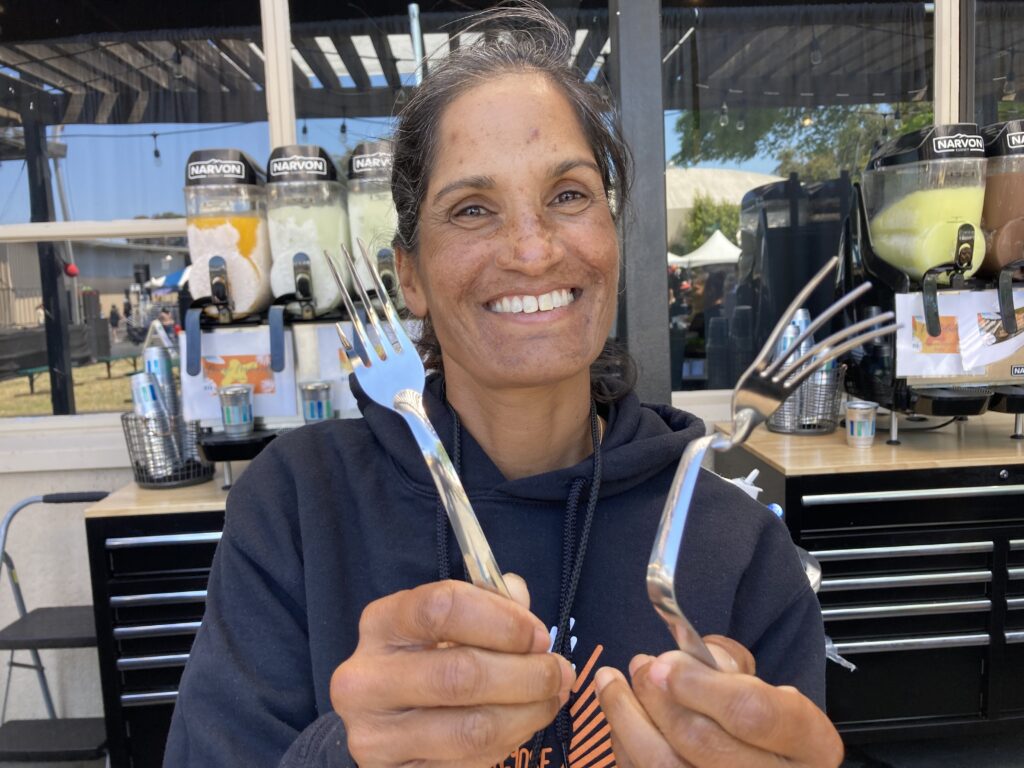
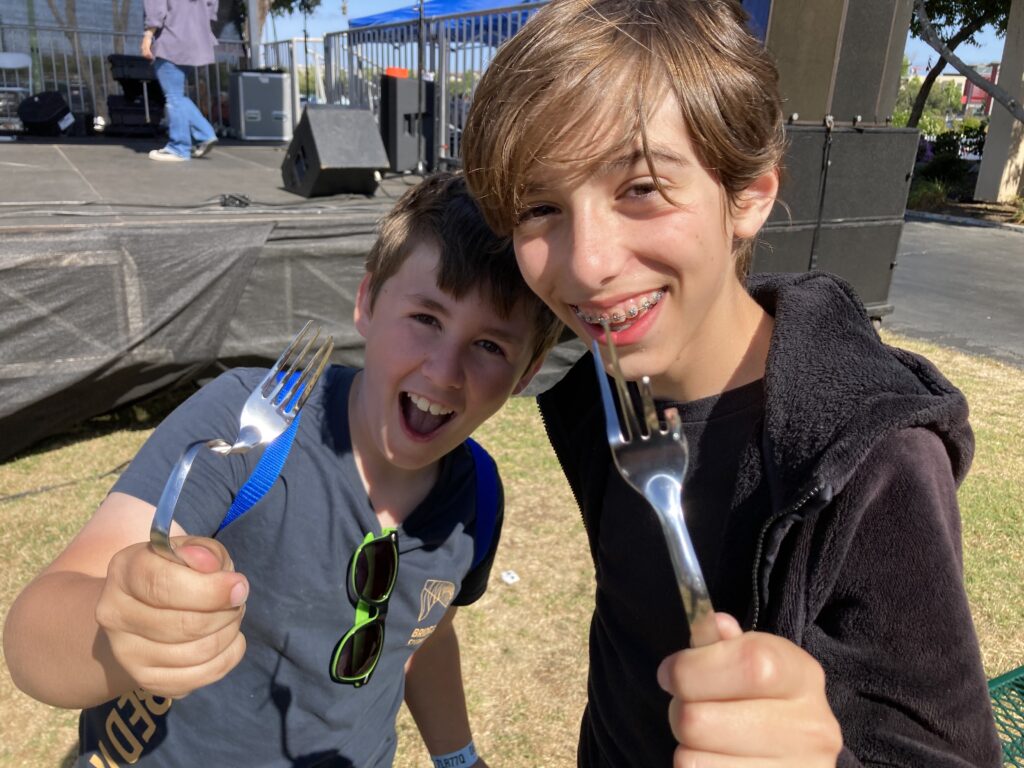
One of the cool things about performing at a fair while reading this book is that I have a lot of opportunities to play with the techniques and ideas in this book.
On a side note, it’s been years since I’ve really played around with spoon bending and since then, I’ve learned to do the strongman stunt of ripping a deck of cards in half. That has given me some good hand strength and putting the bends into the spoons/forks is way easier than I remember!
This week I’ve started reading Ben Harris‘s new book Bend It Like Geller. This book is about Uri Geller and spoon/metal bending.
I’m not very far into it, but I didn’t know that according to Ben that Uri Geller was the first person to really bend spoons. That kinda suprised me, Ben mentions that there were spoon bends before Uri Geller, but they were mostly gags, and not bent with your brain power.
This book also goes into routines and methods for different bends. I picked up a few packs of spoons and forks from Costco, so I can work through the book.
I’m enjoying this book so far, and Ben Harris always does a good job with how he lays out the book, and it looks super slick! -Louie
For some reason I’ve never really liked the Assistant’s Revenge Illusion. I think that from a method standpoint, it works exactly how anyone would think it does. If you’re not familiar with the trick, here’s what it looks like:
What the trick has going for it is that it has a nice surprise, where the audience is expecting the magician to escape, but it’s a substitution. I’m going to imagine it packs pretty flat and it plays big. I’m not knocking anyone that does the trick, I just think the trick is just “meh”.
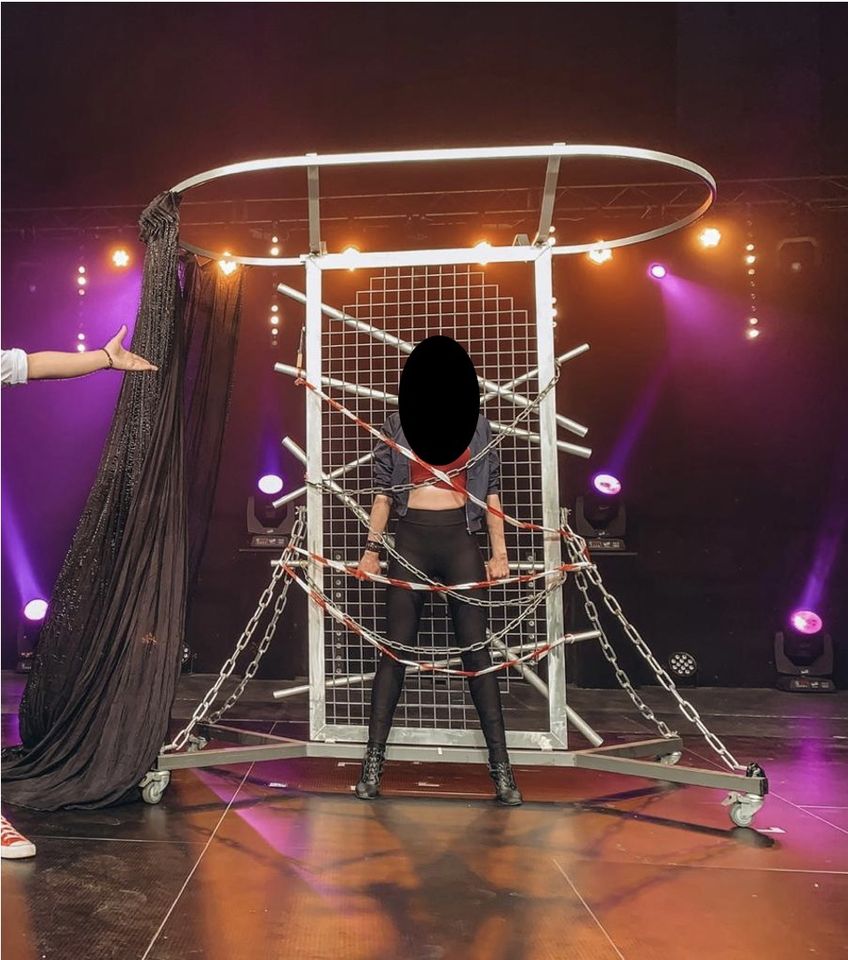
Recently this one popped up for sale:
This pic is what got me thinking about why I don’t like the trick. The chains end up soo loose on usually the female “assistant” that there’s really no reason why the person couldn’t just slip out. If you watch the video above, you can see how loose they are at the end. I do understand that at the beginning they are tight, but that’s not the final image the audience is left with.
The trick would be greatly improved with some sort of handcuff type restraint, but I also think that would make the switch much slower.
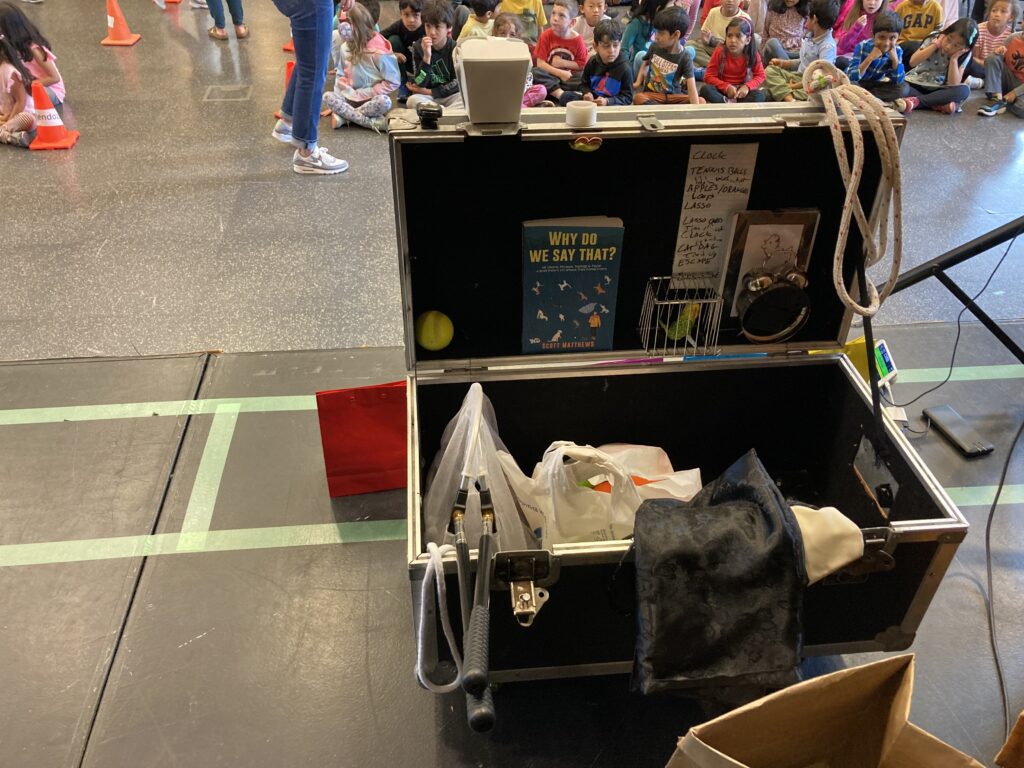
One thing I love it how other magicians have their props onstage. Not what the audience sees, but the magician’s view. A couple of weeks ago when I was doing my Incredible Idiom show, this is what the inside of my prop case looks like.
All of my props are easily grabbed and put away. There’s no fumbling, I’ve cut out all the dead time of bringing props into view.
I’m still amazed at how many magic shows I see where the performer ducks out of view behind their case looking for a prop. This is usually done by magicians who don’t have a firm set list, and simply chose the next trick on the fly and their show’s flow is different every time.
Having a set list will make your show better! You can see mine on the inside of the case!
I haven’t put it on my phone yet, however I like the idea of using it to force the fractions of a second. I have an idea for it…I want to have a breath holding contest with person from the audience and ultimately the game tied down to the fraction of seconds. This would be revealed by a prediction that is revealed in stages.
I haven’t gotten to play with the app yet, so my opinion may change once I actually use it.
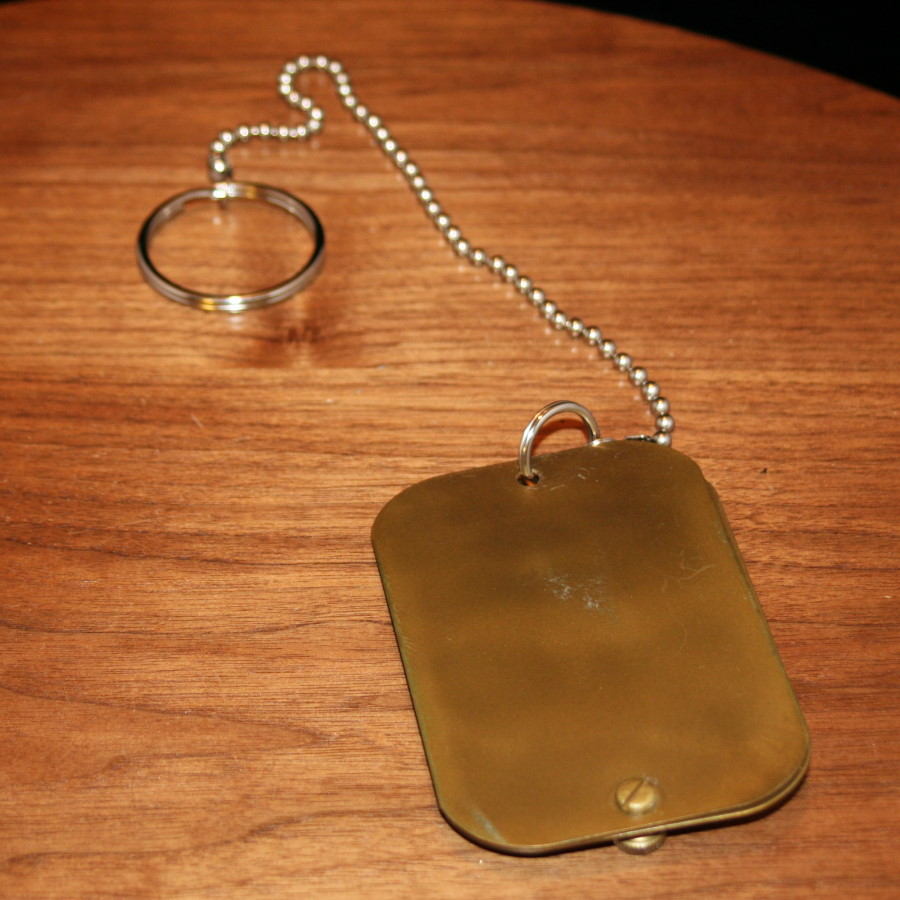
Sometimes a prop just looks cool and I want to figure out a way to use it. One of those props is the brass plates for the trick Collectors Workshop’s Jaks or Better. The prop consists of two brass plates that are screwed together and dangle from a chain.
Personally I’m not a fan of the trick that the brass plates come with. The Jaks or Better effect is basically a drawing duplication. Someone picks a card and puts it between the two plates. You then draw the picture that they put in between the two brass plates. The effect is fine, I’m not a fan of the method.
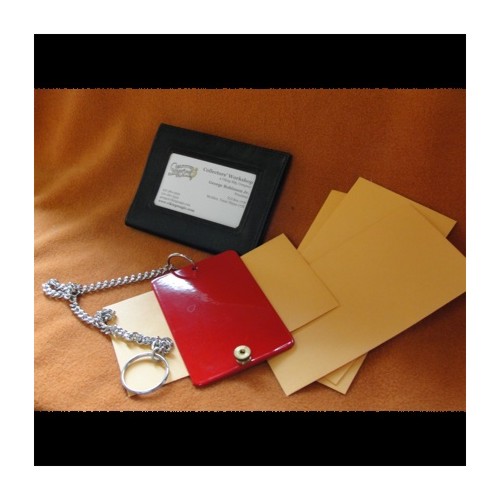
The original props looked like this:
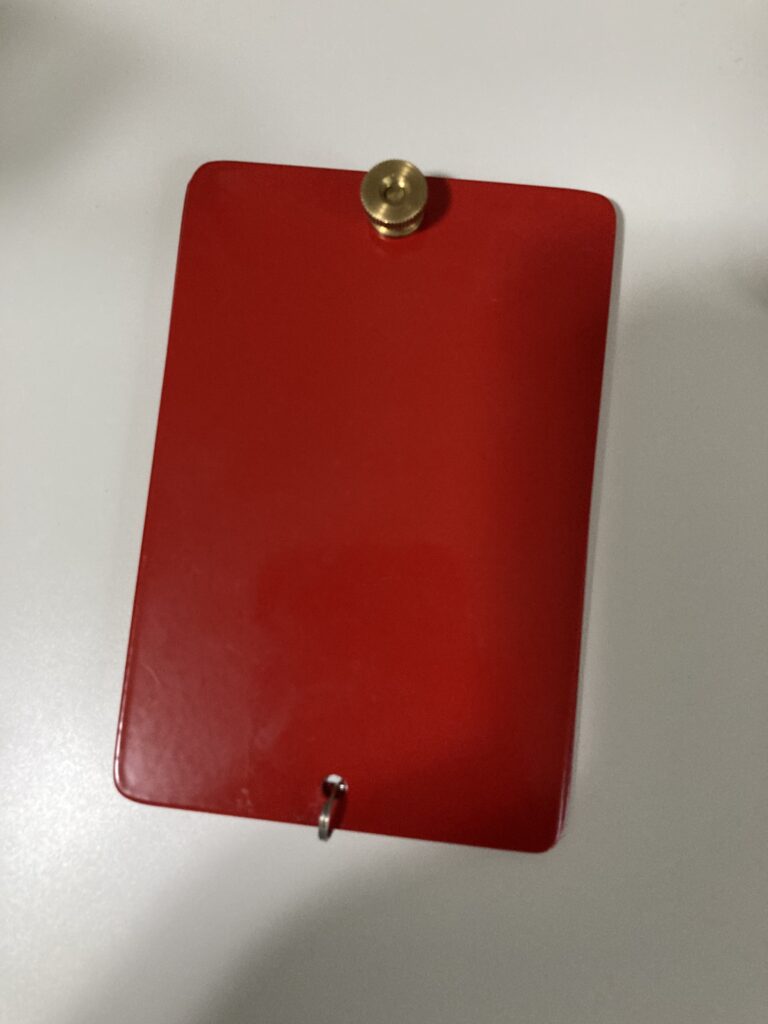
About a year ago I bought a set and unfortunately they had changed the brass plates to a powder coated set of red plates. The red plates lack the character that the brass plates have. According to the Viking Magic (who owns Collector’s Workshop) website they switched to the powder coated plates because the brass tarnished.
Personally I think that the tarnished brass is what makes it look cool and interesting.
I’ve had the red set of plates kicking around on my desk for a while and I hadn’t come up with something to do with it. Then as I was heading out to a week or so ago to do a roving magic gig, I had an idea. What if a signed card came out from between the plates?
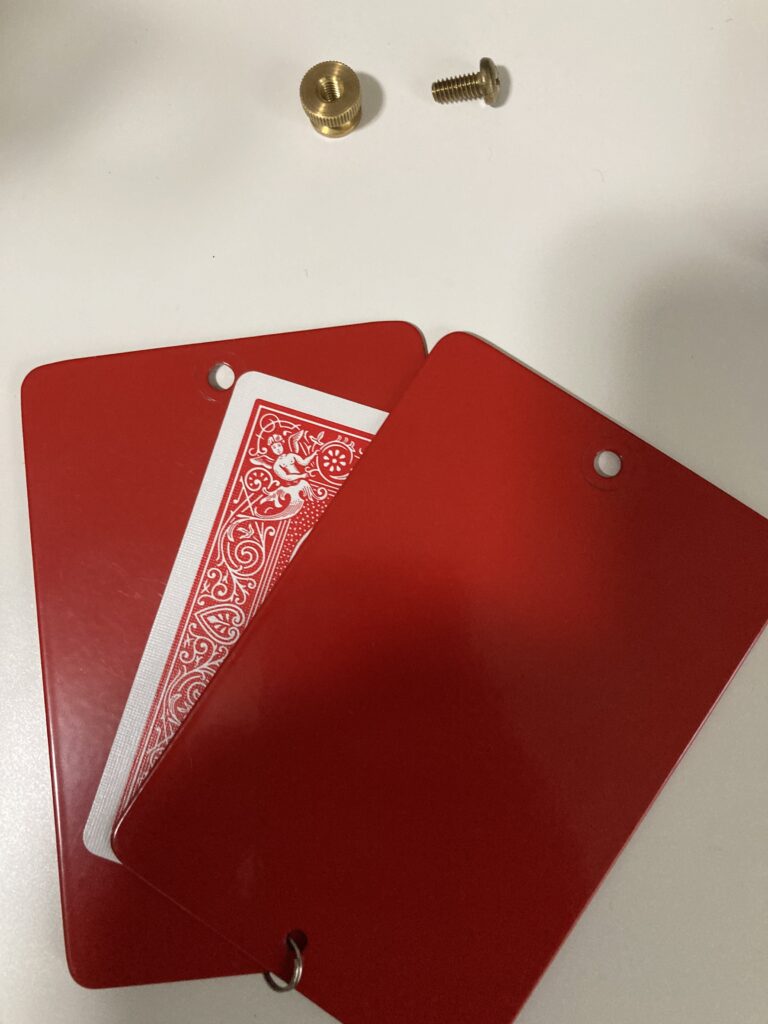
The method would simply be a double backed card. All I had was a red/blue double backed card, but I grabbed it anyway and put it between the plates.
After arriving early to the gig, I was playing around with the plates in my dressing room and realized I really didn’t need the chain, so I took that off. I also noticed the ring that served as the hinge was too big for what I wanted and didn’t hold the plates tight enough. Luckily I had a small key ring that I could put on it.
Here’s the altered plates:
It really doesn’t look like much difference, but the small ring for the hinge makes a huge difference!
I use blue decks, so the card coming out of the plates out have to be red.
The routine was simple. During my close up set I took the plates out and set them on the table. Then later during my ambitious card routine, after the card has some out of my wallet, I say, “You can keep the card or trade it for what’s in between the metal plates“. 100% of people took the metal plates. What’s fun, is someone every time also said they bet it was the card.
When the plates were unscrewed and a red card came out, it was a great moment to release tension as it clearly wasn’t there card. Then the card is turned over and it is the signed card, and the reveal had a huge impact.
initially my plan was to simply put the card back in between the plates and move on. On the second group I tried it on I handed them the card face up, and was surprised I got a bonus trick when they turned the card over and noticed it now had a blue back!
I thought the color changing back would signal that something fishy was going on, but to my surprise it was interpreted as a trick and it had a great impact!
I don’t know if I’m going to keep using the red powder coated plates, or try to find a brass set, but I do know I’m going to keep doing this bit!
The other day I was trying to come up with some ideas of magic with Apple Airpods. The best idea that I came up with was a combination of an old sponge ball bit and a coin move as a two phase routine.
The routine needs a third phase. What I want to do is hold the airpods in my hand and drop the case onto them and they airpods disappear and end up inside the case. That puts a nice third beat and ending to the trick.
For that, I need a duplicate set of airpods. So I couldn’t make the 3rd sequence happed the other day. I’m going to keep my eyes out for a cheap set of broken airpods.
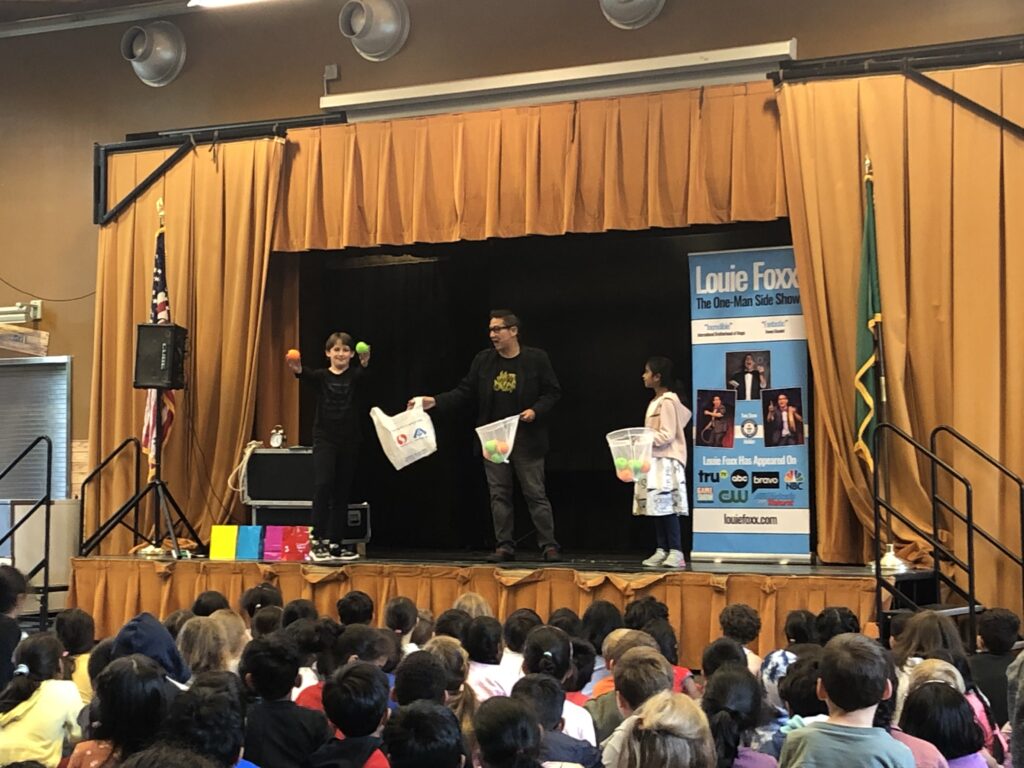
Last week I did a run of school assemblies that were sponsored by a library system to promote their summer reading programs. The show I was doing my my Incredible Idioms school assembly show, which I wrote for a 6 week school assembly tour in January/February of this year.
The challenge remembering the show as the last time I did the show was mid February, so about 3 months ago. What works for me to relearn a show is to listen to audio recordings of the show. This is also why it’s important to record your shows. It’s not hard to do, simply use the voice recorder on your phone.
The week before I had these shows I listened to the audio of the show while I drove in the car or on headphones as I worked around the house. For me passively listening really helps my brain bring back the “mental muscle memory” of the show. This is something that also helps for learning a new show or routine. I record myself doing the script and listen to it over and over while doing other things.
Hope you remember this tip when you need to relearn a show!
The other day I wrote about working on a variation of Alan Wakeling‘s trick Aces Front. Here’s the rough outline of the sequence of events:
I think the sequence is good, where I think there’s a sense of progression. For the first card, I do touch the deck before it goes into the glass. For the second card, it happens with the deck in the glass the whole time and then the card rise for the final card.
What’s fun is my starting point was something like Aces Front, but my end point is something completely different than Aces Front. I always love it when there are a couple of twists in working on a variation of an existing trick that leads you to something completely new.