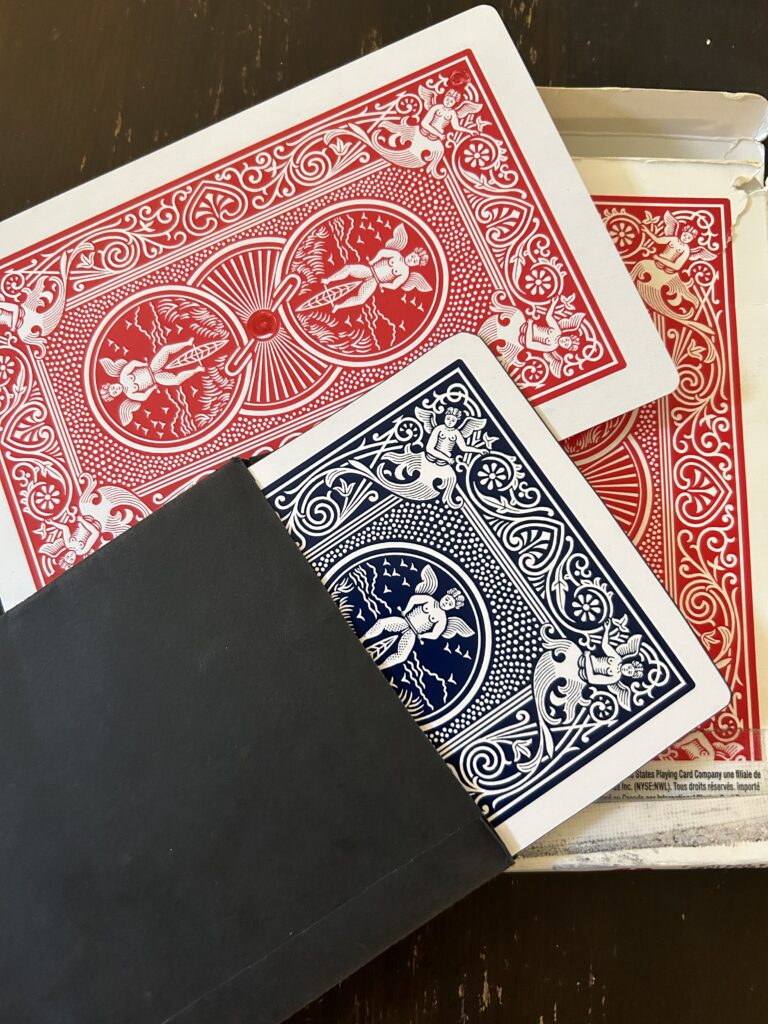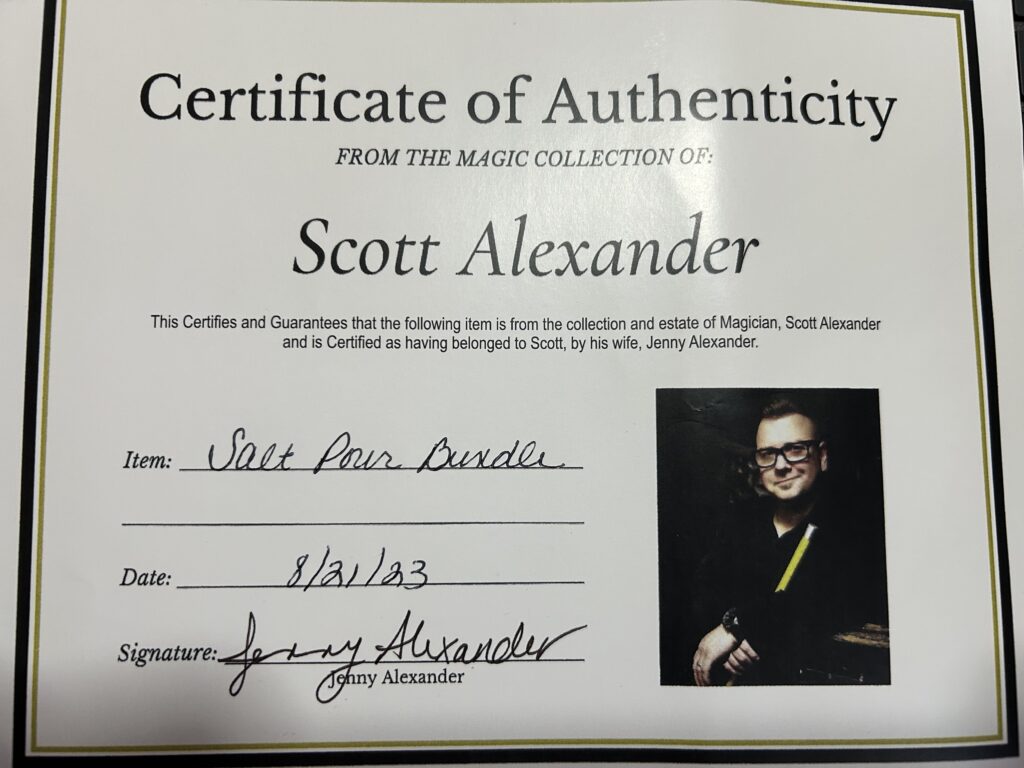
I had a day off last week and finally made a prototype of my custom props for The (W)hole Thing which is Daryl’s version of an Emerson and West packet trick.
The main differences is that the circle around they hole is a donut, the spots are arranged like an X and the cards are black. The main reason that the cards are black is that I might have a line about a black hole. With the cards in black I’m sacrificing some visual clarity of what’s a hole and what isn’t. I think if I end up not using the black hole line, I’ll switch the colors back to red as it visually pops!
In my close up work I don’t really do any packet tricks, however I love working through them. One thing I like to do is buy packet tricks out of junk bins at magic shops and then try to improve them. In a recent junk packet trick purchase I got Nick Trost’s Kannibal Kards.
First of all, the art is offensive by today’s standards, however this was made in 1981, so over forty years ago when this style of art would have been acceptable. That doesn’t make it right, but socially acceptable at the time.
The effect is that two cards disappear one at a time within a packet of three cards. Then for then ending there is a surprise reveal card.
The problem with the original routine (besides the art) is that the first card physically disappears and the second one doesn’t. Here’s what the original routine and my improvement looks like:
What I did was change the handling so that the second card also physically disappears and then for the reveal, all three remaining cards change to the surprise card, not just one card. I also noticed there’s a little subtlety where you can show show half of the reveal card and it appears to be one of the original cards. This works with the original card set, however it’s not mentioned in the instructions.
I also made a version using the original handling with a slightly different reveal card at the end
A while ago I was chatting with Marc DeSouza about vanishing cages and he mentioned the round top cages were really cool. I had wanted one before Marc had mentioned it, that he made me want one more. Whenever a John Martin Round Top Vanishing Birdcage pops up for sale at an auction, they usually sell for just over the maximum that I can spend on it.
A couple weeks ago a round top vanishing cage was on the Potter and Potter summer magic auction and it went for a price that I could actually afford!
It’s super cool how stays rigid and then collapses! Also it fits perfectly on my vintage vanishing alarm clock stand that was missing the alarm clock!
I’m excited to have added this to my vanishing birdcage collection!!
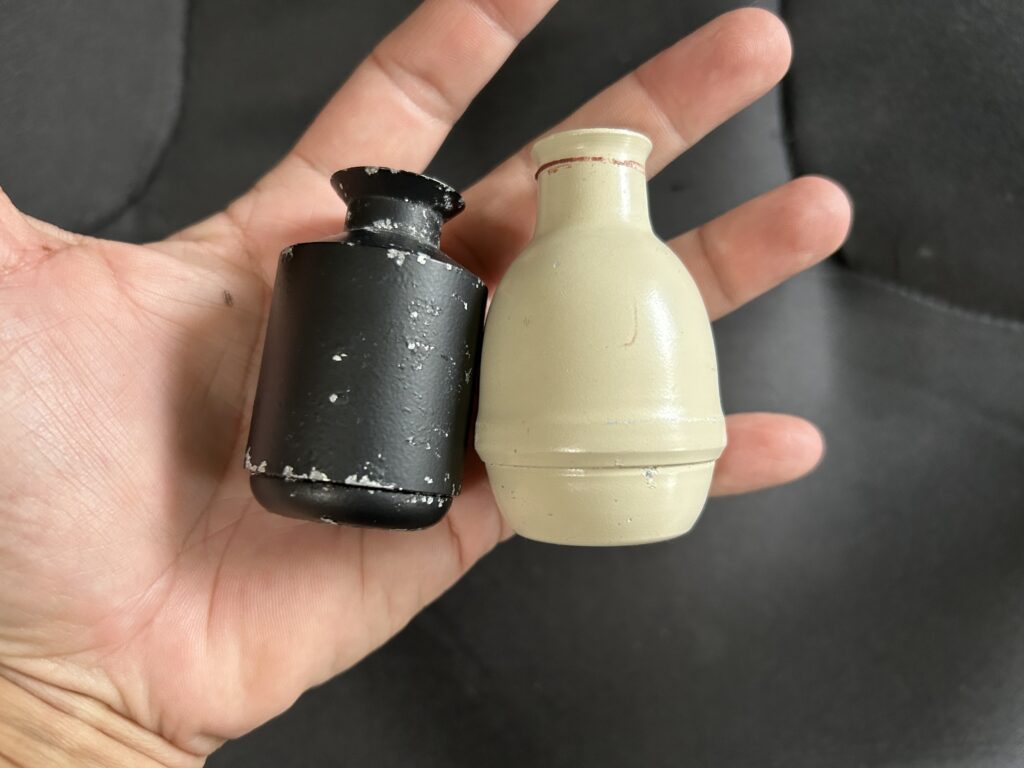
One of the things that I collect are three shell game sets. I have a pretty big collection of shell game sets, and it’s getting harder and harder to finds ones that I don’t have. I recently came across this set:
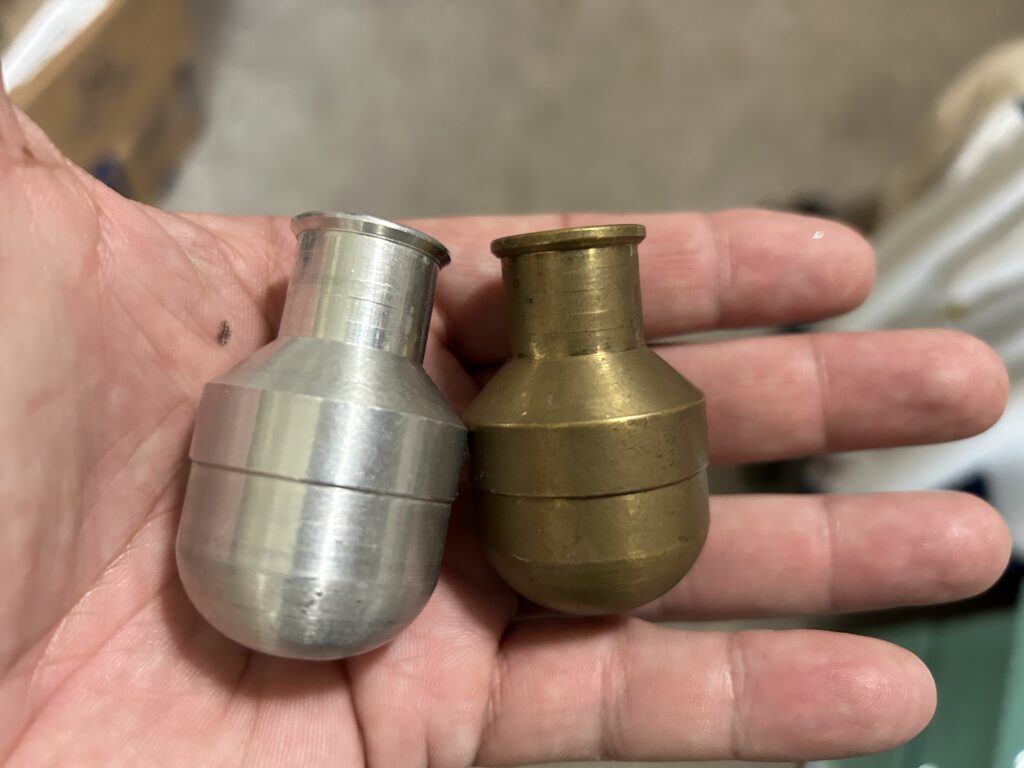
And here’s the under side of the shells:
Initially I thought these were resin, but thank to Andrew Pinard’s suggestion, I did some more inspection and they are natural walnut shells that have been filled and coated.
It’s taking some time go get through the JP Vallarino book, but I’m still working on it. I finished the card sandwich section last night and there’s one thing that really stuck out to me. I think it was called the “automatic sandwich“, it’s a very hands off way to get the selected card in between the two other cards.
Before you watch the video, while you can’t see the cards, I never touch the pair of cards, the selection or any of the cards and there are no gimmicks.
And here’s how it works:
I feel OK showing this as the routine makes it happen openly, so I’m not giving away anything secret that wouldn’t be shown if I did the trick as written. In the video above I’m blowing on it, in the book Vallarino uses a riffle to create the air force to blow the card.
This would make an interesting bar bet OR as a paper balls over head sort of trick where everyone sees how it works except for the person who selected the card. It’s a fun little bit for a card sandwich routine, I don’t really do any card sandwich routines, but might start just to use this bit!
Years ago I built a set of soft pins for the linking pins trick out of giant 5 inch safety pins. These aren’t as easy to make as you’d think. There are a couple of challenges, like the safety pin take a lot of force to open and close. The tension on the spring make getting the pin over the lip a challenge to open and close the soft pin.
My solution was to cut off the lip of the safety pin, so that the the pin had less distance to travel, making it easier to open and close the soft pin.
That partially solved the problem the of opening and closing the soft pin. The final part was to shorten the needle of the pin, so that it was easier to load things on and off of the safety pin.
After that, the final alteration was to bend the pin so that it functioned like a traditional soft pin. I’ve been using these pins for years and they work great. I’ve seen in magic groups on the internet people ask about gimmicking these giant safety pins and other magicians say that you can’t. Those magicians are wrong and I’ve intentionally not really mentioned you could. I liked keeping this thing for me…or so I thought.
Recently while digging through a junk magic bin I found this:
In this book from 1994, Jose De La Torre came to almost the exact same solution as me…but 30 years before me! While I’m disappointed I’m not the first person to solve this problem, I’m also not surprised. Scaling it up in size logical extension of the close up linking safety pins.
One of the things that always makes me nervous is when I see a review of one of my products pop up. Recently Magic Orthodoxy did a review of my Take Out Box, you can watch it below:
One of the things I really enjoy is going to magic shop and digging through their bins of junk magic. I really like buying a random shoe box sized amount of magic for cheap and then working through the magic to try to find some cool forgotten piece of magic.
In a recent purchase I found Ring Pins, and when I saw the package, I didn’t think it’d be any good, but I was wrong!
What’s cool about this is that there are no gimmicks or altered props (like soft pins). I did have to change the hand positions from what are in the instructions and break the “secret” into to motions instead of one to make it work for me.
I think I’m going to make some that have the safety pins soldered shut and are presented as puzzles.
One thing I’ve noticed that I do is over write my patter for my tricks. The early versions of the tricks are full of stuff that ultimately will be cut. I do think that’s a good way to do it, over write and figure out what’s good and what isn’t. I try to initially fill a lot of verbal space, then cut out what doesn’t work, leaving only the best parts.
The trick I’m working on that’s essentially a clock prediction:
The presentation hook is about my cat, and that seems to be something that people really connect with!
I think that another huge part of putting together routines is finding some sort of presentation hook that people can relate to. There are definitely people who are a lot better at this than me, but I’m trying…
An idea for a presentation of The (W)hole Thing by Daryl came up in my daily writing a bit ago. I managed to fill out the idea a bit and do some writing. While I was in the Bay Area, I had Joe and Misdirections Magic Shop order me a set of the cards in.
One thing I found interesting was that there’s no mention of Emerson and West in the ad copy for the trick. This is essentially Daryl’s routine for the original trick. I’m guessing this is a Murphy’s Magic copywriting thing, as Daryl was pretty good about crediting things.
Here’s Daryl doing the routine:
For the routine that I want to do, I will need to make some custom cards. For now I’m working out the muscle memory for the routine!