Economy of Motion…

Recently I added the Silk in Light Bulb trick to my show. Essentially a silk that has disappeared reappears inside a light bulb. To do this or similar “in light bulb” type of tricks I’ve always used glass light bulbs. I hollowed out real glass light bulbs and used those. These look great and work … Continue reading “Economy of Motion…”

Recently I added the Silk in Light Bulb trick to my show. Essentially a silk that has disappeared reappears inside a light bulb. To do this or similar “in light bulb” type of tricks I’ve always used glass light bulbs. I hollowed out real glass light bulbs and used those. These look great and work great, but travelling with them is a pain as they are fragile.


About a week ago I was talking to another magician and he mentioned he started using plastic light bulbs. These have the metal base that unscrews giving you access to the inside. I ordered some and they showed up a couple days later. They look great, and I’m glad I ordered them, it’s going to make travelling much easier.


One problem with this style light bulb is how long it takes to unscrew it. There’s too much threading on the base:

silk in lightbulb magic trick

I took my Dremel and sanded off some of the threading:

Now it unscrews in less than one twist. That speeds up the moment from when the audience realizes it’s the silk in the light bulb to when you are displaying it.


Look at your show and figure out where there’s wasted procedural motion. Once you find that, try to figure out ways to eliminate it. That will tighten up your show.

Keep Tweaking…

It’s fun playing around with magic tricks. A couple days ago I wrote about tweaking the card trick A Case For Premonition by Roberto Giobbi. This is a card trick where someone names a card, it disappears and it’s in your pocket. I jammed the card trick with a buddy and showed him another way … Continue reading “Keep Tweaking…”

It’s fun playing around with magic tricks. A couple days ago I wrote about tweaking the card trick A Case For Premonition by Roberto Giobbi. This is a card trick where someone names a card, it disappears and it’s in your pocket. I jammed the card trick with a buddy and showed him another way of doing it that I had thought of, which I like a bit more.


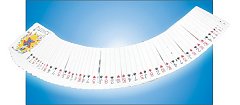
In the original method you need to count out 51 cards, it’s boring and time consuming. What I’m doing instead is using a deck that’s marked and in a memorized order. They call out a card and you spread the deck to about where the card is, locate it and get a pinkie break under it. I do this as I say, “You could have named any card…” then I square up the deck. I then side jog the card, and ribbon spread the deck face up on the table. This will hide the selection. Be sure to not be selfish and ribbon spread the cards so that they indices aren’t upside down to the audience. I then run my finger across the cards looking for their card, and it’s gone! I finish by doing Bob Farmer’s Bammo Move as I pick up the deck, palm the card and produce it from my pocket.


It’s not a huge change, but I think it really streamlines the process of making the card disappear. It’s also technically a lot easier than Giobbi’s version that uses a Double Deal and a Cull Palm. If you used an edge marked deck, you’d eliminate the need for the estimation and spread, you could just look for the mark and get a break.

App Free…

In the past I’ve written about my dislike for magic apps, and my fascination with them. I think they are interesting, but the main problem is that the majority of them either rely on an internet connection or using your phone. In my opinion there’s no way around having to use the internet for apps … Continue reading “App Free…”

In the past I’ve written about my dislike for magic apps, and my fascination with them. I think they are interesting, but the main problem is that the majority of them either rely on an internet connection or using your phone. In my opinion there’s no way around having to use the internet for apps that work that way, and that makes them not as reliable as I’d like. As for using your phone, well, you just need to justify it.


I just started playing with an idea that uses my phone to take a picture for a prediction. The idea of using a picture that you are taking in the moment makes more sense that a random pic in your gallery that’s been there for months.


Here’s what the rough idea looks like:

This is a trick that I don’t think really has a place in a formal show, but as an informal trick, I think it’s great. The nice thing about it is they can pick any of the items and they can pick up the phone to reveal the prediction. It’s pretty hands off once you take the pictures.

Premonition…

One of the card magic plots going around right now is a “Card To Pocket” that’s done in the style of Eddie Joeseph’s Premonition. Right now Max Maven’s Pocket Nightmare and the Other Brother’s Card To Pocket are just coming out. The trick is a card is selected, the cards are gone through and there … Continue reading “Premonition…”

One of the card magic plots going around right now is a “Card To Pocket” that’s done in the style of Eddie Joeseph’s Premonition. Right now Max Maven’s Pocket Nightmare and the Other Brother’s Card To Pocket are just coming out. The trick is a card is selected, the cards are gone through and there are only 51 cards, their card is missing. It’s then produced from your pocket.

Last night I was reading the book Concertos for Pasteboards and there’s a Card to Pocket by Roberto Giobbi called A Case For Premonition. This one uses one normal deck, which is a huge advantage for me than the two marketed ones. The disadvantage is that I need to deal the cards instead of letting a spectator go through the cards. Personally I think the condition of the audience dealing is a that impresses magicians more than non-magicians (in most cases).

After working through the one in the book, I did a couple of tweaks. There’s a moment where you need to spread through the cards to find selected card that had just disappeared. I didn’t like that, so in the dealing process I deal them a bit sloppy and side jog the card before the selected card, which lets me find it without spreading the cards. The other thing I changed was the need for a cull palm. Instead as I pick up the deck I do the pass that’s used in Bob Farmer’s Bammo Card Walloper to bring the card to the top and simply palm it.


I’m excited to try this out on real people to see how it plays. I think this will be one of the tricks that I do as part of an informal card set. I always like reading a trick and immediately know that if I change a couple of things it will work with my body vocabulary.

Broom Balance…

On social media yesterday a hoax about balancing a broom upright went around. Well the hoax was that “because planets were aligned” you could do it, besides the fact that you can do it anytime, you just need to try. If you keep your eye out for trends like this, they are a good way … Continue reading “Broom Balance…”

On social media yesterday a hoax about balancing a broom upright went around. Well the hoax was that “because planets were aligned” you could do it, besides the fact that you can do it anytime, you just need to try. If you keep your eye out for trends like this, they are a good way to pitch yourself to get on the local news or have a picture get shared a lot.


Here’s what I did:

Unfortunately, I was busy most of the day and unable to hustle this picture early in the day. I think that a video of someone doing the trick Balance or Stasis if presented properly would would go viral, or at least get someone some media attention.


Keep an eye out for things that are blowing up on social media and think about what you can do with that premise. Sure it’s probably something that you won’t be doing outside of that particular instance, but it’s a good for creativity and if something goes viral, then it’s good for you!

Bouncing Ideas…

In the past I’ve mentioned that jamming with other magicians is an important part of the creative process. This has benefits beyond just coming up with ideas, you can also learn new techniques by hanging out with other magicians. Here’s a magic jam from yesterday: In the video you may have noticed the Coin in … Continue reading “Bouncing Ideas…”

In the past I’ve mentioned that jamming with other magicians is an important part of the creative process. This has benefits beyond just coming up with ideas, you can also learn new techniques by hanging out with other magicians.

Here’s a magic jam from yesterday:

In the video you may have noticed the Coin in Chapstick that I’ve been messing with. It’s an interesting idea, and it was fun two work out some of the finer details with these magicians. I think the trick got better after getting some good feedback!


After The Force…

The other night I finished up reading After The Force by Ron Frost. I think it’s important to keep learning. There are tons of magicians I know that don’t learn magic for fun. They only learn something when they have to, which I think is the wrong approach. I think that magicians need to keep … Continue reading “After The Force…”

The other night I finished up reading After The Force by Ron Frost. I think it’s important to keep learning. There are tons of magicians I know that don’t learn magic for fun. They only learn something when they have to, which I think is the wrong approach. I think that magicians need to keep on top of techniques and tricks.

image from Vanishing Inc

This book’s title is a bit misleading, I expected just endings to card tricks. The first part of the book teaches you how to force cards in a variety of ways. I agree with Ron’s assertion that the Classic Force is the best force. Then he teaches you a lot of tricks that uses forces, but in the context of the whole tricks. It’s the trick start to finish. Not that it’s a bad thing, I just thought it’d be something a bit different.


I’m glad I read the book, and worked through the stuff in it, however I don’t think anything from it is moving into my working set. It’s not that the stuff is bad, it’s just not for my show. There is one move in the book that will move into my “toolbox” or moves that I use when a situation calls for it. The big thing is to keep educating yourself on techniques and grow as a magician.

Closure…

Material cycles in and out of my show fairly frequently. One trick that has been out of the show for a while is my Applause Please trick. This is my version of milk in lightbulb that uses an applause sign instead of a lamp. I took this out of my show a bit after I … Continue reading “Closure…”

Material cycles in and out of my show fairly frequently. One trick that has been out of the show for a while is my Applause Please trick. This is my version of milk in lightbulb that uses an applause sign instead of a lamp. I took this out of my show a bit after I started selling it to magicians.


Currently I have a need for the trick in the show. In my color changing handkerchief routine at the end when the original handkerchief is gone, the audience is left missing some closure to the trick. What I’m doing is using the applause sign throughout the show, then when it comes to the end of the color changing handkerchief routine the silk reappears from the lightbulb.


I’m hoping the reappearance of the silk will be a better end of the routine for the audience. Always look at your show and try to find things that don’t feel right and try to fix them, don’t settle for just OK.

What’s Wrong With That Act…

Recently I saw an act that is everything I dislike about how people perform magic. They lacked technical skill, knowledge of the trick and presentation. For me it was a trifecta of what I don’t like. This act did the “Sands of the Desert” trick. This is a trick where you have a bowl of … Continue reading “What’s Wrong With That Act…”

Recently I saw an act that is everything I dislike about how people perform magic. They lacked technical skill, knowledge of the trick and presentation. For me it was a trifecta of what I don’t like.


This act did the “Sands of the Desert” trick. This is a trick where you have a bowl of water and you swirl your hand in it and the water turns black. then you dump different colored sand into the bowl and swirl it up. Then you reach into the bowl and pull out handfuls of dried sand that’s all the same color. For the finale the water in the bowl turns clear.


First of all, the performer couldn’t do the trick. It’s not a hard trick to do, and they lacked the technical skill to do it. It was pretty crazy to watch. You really should practice it before you do it in a show. You not only need to know the “sleight of hand” but how and why the props work like they do. That’s super important, knowing why something is shaped the way it is, or how to hold it.


As far as their presentation goes, it felt like they were trying way to hard to put meaning to something. They tried to use the trick as an analogy for the universe. That’s fine, but it lacked conviction and authenticity. It felt like they asked someone to write a script and they read the script. If you watch Jeff McBride do his stuff, you feel that he believes it and he’s trying to open your eyes to something, not just saying big words. He puts his heart into it, but that’s also Jeff, and a piece of who he is.


Put yourself into your tricks, put your heart into it and put your time into it. Dive into the props, the sleights, learn the history of the trick, learn as much as you can about and the story you’re telling. That will come through in your show.

Two Methods…

One of the nice things about the magic scene in Seattle is that we have a monthly magic show called Magic Monday. Essentially it’s a “magic open mic” and a great place to work on new material. Most areas don’t have a venue specifically for magicians to work on new things, or give newer performers … Continue reading “Two Methods…”

One of the nice things about the magic scene in Seattle is that we have a monthly magic show called Magic Monday. Essentially it’s a “magic open mic” and a great place to work on new material. Most areas don’t have a venue specifically for magicians to work on new things, or give newer performers a place to work out materials.


A couple of nights ago I performed at Magic Monday to practice some routines that I hadn’t done in a while. One of the routines uses some technology, and it failed during the show. That’s the importance of having an “out”. When doing a trick that relies on technology, that frequently means you need to run two methods for the trick at the same time.


While running two methods to accomplish one trick is a bit of a pain, but if you use tech, it’s worth it. It’s good that for the trick I was relearning, the worst possible scenario happened, that let me practice that scenario. That’s a good lesson, you need to not just plan for the worst, but practice for it!