How to Make it Play Onstage

The last couple of days, I’ve written about my idea for a three shell game style routine to be done onstage. The basic premise is that the prize is put into a tennis ball that has a slit cut into it and it’s juggled with two other balls and the audience has to follow the one with the prize.

You can read about the idea here and how I solved one of the problems here.

A challenge that I didn’t think about with using a two dollar bill and a couple of one dollar bills is that they are visually similar when viewed from a distance. The different formatting of a five and higher value bill looks different, however a $1 and $2 have the same layout.

How Can They Look Different From a Distance?

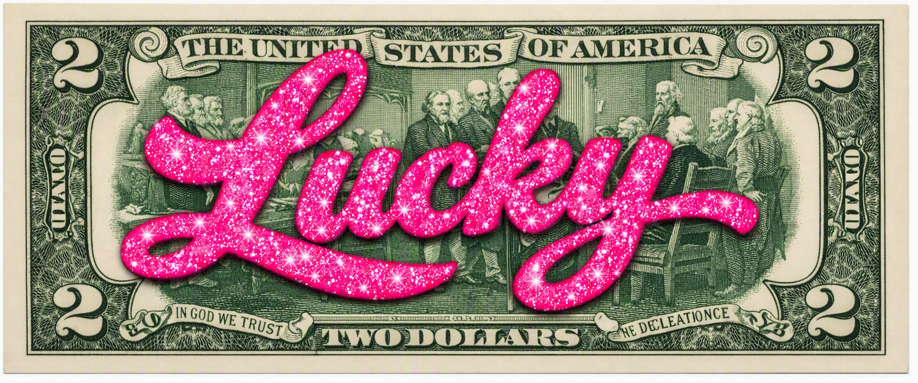
This is the challenge, making the trick play to the back row. Here’s an idea for the solution to that: What if on the back of the two dollar bill in bright, sparkly ink/paint I wrote “LUCKY”? I could introduce the two dollar bill and say it’s my lucky one, then turn it around to show the word on the back. That visual difference would make it play further back in an audience.
When I create routines, I always try to think about the back row!

-Louie
Remove the Loss In a Shell Game Routine

Yesterday I wrote a post about the idea of doing a three shell game type routine onstage using tennis balls, and you can read it here. The tennis balls have slits cut in them that I put money into, and the audience has to follow the one with the money.

One of the problems with this style of routine is that the spectator loses. I’m trying to take the sting out of that. My idea isn’t that they win; they still lose, but ultimately, as losers of the game, they still win.

How Do They Lose, But Still Win?

I’m not sure how this will play with an audience, but here’s the idea:

I show a two dollar bill and put it into one of the tennis balls. I tell the audience that it’s “My lucky two dollar bill” and you won’t win it. I’ve played this game hundreds of times; each time I lose two dollars, but I have never lost this two dollar bill!”

The bill is put into a tennis ball, and they’re juggled. Someone from the audience selects one of the balls, and it’s tossed to them. They open it, and it has one dollar in it. You give them a second chance, and they pick another one, and when they open it, that one has a one dollar bill in it as well. That leaves you with the two dollar bill!

Ok, so they lost in their objective; however, they still walked away with the same amount of money that they would have won if they found the two dollar bill.

I think this idea takes the sting out of the spectator losing at the end.

-Louie

The Shell Game Onstage

The idea of doing a three shell game style routine onstage has been in my head for a little while. Onstage, a shell game type routine typically manifests itself as a Bank Nite type routine, where money is mixed with worthless prizes. The spectator picks all but one envelope, leaving the magician with one, which has the money.

There are two challenges with a Bank Nite style of routine:
1: The spectator loses (usually)
2: The final reveal is anti-climatic, the audience knows what’s in the last envelope, so opening it isn’t really a moment.

A good example of ending the routine with a bit of a moment is telling the audience that money is in one of the envelopes, but not showing them. A good example of this is John Archer’s Blank Nite routine:

What’s the Solution to Doing The Shell Game Onstage?

This doesn’t really solve the problem, but here’s the idea I came up with: You have three tennis balls with slits cut in them. You put the $100 into one of them, and the audience has to follow that one while you juggle it.

This is nice and visual, and it has the mixing element of the three shell game. The audience is involved in trying to follow it.

This doesn’t solve the two main problems: the spectator loses, and the final reveal is anticlimactic.

I like the visual…but now to try to figure out how to solve the two issues.

-Louie

What is the Greatest Packet Trick of All Time?

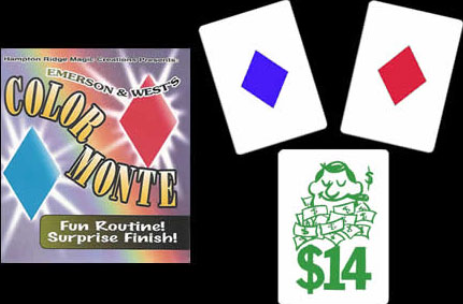
Of the hundreds of packets tricks I’ve learned and tried, last week I took out an old one that I really haven’t done since I was a teenager, and was amazed at how much people loved it! That packet trick is COLOR MONTE!

While it’s not my style to do, I also can’t deny how great it is! It’s really the sponge balls of packet tricks!

There’s so much action in it; you get a lot of magic effects in a short amount of time. Plus it has a story that’s easy to follow and makes sense. Not some wacky story about bigfoot or splitting breakfast with a football team.

This post is just a shout out to an amazing routine!

-Louie

How to Keep Them in the Moment

Right now I’m on an airplane writing this post, and watching a movie about a plane disaster probably isn’t the best choice for a movie. The movie is about Pan Am 103, and at one point an FBI agent goes into a door and “center” was spelled “centre” which took me out of the story when I saw it. Clearly that sign was made by someone who is a UK based English speaker, and not one from the USA.

magic show props


Why does that matter? It’s a prop that’s pretending to be something and while I have to suspend disbelief for the movie, it’s a moment that took me out of that suspension of disbelief.

When I watch magic shows, one thing that takes me out of the moment with the performer is when they take out a prop and say it’s something, let’s say a bucket. However, that bucket looks nothing like a bucket I’ve ever seen in my life. Sure, it has the elements of a bucket, but it’s not a bucket. It takes me out of the world the magician has created.

This is why I prefer tricks that use props where the method is created around a real-life item, instead of a trick where the item is created around the gimmick. A good example is my Take Out Box, the gimmick is built into a real take out box.

Take a look at your props, what pretend to be a real life item, but isn’t? Can you rebuild it so that it actually uses what it pretends to be?

-Louie

A Simple Way to Reduce Distractions at Outdoor Magic Shows

bubbles in a magic show

One of the things that I hate when performing at fairs is the vendors that sell bubble guns. People will give them to a toddler, and the kid will just sit there and shoot bubbles the whole show. This is a HUGE distraction.

Not only is it a distraction, but the bubbles can also get on my glasses and smudge them (which is super annoying) or my props.

How Do I Politely Get Them To Stop?

Here’s what I started doing when there’s a kid with a bubble gun at my show: I say (on mic), “No bubbles during the show, I’m allergic to the detergent in them”

That’s it, super direct and simple. Sure, it’s a lie; however, it tells them that not everyone wants bubbles blown into their face. It also gives a reason they might not have thought of for why they’re being inconsiderate by letting their kid spray bubbles everywhere.

Give them a reason for the request and they’ll (usually) follow it.

-Louie

Easy App Magic Trick without a Magic App!

It’s no secret that while I have used phone based app magic, I’m not a huge fan of them. They are frequently abandoned by the creator once sales slow down or are affected by a lack of internet connectivity. Recently, I posted about a trick with my phone that doesn’t go the traditional magic app route. Here’s what the first version of the trick looked like:

The first version needed some double lifts, which is fine, but I learned they are totally unnecessary. There’s no reason to have them, and they could be eliminated with a slight adjustment. Taking them out, really streamlined the trick, and the adjustment allows me to do it with a borrowed deck!

This is a good example of looking at a trick and trying to improve it past the “it works” phase to make it work better!

-Louie

Is the Three Shell Game Relevant?

Not too long ago, a magician I was hanging out with said he didn’t think that younger people understood or knew what the shell game is. I disagree; I think young people know what the three shell game is, and my reasoning is that every ballpark in the USA plays a version of it on the jumbotron. Here’s the shell game at a Cincinnati Reds game:

It’s a simple concept of a game, and younger people definitely know what it is, or it wouldn’t be played in stadiums! This is one of the things that I like about it, it IS RELATABLE because people have played it before!

-Louie

Magic Trick That Looks Like AI!

Modern magic, especially close up magic has moved to very visual effects. Things that look like AI or if you’re old school, then trick photography. Magicians rarely look to the past, there are some amazing tricks that look like a modern AI fake magic trick.

One example is the Joseph Silk Gun. Another is the Jumbo Card Restoration Frame which was invented by Theo Bamberg in 1909. I’m sharing a greenroom with a magician who has one of these and it looks amazing!

There’s ton’s of really cool stuff from the past that fits modern styles, you just got to search it out!

-Louie

A Simple Cell Phone Magic Trick

Personally, I don’t like using my cellphone for magic tricks. It’s too easy for an audience to say something is an app or AI. The other reason is that so many magic specific apps get abandoned by their creators, and they just stop working.

Here’s a little magic trick that I came up with that uses a cell phone:

The video above was the test of the trick, I’ve tightened it up and removed all the double lifts from it.

Honestly Evaluating The Magic Trick

What I like about this is that it doesn’t use any magic apps, so I’m not relying on some magician in their basement in Alabama to keep it updated!

What I don’t like about it, is that the effect is fairly slow. Removing the double lifts speeds it up a lot and takes out a lot of unnecessary process.

One last thing, I found the trick is stronger when it’s repeated a second time!

When creating magic tricks, I think it’s important to evaluate what’s going one. Figure out what you like and don’t like and what makes it hit harder for the audience. Try things, take risks. .

-Louie