Here’s a gag idea: You call attention to your glasses and mention that everyone has cameras in their glasses now. You then pull/shake a camera out of the glasses.
That’s it, a quick sight gag.
To do it, the easiest way would be to palm a small camera and produce it. More complex methods would be a camera that collapses. A simple, but pain to make would be a latex or sponge camera.
There you go, if this idea interests you, go out and do it!
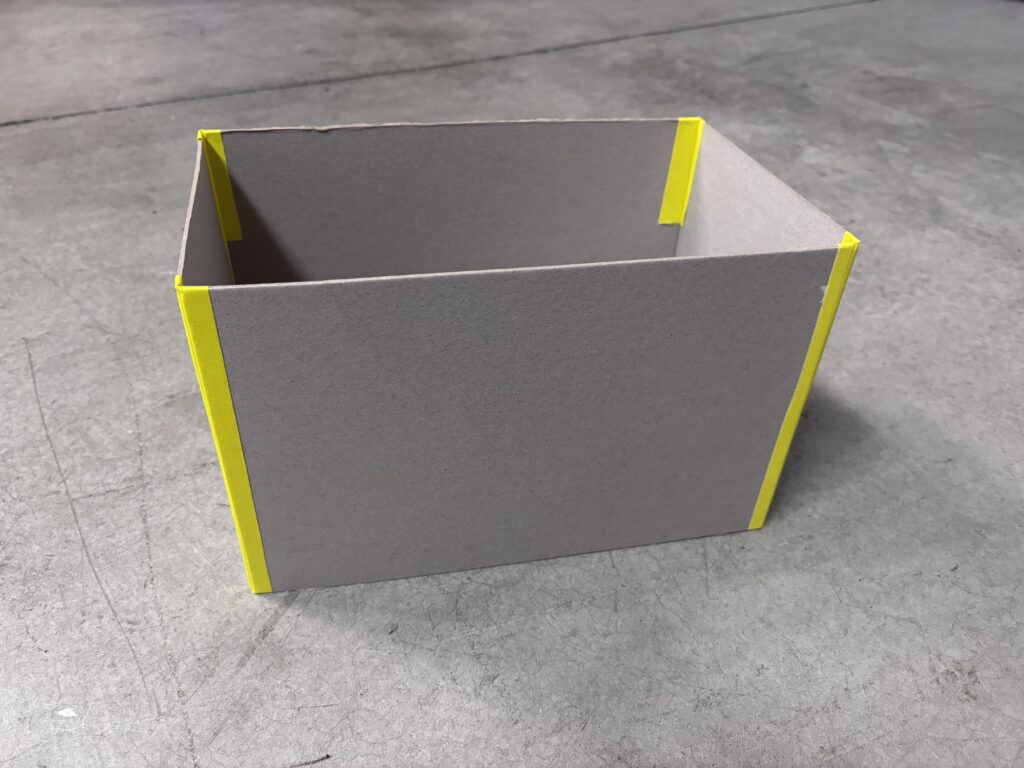
I’m still working on my Snake Basket Magic Routine. The basket won’t be a basket; it will be a box. I’ve written on this blog before about why I’m not using a basket for the snake. I want the box to look like a shipping crate, but it also must be light and pack as small as possible. I started with a cardboard frame with gaff tape hinges.
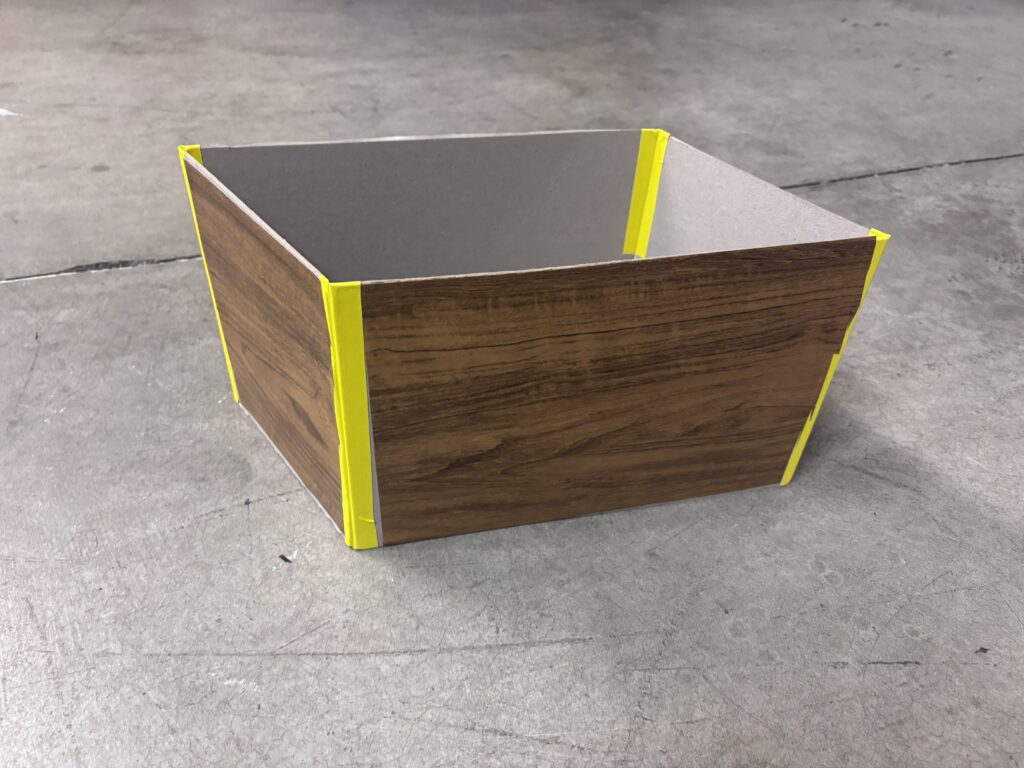
I then covered the middles of the panels with wood patterned contact paper.
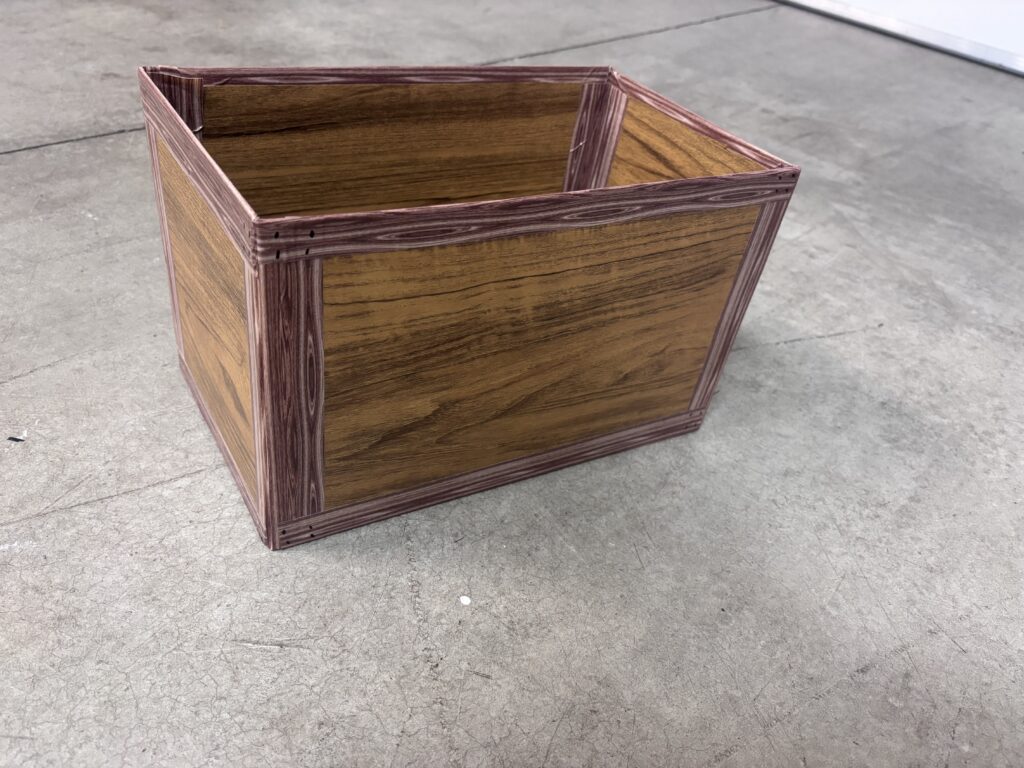
Finally I did the corners with a wood patterned duct tape to give it the crate look.
This gave me the look that I was going for without the weight of wood, and it packs flat!
This snake basket magic trick I’m working on feels like a “project car” that’s in someone’s garage that they are constantly working on. It’s something I keep finding ways to improve. The first version is barely finished, and I’m working on a second one!
The big change is that I’m going to move it away from a card trick. I’m going to merge it with Terry Seabrook’s Chattering Teeth Routine. The snake will chew holes in the paper, and the reveal will be when the paper is opened. A paper is physically larger than a playing card, even a jumbo playing card. Bigger is better for a reveal!
Moving to paper also allows me to customize the routine to a show. For example, if I were doing a safety-themed show for kids, the snake could chew a stop sign in the paper. It could still be a card a la the original Seabrook routine, or spots (like on a die) or even the image a piece of art!
In January, I have two magic lectures: one was last week, and the other is in just over a week. I usually don’t do many of these, as my performing schedule is busiest during the summer, when the magic conventions happen.
I had a blast at the one last week for the Portland Society of Magicians. Here’s a peek at what the 90 minute lecture looks like in 60 seconds:
If your local magic club would like a lecture, feel free to contact me and we can try to make it happen!
On today’s episode we welcome in comedy magic duo Trevor and Lorena. We talk with them about how they started in magic, the evolution of the act and learn about their alter ego’s Charlie and Delilah.
We discuss Trevor meeting Lorena’s Dad for the first time and we even try to place their accents. A super fun conversation with two phenomenal people.
On the plane the other day I read Mastering Comedy Magic by Ian Batterbury. This book goes through different techniques and objectives with using comedy in a magic show. The book says it’s intended for beginners at comedy magic. I would say it’s for beginning at adding unique comedy to their magic.
The difference is that there are a lot of comedy magicians out there who have never had an original thought in their life. They are doing Banana Bandana, or whatever using the jokes the trick came with, or worse using the jokes they’ve seen other people do without permission.
This book is a general “theory” of performing comedy magic, without much in the way of tools, like how a joke is structured. If you’ve never created your own original script for a routine, this book will give you some good guidelines to help you out. With it only being about $10 on Amazon, it’s worth looking into.
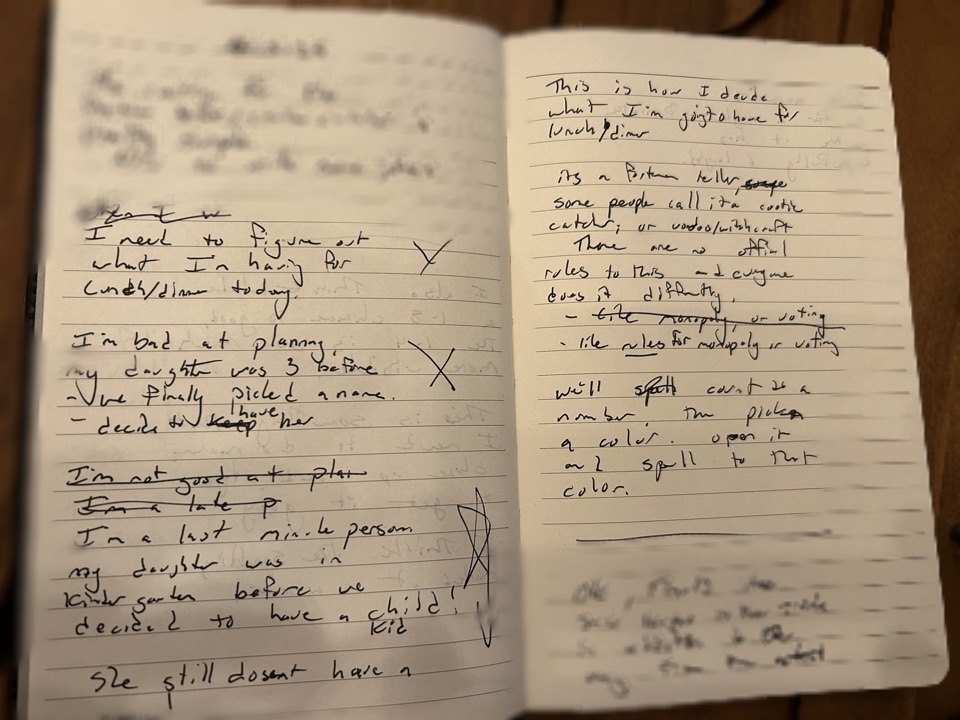
Every year in my library show I try to have at least one trick that has a life larger than that show. Something that I’ll try to put into my main show. One of the new routines that I have been doing in my library shows uses a Cootie Catcher/Paper Fortune Teller.
This routine has been doing well, and it’s a great little solo routine that’s compact a trick that packs flat, but because it’s a three dimensional trick that moves, it has a bit more visual texture than a flat prop.
There’s not a ton to the routine that I’m working on. It’ll hopefully have 6 laughs in two minutes. I’m always looking for solo tricks that I can do without someone from the audience onstage.
One trick I’m not a big fan of is bill to orange/lemon/etc. It’s a overdone trick and usually it’s not a surprise to the audience when the bill is in the fruit. A notable exception to this is Nick Lewin’s Lemon Aid routine.
I do a routine that uses a dollar bill, but the dollar isn’t the focus of the trick. It felt like it had a loose end at the finish of the trick. One day I had the idea to make the bill come out of an orange at the end of the trick. What I like about this routine is that the bill doesn’t disappear, so it’s not obvious it’s in the orange immediately when the orange comes into the play.
Then I had to deal with how to give the wet dollar to the person. I found some Evidence bags, and wrote a gag with them.
Now at the end of the routine when I give the signed dollar to the person, I put it in the bag and let them keep it! It’s a fun way to deal with the wet sticky dollar and gets me a couple of laughs!
I love updating old things to make them modern and more relevant. A great example of this and something that I wish I thought of is Play-Duh. This is the old spring snake in a can, but instead of a peanut brittle or chip can, it’s a “Play-Doh” style can.
Simply putting a spring snake into Play-Doh can won’t work, the lid won’t reliably stay on. This has an adjusted lid to make it stay on.
I’ve been using this in my test shows for my summer library show and it’s a HIT!
The national theme for libraries this summer in the USA is Color Your World, so this fits right into the theme!
Here’s how I use it in my kid show:
Effect: Five container of Play-Doh are shown, each has a different colored lid. One is selected (purple). The other four are opened and they contain a ball of purple Play-Doh. When the selected one is opened, and two purple spring snake jumps out.
This is a really simple routine, all you need to do is to put purple Play-Doh in the four containers that aren’t purple. Two spring snakes go into the one with the purple lid and you’re all set.
All you need to do is force the purple one, I use Phil Smith’s Quinta Force, but the PATEO Force or Magician’s Choice force would also work.
It’s a fun routine, especially when you add in all the Bev Bergeron style bits of trying to put the spring snake back into the can and having them pop back out.
This isn’t a product that I put or make anything on, it’s just something that I think is really cool idea.