What’s Next for What’s Next

Sometimes during my morning writing I will explore ideas for tricks like What’s Next that uses the spot card. This is routine where the number of spots on each side keep changing, then there’s a sucker explanation followed by a series of surprises. The prop in that trick resembles a domino and Norm Nielsen made a version of it that has the correct color combination for a domino. Someone else had made a version of one that’s a cookie with the chocolate chips being the spots.

What’s next is a trick that is perfect for trying to theme, you just need to figure out what the spots are. They could be zits on a teenagers face, or my favorite idea I came up with, bullet holes on a road sign. If you’ve driven in the rural USA, seeing a road sign that’s been shot up is common.
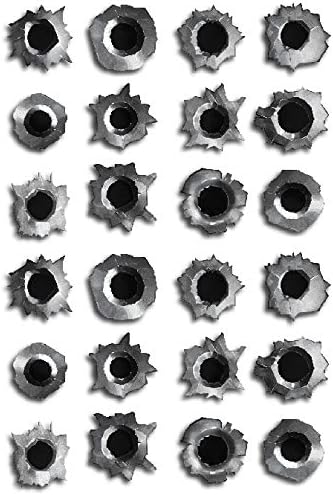
It’d should be simple to make this. Just use bullet hole stickers for the spots on the what’s next card, and cover the white board with art that’s a street sign. I’m going to imagine that the gimmick’s black art to hide the magnets would still work with the bullet holes.

If you wanted to do some work, you could do a kicker ending by building a flap card gaff to one side of it to reveal something.

Honestly I’ll probably never use this, so feel free to make one up. Creating things you know aren’t for you is still a good creative excercise!

-Louie
The Third Row and Beyond

When I was at a booking conference last month, one of the acts that I saw was a magician. He did a sponge ball routine where most of the action happened on the table top.

Sponge ball magic trick

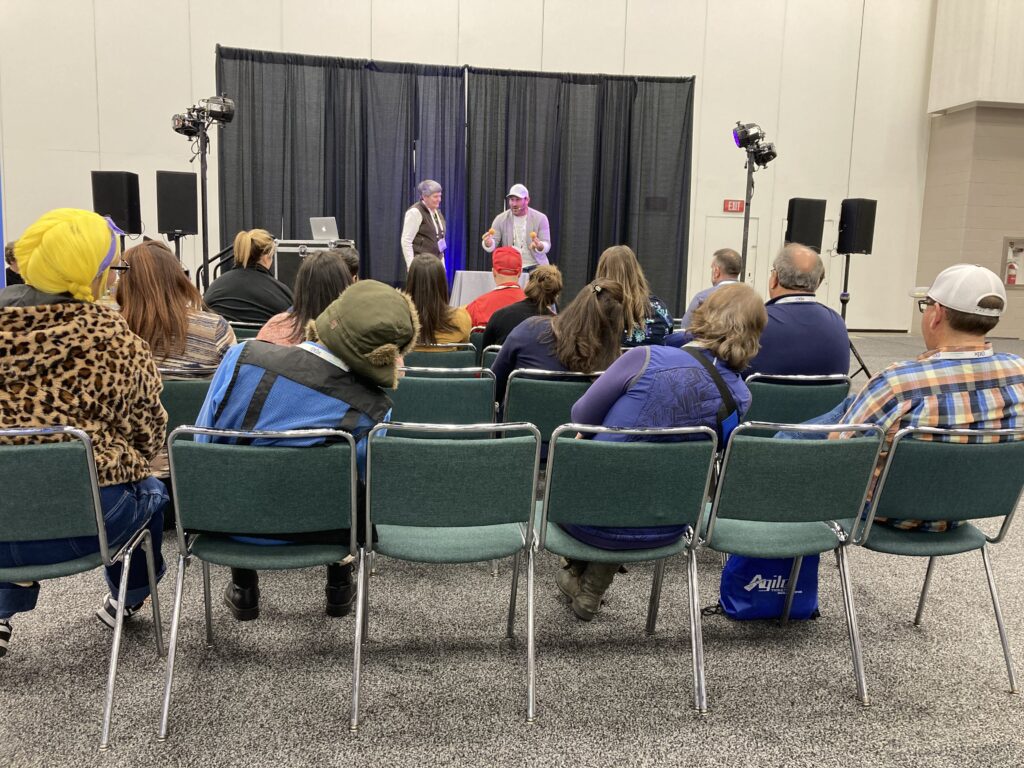
What do you notice in the picture?

What I see is an audience that can’t see what’s happening. The back two rows are all leaning trying to see through gaps between the heads of people in the front two rows.

In theory, sponge balls can be done “high”, but in practice it’s a “low” effect. What I mean by that, is you can ask the person to hold the sponge balls at shoulder height, but in reality, that’s not a very natural position. They’re going to hold them at belly or waist height. That takes a lot of the visibility out of the trick.

How can you sponge balls play higher?

I have no idea, I don’t do the trick and when I used to, it was close up, not onstage. The challenge is when they open their hand and the balls are there, they will fall, and that makes if very difficult to the audience to know how many balls are there before they fall.

Another possible solution is to not do close up tricks onstage. I’ve been guilty of that, doing close up tricks that translate to a small parlor audience. The success the close up trick gives you for 20-30 people makes you think it will work for 75 or more, and it really doesn’t.

Watch other performers from the back of the audience and make note of what’s visible and what isn’t. It’ll really help you look at your own show and know what plays beyond the second row!

-Louie

The Moisture Festival Podcast – La Petite Mort

On this episode of the Moisture Festival Podcast we are joined by the lovely La Petite Mort. We talk about how being a runway model led her to finding her voice and how that led her to becoming a performance artist.

We talk about what goes into developing her acts and how she curates her own shows to build up the community. We talk about the rave scene and what Gorelesque is. A fun interview with a wonderful person, we hope you love it.

Gimmicked Handcuffs

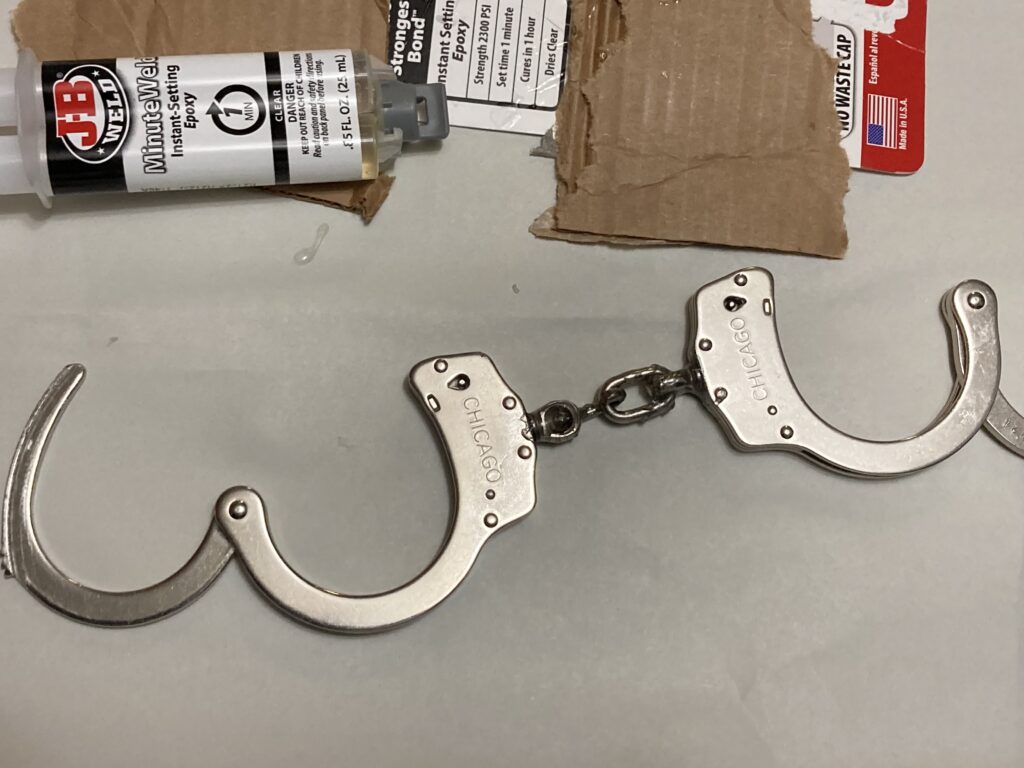
A few months ago I wrote a blog post about a set of gimmicked handcuffs I had made a long time about. You can read about them here. The allow you to escape from the cuffs, but they also have another feature that allows you do a thumb tie style effect.

These cuffs have two very different gimmicks in them and I finally got around to making them again!

Essentially these cuffs will be used as a gag in the show. The premise of the trick is a rope escape, however at the end I’ll say I didn’t get out…of the handcuffs. The appearance of the handcuffs will hopefully get a laugh, then I’ll go into the thumb tie bits. I’ve never really done anything like this in the show, so we’ll see how it plays out.

-Louie

Holiday Magic Shows…

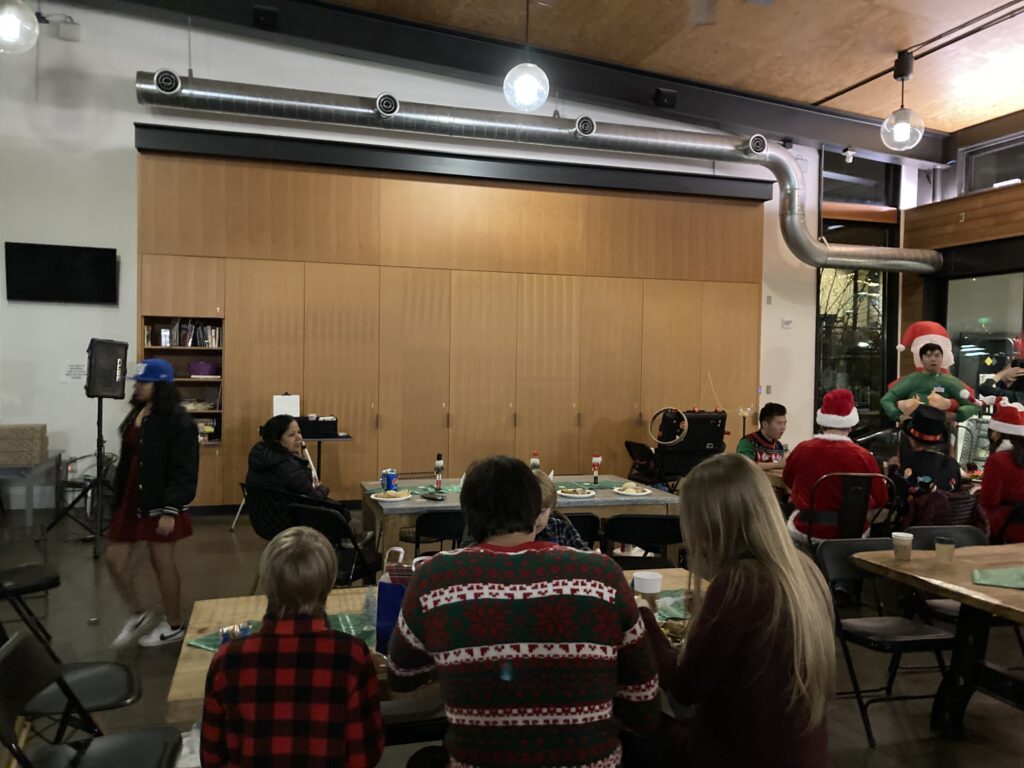
Recently I did a holiday party for a company that was in a situation that I normally would have declined the show as the conditions weren’t right for a successful show. Sometimes what I talk about with the client and the reality of what the show is when I get there are completely different. I’m not saying that the client was trying to deceive me, but sometimes we speak different technical languages, or they assume things like a table is movable when it isn’t.

Here’s the view from the back of the audience looking towards the performing area.

magic show audience

There are big tables with people only on one side. This puts huge gaps between the groups of people, which makes having them come together as an audience much harder. The other challenge was that most of the guests showed up late, and they were still eating when it was my showtime. We pushed it back 15 mins, but that’s all I could do. If I didn’t have another show after this one, I would have pushed the show back 30 mins or more.

Some performers really lose their crap about corporate holiday shows starting late. The reality of these shows is that 95% of them start late. If you have another engagement, be clear with the client the situation. Personally if I had a choice of starting the show late, or performing while people are eating, I’d pick starting the show late every time. Obviously there are things reasons to not start the show late, like having another engagement, personal plans with your family, or it’s going to start hours late!

Sometimes you just need to make the best of situations. The audience was great, and had a good time!

-Louie

School Assembly Show…

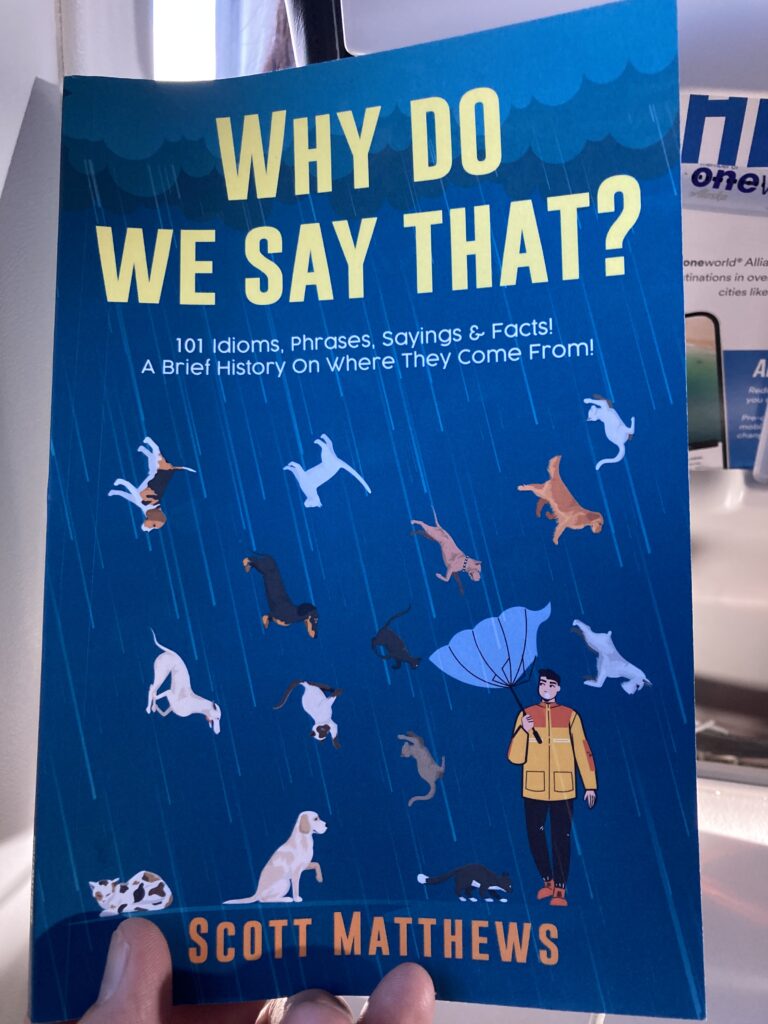
In less than a month I’ll be debuting a new school/library show. I’ll be on a school assembly tour for five weeks. The show is called “Incredible Idioms” and is themed on idioms.

incredible idioms show

The great thing about breaking in shows by doing three a day for over a month is that the show gets really good, really quick…Or you realize by the end of the 5 weeks you don’t like the show and never do it again.

The key to these is actually putting in the work. I’ll be doing a lot of reviewing video and writing every night and the first week or two the show will be rough, but then it’ll be super tight for the rest of the tour. Oh, by rough, I mean just good, and not great. I’ve done school shows for a long time, and have a good general sense of what kids like (but the do surprise me sometimes).

Right now I have a ton of half built props and half written routines. It feels like the show won’t be ready in less than a month, but once one routine gets completed, they’ll all domino into being built.

-Louie

An Amazing Show!

Most of the time when I hear about a how great a certain magicians is, over and over for years, when I finally see them I’m let down. Sometimes it’s because what I’ve heard has them build up soo much in my head, and other times they’re just above average.

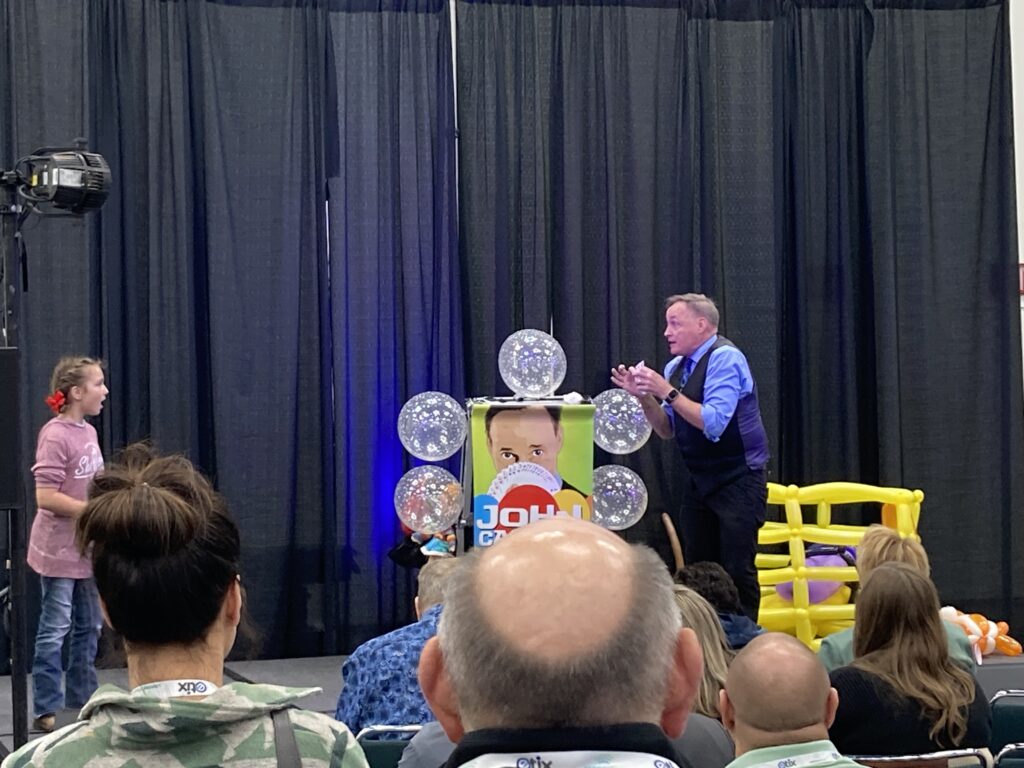
I’ve heard about John Cassidy for years and finally saw his show and he’s AMAZING!

If you’re somewhere that he’s performing, go out and see the show! It’s a great show and you’ll learn a lot by watching it! He has a great way of tying together unrelated gags to make them cohesive, and his magic is good!

-Louie

Card Split Routine in Action

At the end of November I posted an idea for a trick that was a card split where an 8 turns into two 4’s. Then the next day I posted a routine for the card split. I was able to try out the routine at a magic jam and it played well.

The routine is fairly straight forward, you end up with a problem, then magically solve the problem.

-Louie

The Principles of Magic and Mentalism

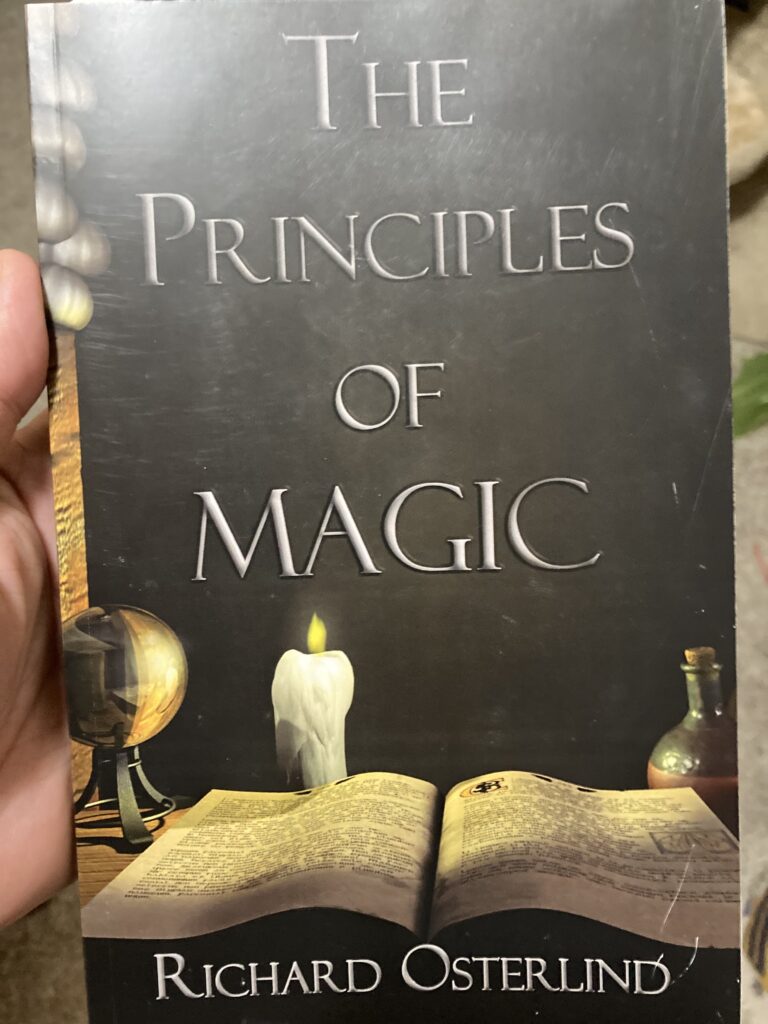
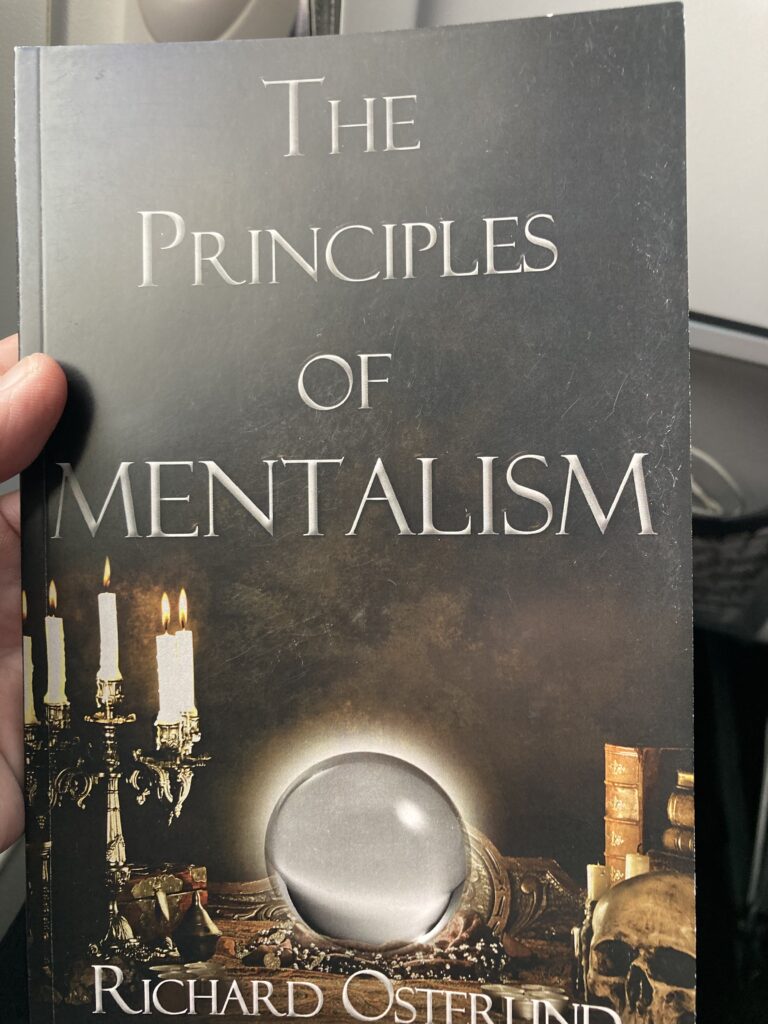
About a month ago I picked up two Richard Osterlind books. I got The Principles of Magic and The Principles of Mentalism. These books look like they’ve been out for a while, I think the magic one had a copyright date of 2005 and the mentalism one a few years newer.

These books are filled with short thoughts on different aspects of performing. Usually these little essays about about a page and a half to two pages. Richard gets the information across, but it’s a pretty much just the facts. He doesn’t go too deep into much of it, but it’s a starting point to get you thinking about different aspects of how you perform.

I’d say these books are targeted towards someone who is going from performing for family and friends to maybe trying to do a show, or just starting doing formal shows. If that’s you, pick up a copy of the one that’s appropriate to what you do.

-Louie

Stand Up Ball Thru Cup

In playing with the stand up, cup and ball routine, I came up with this move:

I like it, but it’s a little be angle sensitive. I like the ball going up into the mouth up cup more than I when the ball drops into a mouth up cup and comes out the bottom.

I don’t know if it’ll make it into the final routine, but it’s adding to my move vocabulary for this routine!

-Louie