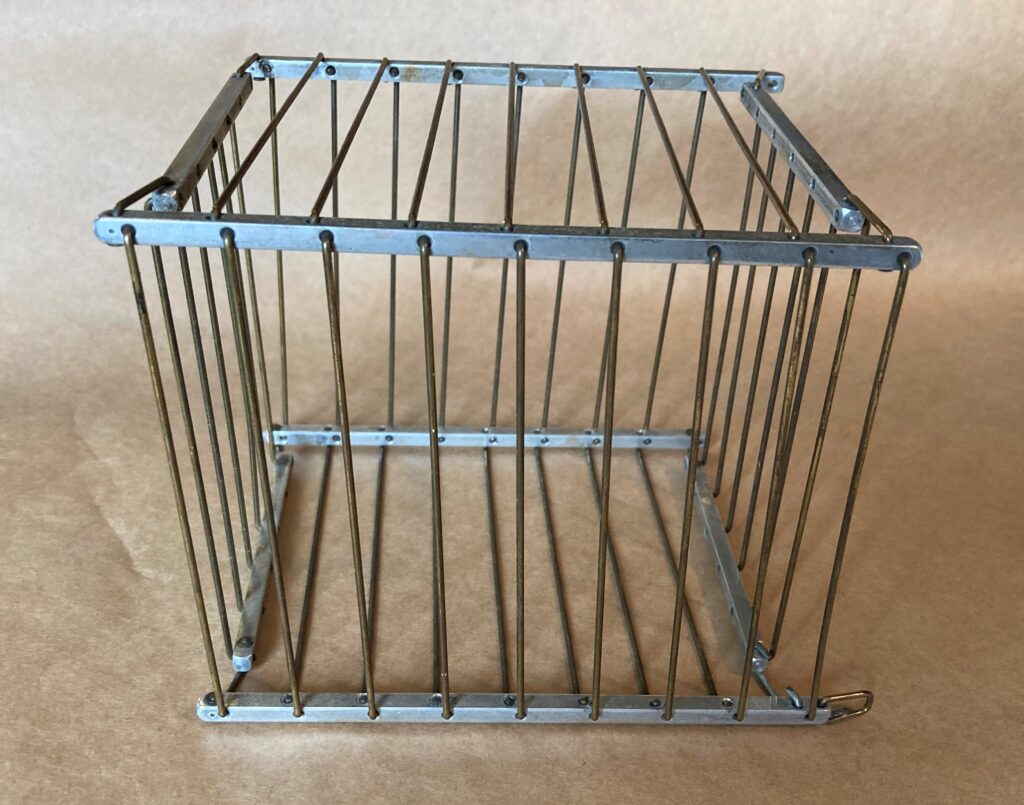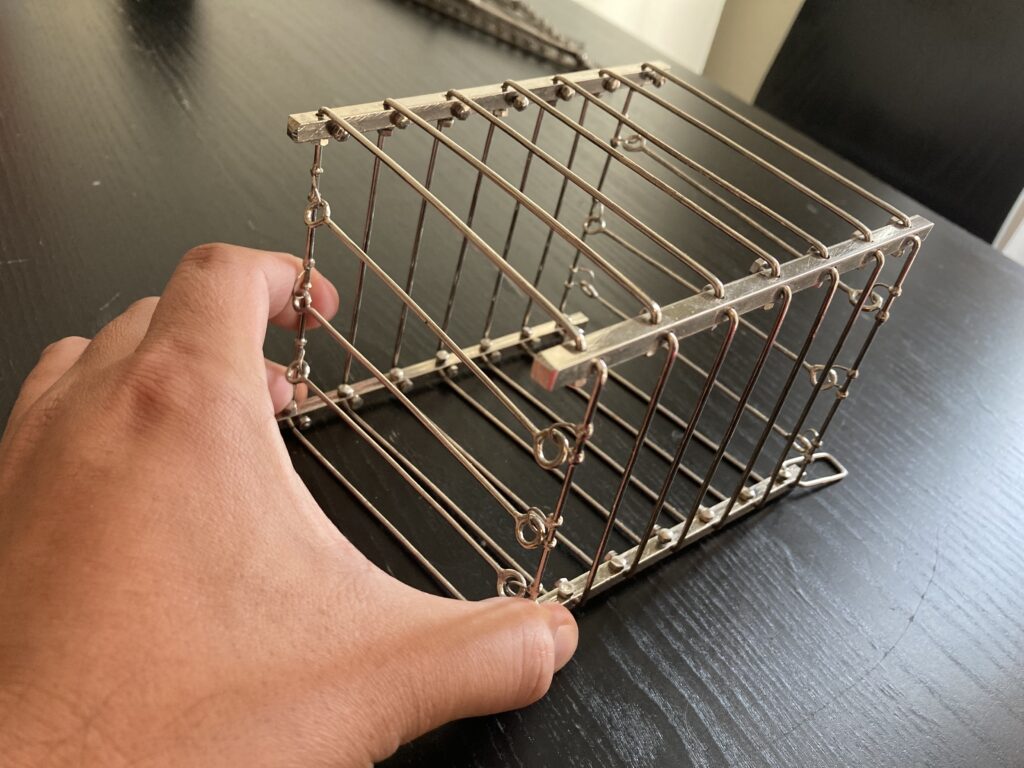
Lately I’ve been on a downsizing kick, and cleaning out my office. Some of the things I’ve decided to sell are my duplicate Vanishing Birdcages. I’ve got a several of the same cages in various conditions. Here’s one that I’m selling:
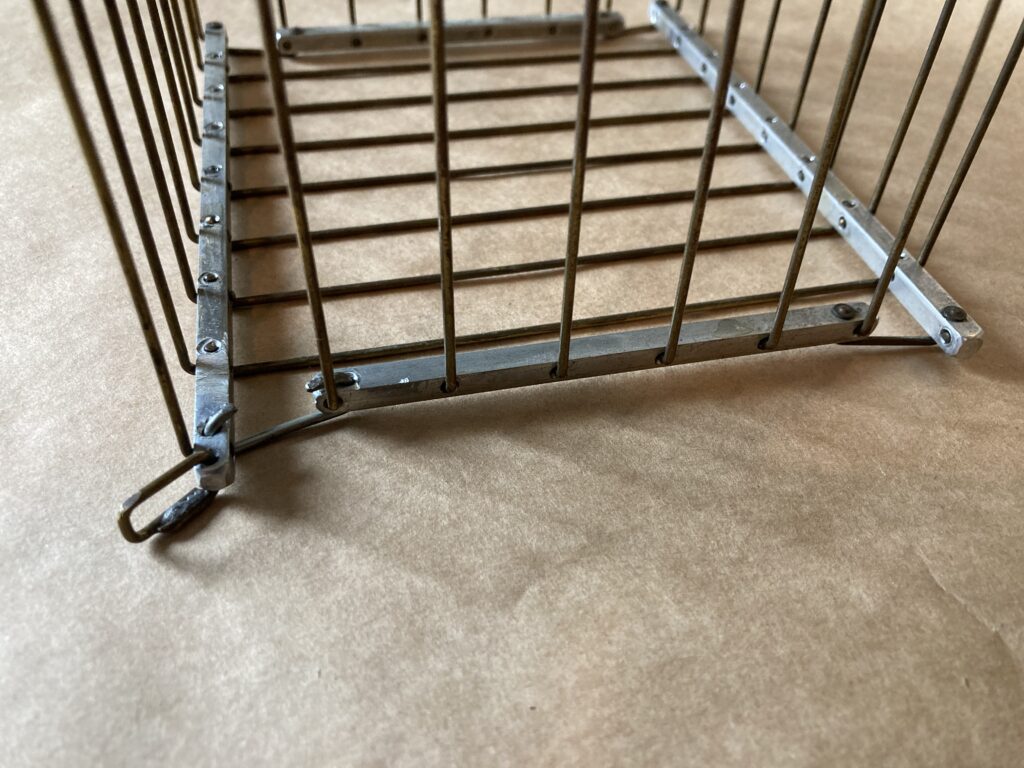
This cage had a bar broken and a previous owner had done a repair. You can see in in the bottom left of the picture below:
This repair was probably in the best place it could possibly be. The lead edge contacts your sleeve a lot less than if it was done on any other corner.
I made a quick video showing the cage in action:
If you’re interested in this cage it’s currently on eBay: UPDATE: it has sold
A while ago I started thinking about putting together a “briefcase magic show”. This would be a show that would fit in a briefcase and have minimal set up and take down. Ideally there wouldn’t be much more set up than simply opening the case.
The end goal would have this show as a totally different show from my normal show, so there is no duplication between the two shows. Right now the set list I’ve written for it is:
The things with the asterisk after them are tricks that are also in my current main show. That means I need to figure out how to either move them out of the main show, or out of the briefcase show. It’s a fairly mentalism heavy show, with 4 predictions (if you count the card trick as a prediction).
I think I might need to add another magic trick to it…not sure what. I guess that means it’s time to get to work on that.
For some reason I’ve been thinking of the “double action” birdcage pull lately. I’ve used one a long time ago, and never really felt it contributed much to the vanish. Essentially what a double action pull does is give you more pulling power with less motion. It converts your motion 2 to 1, so you move one inch and the line moves two inches! It’s a great way to reduce arm motion for the vanishing birdcage, but adds complexity to the setup. Every bit of complexity you add, it’s another thing that can potentially go wrong. This may be the issue I have with it, the gain of having reduced motion isn’t worth the risk.
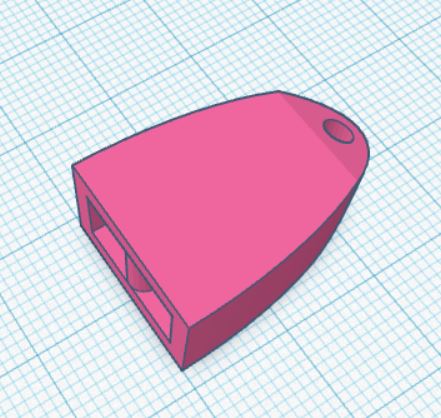
I haven’t used one in 15+years. Tonight I decided to make one, so I designed this one to be 3d printed:
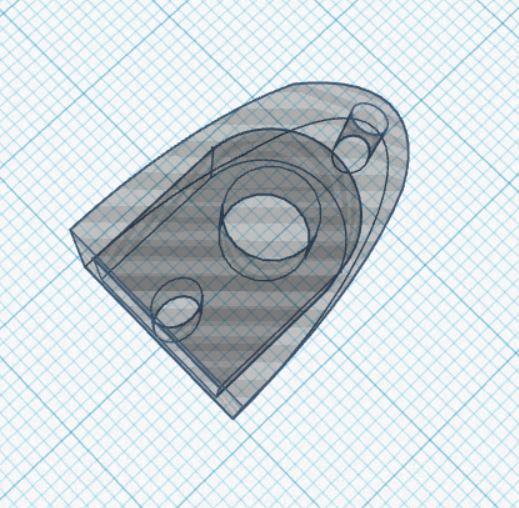
Here’s what the insides look like:
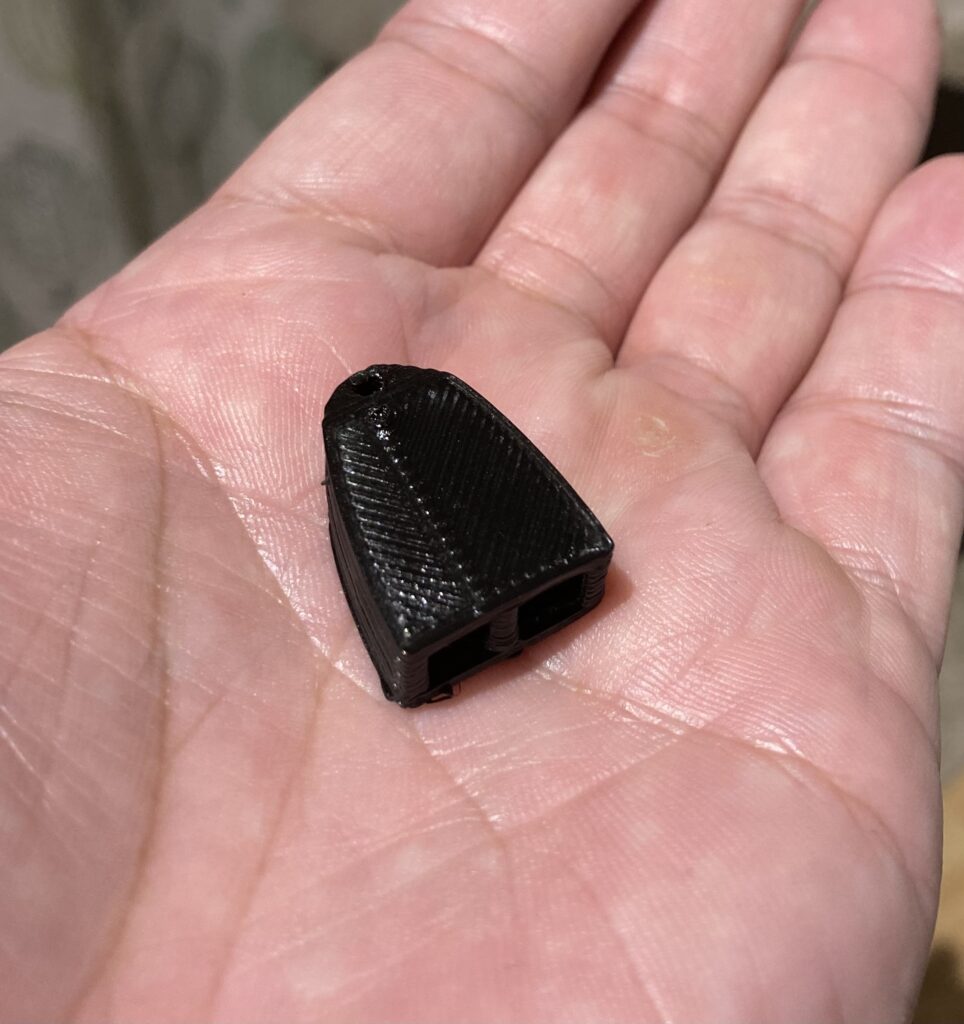
There’s not really too much to it, it was a simple design and a quick print. Here’s the printed version:
There are a couple of things I want to change after printing the first one. The big change is that I want it just a little bit larger, so that I can fit a bearing inside for the pulley.
I’ll do a new design later today and hopefully I’ll nail it the second time!
When I was driving home from Abbott’s Magic Get Together, I stopped and visited a magician in Minnesota to talk about the vanishing birdcage. He was thinking of adding it to his show.
His fear was the cage hanging up on his sleeve. The thing with the cage vanish is that people think it’s easy, until they start to work with it and then realize how hard of a trick it is to do. The first thing you do is try to eliminate anything that will snag on your sleeve. The second thing you do is use proper technique for the vanish. That’s putting a lot of tension on the pull and making the “hand tunnel” correctly.
Here’s me vanishing the cage at the fair yesterday:
Once you’ve gotten the snags removed and the technique down, the last thing you have to do is commit to the vanish. When you make the cage disappear you don’t do it timidly, you vanish it like it’s going to go up your sleeve. Committing to the vanish is where I think a lot of people have trouble. They’re worried about it not going up the sleeve, so the don’t pull as hard as they should.
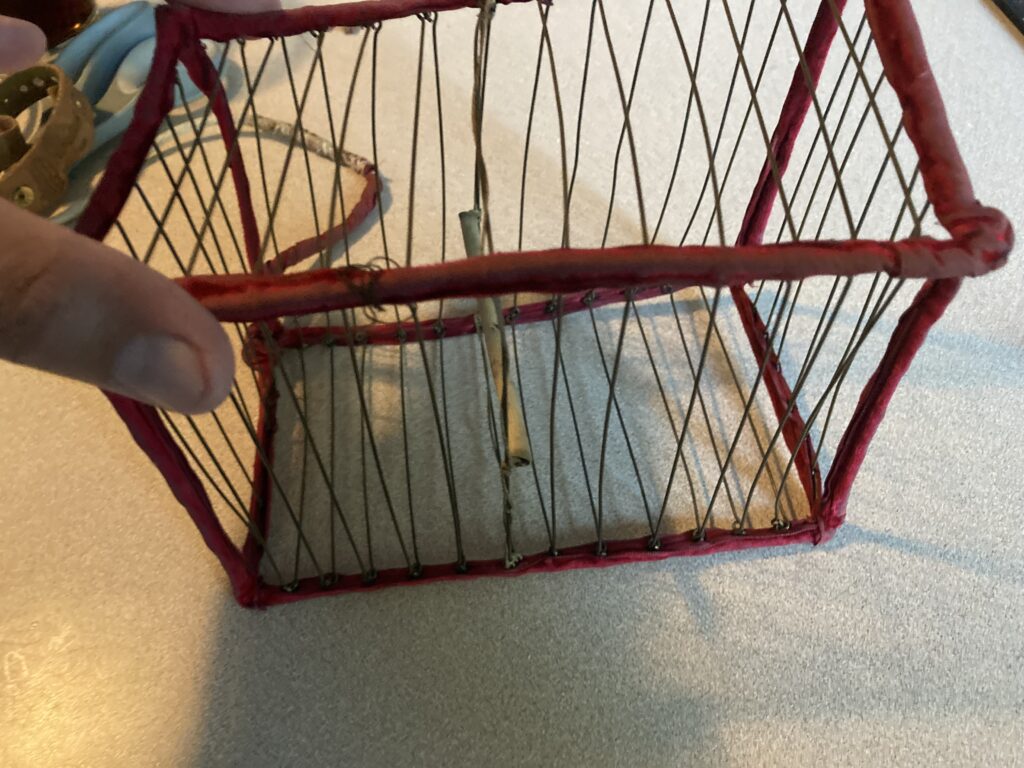
This is a Thayer Vanishing Birdcage and is the non-rigid style cage. For some reason, I thought that Abbotts was the only one that made a non-rigid vanishing birdcage. I don’t know who made them first, however based on the timelines of the two companies, I think Thayer made them before Abbotts, however someone could have made them before both.
This cage is a bridge between the older metal rigid cages and the semi rigid cages, like the Lindhurst cage. This is rectangular and has the fixed perch, where the abbots which I think came after was square and eliminated the fixed perch. I think then the Lindurst style cage grew from the Abbott’s cage.
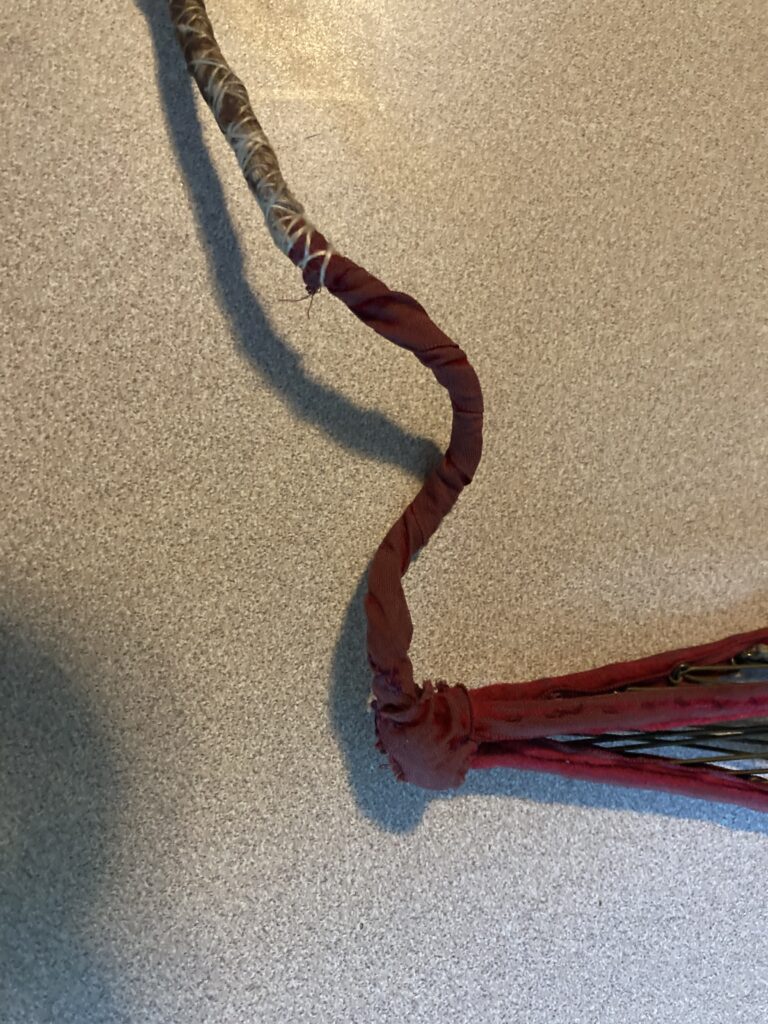
Another neat thing about the Thayer vanishing birdcage is how the pull is connected to the cage:
It’s permanently attached to the cage, and not clipped on. The red ribbon extends down the cage onto the pull. This in theory smooths out the cage going up the sleeve and eliminates some possible snag points. Having a clip like a modern cage adds places for the cage to snag.
I’m glad to add this to my collection, as I think it’s a missing link from the older style cage to the more modern cages.
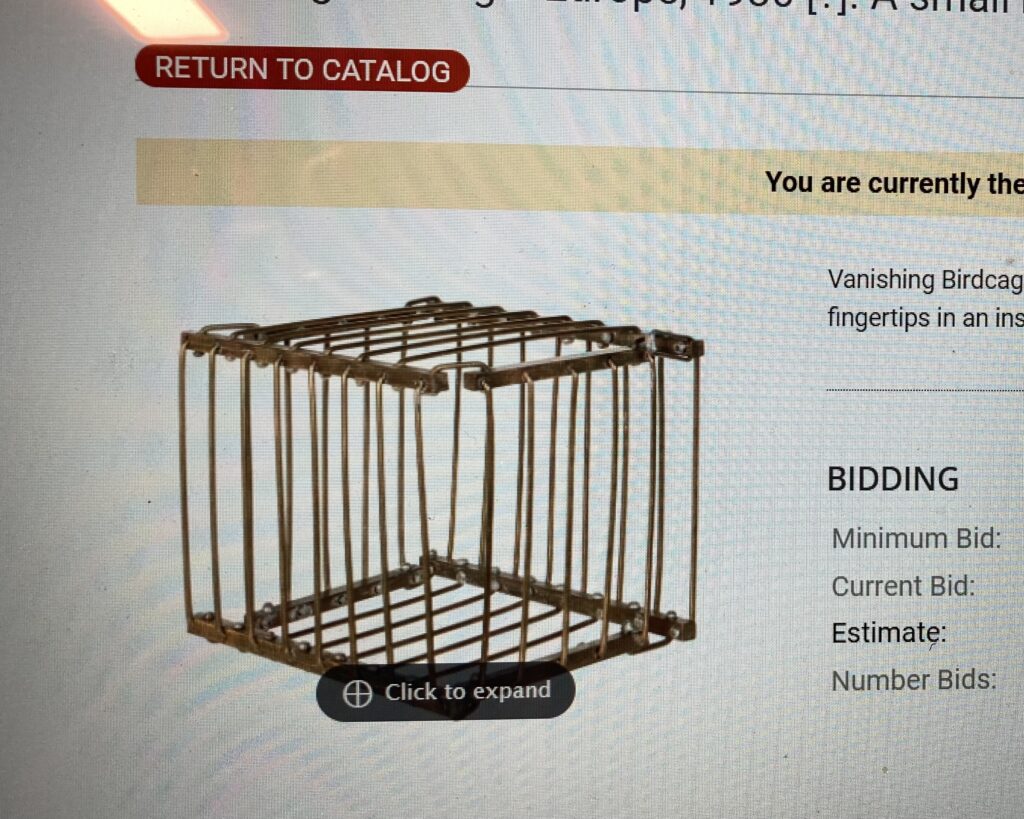
The description said they think it’s from the 1930’s. I personally think it’s more modern than that. I decided to bid on it, and I’m the only one that bid, so I got it for next to nothing, which is great for me!
I’m very curious how heavy it is and how well it collapses.
The blobs of solder look like they’ll rip your forearm open if you vanish it with any force. I wish I knew a little bit more about the cage’s history. That’s the thing, so many makers worked for different companies and people. It’s hard to know what came from who. When I was at Abbott’s Magic Get Together, I chatted with a lot of people who are very knowledgeable about the vanishing birdcage to try to figure out who made the one I use. Everyone gave me a different answer and told me that the other people were wrong.
Do I need to know who made it?
Not really, since they aren’t made anymore, I can’t just go out and buy one. Knowing the history of your props does make you a better performer. I’m not sure why, but I think when you know your props on a deeper level, the audience can sense that. The prop becomes something more to you, and that comes through when you use them.
I got up early after sleeping in my car, and caught Franz Harary’s lecture. It was more of a Q&A and he shared a lot about how he thinks and how he works.
We got really nerdy about the cages, it was a lot of fun!
Then I ran into Larry Kahlow from Eagle Magic, which was the shop that I went to when I lived in Minnesota!
It was great to catch up with Larry!
Before the convention, my daughter had made some buttons out of the George Shindler’s beginner’s magic book. I ran into George and gave him one of the buttons!
When I gave him the button, he told me that he does the trick on the button. I told him it was his trick from his book!
It was a fun show and got a deserved standing ovation!
I’m now trying to figure out how to get to Abbott’s next year. It’s pretty unlikely that I’ll be able to go, with me taking time off for FISM next summer.
Today was a fun day for the incoming mail, I had three different vanishing birdcages show up! The first is an birdcage from India, this one has the side bars made at a 90 degree angle difference from how most are made. It could have been made left handed??
This cage vanishes fine, it’s just got a lot of rough edges, that you’ll have to spend sometime filing down.
The second cage that came is an older “martin style” that once belonged to Bryce Chambers (inventor of the Bryce’s screen illusion). It’s damaged and ad an attempt at repair at some point.
The notches in the corner posts are interesting. They appear to have been put there by the manufacturer. The do make the cage a bit more sleek when collapsed, but it appears (to my eye) to be a negligible amount.
The third cage is an Owens Challenge Vanishing Cage. This one, I’m hoping to have be my new working cage. My current working cage is one that was given to me as a teenager, and it has missing bars.
This cage looks great, however it’s pretty stiff. It’s going to need some breaking in. I put in on a pull and it vanished way better than I thought it would have with how stiff it is. I’ll keep working with it and it should loosen up!
People still shoot me notes asking questions about my Take Up Reel. One of the questions I get asked a lot is, “will it work with the vanishing birdcages from India?”
The answer is yes, here’s a video of me doing it with one of them:
There’s a lot of misinformation around about the Vanishing Birdcage. I have never really considered myself an expert about that trick, but recently it’s become clear that I know a lot more than most people, but still don’t consider myself an expert. It’s a trick I’ve been fascinated with for a long time, I’ve used off and on since I was a teenager and tried different styles, at one point I even did the Tommy Wonder vanish with the sleeves rolled up.
In a facebook group someone posted a link to a reel that was being sold as a door closer. Then this conversation happened:
You really can’t beat a wrist to wrist pull for the actual vanish of the birdcage. The power needed for the vanish happens before the vanish happens and there’s no way a reel or elastic can reasonably come close to the power your arms can. For the flash vanish, right before you are going to put tension on the pull’s cord by pushing the cage away from the body as hard as you can. This is going to start building up energy and when you let go of the cage you are releasing all of that energy and that explosion of power is what sends the cage up your sleeve. Once you let go of the string the pull doesn’t really do anything…except at the very end, it may help keep it high up your sleeve so it doesn’t peek out.
Most magicians think it’s pull dragging the cage up your sleeve, and not the cage shooting up your sleeve. Yes, you can vanish the cage by pulling it up your sleeve, however it’s an inefficient use of energy and you need a lot of arm movement to accomplish this. Having the cage shoot up your sleeve requires very little arm movement. The exception to this is Billy McComb’s Slow Motion Vanishing Birdcage, however it’s still a situation where a reel or elastic would be inferior as you lack control of the vanish.
When using a reel or elastic for the vanish (this is different from how a Take Up Reel is used) you are going to have constant tension on the corner of the cage that’s attached to the elastic. That means you are going to be fighting that tension to keep the cage upright. It would virtually rule out using an Abbott’s / Blackstone style Vanishing Birdcage, and make using a semi-rigid card really difficult. From the audience’s perspective your arms are going to be tense the whole time you’re holding the birdcage. You’ll be holding it like it’s 20 pounds, not less than a pound. This is the huge advantage of a wrist to wrist pull, you can instantly add the tension to the line whenever you want. In the case of the vanishing birdcage, you can do it a fraction of a second before the vanish.
For the actual power of the vanish, to get a reel strong enough to match the tension you can put on the cord with a wrist to wrist pull, the reel would have to be massive. Same with an elastic cord, it would be very thick.
Something else to consider is that with elastic or a reel is if there is any clean up, or to keep the cage up your sleeve. If the arm that it’s anchored on moves away, the cord will stretch. That will cause you to have to make exaggerated motions to compensate for the stretch to move the cage in your sleeve. Also after the vanish and the cage is in your sleeve, the cage’s weight will be pulling on the line, so you’ll be fighting it wanting to crawl back out of your sleeve. Sure you could have the elastic super short, but then there will be constant tension on your arms after the vanish.
I think people want to complicate the vanishing birdcage by adding things to it because a wrist to wrist pull is too simple to be what’s connected to the complex cage. Yes, a Take Up Reel is something that an addition to the trick, but something that helps with everything except the trick. The Take Up Reel has done it’s job before the vanish happens. When the actual vanish happens the Take Up Reel is functioning like a wrist to wrist pull.
If you’re going to do the Vanishing Birdcage, learn to do it with a wrist to wrist pull before you start playing with elastic, or whatever. That will give you a baseline for how the vanish should look.