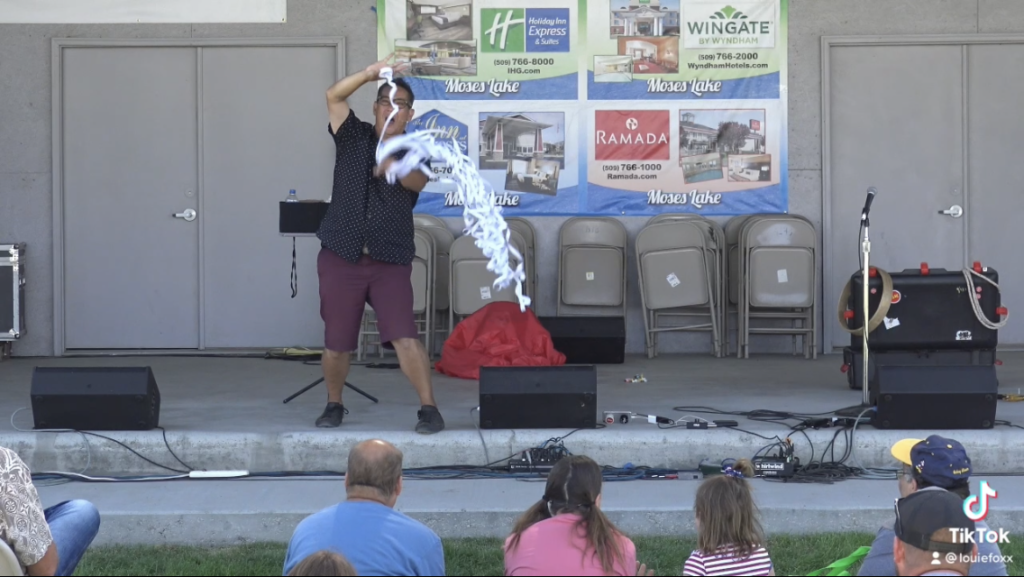
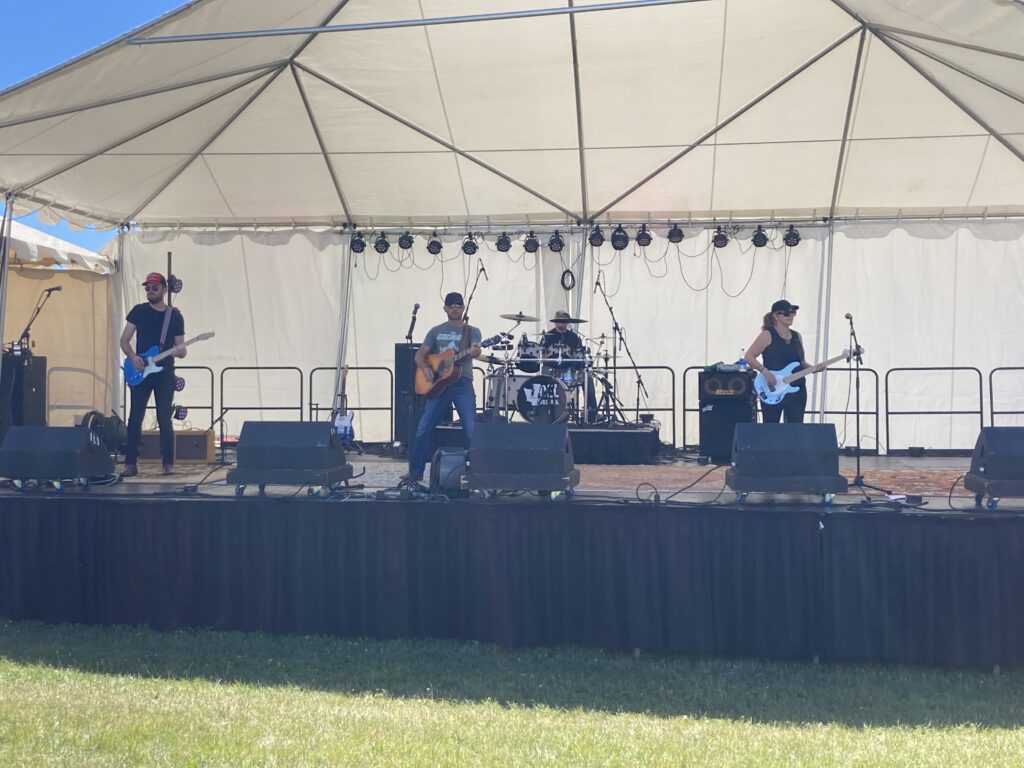
Show business is funny. In less 24 hours you can go from performing outdoors in the full sun (I’m not complaining, I love outdoor gigs):
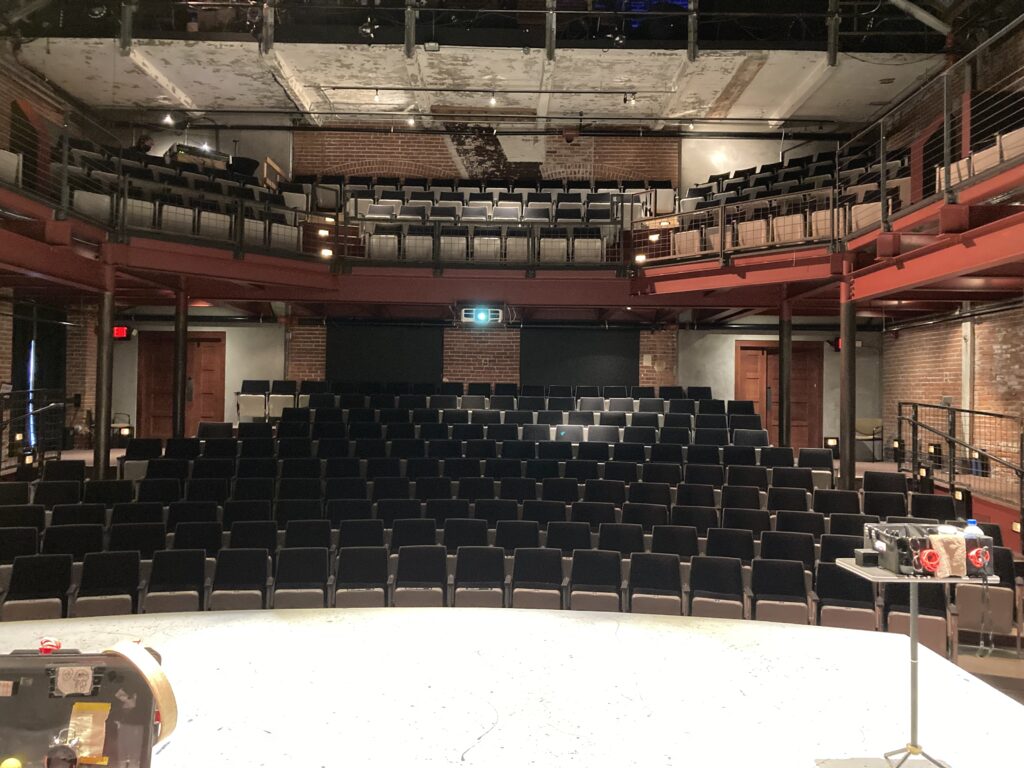
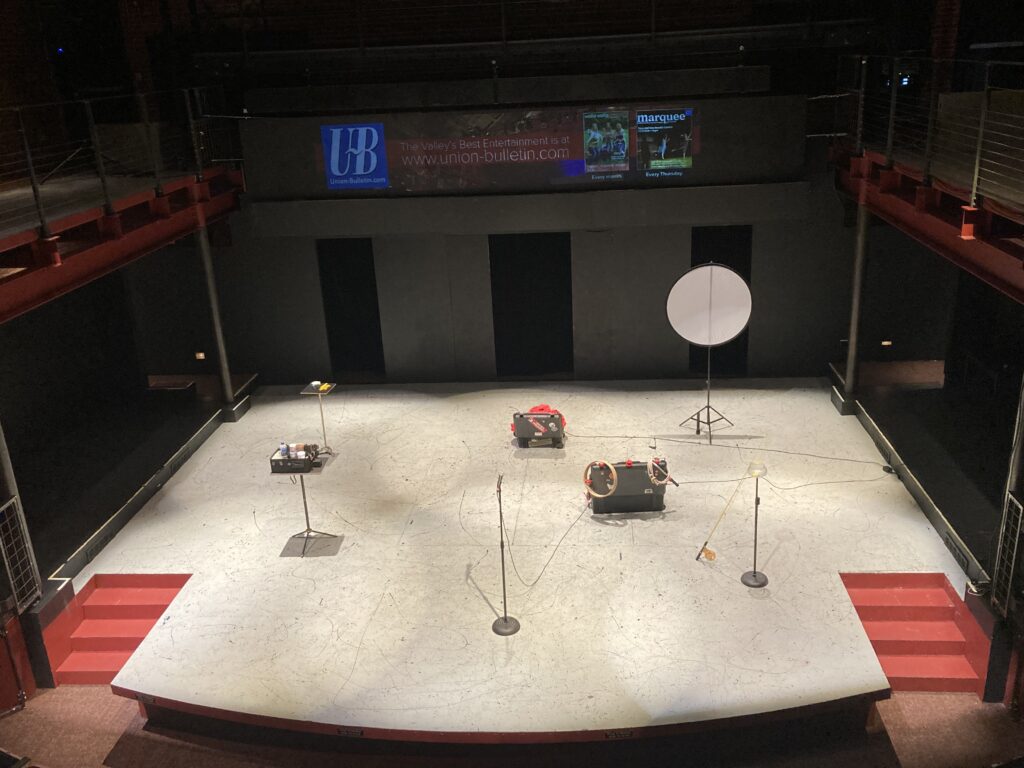
To performing indoors at a really cool theater!
While both shows are similar, there are things that I do indoors that I don’t do outdoors and things I do outdoors that I don’t do indoors. There are reasons for that, the audiences are different. Inside I can take a little bit of time with things, so I can do some slower tricks. Outdoors everything is a bit quicker and I’m a little more aggressive when I perform.
I enjoy indoors and outdoor performing, and both have their own sets of advantages and disadvantages. As a performer you need to learn what material of yours works in each situation. -Louie
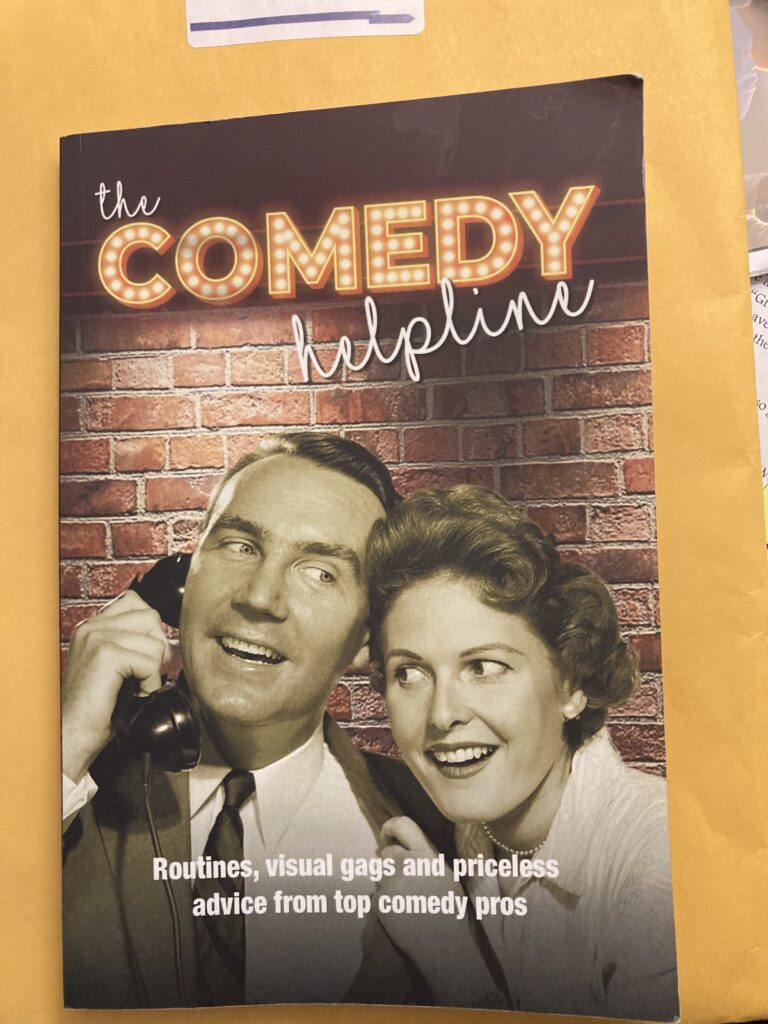
I picked up the book The Comedy Helpline recently and read it while I was stuck in line for two hours to get an oil change!
This is an interesting little book, kind like Wayne Dobson‘s book 50 Shades of Gold, that has a lot of little tips in it. It’s not a “how to” for comedy magic, but will make you think about a thing or two. I’m glad I read it.
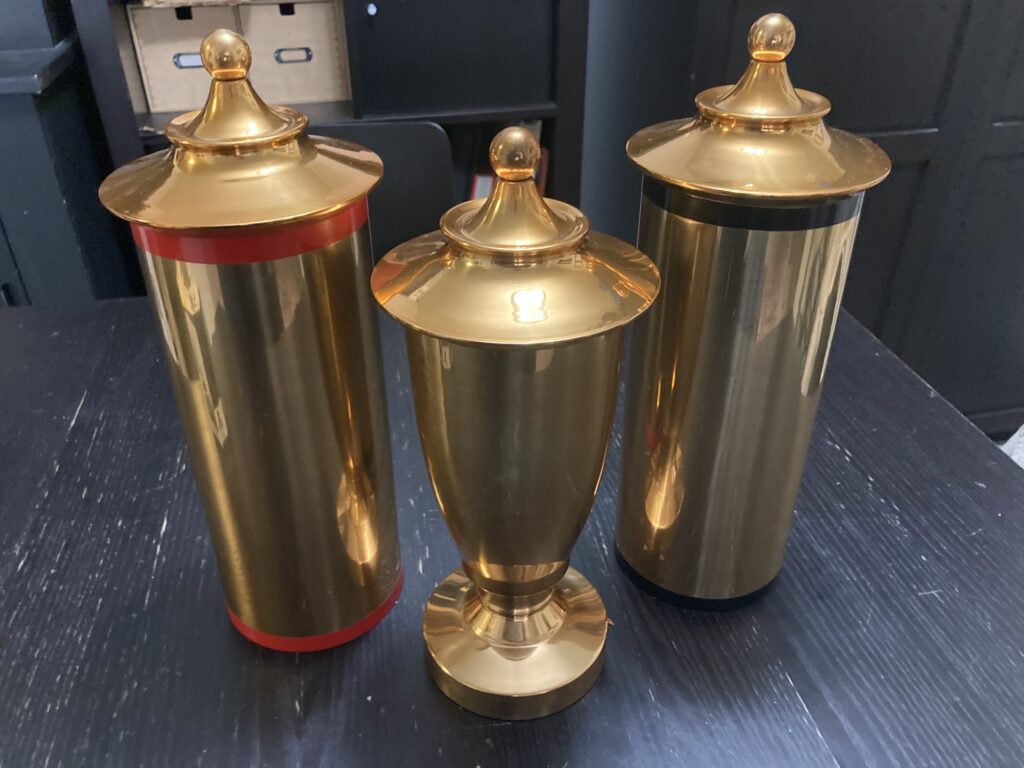
There are some props that have always baffled me as they don’t look like anything I’ve ever seen with my own eyes. The props for the Rice, Orange and Checkers trick is one of them. Below is a Rings n’ Things set that I own:
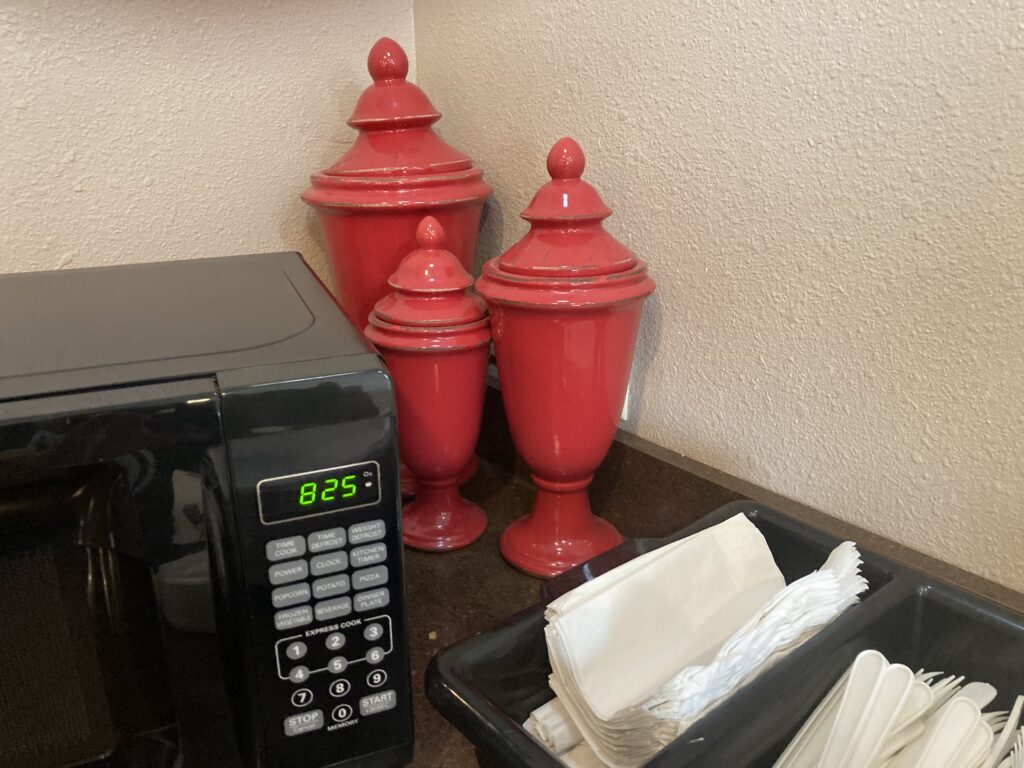
The middle container is the rice vase where you fill with rice, then rice turns into an orange. At the hotel I’m at, I found what I think it’s supposed to be in real life:
I don’t think anyone has really used containers like that in my lifetime, but I found what they rice vase is supposed to look like! I now only slightly less dislike the Rice, Orange and Checkers trick.
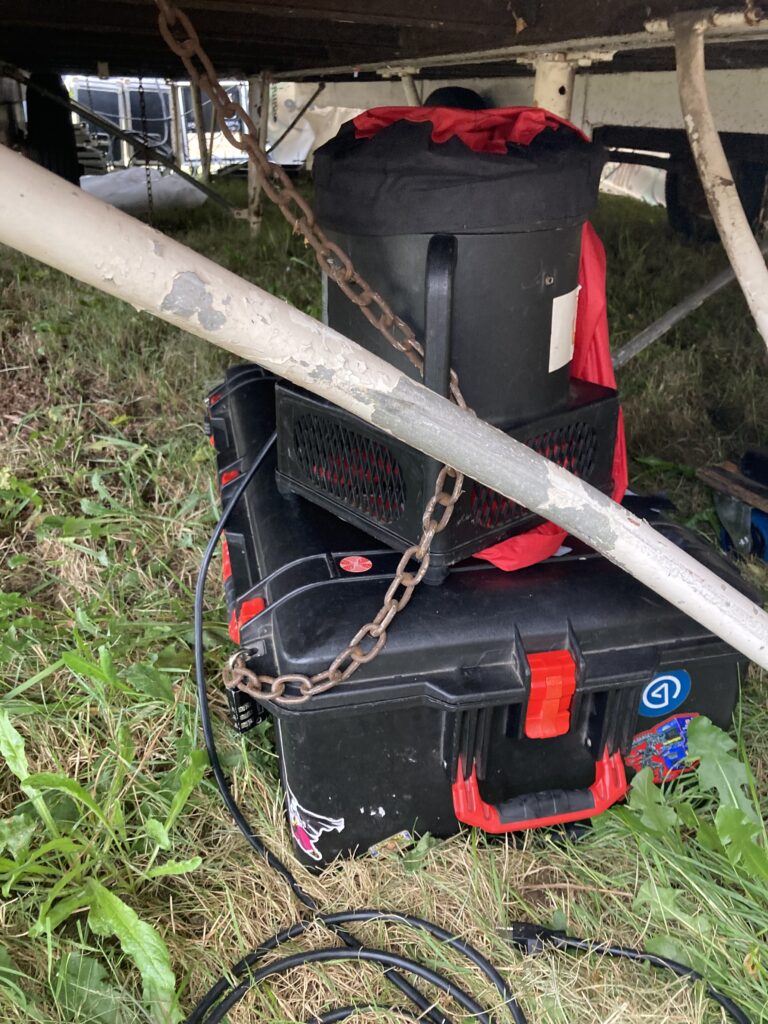
Right now we’re in the middle of the summer outdoor performing season. One of nice things about performing at fairs which are multi-day events is that you only need to load in once and load out once. After the first day my gear lives at the fair. Normally they are supposed to have a space for me to store my gear on the grounds, however that doesn’t always happen.
Last week my stage was a trailer and to avoid doing a complete pack out everyday, I locked my show to a chain that was under the stage!
Is this the most secure way to store a show? Probably not, however anytime you store your gear anywhere you are taking a risk. The amount of “locked” storage areas where I keep my trunk which seem to never actually be locked is very high! At some point you have to have faith that no one is going to the fair to steal your show. It does happen, I know of people that have had things stolen, however it’s pretty rare if you take basic precautions like locking things up.
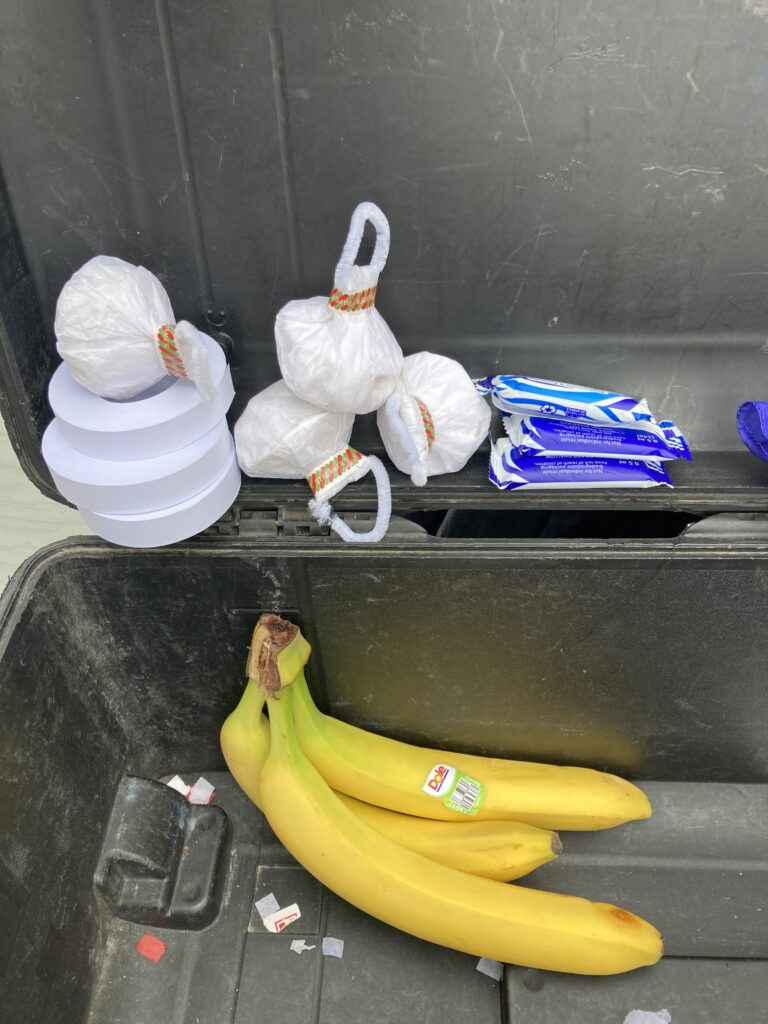
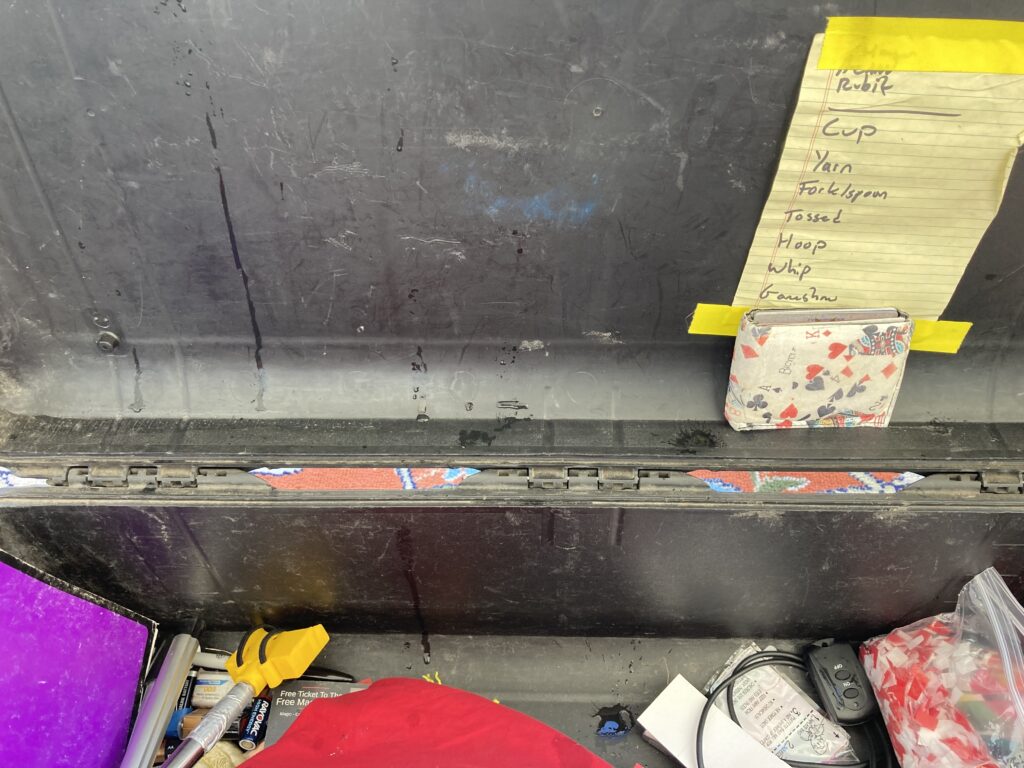
Many times after shows magicians will comment on how much is must cost me to perform my show. I have several spots where I use props that I can’t reuse each show. Honestly, I don’t have too many props that are single use. Here are my consumable props for my day at the fair:
Each show I use a paper coil, kabuki streamer, bar of hotel soap and a banana. In addition to the picture I also give away some of my wristbands which I sell after the show. Every show costs me about five dollars to do. To me this isn’t a big deal and since I’m getting paid, it’s just the cost of doing business.
If spending $5 or $100 to do your show is what your vision as an artist is, then it’s money well spent! -Louie
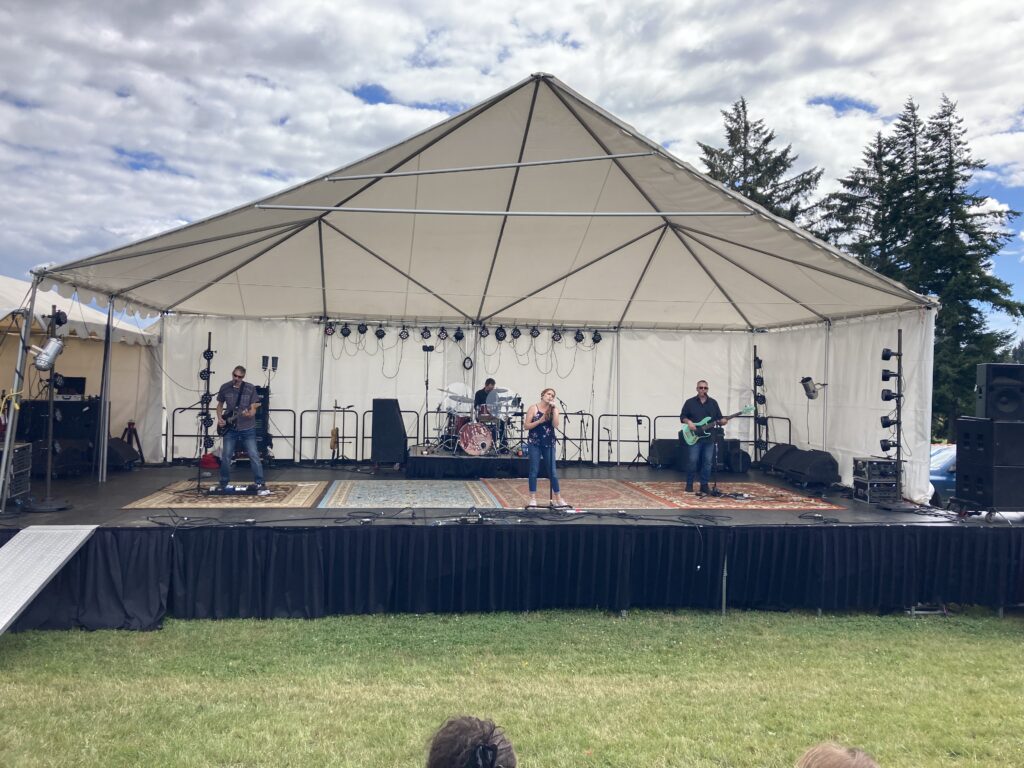
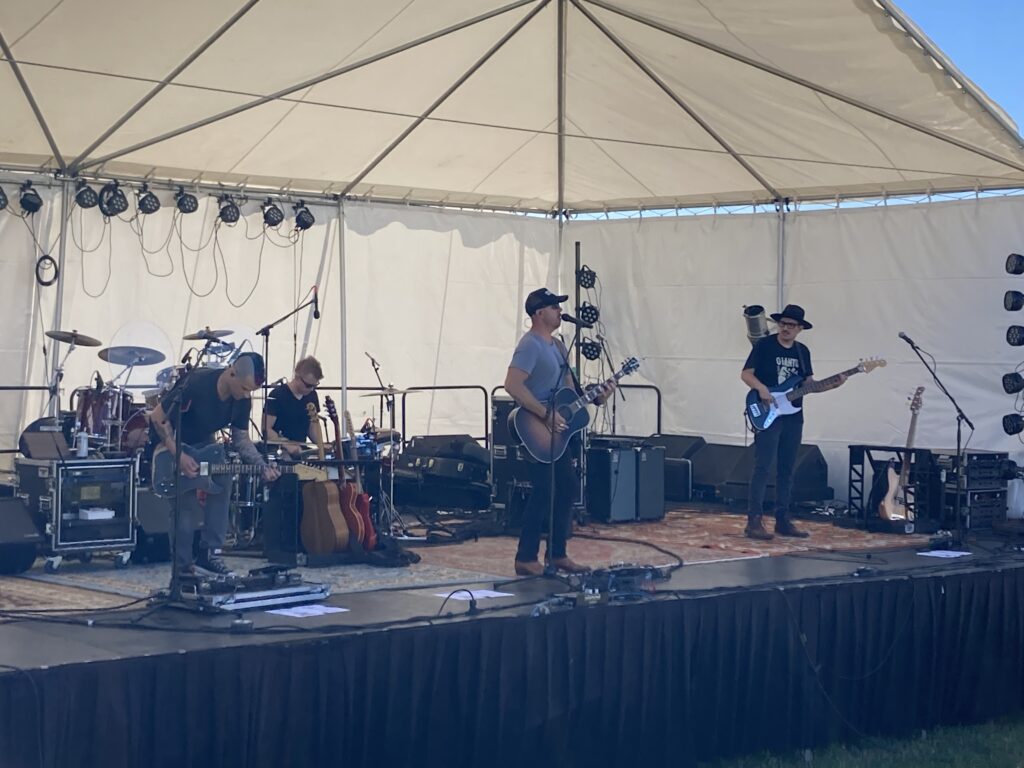
Normally when I perform on a stage, I have the monitors moved, so the front of the stage is clear. That gives me more real estate to perform on at the front of the stage and it also removes a physical barrier between the audience and me. Last week while performing at a fair I was watching the bands that I shared the stage with and realized how much better the stage looks without the monitors.
Here’s a band with the monitors on stage:
I think audiences are used to seeing monitors onstage. However once you remove them, it looks soo much cleaner!
The two bands without monitors were using “in ears” monitors. I don’t think they are right for most magic acts but using them to eliminate the monitors for a band looks great. It also gives the performer a more powerful position onstage with no physical barriers between them and the audience.
If your stage has monitors, you can ask to have them moved…if you don’t need them.
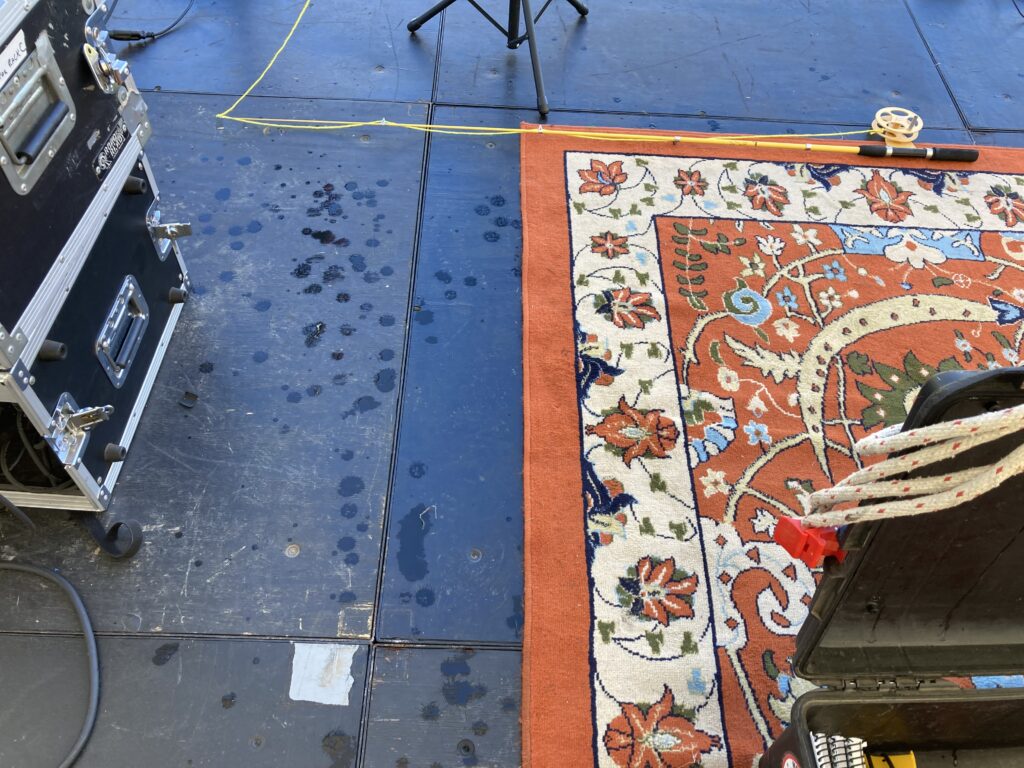
Performing as many shows as I do around the country at all sorts of different venues you encounter a lot of things. I just had a new one, it was a gorgeous sunny morning, but it was raining onstage!
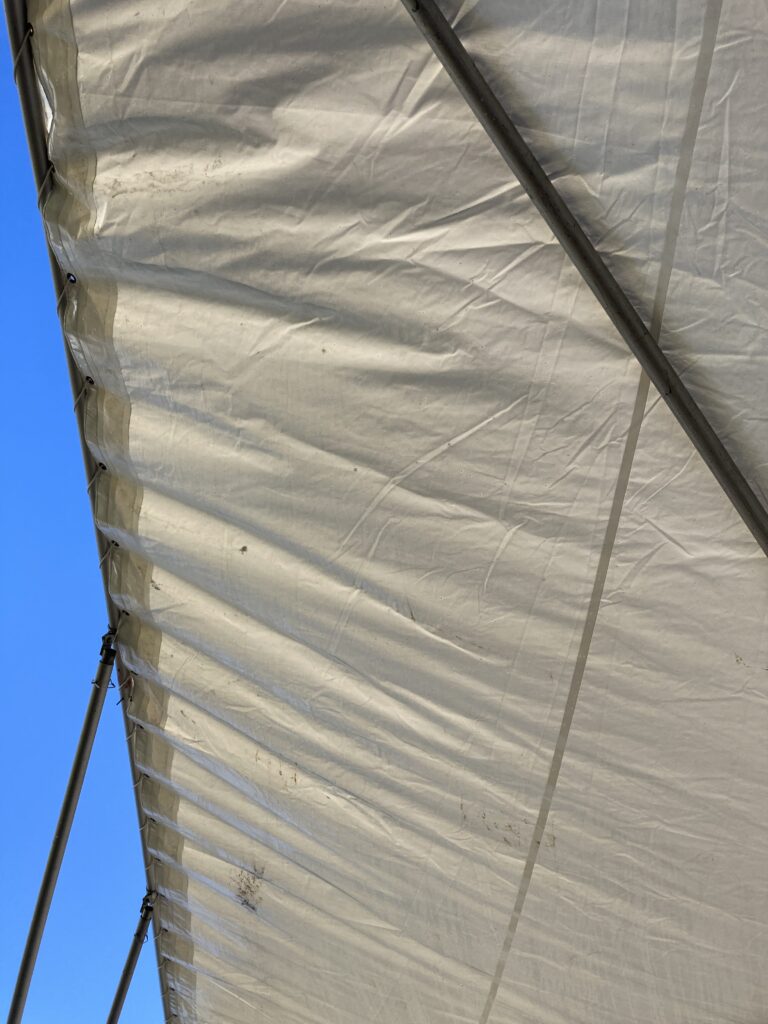
What had happened was it was really dewey this morning and moisture had collected on the underside of the stage’s canopy. The top edge of the canopy wasn’t pulled very tight, so it had little valleys the water could pool on and form droplets that fell down on me during during my show.
It was the strangest thing because the audience really couldn’t see this, so it was something that I had to deal with. I did mention it to the audience, so that they were aware of it. That was it didn’t look strange when I pulled out wet props!
I did have to move things around to keep more water sensitive things dry. For example my notebooks (svenpads) I put another prop over to keep them dry.
This is a case of be ready for anything that can happen when performing. You never know what you’ll be walking into!
Yesterday was travel day to get to Quebec City for FISM. It’s been quite a journey, I bought tickets when they first when on sale, so I’ve had me ticket for around 4 years! This is a bucket list item for me, and I’m glad I get to attend!
There have been a lot of challenges just to physically get there. I was performing outside of Reno and booked a flight from Reno to Quebec City. That flight got cancelled and the airline moved my departure airport to Sacramento, about 3 hours drive. Then my flight got cancelled again and the only way to get to Quebec City was to drive almost 6 hours at night to San Francisco to get on a 6am flight yesterday!
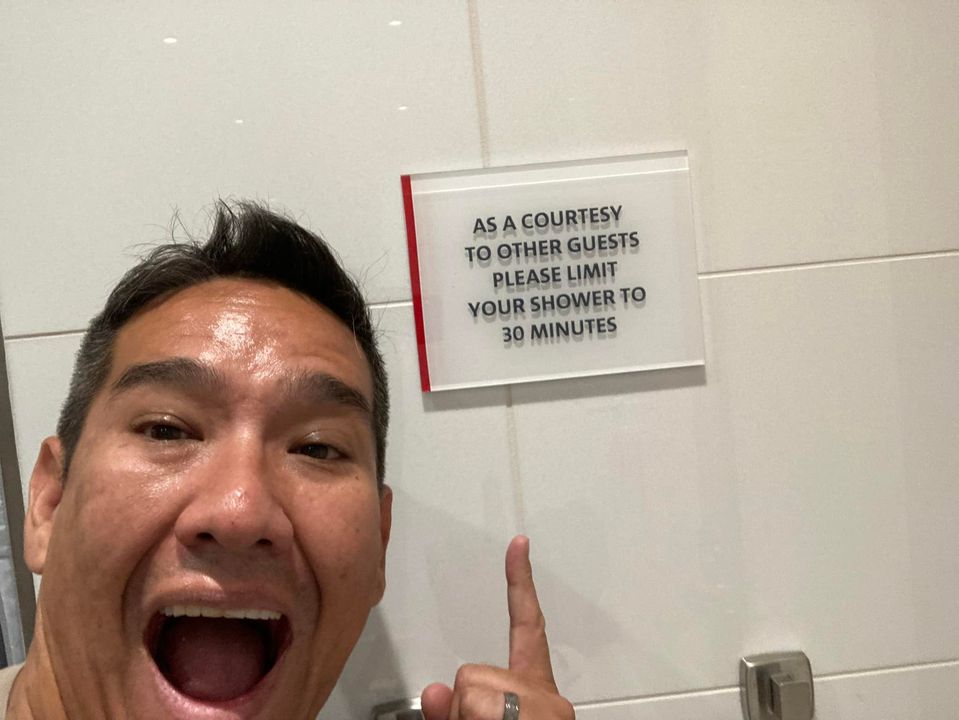
I finished my shows Sunday and drove into the night and slept a few hours in my car at the airport. I got to the airport and I have a lounge pass, and when I went into the lounge for a cup of coffee, I noticed they had SHOWERS!
I was probably really stinky from doing three shows in the sun, then driving all night and sleeping in my my car. The shower refreshed me!
This is one of the little things that having a luxury like an airline’s lounge pass gets you. I was able to take a shower at the airport and now my travel day was way less depressing! If you travel by airplane frequently, I highly recommend getting a lounge pass. Do some research and figure out which one is best for you. I use the Alaska Plus lounge pass, as my home airport has three Alaska airlines lounges and I can usually use American Airlines lounges as well. they’re not cheap, but I get my value out of them with the amount I fly.
I missed the first day of FISM as it was my travel day, but I’m excited for today! -Louie
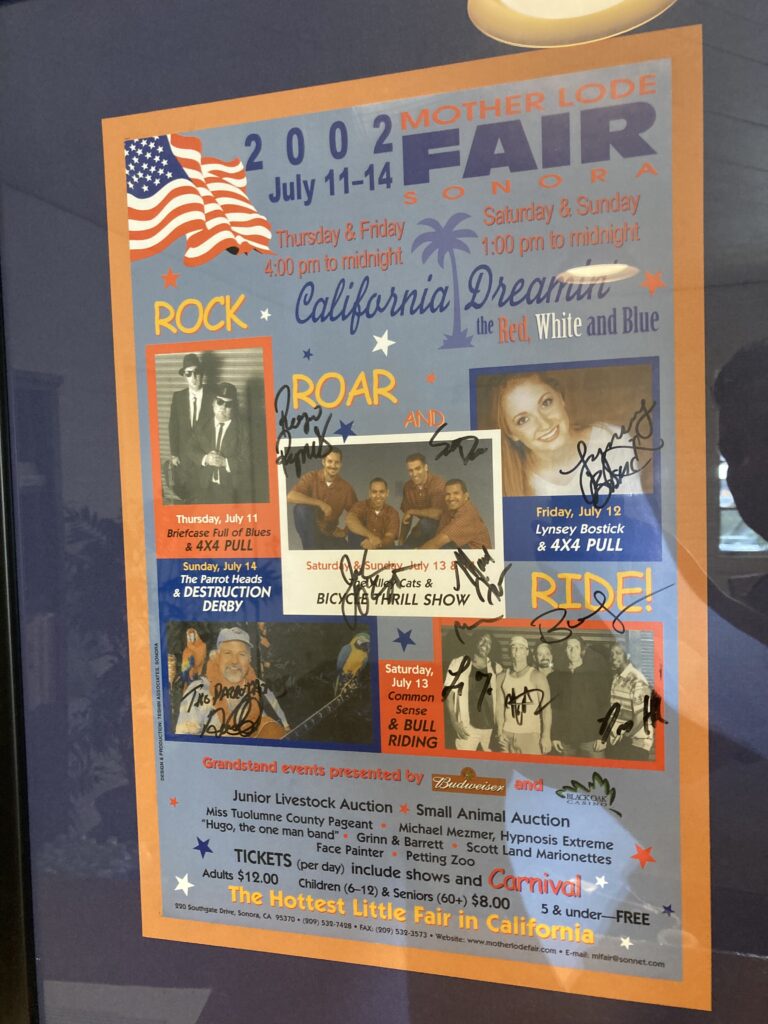
One thing that magicians frequently complain about is having a generic “magician” on a post and not their name. Here’s a 20 year old poster advertising a fair that I came across:
Look at the listing, at the bottom they list acts by name. There are specific titles and generic ones. For example, Scott Land Marionettes is the name of his show, so the full title ends up on the poster. Then there’s the generic Face Painter. Both of those titles tell the person going to the fair what will be there. A generic face painter may not do good for the face painter’s ego, but it is probably more exciting to a ticket buyer than “Shelby Winters”, unless that’s a prominent person from the community.
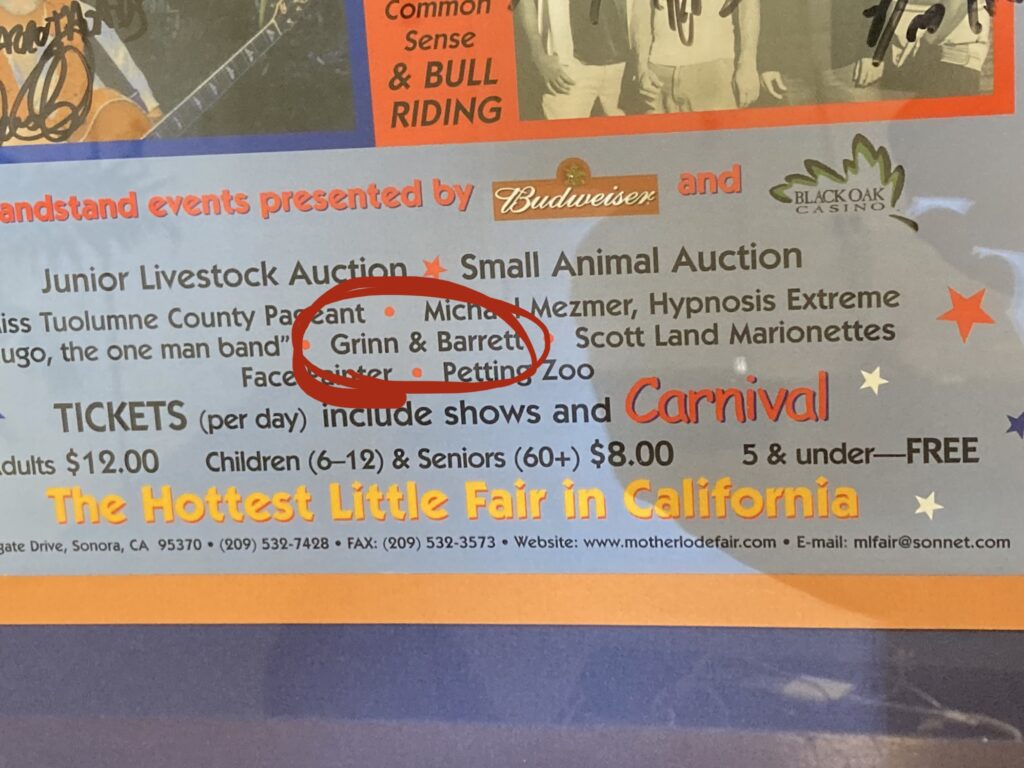
Let’s take a closer look at the listing, I circled an act:
I circled Grinn & Barrett, I know what what this act is and know the two people in the act, but 99% of the people going to the fair have no idea what it is. In that place a generic “comedy juggler” or “juggling show” would have gotten more people excited about than the name of the act.
This is something I’ve changed recently with my show. I used to bill it at fairs as Louie Foxx’s One Man Side Show, which is still the name of the show, but I don’t use that at events like fairs or festivals. It doesn’t really tell the audience what they are going to see. I’m now using The Magic of Louie Foxx and since I made that change, I’m seeing bigger starting audiences at my shows. This is nice, as I don’t have to build as hard as I did in the past.
Take a peek at how you’re being advertised in a program and think about if you didn’t know who you are and what you do, would you go see the show? Personally I’d rather be listed as a generic “magic show” in a program than just “Louie Foxx”.
One of the tricks that I’m trying to move out of my preshow and into the main body of my show is my version of Iain Bailey’s Measure For Measure trick. This is a tape measure prediction, you pull out the tape and someone says “stop” and there’s a giant arrow drawn on the back where they stopped. I totally reworked Iain’s gimmick so that it works way better for how I perform and the conditions that I perform in. You can read a little bit about it on this blog post.
The challenge I’ve had with it was getting the effect to really hit. It was getting an “meh” sort of reaction. What fixed it was that I added a phase to the beginning of the trick. This first phase I used a separate tape measure and the person from the audience says “stop”, but misses the prediction and it’s wrong. I tell them they will get it wrong the first time, but will get it right the second time. I think this really sets up what’s going to happen the second time and makes their brain processing the effect much faster.
I’ve managed to get a couple more laughs out of the routine as I’ve been working on it this summer. It’s slowly becoming a more fleshed out routine. I just need to do the work, which is writing, testing and editing.