Fantastic Information!

If you know me, you know I’m a huge fan of comedy magician Nick Lewin. He was one of the magicians that I saw as a teenager and his style shaped how I perform. He’s someone that had pretty much done it all as a magician. Recently he was on the The Variety Artist Podcast … Continue reading “Fantastic Information!”

If you know me, you know I’m a huge fan of comedy magician Nick Lewin. He was one of the magicians that I saw as a teenager and his style shaped how I perform. He’s someone that had pretty much done it all as a magician.

Recently he was on the The Variety Artist Podcast and it’s a great interview!

He gives a ton of great advice on all aspects of your show. One of the things that I really liked is he mentioned that comedians and comedy magicians have a different definition of what performing “comedy” means.


Most comedy magicians thing performing comedy in a comedy club means being dirty. That’s couldn’t be further from the truth. Performing comedy in a comedy club should mean you have original material. Jokes that move a plot forward. Yes, you can have limited success doing store bought tricks, but at some point to really progress you need to write material!


TLDR: Listen to Nick Lewin’s interveiw

Collecting Magic…

Do you collect magic? Many magicians are hoarders and have boxes of stuff that they buy and almost immediately gets put away. Personally I actively try to not have too much magic kicking around. This is partially because of space, and partially because when I die, it simply becomes garbage. I do collect things, however … Continue reading “Collecting Magic…”

Do you collect magic? Many magicians are hoarders and have boxes of stuff that they buy and almost immediately gets put away. Personally I actively try to not have too much magic kicking around. This is partially because of space, and partially because when I die, it simply becomes garbage.


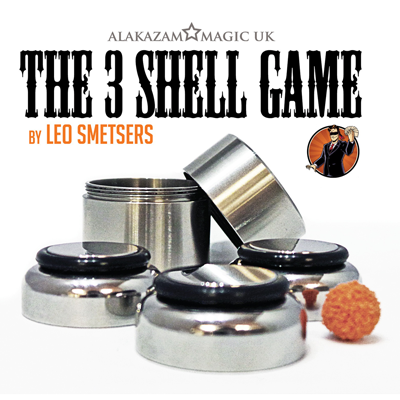
I do collect things, however it’s a little different than “hoarding” as it’s fairly specific. I collect three shell game sets. Here’s the current collection:

You’ll notice in the bottom center there is a space with no shells. That’s the shell game set that use when I’m out performing. I use Leo Smester’s shell game, and I highly recommend it. The only thing I changed was I don’t use his peas, I use the Perfect Pea made by School For Scoundrels.


Personally I prefer the “bowl” type sets. I had been doing the shells for a little while and found some little bowls in Chinatown when I was a teenager and started doing the shell game with them. Those bowls broke a long time ago, however ever since then I’ve preferred the bowl style.


Suspension of Disbelief…

Performing magic requires the audience stop believing what they know. A magic show is a world where anything can happen…but there are limits. If they can see the ball palmed in your hand, you break that suspension. If an effect lasts too long and give them time to leave the magical world and into an … Continue reading “Suspension of Disbelief…”

Performing magic requires the audience stop believing what they know. A magic show is a world where anything can happen…but there are limits. If they can see the ball palmed in your hand, you break that suspension. If an effect lasts too long and give them time to leave the magical world and into an analytical world, you’ve also lost the suspension of disbelief.


Here’s an example, let’s say you are floating a lady and she just levitates for a minute. Just static in the air without moving, and nothing else happens. The audience gets over the shock of them floating and no shifts to why is she floating mode. Odds are within the remaining 40 seconds they’ll figure it out. That’s why you add things like motion. She floats up or around you. You pass a hoop over her. These things keep your mind from becoming bored and stop suspending disbelief.


The suspension of disbelief goes beyond magic, it goes into puppetry, physical comedy, story telling, and even juggling. The audience doesn’t really believe it’s the juggler’s first time doing a trick, or that you and the puppet are having a spontaneous conversation. You need to keep adding things to prolong the suspension of disbelief, like the juggler dropping on his first attempt.


With your magic, how are you keeping people’s minds in your world?

Sometimes You Need To Take the Long Road…

Magicians love to take short cuts and be lazy. Here’s an example, I’m doing a trick where loose rubber bands turn into a rubber band ball. The easy way would simply be to do a shuttle pass during a hand to hand transfer. However I had some conditions that I wanted for the trick: 1: The … Continue reading “Sometimes You Need To Take the Long Road…”

Magicians love to take short cuts and be lazy. Here’s an example, I’m doing a trick where loose rubber bands turn into a rubber band ball. The easy way would simply be to do a shuttle pass during a hand to hand transfer. However I had some conditions that I wanted for the trick:


1: The change had to feel like it was a visual change
2: I needed to end with my hands empty
3: The trick needed to be able to happen at anytime in my show
4: The ball had to be able to bounce


The first and second conditions made something simple like a shuttle pass not the solution for me.


Ending clean made things a bit more complicated. An early idea was to use a gimmicked rubber band ball that was similar to a Silk to Ball Gimmick. However making one that could bounce and not look strange is something I have yet to figure out.


Here’s what I ended up coming up with:


What I ended up doing from a “method” standpoint was a lot more complicated than a shuttle pass, but I think it fulfilled my artistic vision better than a shuttle pass would have.


P.S. The method for this will be in an upcoming issue of Vanish Magazine

Not Everything Is Easy…

Every time I hear magicians complain that tricks are too hard, it drives me nuts. Why wouldn’t you try to learn something difficult? If you are an artist, you should be pushing yourself to learn to do difficult techniques. Here’s what Kennedy thinks about it: A great example is I’ve been working on a false … Continue reading “Not Everything Is Easy…”

Every time I hear magicians complain that tricks are too hard, it drives me nuts. Why wouldn’t you try to learn something difficult? If you are an artist, you should be pushing yourself to learn to do difficult techniques.


Here’s what Kennedy thinks about it:


A great example is I’ve been working on a false shuffle for about a year now. It’s not quite right, and I’m still practicing it. Should I give up?


No, and here’s why: It’s the best looking false shuffle I have ever seen. Sure I could stick to something that looks good enough, and that’s fine, but why wouldn’t I go all the way, make my art the best it can be? I do it because that’s what separates me from 80% of other magicians, and I do it because I take pride in my work.


Go out and learn to do something difficult!

Do It Right!

Over the weekend I got to watch many performers showcase their acts to a room full of people who book entertainment. I got to watch one magician, who I’ve known for years and he did everything right when doing the cups and balls on stage! Here’s the problem with the cups and balls, it’s not … Continue reading “Do It Right!”

Over the weekend I got to watch many performers showcase their acts to a room full of people who book entertainment. I got to watch one magician, who I’ve known for years and he did everything right when doing the cups and balls on stage!


Here’s the problem with the cups and balls, it’s not a stage trick. It’s a close up trick that takes up a lot of space. This makes a lot of performers think they can do it on a stage. Unfortunately, you cannot just put it on stage and have it work for 300 people without solving a couple of problems.


The first problem is the table top. If you are on a raised stage, the audience’s vision of the table top can be blocked because they have to look up at this. Years ago when I used to do the cups and balls in my show, I solved this by having my table sit at an angle, this is the same solution that I saw over the weekend. As a bonus it puts motion into the balls when you lift the cups and they roll, making the trick play a little bit larger.


The second problem with doing cups on stage is the balls most magicians use are very small, and usually a dull color. The ones with the crocheted covers don’t reflect light, this makes them appear smaller onstage. If they were glossy, they’d appear slightly larger as they reflect light. The magician I saw used glossy, bright red balls that were very big, at least an inch in diameter. You could see them from the back of the large banquet hall.


Take a look at your show, how can you make it play bigger, especially if you are moving from close up to stage.

When a Magic Trick Stops Becoming a Magic Trick…

It always cracks me up when magicians complain about a magic trick becoming too mainstream. Certain magic tricks become “pitch” items for magic shops. They become pitch items for several reasons, the mains ones being that they are visual and easy to do. Most of the tricks pitched magic shops are things like Svengali Decks or Scotch … Continue reading “When a Magic Trick Stops Becoming a Magic Trick…”

It always cracks me up when magicians complain about a magic trick becoming too mainstream. Certain magic tricks become “pitch” items for magic shops. They become pitch items for several reasons, the mains ones being that they are visual and easy to do.


Most of the tricks pitched magic shops are things like Svengali Decks or Scotch and Soda, both easy tricks and fairly visual when done correctly. Then there are tricks that are just visual, but have a high profit margin, like the UFO Floating Card. This is not easy to do, but the profit margin is soo high, even if you get a few returns it’s no big deal.


Then there are tricks like D’lites, which are visual, and easy to do. They took off, and there were pitch carts in malls selling them. They’re a great trick…but not longer a great magic trick. They’ve become just another toy, here’s a version being sold for a few bucks:


Every kid has seen these, and guess what, so have parents. If you have a D’lite in your show and aren’t using it in some very unusual way, you are just showing your audience a toy. Essentially you are up there playing with a GI JOE.


This is not magic.


TLDR: Be better than every 8 year old in your audience and drop your D’lite routine.

Video Rehearsal…

Currently I’m working on something for a show and an article for a magazine for magicians. This is something that I’ll probably only do a couple of times. One of the tools that I’m using to get it show ready is video. I record the trick, takes notes while I watch the video and rehearse … Continue reading “Video Rehearsal…”

Currently I’m working on something for a show and an article for a magazine for magicians. This is something that I’ll probably only do a couple of times. One of the tools that I’m using to get it show ready is video. I record the trick, takes notes while I watch the video and rehearse some more. Then I repeat the whole thing.


One of the things that I’ve noticed in watching my video is that when I do a certain move that takes a little bit of brain power, I stop smiling and look like I’m doing something. This is just my face. If I cropped the video and you just saw my face and I asked you when I did the move, you’d be able to!


This is the value of video, you can see things that you can’t see in a mirror. When the move happens I need to visually see something, so I can’t see my face in the mirror. I wouldn’t have known my face was giving me away!


TLDR: Video is a helpful tool for rehearsal!

Keep Learning…

Right now I’m learning a fair amount of things that are pretty much new to me. By new, I mean they are things that I don’t really have a solid base skill in. Learning is fun, however there are taking some work. The first thing I’m learning to do is a “zombie” style floating effect. … Continue reading “Keep Learning…”

Right now I’m learning a fair amount of things that are pretty much new to me. By new, I mean they are things that I don’t really have a solid base skill in. Learning is fun, however there are taking some work.


The first thing I’m learning to do is a “zombie” style floating effect. I’ve played with this principle when I was in highschool, so while it’s not 100% new to me, I really don’t have much experience in it. I’m learning a lot, and Tommy Wonder writing on it and Al Schneider’s books are a lot of help. This is a trick I’ve always wanted to do, and I recently came up with my angle on the trick which makes it semi unique to me.


The next thing I’m working on is a fancy cut (cardistry). I was around when the whole cardistry thing started to boom, but only learned one cut. I’ve wanted to learn some cool cuts for a while, but never really knew where to start. Now that I’ve watched a tutorial, I think it’s fairly easy to be taught. For the most part they have a few base moves that your cut is built off of. If you know the base for your cut already, it’s easy to learn. I need to practice my base!


The final thing I’m working on is learning to rip a deck of cards in half. This being purely a strength thing, is something that will probably take me a year or more to be able to do. I was hanging out with a buddy that’s a “strongman” and he gave me some pointers. Right now I’m able to rip 17 cards and every sunday I add a card to what I’m trying to rip! I anticipate there will be some weeks where I’ll add a card and will stall out for a week or two, so the goal is to be able to rip a deck in 2020.


What are you learning?


Learning new things, whether the go into the show or not will keep you from becoming a dinosaur!

Sit or Stand?

Last night I went to my local magic club and during the part where people perform tricks I noticed that some people sat and other people stood. This is a small thing, but an important thing when it comes to actually doing the trick. If you are sitting when you do the trick, but practice … Continue reading “Sit or Stand?”

Last night I went to my local magic club and during the part where people perform tricks I noticed that some people sat and other people stood. This is a small thing, but an important thing when it comes to actually doing the trick.


If you are sitting when you do the trick, but practice standing, you’ll have a hard time as the range of movements in your arms is limited by the table top. If you practice sitting and perform standing, you upper body will now slouch.


Going from sitting to standing I think it an easier transition to do. However I recommend practicing to perform standing. Here’s why, you are more visible standing, and it’s more versatile. When you aren’t bound by a spot to sit, you can choose where you are going to do your magic trick.


I guess the main advantage sitting gives you is lapping, where if you are going to do that then YES sit. However if you do a more formal show, you should consider a more formal approach and do it standing. A great example of this is Shin Lim’s act:

Everything that would have been done sitting 20 years he’s doing standing and it really plays a lot better.


TLDR: Perform standing, unless you have a very good reason why to do it sitting.