Effect: You show a bottle and tell a story about a friend paying you back for a beer. You say, “he paid me back with venmo, but as a joke he said it was for an eggplant.” You put the beer bottle into a paper bag. You snap your fingers and bring out an egg plant! You then crumple the bag and toss it over your shoulder to show it’s empty.
That’s it. It’s a simple plot with an easy presentation hook. It is also a non-standard routine for the vanishing bottle.
This lecture is mostly platform/stage material, however there is a lot of stuff of use to close up performers. In the lecture I talk about how I create original magic, and ways to make magic your own. It’s always fun to share my “art” with other magicians!
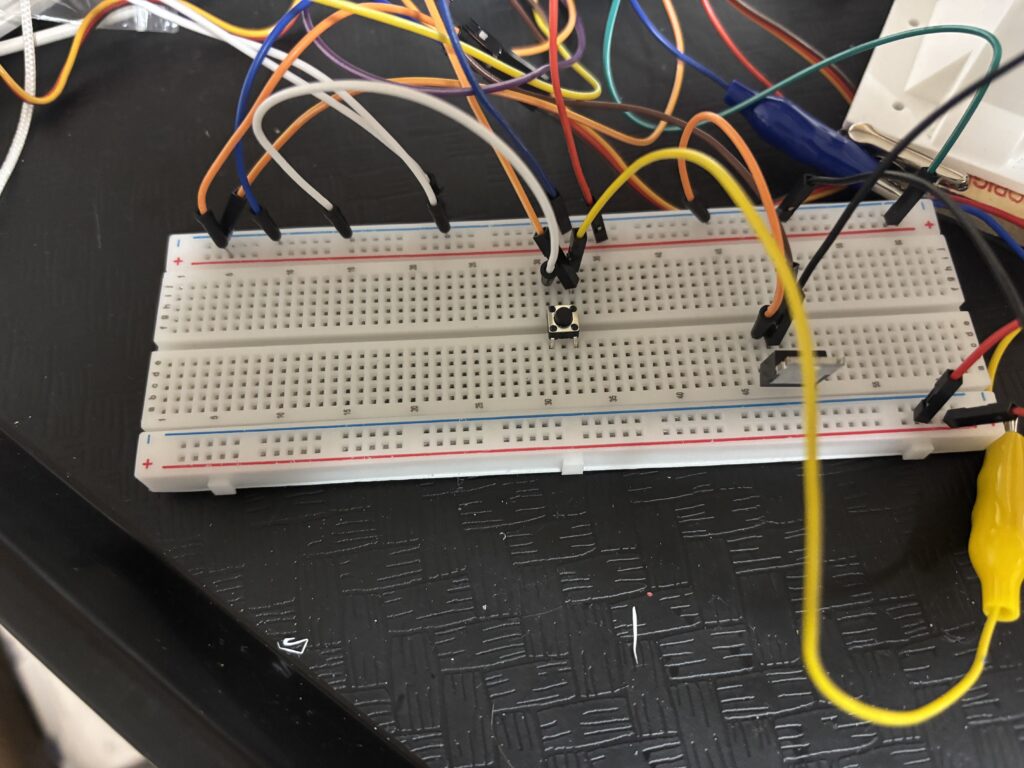
The more I work on this snake basket, the more I want to simplify the wiring in it. The previous versions had an LED to indicate that it was on. I eliminated that using the ESP32’s built in LED, so that took out some wires. Here’s the current wiring:
One thing I have that’s redundant is that each action is triggered by a button press. The first version just had a single button that started all of the actions that would be timed. I didn’t like this as it makes me a slave to the preprogrammed timing. To give me more freedom, I added a second remote control button, and both buttons trigger each action. I could eliminate the wired button, however, I can see a situation where it could come in handy, like if the remote unexpectedly ran out of batteries.
The next tweak will be in the code, and that will be adding some delays after the button press. That will get my hands away from the remote control or the wired button when the action takes place.
I think this is coming along nicely, and I’ve learned a lot about using microprocessors!
If you’re not a magician, but “magic curious” this is a great way to get some insight into magic and also learn a bit more about the magic magic club.
If you’re a magician, there’s lot of magic to learn. This is more that tricks, there’s a lot of insight into the how’s and why’s of performing magic tricks.
I started using a handheld whiteboard in my show last summer. I never really thought much about it, it’s just a prop I used. Then a couple of weeks ago I saw a picture of me performing with it.
The backside of it looked like garbage. The backside was just cardboard, and it’d gotten dinged up over months of use. I went for a simple fix and just covered the back with some stick on black velvet that I had
It looks way better now! I’m glad I noticed that in the picture, it’s a small thing I could do to make my show look a little bit classier.
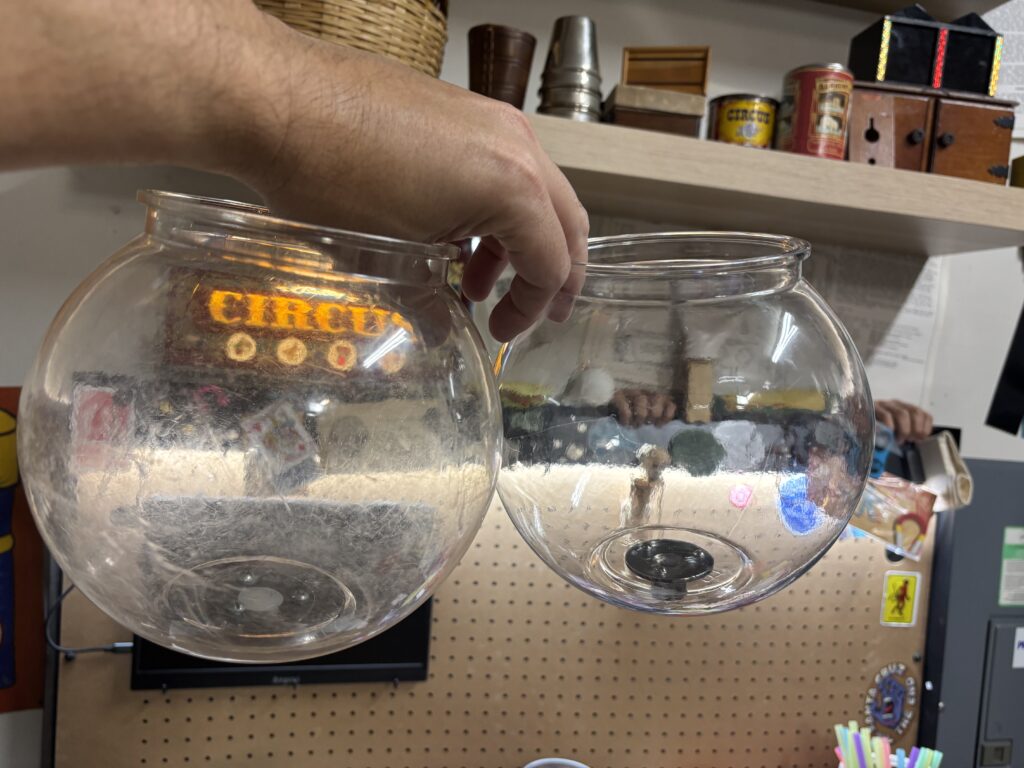
In the off season I spend time replacing worn out parts of my show. The fish bowl on the left is the one I’ve used in the show for the last year, and the one one the right is the new one.
It always amazes me how things can get beaten up slowly, and because it happens over time, I don’t notice till it’s really bad. It’s always good to check your props and clean or replace them regularly!
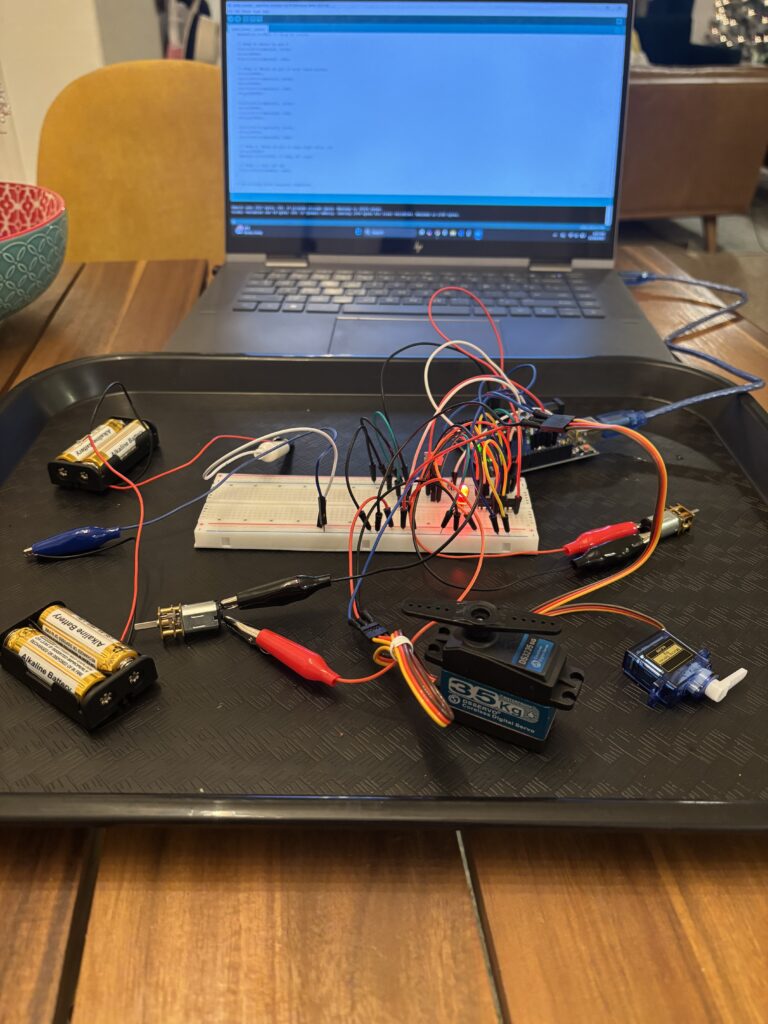
I’ve been working on learning to use Arduino and over the summer I made a working model on an Arduino simulator, but haven’t had time to actually make it, until a few days ago.
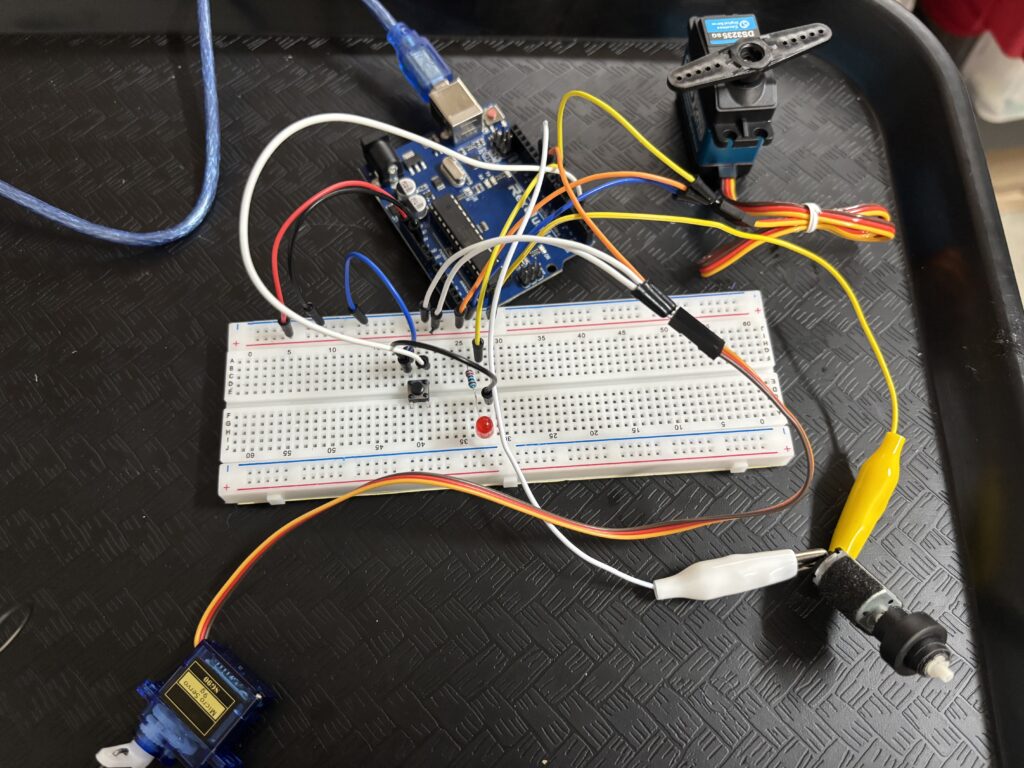
The arrangement above has a lot of wires, but it works! All of the functions do their thing. Like any project, once it becomes a physical thing, it will change. I realized I could eliminate one motor and have one servo handle two tasks. The motor would make the snake rise, then the servo would make it move back and forth. I decided to eliminate the motor and have the servo make the snake rise and shake. That simplified this a lot, and here’s the new wiring:
Usually, simpler is better; here’s less to go wrong, and it’s easier to diagnose if something does go wrong.
The next step will be to move it from an Arduino UNO board to an ESP32 board and put everything onto a PCB board for more sturdy final version of this.
Right now I’m writing a show that I’ll be doing for a elementary school assembly tour in April. One of the challenges is that I’m trying to avoid the whole 6 7 thing.
That makes counting tricks a challenge and there’s a card across type trick that I’ve written into the show. I don’t want to lose control halfway counting a packet of cards, and that needs to be done four times!
Right now is that my plan it to talk about the objects as I’m counting them. That would break up the 6 to 7 with dialogue between them. I’m not sure if that will work, but it’s an idea. Another idea is to use 9 items instead of the traditional 10. Then if three items move from one packet to the other, that will reduce the counting that will have the numbers 6 and 7 from four times to three times.
Another option would be to not have the trick about counting, but about specific items moving from pile to pile. So three red backed cards end up in a blue backed packet.
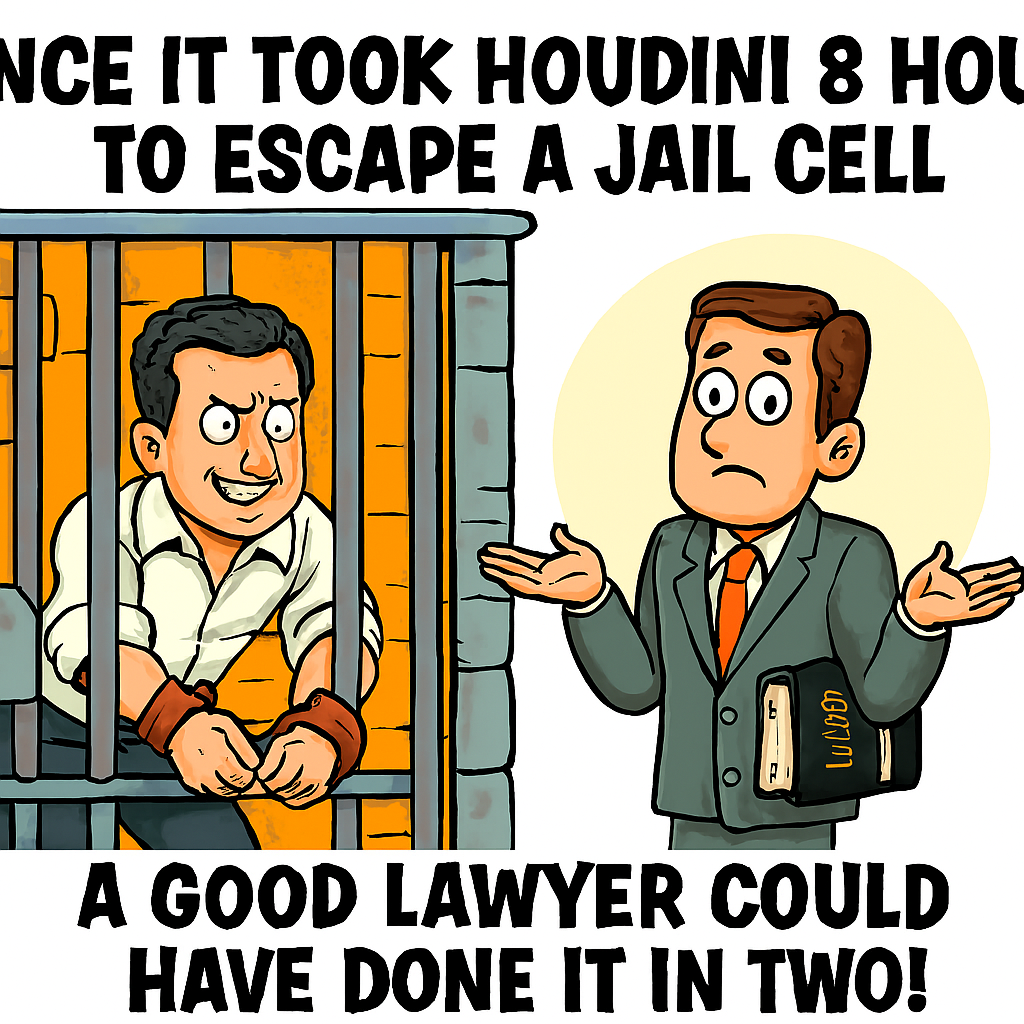
I had an idea for a joke about Houdini. The line I thought of was: “Once it took Houdini 8 hours to escape a jail cell, a could lawyer could have done it in two.“ I wanted to make it as a cartoon, so I put some basic prompts into AI to make the basic picture:
Then I had AI add the caption:
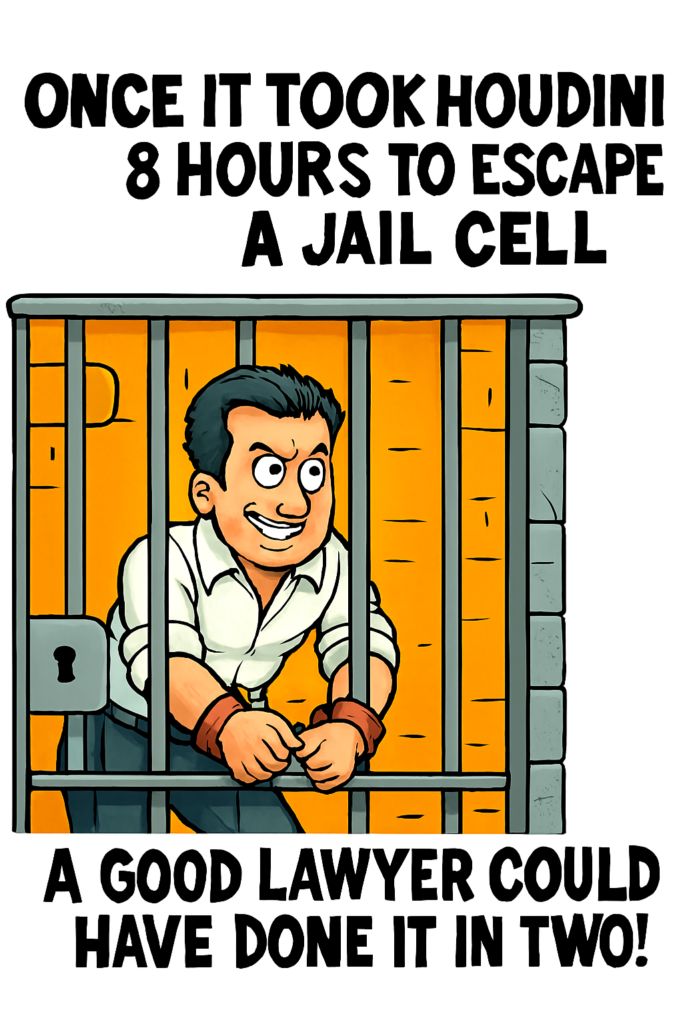
For some reason it had a cropping issue at the top. Once I saw it, I didn’t like the lawyer, he didn’t need to be in the picture, so I had him taken out.
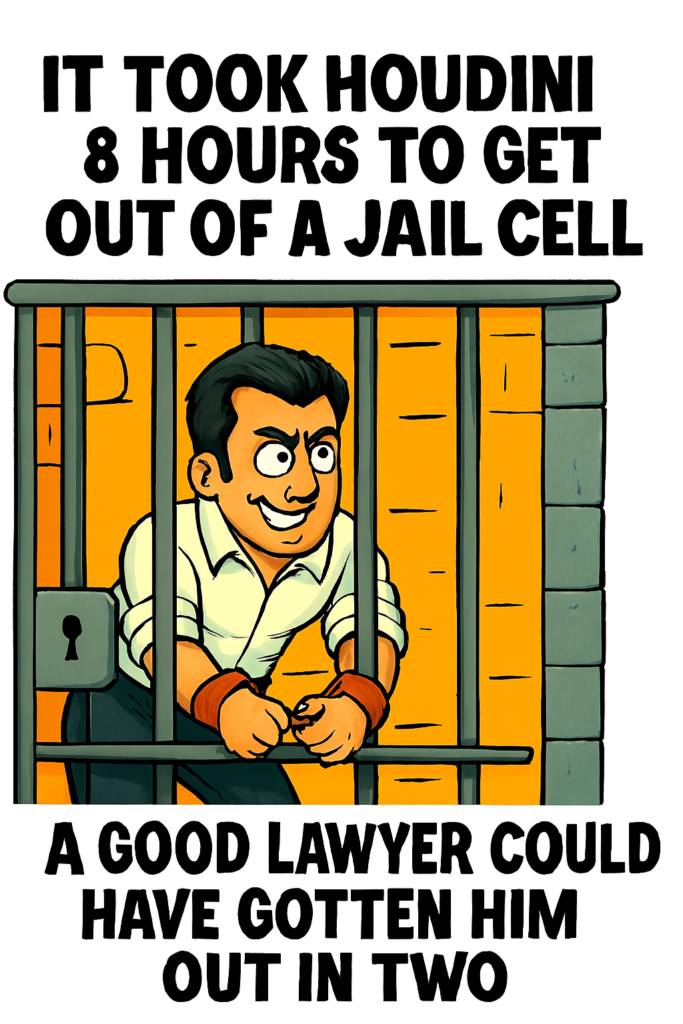
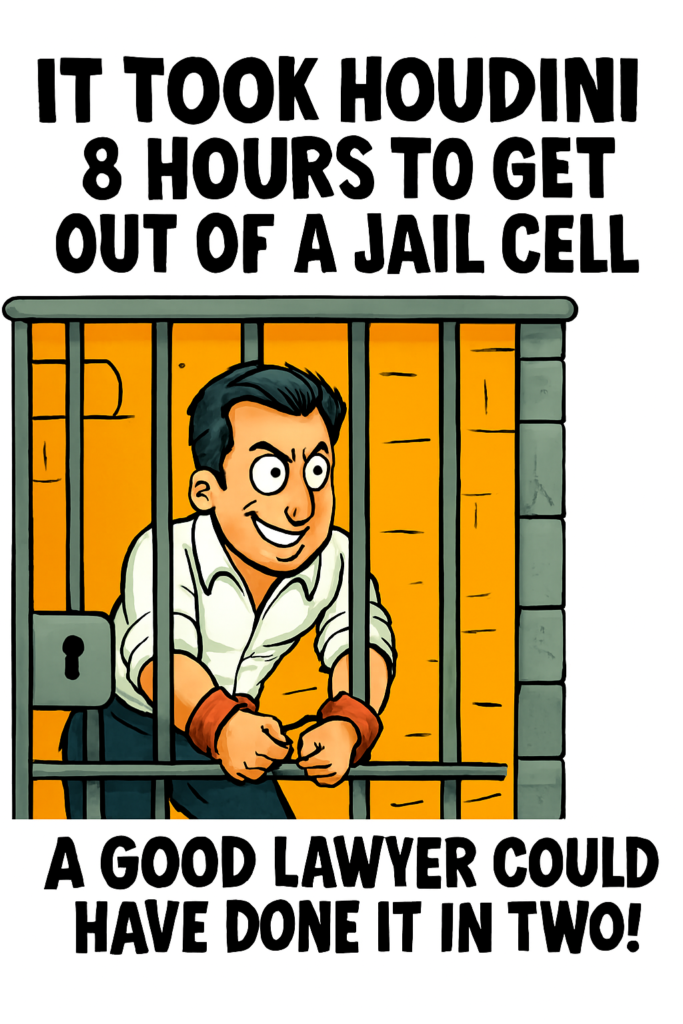
Looking at the picture above, I decided it didn’t need the word “once,” so I had it removed. Now it’s a nice, tight joke with a setup and a punchline, and the image doesn’t distract or give away the punchline.
I also rewrote the punchline, so there are two versions:
I’m not sure which I like better. I think the one on the right, as it’s tighter. The one on the left really takes the audience to the punchline, while the one on the right makes them think a little.
That’s a little insight of what goes into writing a joke.