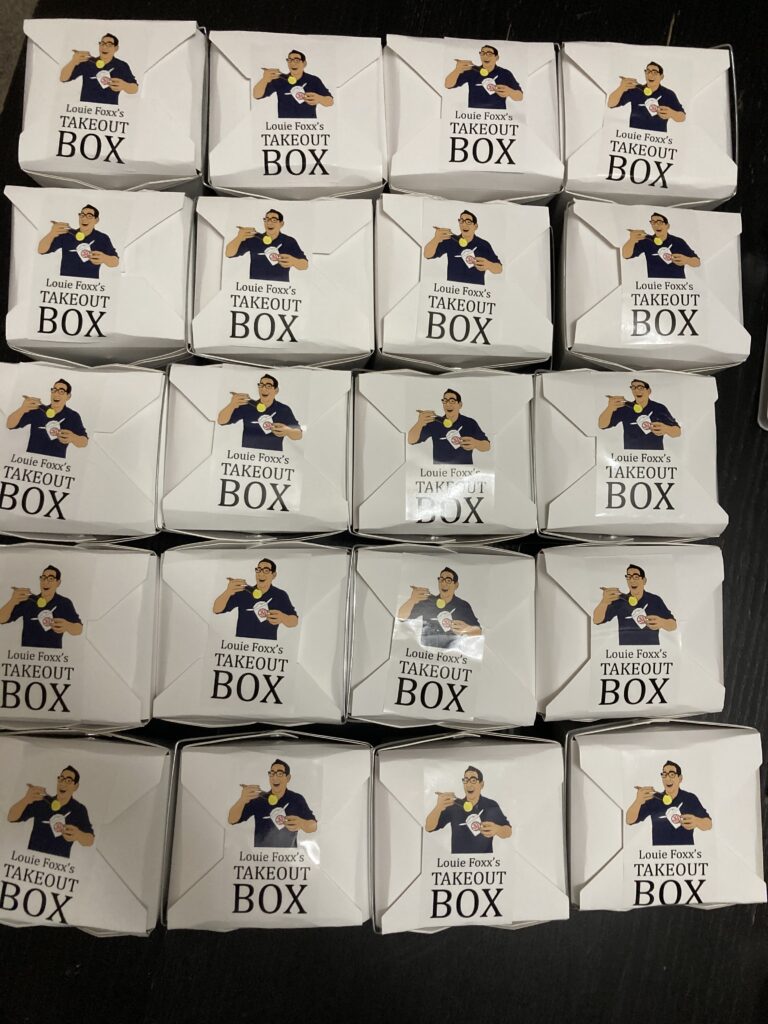
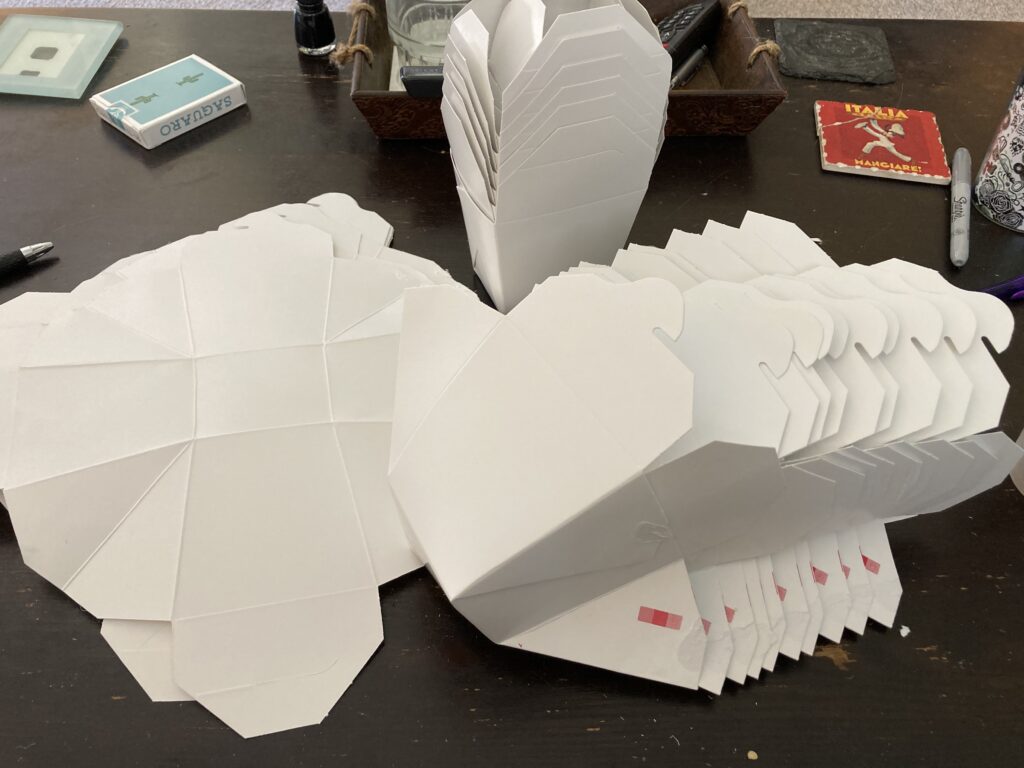
One of the things with marketing magic trick is figuring out the most efficient ways to make them in bulk. Making a single prop is pretty straight forward, you go step by step. When making in bulk the challenge is how many steps per unit do you do before you move onto the next unit.
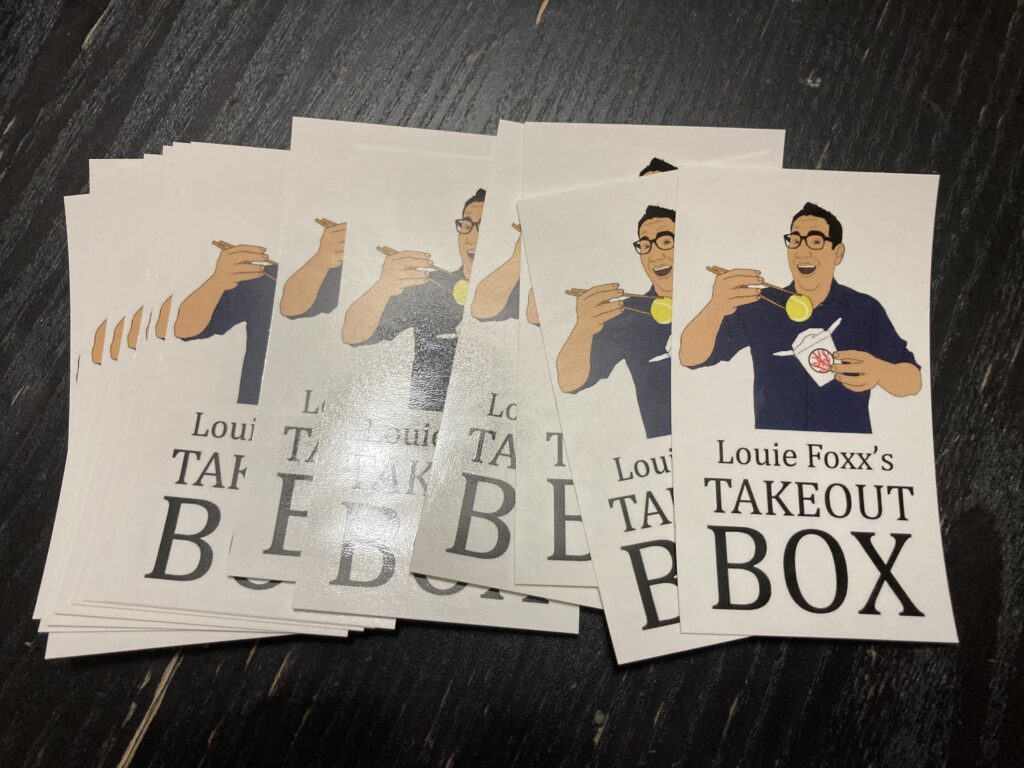
For something as simple as opening up these Chinese food take out boxes for my Take Out Box trick, I found that doing it in two steps was the fastest and easiest for me. This all goes back to sleight of hand, and the idea of economy of motions.
What’s the most efficient way to move a card to the top of the deck? Is it a pass where you’re moving half the deck or the side steal where you’re only moving one card? A lot of times the situation, your skill level and confidence with the move will dictate which is more efficient.
Recently I saw a show and a performer did a trick with a Rubik’s Cube. The trick was good, the routine was good, but there was a bump in the road. The person that was brought onstage knew how to do a Rubik’s Cube and that led to some awkward moments where the performer didn’t really know what to do.
The performer handed a mixed cube to the person from the audience and asked them if they could solve it. The person from the audience said, “YES” and started to speed solve it. The performer stopped them from doing the solve and moved on with the routine.
Personally I think the performer missed a great moment where the person from the audience could have really shined! Let them have their moment, and celebrate it! Once they get the glory you can move on with the routine. Being a generous performer, you get all credit for what the person from the audience does, plus the credit for whatever it is that you do!
One of the thing that drives me nuts on social media are magicians complaining about people asking them to do gigs for “exposure”. The people are super offended that someone asks, however that’s the way that charities operate, by donations. You are a business, and they ask businesses for donations, you should be flattered that they consider you a business!
I will agree that the promise of exposure is usually an empty promise as they think you’ll do all of the work to get the exposure. It shouldn’t have to be that way and it doesn’t have to be.
A long time ago I did an “exposure gig” and was passing out my cards, etc and after the gig they had a meal for me. It was the volunteer meal, not what people attending the gig were served. Everyone was eating steak and salmon and they gave me a ham sandwich and bag of chips. That’s when I decided that was never going to happen again.
The next day I wrote up a document and converted it to a .pdf that details exactly what the charity has to do if they want me for free…but beyond that, how they have to treat me.
Now when they call me for “exposure gigs” I tell them that I would love to help them out and I’ll send them a .pdf to see if we’re a good fit. The majority of the charities that contact me after seeing the .pdf tell me they can’t do what I’m asking for, and that’s fine. It’s putting into their head what exposure actually is. The few that accept my terms are exposure gigs where I actually get exposure and a ton of it that translates into paid gigs!!
Instead of being offended, spend an hour and write up what you think is a fair trade in terms of promotion. Then when they ask, say “yes”…on your terms!
-Louie
Want the Charity .PDF? Save yourself some time and use the one page .pdf that has my expectations for “exposure” gigs as a starting point!
For $5 I’ll email you my expectations .pdf and you can use that as the template for what you send out to help you survive exposure gigs!
There’s a term going around magic which is called “every day carry” and it refers to what you always have in your pockets. Typically this means whenever you leave the house, it’s in your pockets or on your person. This refers to props that you would use for spontaneous performances. I’m intentionally not using the word impromptu because that usually refers to magic using things you find around you at that moment.
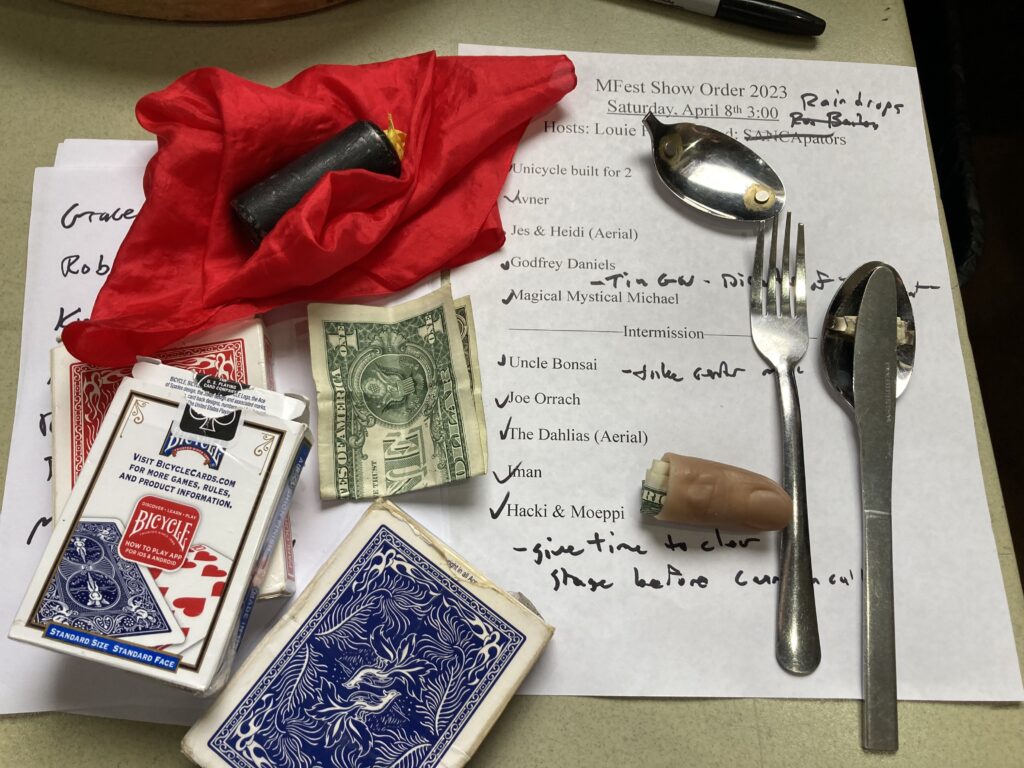
When I host shows, have planned material for known stage delays, like when an act has props or rigging that needs to be set up and I’m aware that I’ll need to kill time.
Then there are unplanned stage delays. These are when a performer isn’t ready, rigging is taking longer than expected, or whatever. For these situations, on my person I always have a a bunch of material on me that I can instantly perform. this is my MC EDC:
I have material of varying lengths and most of the longer routines, like the color changing silks can be broken up into two shorter routines if needed.
If you are thinking of doing any stage hosting, you really should consider having at least a couple of tricks in your pocket that you can use for unplanned stage delays!
Frequently in magic groups on Facebook someone will say they want to sell a trick and want advice. There’s a lot of bad advice (in my opinion) that is then given. One of the things is to go straight to Penguin Magic with the idea, however they usually won’t produce your idea, you’ll need to make it and send it to them. Last time I looked into it, their terms weren’t the most friendly to the creator. You were making product, sending it to them and they would pay you as sold.
A better approach would be to go to Murphy’s Magic and pitch the idea. If they like it and want some of it, they’ll be a couple of options, like you could sell them the idea, they could help you with manufacturing, or you could just sell them the finished product.
Of course by that point you should have done your homework and know how much it costs you per unit to make, and how long it takes you to make them in quantity. Also if you’re self producing, you’ll need to be able to fund making the first batch of your trick as most accounts are on NET 30, so you won’t get paid for a month.
Then you need all of your collateral, so ad copy, art, instructions, etc. Usually you’ll have some of this done before you pitch the idea, but not always. For example my Take Out Box was something that was in my show for a while, so I had tons of video of it that I could pitch it with. Once I had interest, then I went out and started getting all of the other stuff in line.
Personally I’ve made a choice to not mass market thru big magic distributers for most of my products. My reasoning is that going direct thru magic shops I’m able to make more per unit and since I hand make almost everything I sell, it makes more sense to sell a few less units, but make more per unit!
A couple of months ago I recorded an interview with Cris Johnson for The Professional Magician podcast. We were going to talk about more businessy stuff, but we ended up talking about how I work on my show.
When I was starting out, no one ever told me how to work on my show…and I bet if I asked a room full of magicians how they work on their show, the vast majority really won’t have an answer beyond some generic “I practice”.
I came up with a system to working on my show that I call the 6R’s. Each step begins with the letter R. I’ve presented this as a lecture that I’ve presented to groups of performers around the country. A couple of years ago I did one for the virtual KAX Convention and have a recording of it.
If you’d like to learn the 6R’s to working on your show, you can get access to video for $5! Simply use the Add To Cart button below
6R’s To Working On Your Show $5
Once you order, I’ll email you the download info withing 24 hours.
Recently I’ve been to a few sporting events and one of the things I pay attention to the the pageantry of the introductions of the teams. It hypes up the crowd, and it reminds me about the importance of introductions. Simply having someone say your name as you walk onstage works, but it doesn’t put energy into the room.
Yes, I understand that not everyone wants crazy energy put into the room, and it can be done in a low key sort of way.
The other place that sports add energy are in between plays. They’ll either have upbeat music, crowd play along things, or video elements. In a magic show, we have time like that in between tricks or when bringing people up onto the stage.
Those are great times to add music, jokes or something to keep the crowd engaged with you that’s not dead time.
This is where watching your show on video is helpful. If you have a hard time watching your transitions between tricks, this is the area you need to work on. Go to a baseball game and see how they do it…
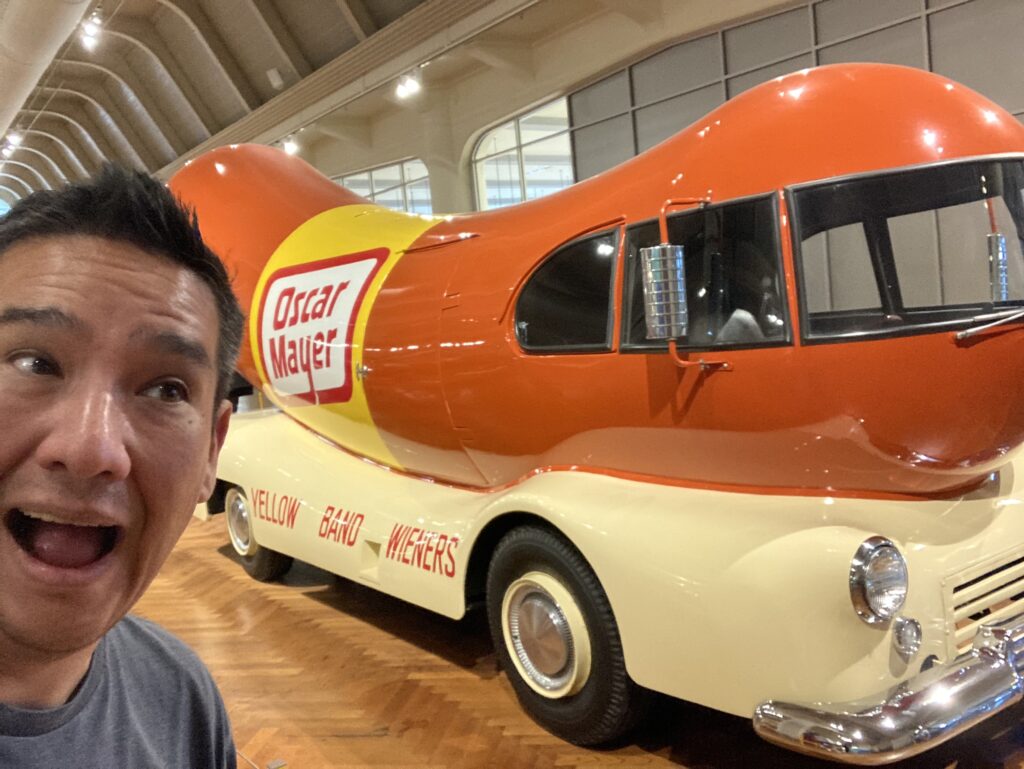
When I was in the Detroit area last week I went to the Henry Ford Museum and there’s the original Oscar Mayer Wiener Mobile there.
This car is super cool, and I’d be excited to see this version on the road now, but they kept improving it and it get better and better ever few years.
I’m sure my show is “good enough” but I try to keep improving. Last week I added a joke to a routine that I’ve been doing for over 15 years! I’ve also cut a lot of bits that have aged out of the routine over the years.
I never think of any routine as finished, there’s always things to add/cut.
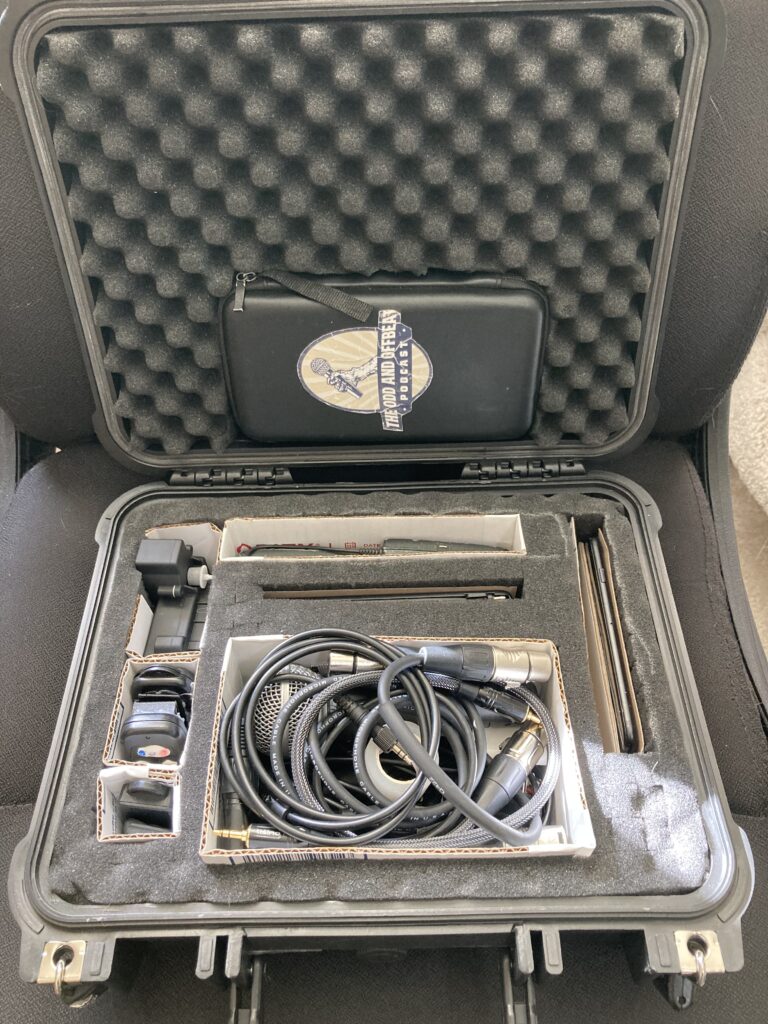
The last time I flew, I had some of my audio equipment damaged that was in my checked luggage. What I think happed was when TSA screened my show case, they did a horrible job of repacking my stuff, which led to some stuff being damaged.
I’ve decided that I’m going to carry on my audio gear from now on…or until I get lazy. I went out to harbor freight and bought a Pelican Style hard sided case that has foam inside.
I’ve used the “pick n’ pluck” style foam before and it has never really lasted for me. For this audio box, I cut cardboard to reenforce the foam walls, and hopefully this will add some durability to the foam.
I’ve just finished my first round trip flight with this case and it seems to be holding up…


:max_bytes(150000):strip_icc():format(webp)/oscar-mayer-weinermobile-drone-wienerfleet-FT-BLOG0617-a153de88245847b19ec8f05e964d3408.jpg)