Before I start, I want to mention that this is not a knock at the performer in the picture below. OK, so now that that’s out of the way, look at the picture below:
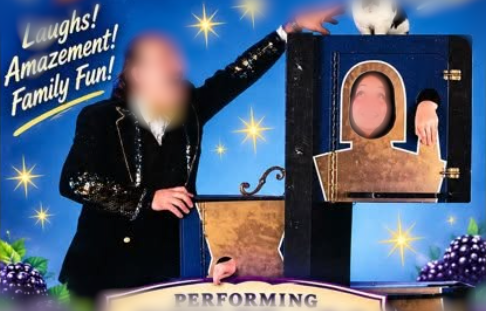
This is an image that’s heavily edited (before I blurred out the faces), which is fine; it’s a show poster. The Zig Zag Lady illusion uses an optical principle (black art) to make it more deceptive. It’s not really black art in the sense of a black art act, but it’s used to make something less prominent.
My thinking is, as long as we’re altering the picture, why not remove the black art part? I’m sure this poster was made from an actual picture of the illusion, and the marketing person for the event didn’t notice…but why would they?
Is it Ethical to Alter the Picture of Illusions?
Is doing little things like removing something that the audience doesn’t realize they see from a promo picture OK to do? I think so. In promo pictures for shows, typically you aren’t doing a live show, so it’s already an unrealistic situation. You can retake the picture dozens of times. I think as long as the illusion is presented accurately, it’s OK. If you Photoshop out the chairs in a chair suspension, that’s not ethical, as you’ve substantially changed the illusion.
That’s my opinion on that!
-Louie