When I used to travel frequently one of the things that I did to keep myself busy was invent magic tricks. I has some guidelines, the main one was to use things found in my hotel room. Here’s one from a few years ago:
One thing I really like about this trick is the visual of pulling the bill through the straw. Once I had the idea of the sideways penetration, then I had to figure out a method. I can’t find any notes I wrote for this trick and honestly I’m not 100% sure how I did it. I have an idea of how I probably did it as there are only a few ways you can slide a bill through as straw.
Doing these hotel room videos were a fun creative challenge because you are really limited prop wise with what you can do.
A while ago I picked up a used copy of Howard Hamburg’s D Lecture notes. One of the things the mentions in it was that Dai Vernon didn’t like was kicker endings. Vernon’s thinking was here’s the trick I’m showing you, and now here’s something completely different that doesn’t make sense…ta-dah!
Now let’s fast forward to a magic video that was posted in a facebook magic group recently. Watch this:
Did he get your card?
He didn’t find mine.
Now let me tell you what’s wrong with the video of the trick:
First of all, he didn’t find my card! If you tell me to pick a card and don’t find it, I don’t care what else happens, it’s going feel unresolved.
Next, the switch out of the pocket is sloppy. It may work in a in-person context where you are talking to people, but not in a video with zero presentation.
Finally the reveal of the fan of cards changing is just bad magic. When the hand holding 4 cards drops out of frame multiple times and for an extended period of time right before you reveal the change, it’s just not good magic.
Add these up and it’s a bad presentation of a trick.
This trick needs a presentation that’s not a promise that will be unfulfilled (unless you get lucky). Also, t he performer needs to be aware that their need to keep their props in frame. It doesn’t matter if you don’t need to drop out of frame or not, it detracts from the magic. Or if you do need to move out of frame, try to hide it and don’t to it immediately before the reveal.
In the past on this blog I’ve written about progressive anagrams and fishing as a great methods for virtual shows. Here’s another video of me using the Mind Power Deck by John Kennedy.
The small change that I have made in this trick from the video I posted a few weeks ago is that I’m revealing the card before I ask them what card they are thinking of. I think it’s a way stronger trick because I’ve committed to the prediction before they reveal what they are thinking of.
Yes, there are risks doing it this way, but I think the benefits outweigh the risks.
In my different shows I have many different table tops, but only one main base. It’s a Collector’s Workshop table base and I just screw the correct table top to the base for the show I’m doing. In my small group, no contact, socially distant magic show, I’m using the base on my small case.
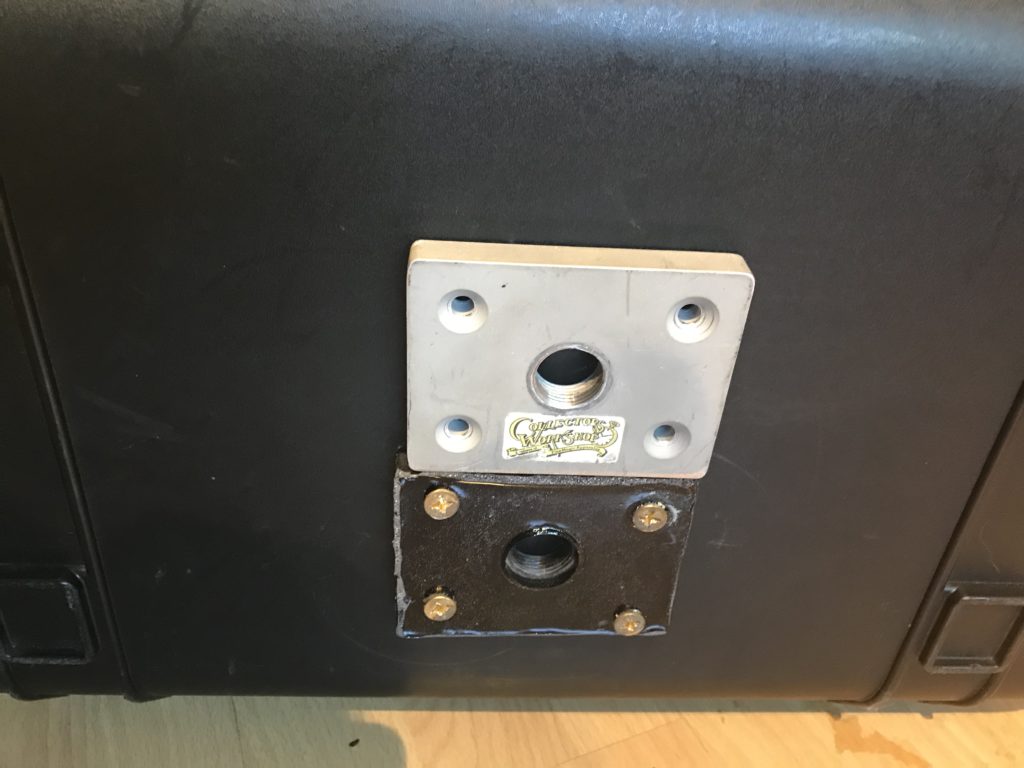
A friend of mine saw what I was doing a he had an old base from a Jumbo Sidekick that no longer exists that he gave me. Unfortunately at some point Collector’s Workshop changed the diameter of the pole that screws into the flange that’s attached to the table.
To fix the problem, I made the flange out of clay with threads that match the larger pole. I then made a mold of this flange and cast it in resin.
Here’s the two flanges:
What I made took about an hour to make, and cost only a few bucks in material. It’s probably not as durable as the metal flange is, however the case isn’t heavy, so it works.
It’s nice to not have to keep moving around the table base. The show that uses this case doesn’t have a table, so now the case is totally self contained!
This summer I’ve managed to save a few gigs by converting them to in-person, small group, no contact, socially distant magic shows. I’m doing multiple shorter shows for 10 kids instead of one large show for all of them at once. It’s a difference in thinking when doing these.
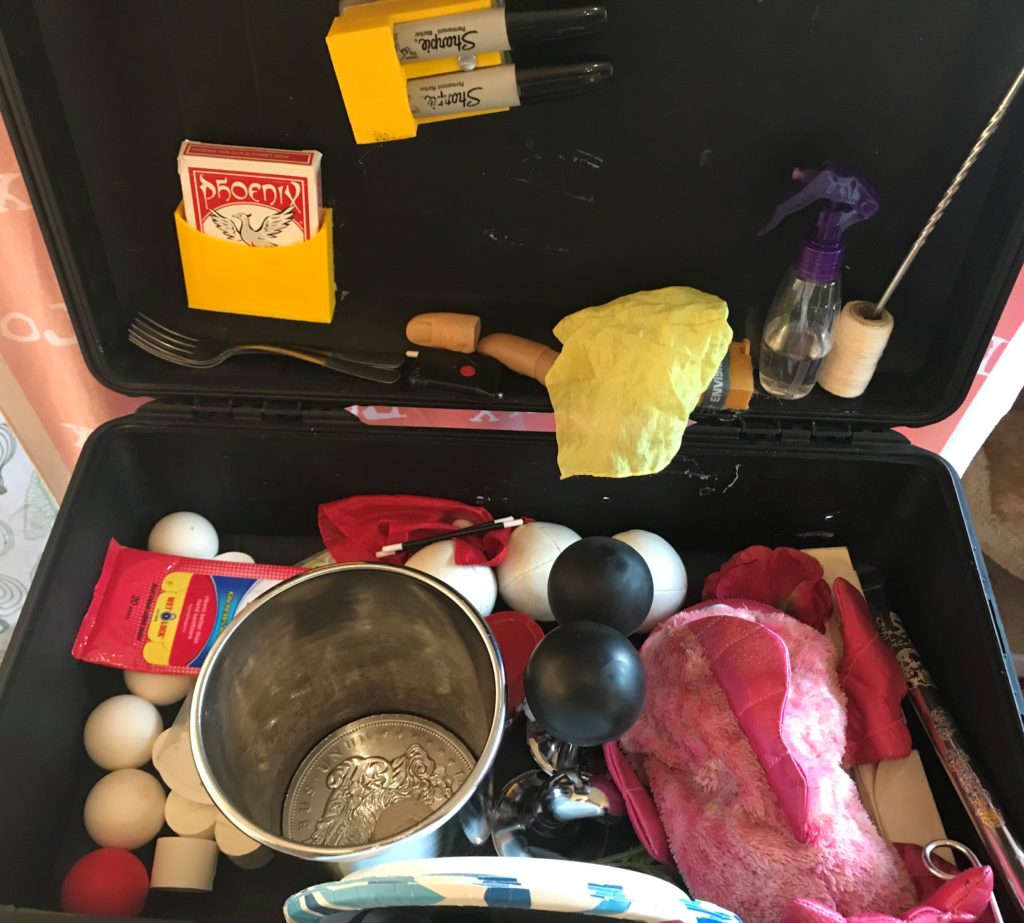
I’m learning I need to pack a bit differently. The nice thing about doing a 20 minute show instead of a 45 minute show is that I can fit everything into a pretty small case.
Here’s the gear I’ve been bringing:
When it comes to material selection, I need stuff that resets really quick. In the past reset wasn’t a concern as I don’t normally do shows back to back with only 5 mins between them. The shift in thinking from “whatever to make the trick work” to “I’ve gotta reset the whole show in 5 mins” is an interesting mental challenge. Making me think differently is one of the silver linings of not being able to do my show how I’d normally do it.
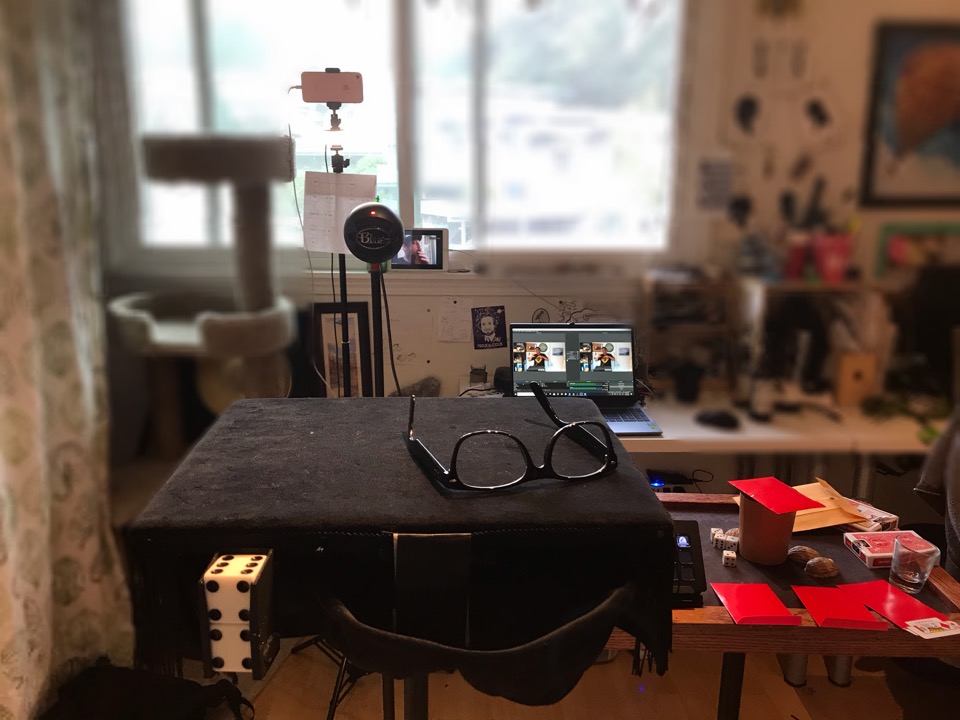
Yesterday’s blog post had video of me performing the Three Shell Game as a guest on a live stream. What the camera sees is pretty simple, however what’s actually going on behind the scenes is bit more complex.
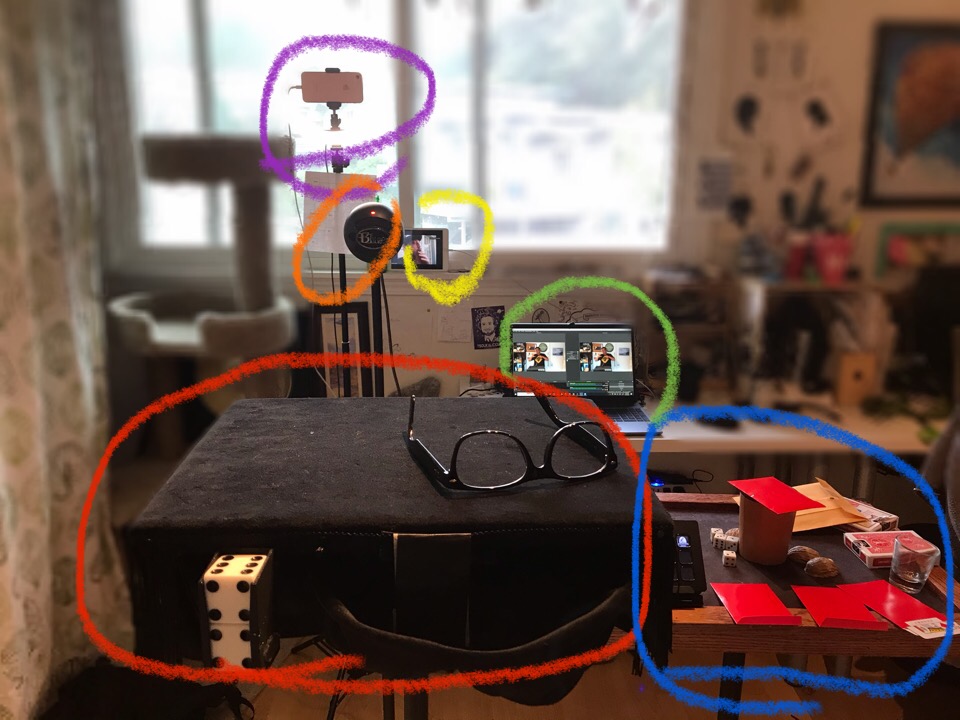
There’s more going on that just putting a table in front of a camera. In the next picture I’ve circled some of the things that goes into my online appearances:
Here’s what I’m using:
Purple: iPhone as a camera
Orange: Microphone
Yellow: iPad to show the person I’m interacting with
Green: Laptop which is running my production software
Blue: Table that’s not visible on camera to hold props
Red: Working table that will be on camera
I honestly wish doing a live stream bit from home was as simple as opening my laptop and using its built in mic and camera. Instead I need to essentially set up a studio and take it down afterwards. There is a noticeable difference in quality when done this way.
One of the hardest things about creating magic right now is that due to restrictions I can’t really audience test things. I’ve written about my endings to the three shell game on this blog before and one that I’ve started doing post-COVID is the solid shell game.
One way to break things in are on live streams. My buddy was doing a live stream a few night ago and needed a guest, so I popped in, hung out and worked on some material.
Here’s the shell game from that live stream:
It’s coming along, just being able to do for something and not the wall at home makes a big difference! If you’ve got stuff you’re working on, go out and be a guest on someone’s live stream. It’s a much better space that doing your own live stream show, and there’s a lot less expectation for you to carry the show.
When I had gotten my wisdom teeth pulled a while ago, I kept the teeth that were removed. For years they’ve sat on my shelf doing nothing. Well I did donate one of them to a friend’s oddity museum, but other than that they just sit there.
While not the greatest trick, here’s something I did yesterday:
I had some black paper on my desk, then saw the teeth and decided that would be a good trick to do. I think I may reshoot it and put it out on social media at some point.
One of the biggest challenges right now with all of the Social Distancing is breaking in new material. Personally I tend to try to work out things on stage. I try them, I ad lib, I tweak and adjust. Right now some in-person venues are starting to open up and this is great and will make working on new material much easier.
Here’s an early version of a trick that I wrote about a month ago on this blog. It’s using “fishing” along with a physical prediction for the trick.
The big change that I made was that I’m pulling the card out of the envelope before the card is named. I’m taking a risk that the person can totally screw my ending by lying about the card that they saw. However the questions leading into the reveal makes it hard to lie, they just can’t make up a card at the last moment as they’ve already confirmed things about it. That’s not going to stop an asshole from just saying a different card, but it does make it harder.
There’s one trick that I’ve been fascinated by for decades and it’s the Himber Pail. Here’s a video of Richard Himber doing it on Don Alan’s Magic Ranch:
I love this trick, the effect is good and it’s got a ton of suprises and hits all of the beats! The problem is that the are hard to find and when the pop up at auctions, somehow I always miss bidding on them.
Then a few years ago, I set out to make a version of the trick. Here’s what I came up with:
The technical end of how it works is completely different than Himber’s method, but the effect is the same. Himber’s method is way more practical than mine. Also my method wasn’t 100% where his is.
This is a trick I revisit very now and then, and still have yet to come up with a practical way to do it. Himber’s method doesn’t scale down to a cup size very well. Eventually I’ll come up with a way…