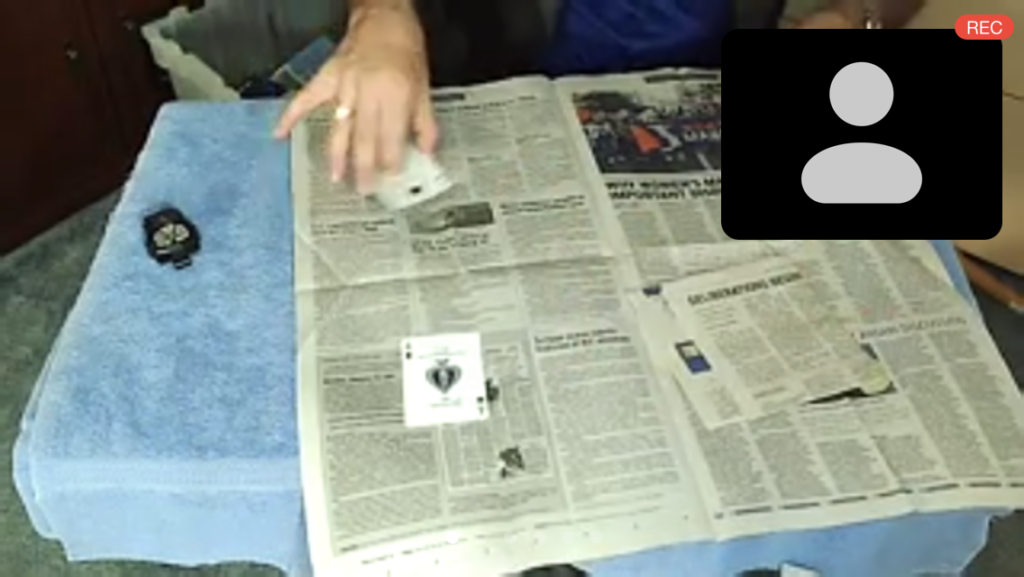
Here’s a video of the Triumph shuffle sequence that I wrote about yesterday. The view is my view, so you can see an angle of the cards that the audience wouldn’t normally get to see.
I kinda like the four shuffles where you flip half over each time, but I still don’t think it’s better than the standard Triumph routine that most people do.
Way back in March I was playing with using the old card reveal where you drop the deck on the table and the top card flips over as a clean up for a Triumph type effect. You can read the post here It’s an interesting way to clean up a reversed card on top of the deck. You get a little trick that happens that does the dirty work for you.
Last night I was shuffling some cards and came up with a Triumph sequence that left you in position to do the drop clean up. Here’s the sequence:
Card is selected and controlled to the top
Zarrow shuffle with half face up and half face down (selection remains on top)
Strip the face down bottom half to the right, flip them face up. Riffle shuffle by running about 10 cards with your left hand, then shuffling with both hands, leaving about 10 or more cards of the right hands stack to fall on top of the left hands stack. This will put the face down selection about 10 or more cards from the top of a deck that’s face up (the audience thinks they are mixed face up into face down).
Strip the top half to the left, flip them over (face down card will show) and do a Zarrow Shuffle.
Strip the bottom card (face down cards) the right and shuffle the card together. Have the left hand’s packet’s top card be the top card of the shuffled deck.
The order from from the top down is a face down card, then the rest of the deck face up with a selection face down somewhere in the middle of the deck.
Do the drop flip over reveal thing to flip over the top card of the deck.
Spread them out to show all of the cards are now facing the same direction except for their selection.
I’m going to be 100% clear that I think this sequence isn’t the best way to do a this style of trick and is inferior to the common method of a Zarrow Shuffle, Daryl’s Triumph display (Don’t know the name of it) and then openly flipping over half the deck.
It is a sequence that gets me into a position where I can do the drop flip over thingy. It was also a fun exercise to try to figure out how to get the cards where I needed them to be.
Recently I was hanging out with a friend on Zoom and he did Goshman’s Cards Thru Newspaper. This is a fantastic trick and I think a really good trick for Zoom due to the static camera angle. It makes everything easy to see and laid out well (unless you’re watching from a cellphone, like I was).
Exploring trick that aren’t right for a live show for your virtual show is one of the very fun things about right now. Personally I’m doing things I’ve never really been able to do before, it’s great!
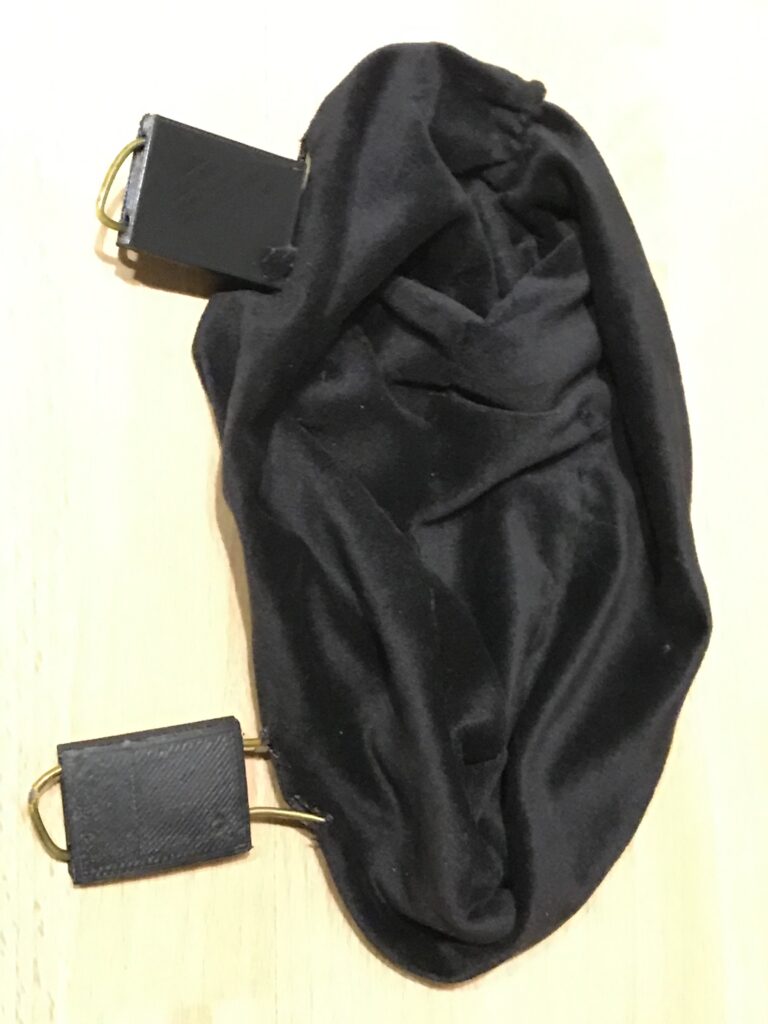
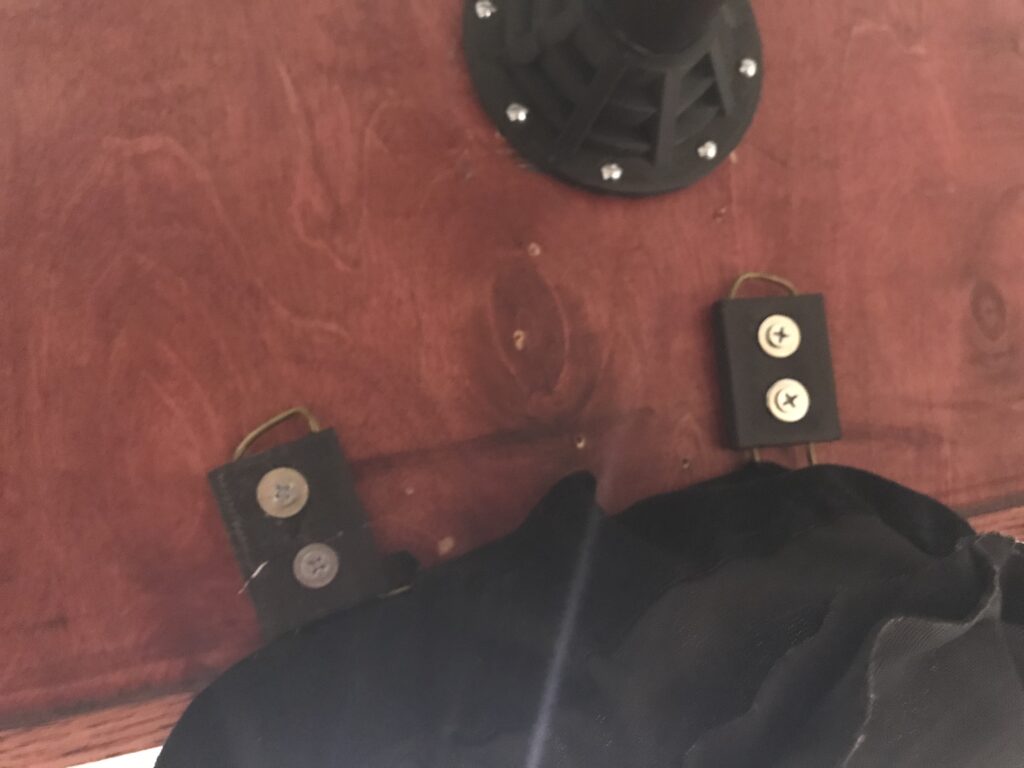
The switch of tables from my smaller table top to a larger one that’s mounted on a speaker stand is done. First I added the new, larger dice holder and today I put the servante on it. I 3d printed some brackets to hold the wire frame of the servante to the table.
Here’s how it looks from the floor looking up:
Finally here’s what it looks like from where I stand behind the table:
In my live, in person show, I don’t do any performing on the table top. It’s simply a place to set things. However for virtual shows, action happens on the table top. I really love having a servante and it kinda makes me want to put a topit in all of my coats for when we get back to in person shows. It’s super handy!
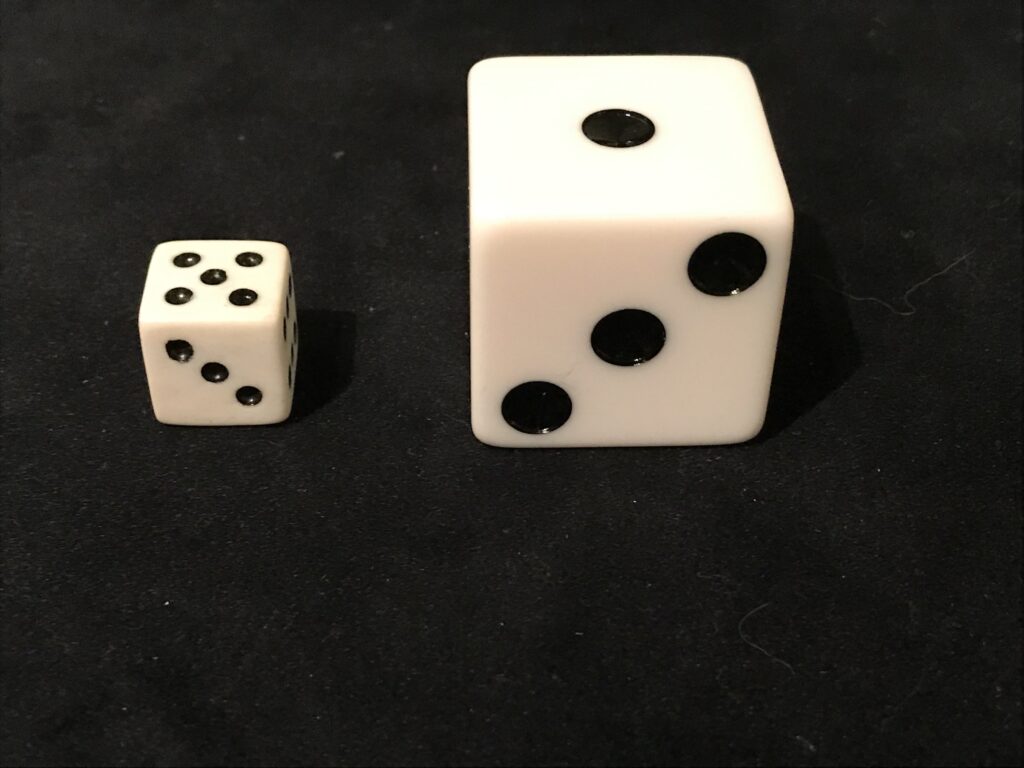
One of the things I’m always doing it trying to improve what I currently do. Right now in my virtual show I do a modified version of my Cee-Lo trick, which is a cup and dice routine. This ends with the production of two large dice. The large dice are 1 1/4 inches on each side. To give you some perspective, the picture below is one of the jumbo dice next to a regular die.
The reason that the trick uses 1 1/4 inch dice is that for a live, in person show, it makes the loading procedure work. The cup will hold two 1 1/2 inch dice, but the method where the spectator loads the cup for you doesn’t work well with a larger die.
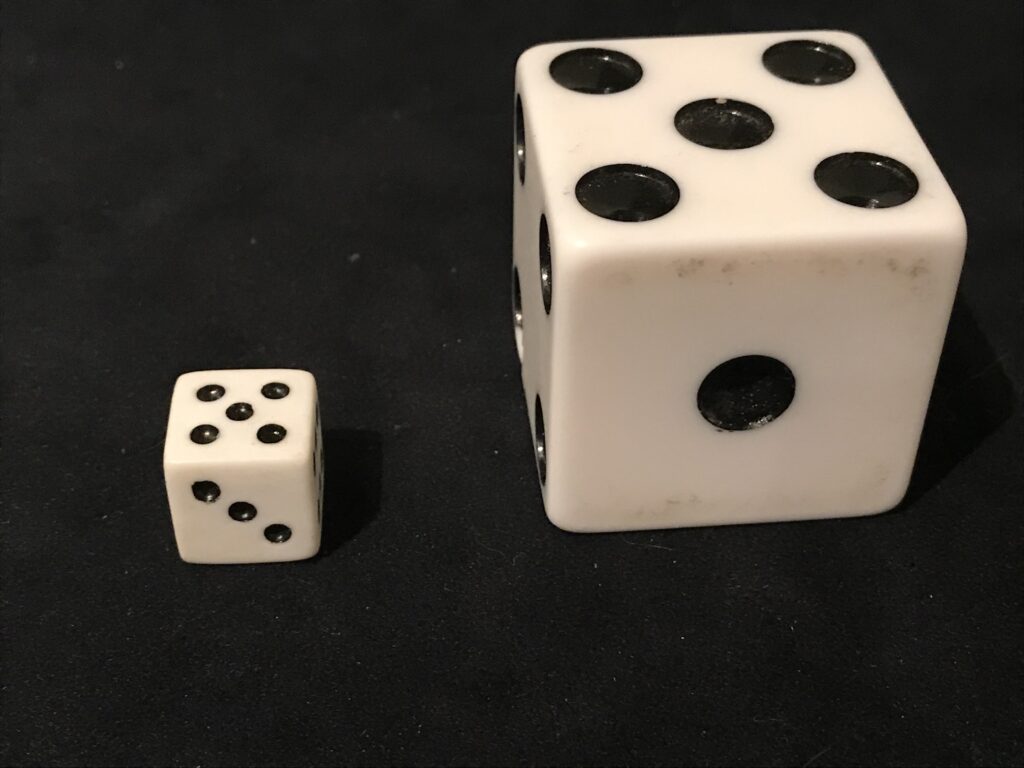
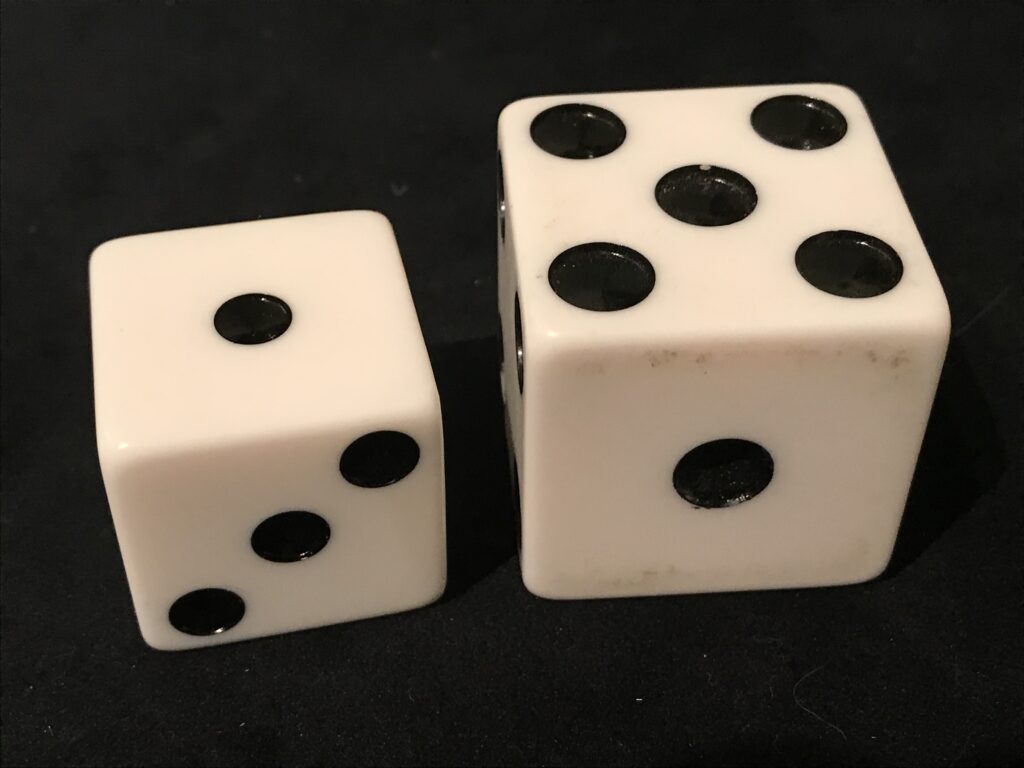
I was cleaning up and found the old set of 1 1/2 inch dice I tried using for Cee-Lo. It hit me, since I’ve changed my loading procedure for virtual shows, and there are no spectators to handle the props, why not move to the larger size dice. To give you an idea of visually how much bigger they are, the pictures below are a 1 1/2 inch die next to a regular die and a 1 1/4 inch die.
That extra quarter inch makes it look massive! The nice thing about how I load the cups for live virtual shows is that the size of the die doesn’t really matter. I’m getting a little more visual impact for no extra work! I’m a fan of that.
There’s an old saying, “do what you love and you’ll never work a day in your life” and this has really hit home for me during the pandemic. I’m having a blast making little cooking/mixology videos.
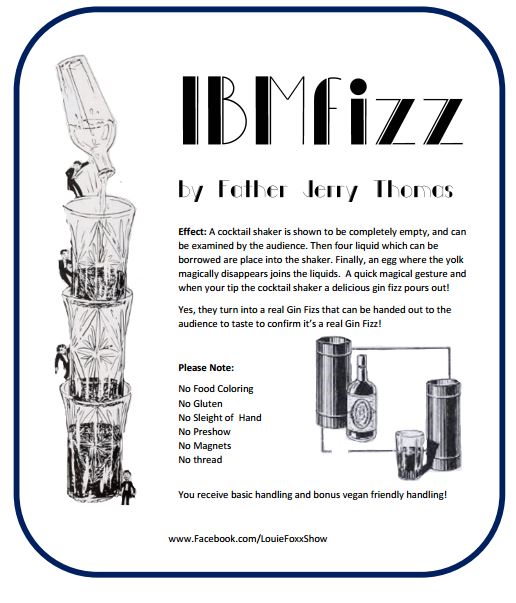
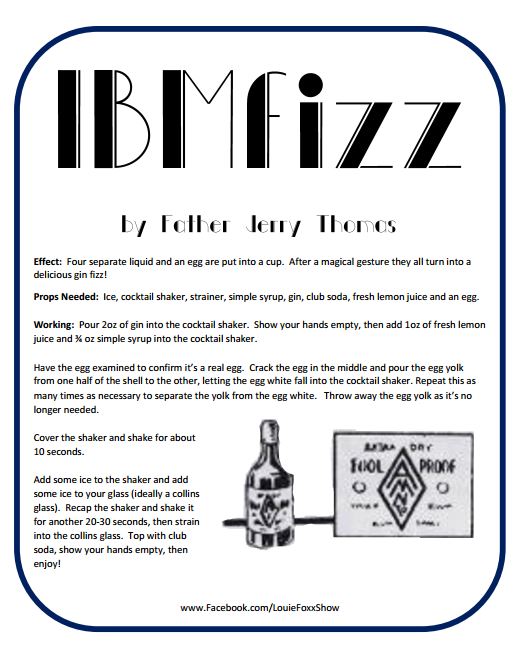
I’m doing one today for the International Brotherhood of Magicians, it’s an IBMfizz! Here’s the magic ad for it:
One of the interesting things about right now is that we live in a world where I can do a show that I did months ago. On Sunday I was in a show where my bit was prerecorded, and I just hung out in the chat section. It’s strange chatting about your show with people while they are watching your show.
That said, I’m not a fan interacting through YouTube’s comments. Every time I’ve done it “Slow Mode” comments have been on/enabled and you can’t have decent interactions with people. Any back and forth quickly gets buried in the chat and makes no sense. I think it takes a lot of the fun out of having me in the comments interacting live with people.
Maybe I’m a dinosaur and the idea of interacting with people in real time is a holdover from being a live, in person performer. I hope it’s not, and that people still want that interaction.
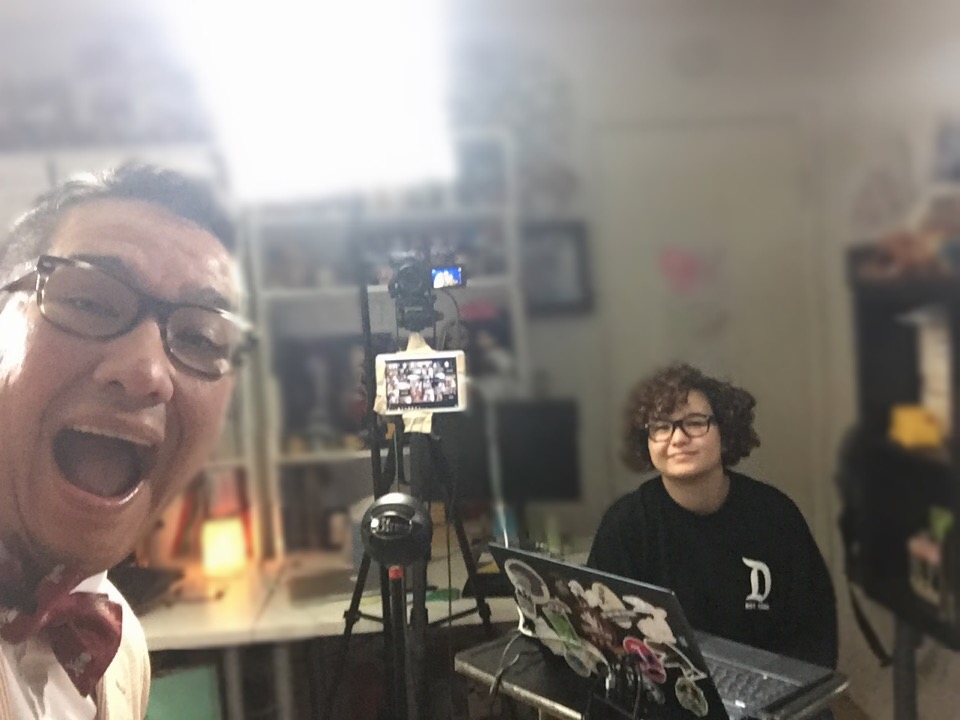
Sometimes I’m doing a quick virtual show spot and it doesn’t really need much set up. For this short spot, I did a simple set up:
It’s a light, camera, mic and an iPad that’s set up as a second screen for my laptop. Not much extra was needed for this gig, and I was just dealing with hand held props.
The softbox light was a great addition to my home studio. It’s super bright and does a great job lighting up my small space. I like it a lot more than the panel LED’s I had been using.
Beloved magician, Master Payne, joins Matt and Louie in the Moisture Festival Podcast studio. Payne talks about performing at renaissance festivals, balancing his magic career with a regular job and how he came to be called “one of the best children’s entertainers” by the esteemed Magic Castle.
They also discuss his time performing with the Jim Rose Circus and how fun it is to perform at the Moisture Festival.
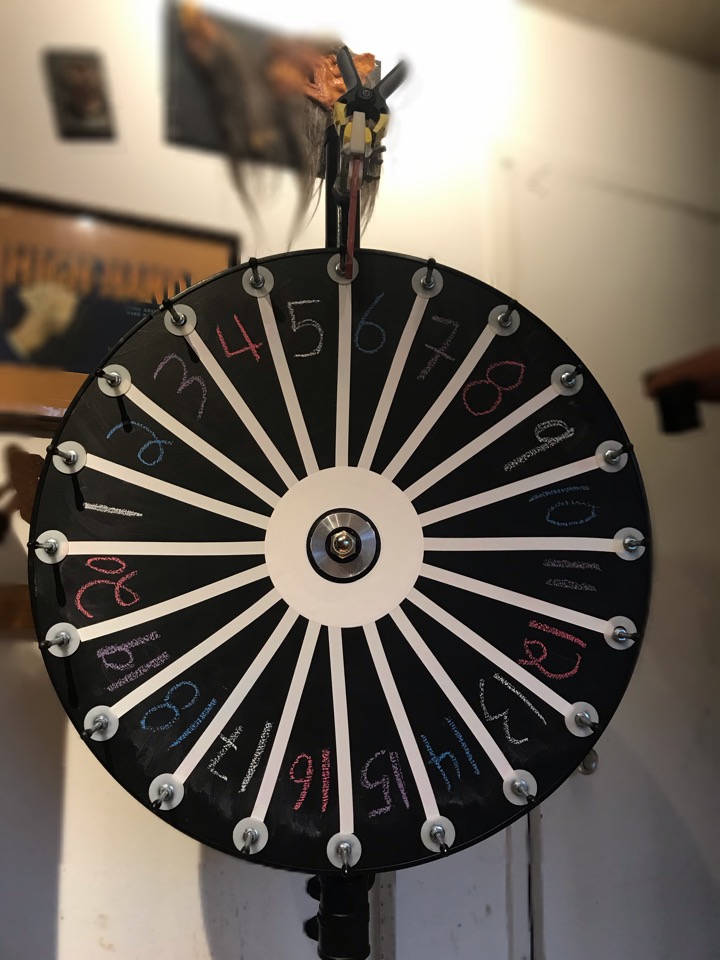
Another day, another change to my wheel. This is a subtle change, but I added colors to the wheel.
There’s a very good reason for this, I’ve figured out a way to force a color on the front and an object on the back. I can now do a prediction that will have three reveals with the wheel, the only variable would be the number, which would be the first selection. Once the first number is made, I can pull the prediction from an index and I’m set! It’ll take a lot of the heat off of the switch, as it happens at the very beginning of the routine!