The Harvard Crimson…

Got a fun surprise today. A while ago I was interviewed by The Harvard Crimson, and the article came out!

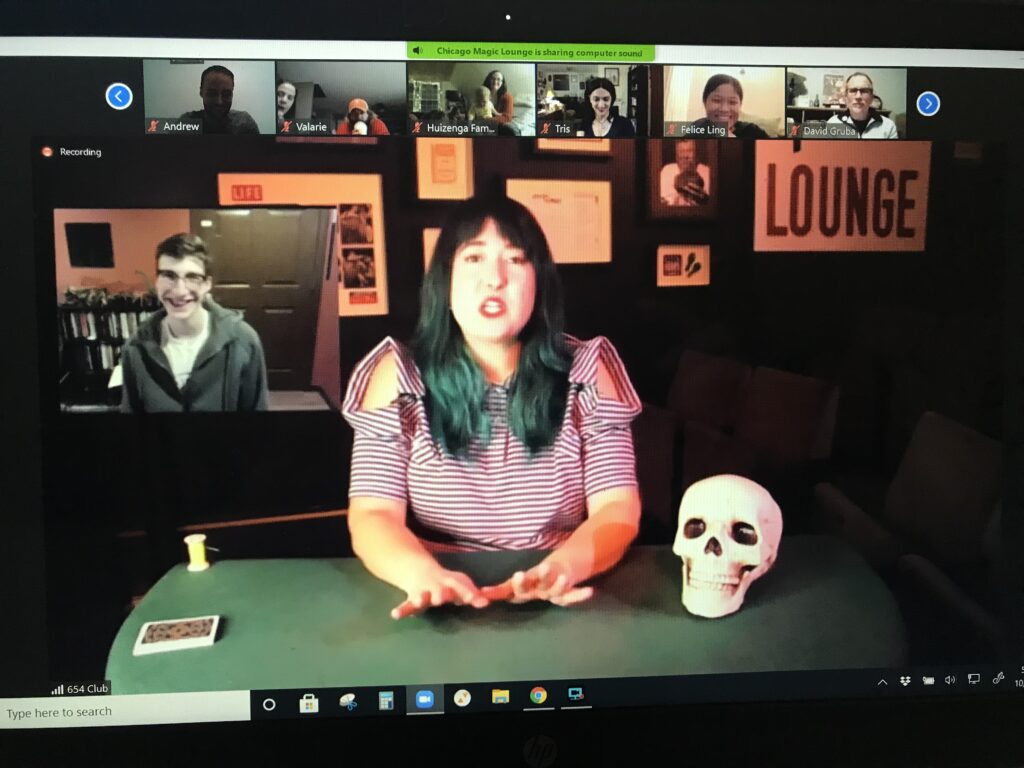
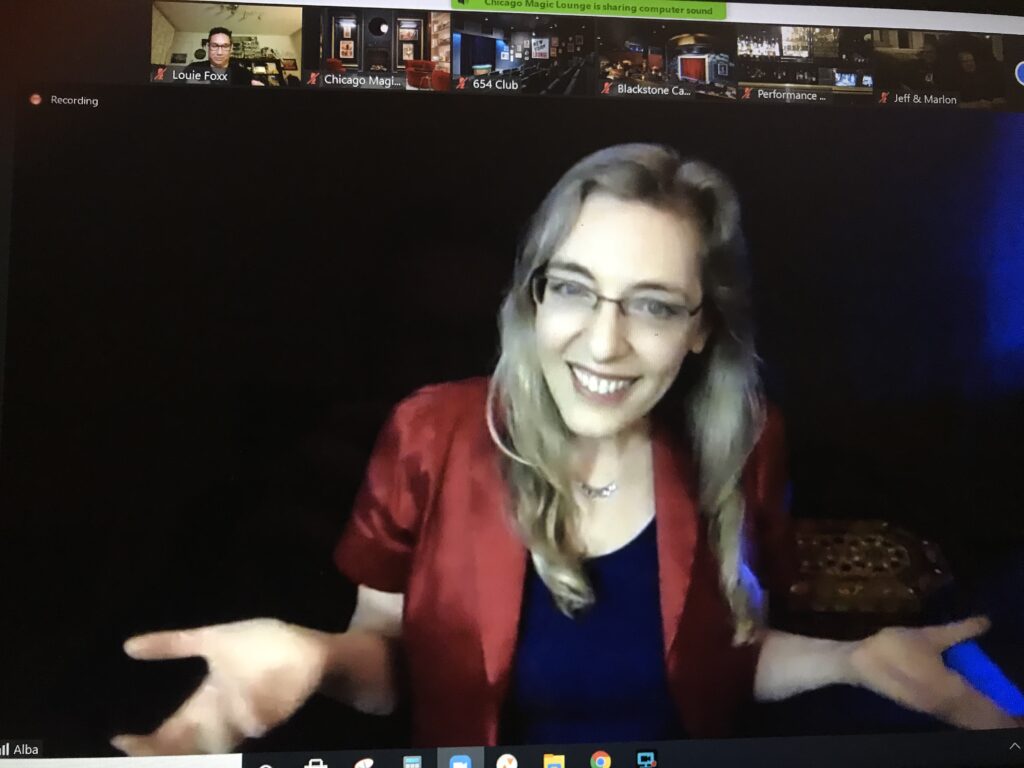
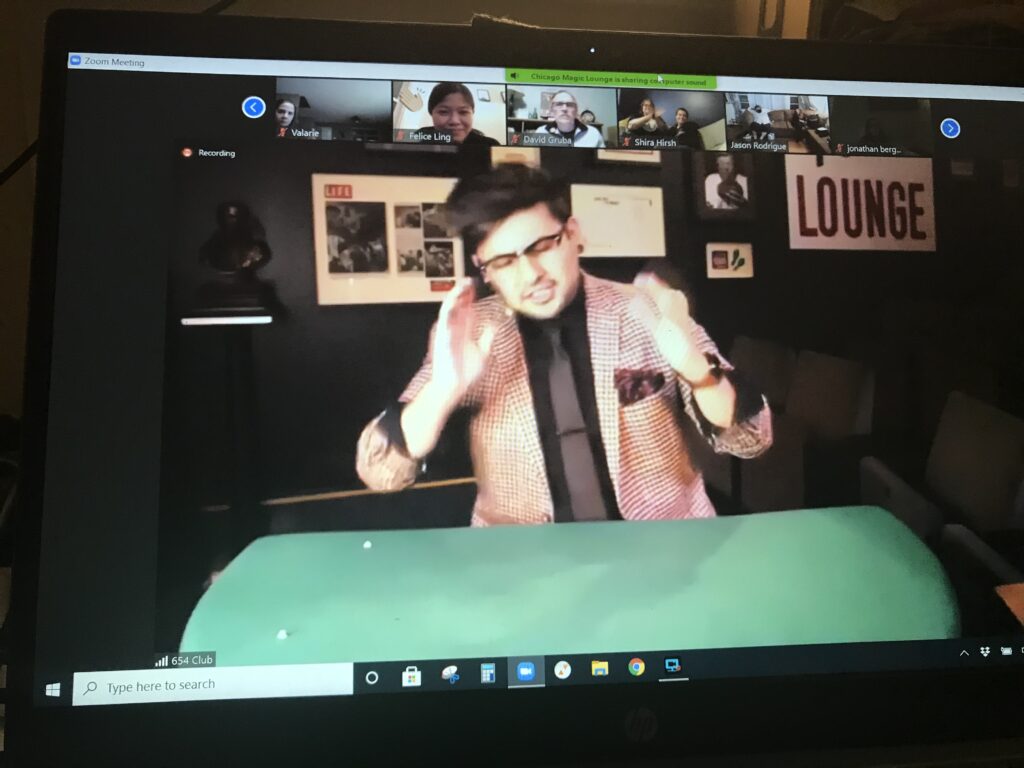
Magicians and audiences from Boston and around the world gathered together virtually for the Boston Magic Lab’s final show of 2020. With backdrops varying from simple bedrooms and offices to more elaborate studio setups, six performers presented the audience with impossible effects ranging from a perfect prediction of a spectator’s thoughts to a chosen playing card emerging from a jar of vegemite. In the show’s unique digital format, viewers spammed “1”s into the chat in lieu of applause, and volunteers were toggled from viewers to panelists when they interacted with the performers.

Now a year old, the Boston Magic Lab is one of the latest additions to the Boston arts scene. The group hosts a monthly open-mic for magicians to test out new material. The show is entirely free for audiences, who are instead encouraged to contribute to local charitable organizations. The magicians aren’t paid to perform — rather, they receive in-depth feedback for their routines.

The Boston Magic Lab was founded by Felice T. Ling, a social anthropologist and street magician who is a regular performer at Faneuil Hall. After having a chance to test some new cabaret material at the Toronto Magic Company, she was inspired. A few years later, Ling’s magician friends from Toronto visited Boston, and they sent out a call for local magicians to come hang out. It was then that Ling met many of the magicians who would join the Boston Magic Lab crew. “[I] realized that there’s a lot of little tribes of magicians in the area who were also craving the same thing that I was looking for,” Ling said, “which was community and a place to perform and try out new stuff.”

While open mics exist in stand-up comedy, the concept of a magic open mic is a relatively new idea. “I think part of the challenge of magic is a lot of people do it as a hobby, which is great, but then it’s always tough to find places to perform live, where you can test new material and you can be, quote unquote, you can be bad to get better,” said magician Adrian Saw, an Australian financial trader based in Singapore who has performed magic in comedy clubs throughout Asia. An open mic platform gives new magicians an opportunity to practice and seasoned professionals a chance to take risks.

One of Ling’s goals for the organization is to spotlight local magicians. In pre-pandemic times, the Boston Magic Lab was housed in the Rozzie Square Theater. “Feeling like Boston is very important to us,” said Ling. “The goal is still to try and keep three slots for Boston area or New England area magicians.” Another of Ling’s goals is to showcase marginalized peoples. “There are so few magicians who aren’t white men, just to be blunt,” she said. “I think [representation]’s really important because for me, the first time I saw a magician on stage who looked kind of like me, that was huge.”

Like all the performing arts, magic has been struck a terrible blow by the pandemic and the subsequent closure of nearly all in-person venues. Magic carries a physicality that is distinctly lost in this virtual world. Viewing tricks through a screen is a significant change in the experience, not just for audiences, but for the magicians themselves.

“If I, for example, turned a coin into a solid steel ball, you just have to believe that what you’re seeing is a solid steel ball, you can’t actually feel it. You can’t actually see that this is a solid steel ball, no longer a coin, and that’s the most difficult part, because everything is visual, is no longer tangible,” said Jay S. Chun, an Edmonton based street performer known for her circus skills. “And as a street performer who works with a lot of, ‘Come close, feel my props, these are regular props, let’s do magic with them,’ is entirely out the window.”

Similar to stand-up comedy, magic relies heavily on feeding off of an audience’s energy — interpreting reactions and altering one’s performance in real time to create a unique and engaging show. Performing for a screen is very different from performing on the street, in a club, or on a stage. “For me, what this is is just a great big game of pretend,” said Benjamin L. Barnes, the current Entertainment Director at the Chicago Magic Lounge. “I am imagining what [people in the audience] look like, I am imagining that they’re having fun and so I’m having fun with them, never seeing them. It’s all just make believe. And I imagine things are going great … There was one point in the show where I said to everyone, ‘I can see some of you are clapping, thank you so much.’ I saw none of that, it’s just in my imagination.”

A virtual format does come with some benefits. “It’s been some of the most creative times of my life because I’m able to pursue stuff that I wouldn’t normally do,” said Louie M. Foxx, a Seattle based magician and two-time Guinness World Record holder, who has been experimenting with creating short pieces of pre recorded content.ADVERTISEMENT

Saw agreed, referencing a trick he did with a coin during the recent Boston Magic Lab performance — something that would usually be considered close-up magic. “I couldn’t really do that in a live environment, in a stand-up or comedy room because no one past the first row could see that coin, but in a Zoom environment where you’ve got the camera right there and the audience can see a tight frame, you can start using different things that you wouldn’t otherwise use in a live show.”

For now, virtual shows are the only option for most magicians. All of the Boston Magic Lab performers emphasized the importance of pivoting and taking advantage of this new opportunity. “Every single platform: TV magic, close-up magic, parlor, stage, they each have their own beauty to it, and you just have to try to find that beauty in every single one,” said Linda Hung, a recent graduate of Pace University currently based in NYC. “And virtual shows [are] just a new platform that people need to find the beauty [in].”

Barnes said that, if anything, magicians will be better performers after working in the virtual realm. “I think this situation has forced us to learn to connect with people more because of the obstacles of not being there with them physically … If you can connect with people through a camera, that’s a great skill to have.”

For the Boston Magic Lab, moving beyond physical space means reaching a larger circle of magicians. “I think switching online has helped me find people in the New England area, actually, that I did not know of here,” said Ling.

The performing arts scene is bound to emerge from the pandemic as a changed industry. Much of in-person magic involves working with volunteers, passing around props, and choosing cards, but in a post-pandemic world concerned about hygiene, this is unlikely to come back any time soon. All of the performers agreed that the virtual magic show is here to stay, even after a return to in-person venues is possible. “It’s inexpensive, you can connect people in different geographic locations, and it’s a lot of fun, and I don’t think it’s going to go away just because we can be together in person again … honestly, I think it’s good. It’s another avenue through which magicians can make a living, which is fantastic,” Barnes said.

Audiences may be Zoom-fatigued, but there are still reasons to seek out virtual magic shows, even more so than other virtual entertainment. “[In] most of those other art forms it’s a fixed performance and an audience member would see that same show if they watched that virtual performance five times,”Saw said. “But in a magic show, you’re going to have audience members making different decisions … I think people have been so isolated that just sitting, watching passively a Zoom show is not really what people want in this kind of environment — they want to be involved. They want to have their camera on. They want to talk, they want to make decisions, and I would say magic is probably one of the only art forms in a virtual medium where people can do that.”

As for the Boston Magic Lab, they intend to resume performances in January 2021 after a two-month hiatus, during which they plan to rework and improve their show and continue to build an unpretentious and inclusive community.

We’re not a nonprofit, we’re not an official organization,” said Ling. “We’re just a group of friends who want to put together a good show.”

By Sam F. Dvorak, Contributing Writer
Side Steal…

At night when I’m hanging out with the family watching TV, usually I’m dinking around with a deck of cards. Frequently I’m working on a fancy cut, I try to be able to do a little bit of the cardistry so the kids at magic conventions think I’m less of a dinosaur. Sometimes I work on new card sleights, or just try to keep the rust off of old ones.

The last week or so I’ve been playing with the side steal. It’s a move I’ve done for a long time and can do it, but I don’t do it exceptionally. When I do it in a live performance, it’s an attitude thing, versus a technique thing. Usually when I do it, I use Scotty York‘s method for the side jog, which automatically side jogs the card.

Sometimes I do the proper side steal technique where you push the card into a squared deck, steal the card and either palm it, or move it to the top. I’ve been working on my technique to get it into full palm using proper technique the last week. It’s starting to look a lot better, I still have a studder between the side jog and full palm. I’m working to smooth that out. It’ll take time…

Magical Mixology…

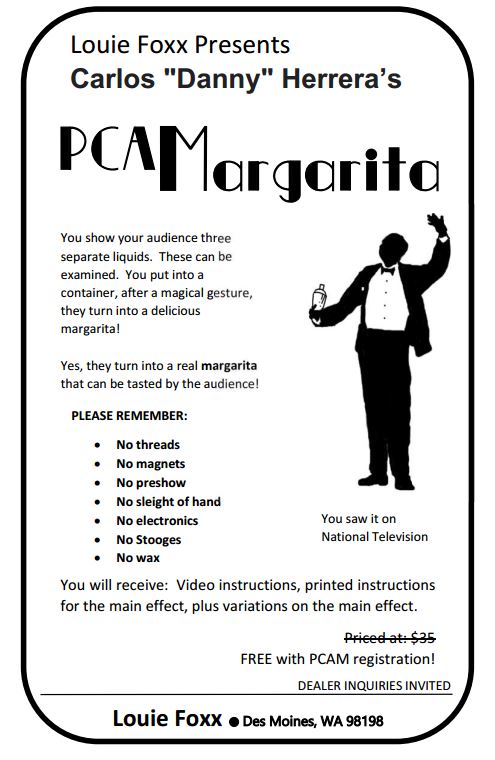
In a few days I’ll be performing at the Pacific Coast Association of Magicians annual convention which will take place online. When they contacted me,I wanted to do something a little bit different. I pitched them having me teach how to make a cocktail. Basically it’s a magical mixology class.

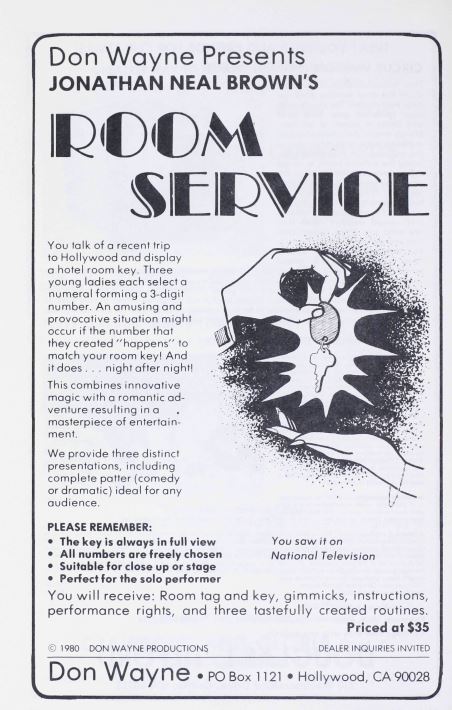
When I sat down to write up the ingredient list and recipe for the cocktail, I decided I wanted to create that like an old magic magazine ad for a magic trick.

I think it turned out well. I worked way too hard on making this, however I think it adds some fun to the whole thing. My starting point was visiting Ask Alexander going through old magic magazines and looking at the ads. I kinda had an idea in my head as to what I was looking for, it was just a matter of finding an ad to use as a template.


Here’s the ad that was my starting point:


Sometimes the little bit extra is what makes the trick work. I’m hoping the ad gets people excited about the mixology.

15 seconds on TV…

Doing stuff for TV is a lot of waiting, followed by we need stuff in 10 minutes. Recently I contributed to a bit on the news in Seattle, and it’s something that initially contacted me about a week prior. Then the day that it aired, they contacted me a few hours before they needed video. While doing 10-15 seconds isn’t a lot of work to produce, when you only have a few hours to do it, it is.

Here’s the news segment:

I sent them a 15 second bit where I just talked in front of the camera. That’s the audio that was used. Then I sent them a 15 second trick montage, of which they only used one trick. The trick they used was the only one that was beginning, middle and end on the video.

They made a good choice!

Notecard Magic…

It took some work, but the MC videos are finished. These are tricks I was doing for a virtual MC gig. I had to do 7 introductions and wanted to have some magical things to happen while I did them. The thing was I didn’t want to do any full routines. This is an interesting shift from live to prerecorded virtual hosting. There aren’t any stage delays to cover, you really just need to move the show along.

Of the seven tricks I planned on doing, four of them turned out alright. There other ones are just straight intros. Here’s a highlight reel of the four tricks:

I think my favorite is the floating card. I’m not sure how subtle it is, but just letting go if it and it not moving is fun. You’ll notice by gesturing with my hands as I talk, I’m waving them over the top to show “there are no strings” without saying it.

I’m hoping people like that style, I’m having a lot of fun doing things like this. It’s making flex a creative muscle that I don’t normally use. The event happens on Thursday of next week, so we’ll see how it was received then.

Virtual Hosting…

Last night I picked up a last minute gig hosting a showcase. This is for a conference where people go to book acts, I showcased last year and can’t this year. However when I was asked to host their virtual showcase, I agreed as getting face time is always good!

Hosting these is more complex than simply doing material and then announcing acts. The host isn’t supposed to showcase their act. That said, when I accepted the gig, I immediately got started writing down ideas that were fun magical moments. I have seven acts to introduce, which is a lot of material to figure!

How I did this was write down a lot of ideas. Basically I’m just looking for a way to produce the acts name. These have to be quick, and not too involved. After the initial brainstorming, I started to make one of the ideas. One of the acts had a really long introduction. The idea was to have all the text written out, then have all the words change to his name. My first thought was to use black art on the table, but didn’t like that as it’s harder to frame my face. Then I thought about making a flap card. When I first learned to make more modern flap cards, I made an index card that was a flap card. It looks like Blake Vogt is currently selling one called Acro-Index, check his out if you like the idea, and don’t know how to make one.

Once I had the index card trick, I looked at all of my other ideas and started to look at all of the ones that could be adjusted to an index card. I got about 4 of the ideas to work with an index card, and then brainstormed three more.

That gave some options, not every act needs an trick with the introduction. I’m going to record all of them two ways. One as just the introduction and one with the trick. I’ll pick the one that flows better. I’m recording these today, even if they don’t work out, at least it was a fun creative exercise!

Flea Circus Book!

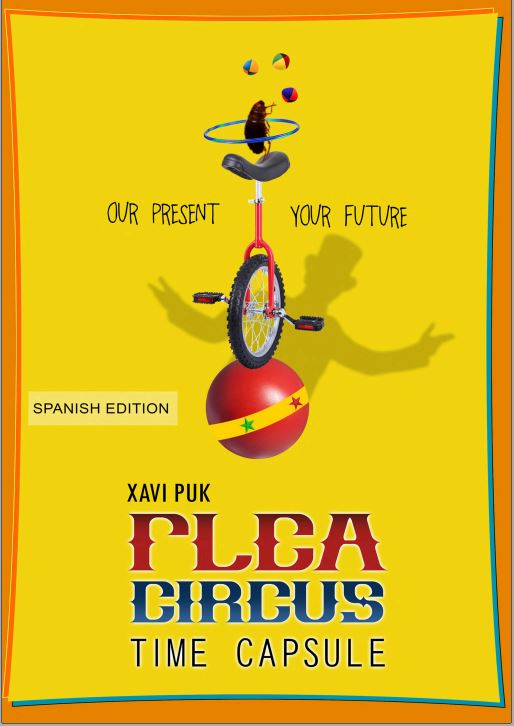
There was a fun surprise waiting for me in my email this morning. A while ago Xavi Puk contacted me asking to use a couple of pictures of my flea circus for an upcoming book about flea circuses. Well, it looks like the Spanish Edition it out and available on Amazon.com !

flea circus book

Unfortunately I don’t read Spanish, so I’ll have to wait for the English version to happen. I did run the pages that I’m mention in through Google Translate and I’m used as an example in marketing your flea circus. Specifically how I embrace social media and how I pose / stage pictures.

If you’re into flea circuses and can read spanish, you should check it out. It appears to be a pretty thorough book!

Chicago Magic Lounge

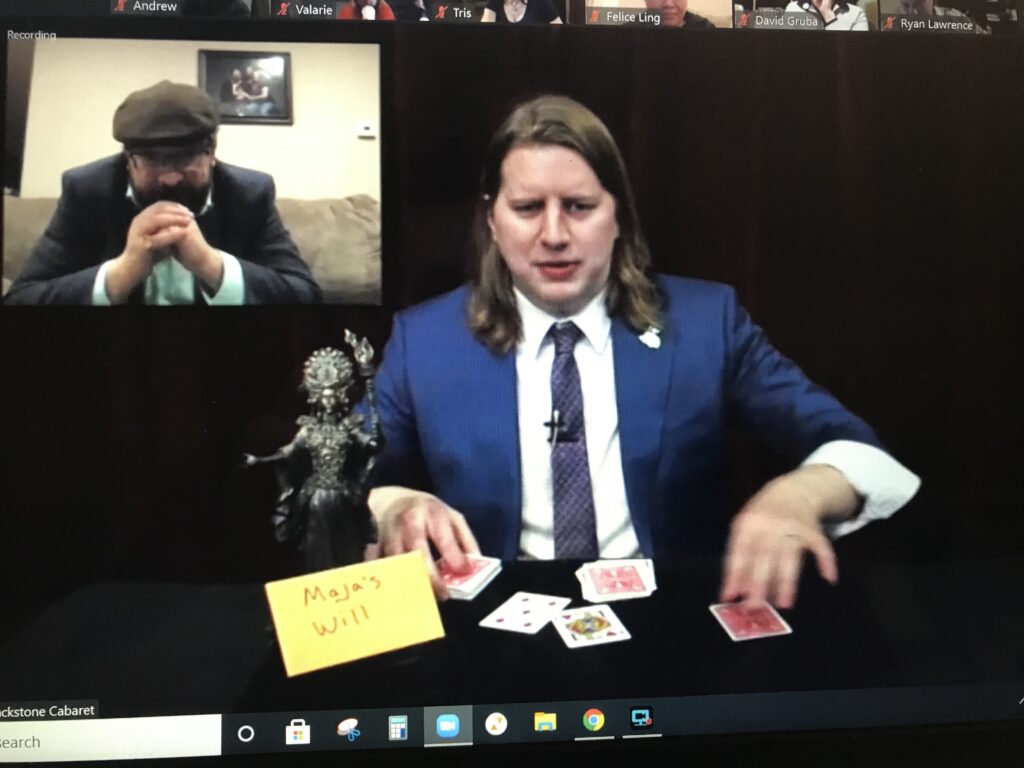
Last week I ended up with a ticket to the Chicago Magic Lounge’s Virtual Happy Hour. I’ve never been in person to the venue, and on video it looks like a cool place. I think tickets are $15 and we had four magicians, a mixologist and a host. All of the performers were performing live at the venue except for one that was in another country.

I didn’t get a picture of the host Benjamin Barnes, however he did a great job introducing the acts. Personally, I would have liked to see him do a set in there somewhere.

All of the acts used audience participation, with the helper on screen. They were in engaging, and the audience was fairly active in the chat.

One interesting thing that happened during the show was at one point when someone was picked to help out onscreen the guy said something like, “I thought this was all fake…“. What he meant was that he thought everyone helping was a stooge.

That comment raises an interesting question:
Do most audience members think these shows use stooges?
I don’t know if there’s a way to keep people from thinking that. People have the same thought at in person shows, so it’s not unique to a zoom show. This is more of a concern for a ticketed show than it is for a corporate zoom show.

Back to the Chicago Magic Lounge, for $15 it’s a solid show and worth checking out online. I think the overall run time was about 2 hours.

Putting It All Together…

This week I’ve written about putting together and interactive coin trick. Today, we’re putting it all together the force and the coin gimmicks. Here’s an example of what the trick could look like:

I like how the vanish at the end gives the trick a feeling of closure. It also builds off of the mini effect of knowing they picked the dime.

This is my first attempt at creating an interactive virtual magic trick from scratch. I think I did alright.

Interactive Coin Force…

Yesterday I wrote about working on an interactive coin trick (read it here). This is the style of trick where the person (or group) follows your instructions and you predict where they end. My version has a physical trick kicker that ends with a vanish of all the coins that the audience isn’t holding.

Today I’m going to talk about the procedure that I’m using to force the coins. I came up with my own force sequence for this routine. If you’ve just read Jim Steinmeyer’s Impuzziblities books, they don’t really teach you how to create your own sequence. That’s OK as that’s not the purpose of those books.

The book Body Mentalism by Juan Pablo Ibanez really does a good job of laying out principle that will allow you to create your own sequences. Right now with these “do as I do” interactive style tricks being very popular, I really recommend you get the book to understand the principle. I think knowing why the forces work is good knowledge to have in your head…even if you don’t intend on creating your own sequences.

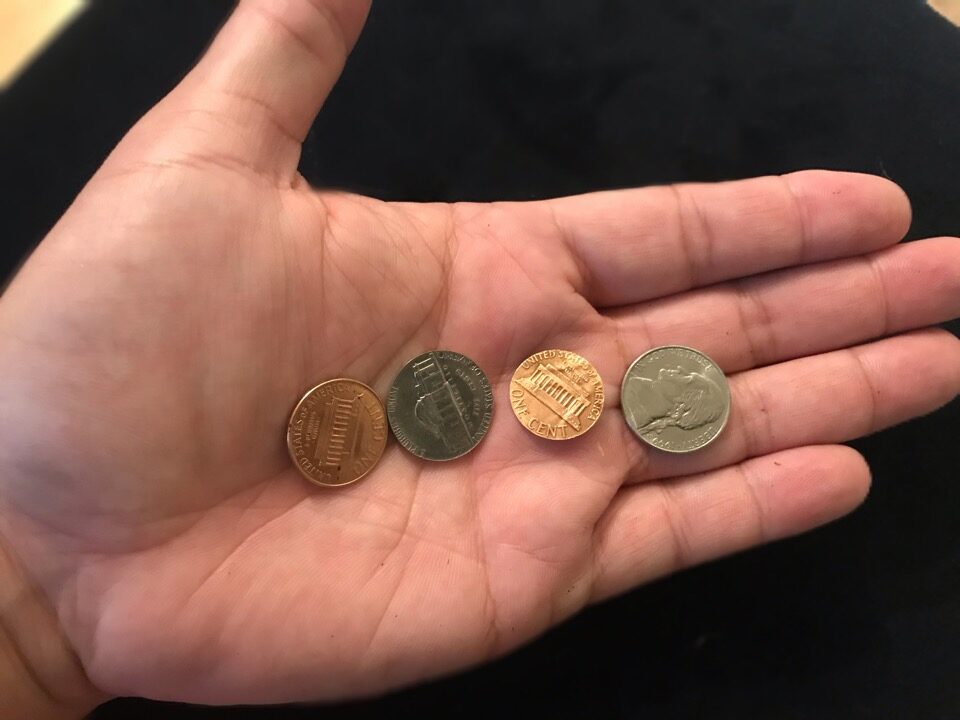
Okay, let’s get to the sequence I came up with for the trick. You lay out four coins in a row, two pennies and two nickels. They are in this order:

Penny – Nickel – PennyNickel

You have them touch any coin, then explain the “rules”. These are you will give them two things to spell, and they move one coin per letter. The first thing they spell is the name of the coin they are not touching. If they are touching a penny, they will spell N-I-C-K-E-L and if they are touching a nickel they will spell P-E-N-N-Y.

Now you have them spell the name of the coin that they are now touching. For example, if they are now touching the penny, they spell P-E-N-N-Y. The coin they are touching is now their new selected coin.

If they followed your instructions they will now be touching a nickel.

This sequence by itself isn’t very strong, but when you add the vanish of all the other coins, it becomes a pretty decent trick.