Moving to the Dark Side…

In the past on this blog I’ve written about how I prefer physical instructions (DVD or whatever) to download/streaming instructions. While I still think something physical is very helpful for people to have, lately my mind has been changing.

I no longer have a DVD player in my computer, it’s been about 18 months since I’ve had one. I bought an external one for DVD’s. It’s a pain to watch anything. I think that DVD’s are going to go the way of VHS soon, and switching to download is the way going forward. I don’t have to like it, but I have to adjust with the times.

You may notice my products switching over to download instructions as I run out of DVD’s. I need to embrace the direction the world is moving.

Gallery View…

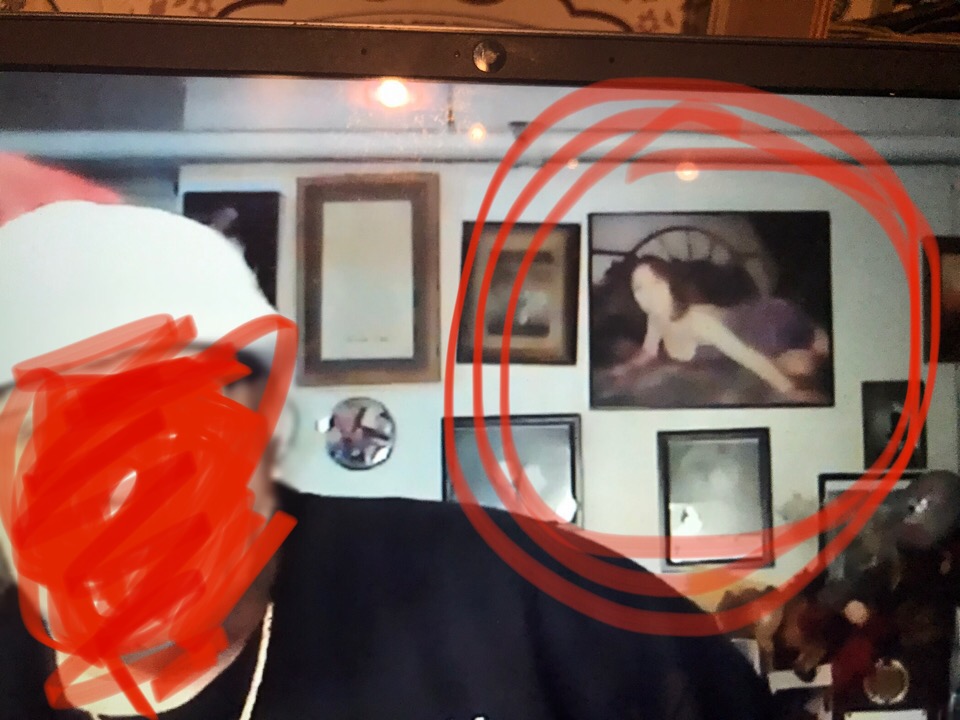
A trick I’ve been using on Zoom is having someone think of someone’s name in the zoom room and then telling them who they are thinking of. What I like is that it’s “propless mentalism” and it feels impromptu.

Here’s what it looks like:

What I like is that you are changing the texture of your show when you do something like this. You are taking the focus off of a single screen and moving it to the gallery. During a trick like this, you get to watch everyone, and everyone watches waiting to see if they’re the one that the person is thinking of.

Moving the visual focus from you to the audience gives your show some texture. While something like this may not be for everyone, it’s something you should think about.

The Love Trick…

Lately a trick that’s been going around is people doing The Love Ritual card trick by Woody Aragon. If you’re not familiar with the trick you can watch it below:

This trick has been popularized by Penn & Teller who use it in their live shows and on TV. I’ve also seen a lot of performers mess up the trick. I was at one of Shin Lim’s early theater shows and he totally messed up trick.

Here’s what I don’t like about the trick, it’s a procedural trick, it doesn’t feel that random. I think people in the audience feel that way as well. It’s a puzzle, and a fun puzzle, but not something that’s impossible.

A couple of nights ago I saw The Present by Helder Guimaraes and he does a version of the trick, that blows all the other versions out of the water! It’s series of surprises that get more and more impossible. That’s the standard that all of that sort of trick should be measured.

Clear Differences…

When you’re running a live virtual show, a lot more goes into it than simply turning on the camera on your laptop. Last night I was hanging out on Zoom with some performer friends and normally I just use my laptop’s built in camera, however I decided to set up the studio. I put up lights and hung the blue screen, and it’s amazing the difference it makes!

In the picture below, both images were taken at the same time by different cameras.

The left was my laptop’s built in camera and the right was an external camera placed about an inch above the other camera. It’s crazy the difference it makes. Even if I cropped down the one on the left, it’d still look blown out, and murkier (probably worse).

You need to look at the product you are putting out, is it watchable?

The Present…

Last night I saw Helder Guimaraes‘s show The Present at The Geffen Playhouse in Los Angeles. Well, sort of, it was over Zoom. The show was really great, I loved it. Helder is the first person I’ve seen who really did the “you do as I do at home” type tricks and make they fun, exciting, and most importantly, not feel like a bunch of procedure.

When you buy your ticket they mail you a box a props to use during the show. What’s cool is it’s not just of a box with a deck of cards and some string in it. It’s a box where he very smartly uses the contents. I don’t want to ruin anything is someone has tickets and hasn’t seen the show, but you’ll quickly notice if you’re paying attention with a magician’s eye that there’s more to it than what it looks like.

I think there are a few more shows at The Geffen Playhouse. I think some have the option of just watching and not having the box mailed to you. If you can afford it, I’d recommend getting the box, you should still have a good time without the box.

The Key to Creativity…

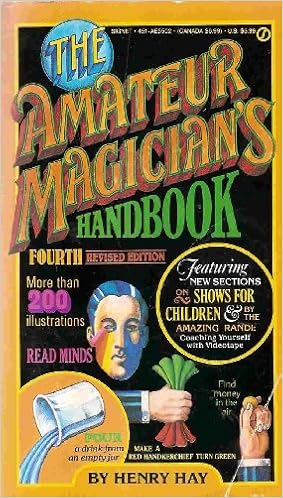
Moonwalking with Einsten

A couple of weeks ago I did a magic lecture and was asked about how to me more creative. The first thing you need to realize is that you’ll have a ton of bad ideas, and to get over the fear of failure. Once you’ve done that you are ahead of 99% of people.

The thing that I think is the key to being creative is being able to connect two unrelated things. Whether it’s two tricks or a solution and a problem. This is something I didn’t k now I was doing until I read the book Moonwalking with Einstein. This is a book about memory, and having a decent memory helps you connect things.

The other ingredient to being able to connect two things is having two things in your brain to connect. I recently came across this quote:

“Creativity is just connecting things. When you ask creative people how they did something, they feel a little guilty because they didn’t really do it, they just saw something. It seemed obvious to them after a while. That’s because they were able to connect experiences they’ve had and synthesize new things. And the reason they were able to do that was that they’ve had more experiences or they have thought more about their experiences than other people. Unfortunately, that’s too rare a commodity. A lot of people in our industry haven’t had very diverse experiences. So they don’t have enough dots to connect, and they end up with very linear solutions without a broad perspective on the problem. The broader one’s understanding of the human experience, the better design we will have.”

Steve Jobs

I 100% agree with Steve Jobs, you need to have experiences to connect.

How do you get those?

Simple, you go out and live. I’m always out doing things, seeing shows, having adventures and all of that goes into my brain and it gives me more things to connect. I’m also always reading magic books, that give me methods in my brain. I also try to reasonably work through everything I read in a magic book, that gives me a tactile experience in my brain to pull from.

So go out and live and be a lifelong student of whatever your artform is!

More Wild Card…

Yesterday I wrote about working on a trick by removing what you don’t like about it. The specific trick I was writing about is Wild Card. I came up with three things I didn’t like, and there were easy fixed for the first two, but he third was more or a challenge.

For the routine, I was thinking you’d take six cards out of a deck. Then a card would be selected and when rubbed on the six cards they change into the selected card. For the finale, you rub the selected card on the rest of the deck and all of the cards change into the selected card.

I’m not sure if that’s been done before, but it’s a decent flow of the routine. It changes it from a packet trick and into a full deck card trick.

The pain will be to build a deck that’s all the same card and to make the needed gaffed cards.

Wild Card…

The Wild Card Kit

One of the ways to create new methods or routines for magic tricks is to take an existing trick and remove what you don’t like about it. We’ll start with a trick that I don’t like, and that’s Peter Kane’s Wild Card. There’s a lot I don’t like, it mostly is how redundant the trick is, and it lacks an ending. It goes, and the ending is all the cards have changed to the same card, but there’s not punctuation on it.

In Jon Racherbaumer‘s book, The Wild Card Kit, there are a couple of interesting premises. More importantly there are a couple of interesting moves and sequences that take the trick past it’s most basic level.

One notable exception is Eric DeCamp’s version of Wild Card called Jokers are Wild Are Wild. In this version the cards values end up being a blackjack hand and for a finish the cards turn into money. This puts a theme on the trick and a finish that punctuates the routine.

So…what am I going to bring Wild Card?

I’m not sure.

What I don’t like about wild card is:

  • How redundant the sequence is
  • How it uses a packet of all the same card
  • How it doesn’t have an ending

The first two things I don’t like are an easy fix, however the third one will take some work. For the first two, I’ll vary the moves a little bit and for the second I can make a packet of the gimmicks that use different cards, not all the same values. However an ending that makes sense might be harder…

The Cork Trick…

Awhile ago I was visiting Steve Dobson and someone (sorry I can’t remember who) showed me a little trick with cork. You put the cork under a cup and when you lifted it, it was standing up on end. It’s a clever little trick that I learned is Sol Stone’s Abraviagra.

You can watch Sol do it here:

Sol’s version is great, while his presentation is a bit dated, don’t let that turn you off. This is a great impromptu trick. I’ve used it a bunch and and it’s great.

I was recently working on some videos for a client thought about the cork trick. I needed to get a bit more time out of it, and wanted a bit more build to the routine. I don’t think it would hit as hard if you’re not there watching it in person.

Here’s what I came up with:

The trick progresses from fully covered, to partially covered, to just under a clear glass, and then there’s the kicker at the end. My method is a bit more complex than Sol’s method is. Mine was designed for a video, so it didn’t need to be practical. It’s super gimmicked!

I think the trick came out well and while it won’t be moving into my show anytime soon, it was fun to do and it’s something that’ll be in my “back pocket” if I need it.

Finally Trying a Trick…

One of the best books on stand up magic as far as tricks go is Jim Steinmeyer’s The Conjuring Anthology. It’s full of mostly stand up style magic, there are other things in there as well, like stage illusions. This book is a tremendous resource.

The Conjuring Anthology by Jim Steinmeyer

Recently I was making a bunch of videos for a client and needed some inspiration. I was flipping through this book and there’s trick that uses confetti in it that’s caught my eye in the past. Essentially loose confetti turns into a full sheet of tissue paper.

I went out, got the stuff to build the prop and got two work on it.

The first thing that I noticed was that this trick is a great lead in to the torn and restored tissue. If you put the two tricks together you’ve got a 3-4 minute routine that takes up virtually no space in your case, or could easily be made in a hotel room.

I’m glad that the project I was working on had me go back and flip though that book. I also think that if I had played with that trick at another point in my life I may not have had the same results as I did.