The Key to Creativity…

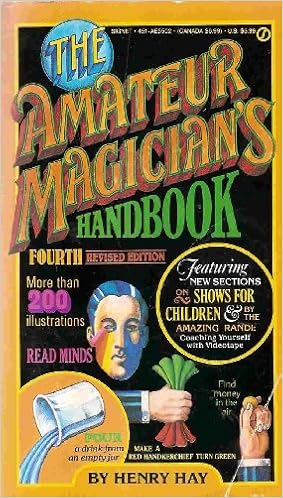
Moonwalking with Einsten

A couple of weeks ago I did a magic lecture and was asked about how to me more creative. The first thing you need to realize is that you’ll have a ton of bad ideas, and to get over the fear of failure. Once you’ve done that you are ahead of 99% of people.

The thing that I think is the key to being creative is being able to connect two unrelated things. Whether it’s two tricks or a solution and a problem. This is something I didn’t k now I was doing until I read the book Moonwalking with Einstein. This is a book about memory, and having a decent memory helps you connect things.

The other ingredient to being able to connect two things is having two things in your brain to connect. I recently came across this quote:

“Creativity is just connecting things. When you ask creative people how they did something, they feel a little guilty because they didn’t really do it, they just saw something. It seemed obvious to them after a while. That’s because they were able to connect experiences they’ve had and synthesize new things. And the reason they were able to do that was that they’ve had more experiences or they have thought more about their experiences than other people. Unfortunately, that’s too rare a commodity. A lot of people in our industry haven’t had very diverse experiences. So they don’t have enough dots to connect, and they end up with very linear solutions without a broad perspective on the problem. The broader one’s understanding of the human experience, the better design we will have.”

Steve Jobs

I 100% agree with Steve Jobs, you need to have experiences to connect.

How do you get those?

Simple, you go out and live. I’m always out doing things, seeing shows, having adventures and all of that goes into my brain and it gives me more things to connect. I’m also always reading magic books, that give me methods in my brain. I also try to reasonably work through everything I read in a magic book, that gives me a tactile experience in my brain to pull from.

So go out and live and be a lifelong student of whatever your artform is!

More Wild Card…

Yesterday I wrote about working on a trick by removing what you don’t like about it. The specific trick I was writing about is Wild Card. I came up with three things I didn’t like, and there were easy fixed for the first two, but he third was more or a challenge.

For the routine, I was thinking you’d take six cards out of a deck. Then a card would be selected and when rubbed on the six cards they change into the selected card. For the finale, you rub the selected card on the rest of the deck and all of the cards change into the selected card.

I’m not sure if that’s been done before, but it’s a decent flow of the routine. It changes it from a packet trick and into a full deck card trick.

The pain will be to build a deck that’s all the same card and to make the needed gaffed cards.

Wild Card…

The Wild Card Kit

One of the ways to create new methods or routines for magic tricks is to take an existing trick and remove what you don’t like about it. We’ll start with a trick that I don’t like, and that’s Peter Kane’s Wild Card. There’s a lot I don’t like, it mostly is how redundant the trick is, and it lacks an ending. It goes, and the ending is all the cards have changed to the same card, but there’s not punctuation on it.

In Jon Racherbaumer‘s book, The Wild Card Kit, there are a couple of interesting premises. More importantly there are a couple of interesting moves and sequences that take the trick past it’s most basic level.

One notable exception is Eric DeCamp’s version of Wild Card called Jokers are Wild Are Wild. In this version the cards values end up being a blackjack hand and for a finish the cards turn into money. This puts a theme on the trick and a finish that punctuates the routine.

So…what am I going to bring Wild Card?

I’m not sure.

What I don’t like about wild card is:

  • How redundant the sequence is
  • How it uses a packet of all the same card
  • How it doesn’t have an ending

The first two things I don’t like are an easy fix, however the third one will take some work. For the first two, I’ll vary the moves a little bit and for the second I can make a packet of the gimmicks that use different cards, not all the same values. However an ending that makes sense might be harder…

The Cork Trick…

Awhile ago I was visiting Steve Dobson and someone (sorry I can’t remember who) showed me a little trick with cork. You put the cork under a cup and when you lifted it, it was standing up on end. It’s a clever little trick that I learned is Sol Stone’s Abraviagra.

You can watch Sol do it here:

Sol’s version is great, while his presentation is a bit dated, don’t let that turn you off. This is a great impromptu trick. I’ve used it a bunch and and it’s great.

I was recently working on some videos for a client thought about the cork trick. I needed to get a bit more time out of it, and wanted a bit more build to the routine. I don’t think it would hit as hard if you’re not there watching it in person.

Here’s what I came up with:

The trick progresses from fully covered, to partially covered, to just under a clear glass, and then there’s the kicker at the end. My method is a bit more complex than Sol’s method is. Mine was designed for a video, so it didn’t need to be practical. It’s super gimmicked!

I think the trick came out well and while it won’t be moving into my show anytime soon, it was fun to do and it’s something that’ll be in my “back pocket” if I need it.

Finally Trying a Trick…

One of the best books on stand up magic as far as tricks go is Jim Steinmeyer’s The Conjuring Anthology. It’s full of mostly stand up style magic, there are other things in there as well, like stage illusions. This book is a tremendous resource.

The Conjuring Anthology by Jim Steinmeyer

Recently I was making a bunch of videos for a client and needed some inspiration. I was flipping through this book and there’s trick that uses confetti in it that’s caught my eye in the past. Essentially loose confetti turns into a full sheet of tissue paper.

I went out, got the stuff to build the prop and got two work on it.

The first thing that I noticed was that this trick is a great lead in to the torn and restored tissue. If you put the two tricks together you’ve got a 3-4 minute routine that takes up virtually no space in your case, or could easily be made in a hotel room.

I’m glad that the project I was working on had me go back and flip though that book. I also think that if I had played with that trick at another point in my life I may not have had the same results as I did.

Writing Jokes…

A little bit ago I was helping out a friend set up a Drive Thru Zoo and stuck around to hang out during the actual event. It was a lot of fun, and people are really excited to have things to do (even if they had to stay in their cars). This is a good sign for when in person shows come back.

While I was there, the performer in me started to think about how to engage people, instead of them just reading the signs. What I did was look up some basic facts about the animals and write out a rough routine to engage and educate the audience.

For example here’s what I was doing when people got to the emu:

Me: This is Louie the emu. He’s the oldest living emu in the USA, can you guess how old he is?
Car: 17 years
Me: 273 years old
Car: what…
Me: no, he’s 27
Car: *laughs*
Me: Emu’s live to be 15-20 years old in the wild

Me: He’s an omnivore, that means he eats plants, animals and tacos.
Car: *laughs*

Me: Can you guess where he comes from?
Car: Africa…
Me: An egg. He comes from an egg.
Car: *laughs*
Me: The emu’s egg is green and sorta looks like a giant avocado.

Me: Louie can run up to 30 miles per hour, do you know what that is in kilometres? Without looking at your speedometer
Car: *laughs* I didn’t think to look there. 40 kilometres?
Me: Close, it’s 50.

What I did was come up with a conversational series of jokes, that makes the car full of people think and laugh while delivering jokes. It was fun writing this kind of stuff for the animals. It’s a bit different than writing jokes for a magic show, but it’s good to get outside your “box” every now and then.

Twinkles…

Years ago when I was a teenager, I attended the Desert Magic Seminar in Las Vegas. One of the lecturers was Gary Oulette and he was talking about magic for TV and how they did The World’s Greatest Magic series. A few things about that lecture have stuck with me, the main one being why to use shiny mylar strips as a backdrop!

He talked about using stingers and adding little twinkles when the magic effect happens. I’ve also noticed that on Master’s of Illusion they do that as well. I think it really does add to the experience.

I’ve been messing with adding little twinkles to my videos when the magic happens. I’ve found a few that I’m using, but I think I need to keep searching as I’m not 100% happy with them. I do feel that they add to the video and are worth the time to search them out and add them in.

About Masks…

In the past I think I’ve written about this, however there are a few instances recently that got me thinking about using face masks and hand sanitizer in magic routines. First of all, it’s no longer the elephant in the room that needs to be addressed. It was in March and April, but not now.

If you’re shoehorning in a mask to your show to try to be topical, it’s lazy creativity. Simply swapping out a silk or a drink coaster for a face mask and having not other context to it, then you’re fooling yourself into thinking you’re being topical. I think an audience can feel when someone changes a prop for no reason other than to try to make it topical.

If you’re doing a bit with a mask that actually has purpose or a point of view, I’m 100% for that. For example if you linked the ear loops of a mask, that’s using the property of the mask, you aren’t simply finding a place to substitute a mask into your show.

Personally I’d love to see a mask bit by an anti-masker, I think that would be very interesting. Using the mask and magic to show how masks don’t work would match well with and having things pass thru the mask. Of course you could do the opposite and show how the mask protects the wearer by not letting things through doing some indestructible type tricks with the mask. However thing like that take actual thinking and work to do well. It’s not easy to do, which is why you don’t see much of it.

Jennifer Wensrich – The Moisture Festival Podcast

This week Jennifer Wensrich drops by the Odd and Offbeat studios to chat with Matt and Louie. We chat about how she became the Director of Smooth Operations at the Moisture Festival and what it takes to put on the festival every year!

We also get into her background in dance and learn a little bit about sailing!

Coin To Silk To Egg with a Kicker!

Right now I’m working on finishing up some videos for a client and I’m just over halfway finished. I had and idea for a little routine, I wanted to essentially do the Sucker Silk To Egg, but take it a bit further. If you’ve seen the lecture that I do for magicians, that’s the message of the lecture, take your magic a step further!

I remembered reading in a Karrell Fox book about a method for the Silk To Egg that he called Super Simple Silk-2-Egg. The was a great method for the Silk To Egg that got rid of the gimmicked egg, which then eliminated the switch of the real egg and the fake egg.

My next challenge was to figure out what direction further I wanted to take the trick. My original idea was to turn the silk to the egg, do the fake explanation and peel off the sticker. The ending would be the silk was then actually inside the egg! The problem with this is that the silk would really need to be signed and that doesn’t really work for a pre-recorded video.

With my original idea not going to work for this specific gig (but I may work on it for other shows), I kept thinking. Then I remembered a book I picked up in a discount magic bin for about a dollar. The book was Hatching by Nefesch, which is a signed coin in egg. This is an interesting effect as the coin is actually inside the egg with all off the egg goop when you crack the egg open.

The sequence of the routine was now starting to take shape. A coin will turn into a handkerchief, which then turns into an egg. At that point I’ll do the “sucker explanation”, and when it’s time to crack open the egg, the coin will come out of it.

It’s not the most amazing magic routine out there, but it definately taking the Silk To Egg to another place (not sure if it’s a good place).